| OCR Text |
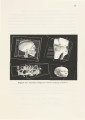
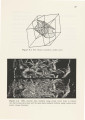
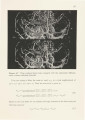
Show 28 renderer. The curve consists of line segments connecting the points on the cookie cutter curve. The volume renderer receives the cookie cutter curve points, which are represented in the world coordinates. They all lie on the same plane since the cookie cutter curve was sketched out on a slice through volume data. We fit a u, v, w coordinate system to this curve with u and v axis defining the plane in which the curve lies. Thus all the points of the cookie cutter curve have constant w values. The near and far clipping planes are also transformed to this new coordinate system. We have a transformation matrix which takes us from the world coordinate system(volume data's coordinate system) to the u, v, w coordinate system; it is easy to make a decision about whether a certain voxellies within the cookie cutter volume or not. It is very easy to identify whether a voxel in question is in the region of interest or not. We use the transformation matrix to bring it to the cookie cutter curves' coordinate system from the world coordinates. After that, it is just a comparison of the w values to find whether the given voxel is between near and far clipping planes. A ray from the voxel's position in the positive u direction is used to find the number of curve line segments it intersects. Odd parity rule is used to determine whether the voxel is interior to the polyline. Figure 4.2 shows the MRA vascular data rendered using a cookie cutter matte volume. We can remove the obstructing structures to produce an image that provides clearer visual information. The figure compares the cookie cutter matter volume with the corresponding plain volume rendering of the MRA vascular data. In this manner all voxels that are within the geometric region of interest can be determined. This geometric matte volume can be either rendered with just the enhanced opacity matte volume of equation 3.7 or matte volumes can be used to control the opacity of the geometric matte. 4.2 Traditional Image Processing Techniques The following are some of the traditional image processing techniques and how they can be used to generate matte volumes. |