| OCR Text |
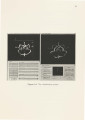
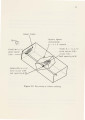
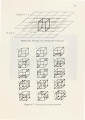
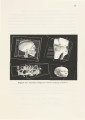
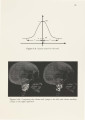
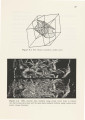
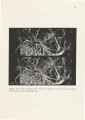
Show CHAPTER 3 THE VISUALIZATION SYSTEM The testbed system in this thesis is called the Interactive Visualization Exploration System (IVES) developed at University of Utah. It consists of a Slicer, Isosurface Renderer, Volume Renderer, Opacity Map Generator and Color Map Generator. Figure 3.1 shows the screen layout of the system. 3.1 Volume Renderer The basic volume renderer is based on an image-order, front-to-hack, ray-traced volume rendering algorithm[24]. The volume data is stored as 3D array of sample values known as voxels. An image is constructed in image-order by casting rays from the eye, through the image plane, and into the volume of data as shown in Figure 3.2. The system provides the option of shooting one ray per pixel or less. If the image sample density is higher than volume data sample density, then one ray per pixel is sufficient. One can use less than one ray per pixel to obtain a faster but coarser rendering of the scalar field data. The data volume is sampled at evenly spaced points along the ray. Trilinear interpolation is used to calculate the data and gradient values at the sample point. The gradient values at each voxel are precomputed using finite differencing between its neighbors along each of the three axes. The color and opacity at the sample point are calculated as a function of these interpolated values. The present implementation uses a mapping of value to RGB(and opacity). The final illumination contribution at each sample point is computed from the color, opacity, local normal( calculated from the gradient), and direction of the vectors to the eye and lights[27, 2] by the following equation: |