| OCR Text |
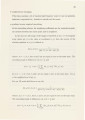
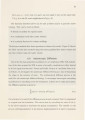
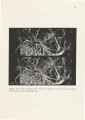
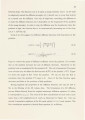
Show 8 of an edge operator is usually the magnitude and orientation of the discontinuity. There are four classes of edge operators: gradient operators, Laplacian operators, zero-crossing operators, and morphologic edge operators. The gradient operators compute a quantity related to the magnitude of the slope of the underlying image gray tone intensity surface of which the observed image pixel values are a noisy discretized sample. The Laplacian operators compute a quantity related to the Laplacian of the underlying image gray tone intensity surface. The zero-crossing operators determine whether or not the digital Laplacian or the estimated second directional derivative has a zero-crossing within the pixel. In some cases, it is necessary to process the data in such a way as to preserve the edges of interest and smooth out the noise. Different approaches have been the application of weighted neighboring averaging[21, 3], using local means and variances to generate the weights for local averaging[20], inverse gradients between the center and neighbors[40], variable weighting coefficients to smooth the image along those directions which have second derivatives smaller than some threshold[13], and a smoothing method which gives each point in the picture the average gray level of the homogeneous neighborhood among five rectangular neighborhoods[36, 29]. Median filtering has also been applied in the area of edge-preserving smoothing in hopes of obtaining better noise cleaning results[30, 17]. Haralick[14] suggested a slope facet model for ideal image data when the data is represented by a piecewise linear polynomial surface. Smoothing base on this image model can preserve data which have slopes. |