| OCR Text |
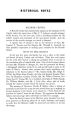
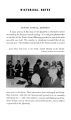
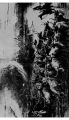
Show First post office in Salt Lake City, at 20 'South Main Street, which in 1849, would have been almost in the center of the city. UTAH STATE HISTORICAL SOCIETY PHOTOGRAPH UTAH'S FIRST POST OFFICE AND POSTMASTER By Harold Schindler* To the Utah territorial cover collector, one of the puzzles in the area's history surrounds the establishment of the first post office in Salt Lake City and its first postmaster. Little has been written regarding this important facet of pioneer progress and accounts often are contradictory. These, however, would appear to be the facts. The city's first postmaster was Joseph Leland Heywood, thirty-four years old at the time of appointment, a convert to the Church of Jesus Christ of Latter-day Saints, and defender of die church during uprisings against the Mormons in Nauvoo, Illinois, prior to the exodus westward. Mr. Heywood was officially named postmaster by the federal government January 18, 1849. Evidence indicates he probably believed he was postmaster of a California post office before Utah gained territorial status. The first post office in Great Salt Lake City was officially established January 18, 1849, but apparently did not exist as a physical structure or begin operation until March 1, 1849. When a post office building was constructed, it was located at 20 South Main Street, which, in 1849, would have been very nearly in the center of the settlement. * Mr. Schindler is night city editor for the Salt Lake Tribune. This article is based on one which appeared in the Western Express, Research Journal of Early Western Mails, XI (October, 1961), and is reprinted with the editor's permission. 348 UTAH HISTORICAL QUARTERLY To substantiate these statements, we must look to church and postal records and issues of Western Express, A Research Journal of Early Western Mails.1 That Joseph L. Heywood was the first officially recognized postmaster of the city is a well-documented record. Shadrack Roundy, a Mormon pioneer, was "unofficial" postmaster named by the first settlers who arrived in the barren Salt Lake Valley in 1847. No records have been found which would show he ever handled mail for the citizenry, however. Heywood, whose last name is misspelled "Hayward" in California postal records, wrote of himself, "We made the journey from Nauvoo to Great Salt Lake valley with ox-teams, arriving Oct. 19, 1848. I was appointed (by the government in Washington, D.C.) postmaster of Salt Lake City in the spring of 1849 " 2 In the archives of the Church of Jesus Christ of Latter-day Saints in Salt Lake City is its "Journal History," a compilation of transcripts from original documents of the church. Under the date February 28, 1849, is written, This winter the Federal Government established a post office at Great Salt Lake City, and appointed Joseph L. Heywood, postmaster, and also instituted a bi-monthly mail between Kanesville and Great Salt Lake City. Al-mon W. Babbitt engaged to carry the mail at his own expense and charges for the net proceeds. This statement would tend to substantiate California "Records of Appointment of Postmasters" 3 which show Heywood was named January 18, 1849. It seems unlikely the "Journal History" intended "this winter" to mean late 1848.* From the same journal Almon W. Babbitt's account of a trip carrying mail from "die States" (Kanesville, Iowa) to Great Salt Lake City shows he left Kanesville on his return journey May 25, 1849, indicating the Utah post office was in operation when he made the first leg of the journey from Great Salt Lake City to Kanesville even though regular mail service had not yet extended to the Mormon capital.5 Since Babbitt's traveling parties during these trips were 1 This magazine is published quarterly in San Francisco, California, by the Western Cover Society. 2 Andrew Jenson, quoting Joseph L. Heywood, in Latter-day Saint Biographical Encyclopedia (Salt Lake City, 1901), I, 647. 3 Western Express, X (January, 1960), 19. 1 Hosea Stout in his journals under the date of July 1, 1849, records diat Joseph L. Heywood had been appointed postmaster. Stout did not state die date when this appointment became effective. 0 Andrew Love Neff, History of Utah, 1847 to 1869, ed., Leland Hargrave Creer (Salt Lake City, 1940), 322. UTAH'S FIRST POST OFFICE 349 Joseph Leland Heywood, first postmaster of Salt Lake City. UTAH STATE HISTORICAL SOCIETY PHOTOGRAPH quite large for so singular a purpose ("... a guard of five men, twelve horses and a light carriage... ."),6 it would seem reasonable that one trip between points would have taken him some sixty days. This would place his date of departure from Great Salt Lake City about March, or hard on the heels of the establishment of the city's post office. That Babbit planned to maintain a regular bi-monthly schedule is found in the church's "Journal History" for March 1, 1849, which relates "mail is expected six times a year from Kanesville." It continues, "the Saints" could now expect mail from throughout the states and even Europe if routed "via Kanesville." Further proof that the post office was in actual operation by March 1, is found in the writings of two authorities on Utah. Andrew Jenson, assistant church historian and one of the church's most prolific docu-mentarians, writes, "March, 1849, a post office was established in GSL [Great Salt Lake] with Joseph L. Heywood as postmaster." 7 Noble Warrum, in Volume I of his four-volume work on Utah, states flatly, "The Salt Lake City Post Office was established March 1, 1849, with Joseph L. Heywood as postmaster." 8 Mr. Warrum, in an afterthought, added, "Mr. Heywood's labors were evidently not very arduous, as the mails arrived only occasionally." A photograph of the first post office building in Salt Lake City from the files of the Utah State Historical Society shows, standing in the doorway, resplendent in top hat and dress coat, a man who bears striking 5 "Journal History," October 1, 1849. 7 Andrew Jenson, Church Chronology: or, A Record of Important Events Pertaining to the History of the Church of Jesus Christ of Latter-day Saints (2nd ed., Salt Lake City, 1914), 37. * Noble Warrum, ed., Utah Since Statehood, Historical and Biographical (Chicago and Salt Lake City, 1919), I, 575. 350 UTAH HISTORICAL QUARTERLY resemblance to Joseph L. Heywood. This would place construction of the first building between January 18, 1849, and January 1, 1851, when Willard Richards took over duties as postmaster. Since the building is of plain frame construction, it could easily have been erected by March 1, if work began in late January or early February. To further substantiate this contention, a slender volume titled Salt Lake City Illustrated notes, "The first post office opened in the city in March, 1849." 9 According to a letter by Walter N. Frickstad in Western Express, Heywood's appointment is listed in "Records of Appointment of Post- Masters'' under a page headed "California Territory." Another line shows "[changed to] Salt Lake City, Utah. T. 9 Aug. '50."10 The date, "9 Aug. '50," apparently is an error since Congress did not approve the act providing for the territory of Utah until September 9,1850. That Heywood's appointment is recorded in the California record is significant. It would show that Heywood was considered a California postmaster, and that Heywood himself might have believed this to be true. If these assumptions, based on the evidence so far discussed, are true, then Salt Lake City's post office was the second in the West open for business - after the one in Monterey, California, and before the office in San Francisco.11 A treaty with Mexico and Heywood's participation in Utah politics (church trustee, surveyor of highways, U.S. marshal) offer strong foundation to a theory aired by Nyal Anderson in Part II of his "Territorial Mails of Utah," 12 that Salt Lake City's postmaster in 1849 believed his office was in California and as a result cancelled outgoing mail correspondingly. By the Treaty of Guadalupe Hidalgo, land known as Upper California, including what is now Utah, was ceded to the United States February 2, 1848. Coupling this information with an account written by Heywood, "I also visited Washington, D.C., and assisted [Dr.] John M. Bernhisel in obtaining a territorial government for Utah,"13 we can form the conclusion that Heywood obviously enjoyed the confidences of Utah political masterminds. He knew no recognized government existed either in Great Salt Lake City or in the area known as "Deseret." Because of the Treaty of Guadalupe Hidalgo, he, and others, may have ' Salt Lake City Illustrated (Salt Lake City, 1887), 2. 10 Western Express, X (January, 1960), 19. " Ibid. '"Ibid., VI (October, 1956), 5-8. 13 Jenson, Biographical Encyclopedia, I, 647. UTAH'S FIRST POST OFFICE 351 assumed Deseret was part and parcel of California, even though no official government existed in the newly ceded land. This then would help explain letters bearing manuscript "Salt Lake, Cal." cancellations dated early in 1849." Heywood's career as a postmaster came to a close shortly after Utah succeeded in becoming a territory. On September 20, 1850, he was named United States marshal by President Millard Fillmore and reappointed by President Franklin Pierce. He first took office January 1, 1851. It was on that date that Willard Richards assumed the position of postmaster. Heywood continued in the capacity of U.S. marshal until his unexpected death on March 11,1854. In summary it can be said Heywood's appointment came January 18, 1849, rather than March 1, 1849, and that by March 1, a post office was open and handling mail. It appears, too, that a building had been constructed to house the post office and that by March 1, a scheduled mail route between Great Salt Lake City and Kanesville, Iowa, had been placed into operation with Almon W. Babbitt as the first carrier. This superceded the first regular mail serviced by the federal government by a year,15 and made the Great Salt Lake City post office the second such operation in the West. Subsequent to Heywood's appointment and prior to approval of the act making Utah a territory, mail leaving Great Salt Lake was postmarked with a California cancellation. Finally, Heywood was carried on federal records as a California postmaster until Utah became a territory. As a result, Willard Richards is listed on federal postal records under Utah as Great Salt Lake City's first postmaster.16 'Anderson, "Territorial Mails of Utah," Western Express, VI (October, 1956), 5-8. ' Neff, History of Utah, 322. ' Western Express, IX (October, 1959). |