| OCR Text |
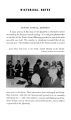
Show This is the first faculty of the Agricultural College of Utah, 1890. Right to left, standing: E. S. Richman, J. M. Sholl, Abbie L. Marlatt, Mrs. C. I. Goodwin, H. L. Everett, A. A. Mills. Sitting: W. P. Cutter, President f. W. Sanborn, J. T. Caine, Jr. College in the early nineties. Structure on the right was the first unit of Old Main. COUHTKSY UTAH STATU UNIVERSITY DEMOCRACY ENROLLS IN COLLEGE By Carlton F. Culmsee* Although America smiles proudly upon her equal brood as they celebrate the centennial of the Morrill Act, she may be conscious of some ironies as well. The signer of the act, Abraham Lincoln, for example, is revered with Ghandi in many a far-off land as a saint "With charity for all, with malice toward none"; yet he felt compelled to weld the Union with blood in a wasting civil struggle which has left an aftermath of divisiveness and bitterness. And circumstances have teamed with adverse propaganda to persuade millions abroad - and here - that we are smug conservatives, guarding the status quo in defiance of appeals for socio-political justice; that we sit fatly upon the upwelling of the common man whenever we can. Yet, as Louis Fischer has declared, we Americans are the genuine revolutionaries. During the Civil War, President Lincoln signed laws leading to bloodless revolutions of profound and permanent effect - which, sadly enough, few persons abroad seem to know about and many here do not esteem for what they are. * Dr. Culmsee is dean of the College of Humanities and Arts, professor of American Civilization, and chairman of the Utah observance, National Land-Grant Centennial. 200 UTAH HISTORICAL QUARTERLY For more than a year now the presses of book and magazine publishers have been pouring out floods of material, excellent through mediocre to poor, about campaigns and figures of the Civil War. Yet the sober, solid revolutions growing out of the Morrill or Land-Grant Act receive little attention. Small wonder that the Land-Grant system leaders and publicists sound a bit strident, seem to strain for effect when they do catch someone's ear. One further and spacious irony: by its very title the Land-Grant Act is for many linked with wild frontier lands and with farming of the rail fence era. Actually, the Land-Grant universities greatly accelerated America's epochal progress to a society predominantly urban and industrial - even in what is termed the "rural areas." By contributing significantly to making research a large fruitful function of a university, by helping raise America to world leadership in farm production per man so that few persons were needed in the fields, and by speeding industrial growth through scientific and technological discoveries, the Land-Grant universities and their experiment stations have done much to cause America to leave behind an epoch with which they are historically associated. One can, indeed, credit them with being the major influence in bringing the chapters of rural America's history to a close. For, as rural sociologist and author Lowry Nelson has commented, there is, strictly speaking, no longer a rural America; the nation is urban-industrial; agriculture has become a mechanized industry and its people far removed from the peasantry of a bygone time; and the Land-Grant institutions have led the revolution that brought the change. Admittedly, all the Land-Grant institutions, many of them fused with state universities, received federal endowments from the public domain, even those in the East, which gained land scrip entitling them to tracts on the frontier. Each state was to receive a grant of 30,000 acres for each senator and each representative, the proceeds from the sale of these lands to be invested and the interest to be expended toward the support of at least one institution of higher learning of a distinctive type. In the years following 1862, a total of 17,430,000 acres of public lands were used to help establish the network of Land-Grant colleges. The link with "land appropriations" was, however, less of a formative influence than were the novel educational policies laid down in the act DEMOCRACY ENROLLS IN COLLEGE 201 to guide the planning of these colleges. The act provided that in a Land-Grant college, . . . the leading object shall be, without excluding other scientific and classical subjects, and including military tactics, to teach such branches of learning as are related to agriculture and the mechanics arts, in such manner as the Legislatures of the States may . . . prescribe, in order to promote the liberal and practical education of the industrial classes in the several pursuits and professions of life. Thus the teaching of subjects related to the improvement of the rural way of life and to technological progress was to be a "leading object." This provision appealed strongly to statesmen who, looking at the partly developed Middle West and the largely undeveloped West, recalled the prophecy of Thomas Jefferson that America would be an agrarian democracy "to the thousandth and one generation," but also to those of Hamilton's persuasion who saw our future in industry and commerce. Let us then refer to the law as the Morrill Act so that we can get this sputtering centennial missile off the ground or rather the land. The frontier and the good earth have admittedly exerted pervasive influences upon American character and institutions; admittedly, agriculture is the basic industry, for it and its associated activities employ forty per cent of America's workers, and it is unquestionably essential to our continuing national health, literal and figurative, and to our foreign aid. But the Morrill Act resulted in such far-reaching and ever-widening changes that we cannot permit the concept of the system founded under it to remain narrow, limited, and perchance outmoded. Other events of 1862 tended to accentuate the "land" or good earth motif. The Homestead Act of 1862 offered Americans their first truly free land. In that connection we are this year celebrating also the sesqui-centennial of the General Land Office and its duties with the public domain. Legislation to encourage the construction of transcontinental railroads was passed in '62, the aid coming largely through grants of frontier lands checkerboarded along the rights of way. The establishment of the U.S. Department of Agriculture in '62, with important research activities growing out of it, helped both to magnify and dignify the role of the farmer and, paradoxically, to reduce his numbers until he numbers less than nine per cent of the working force in America. The USDA is, of course, closely linked with the Land-Grant universities. Small wonder that to many the Land-Grant movement is 202 UTAH HISTORICAL QUARTERLY bound to a chapter of history left behind and to an occupation overshadowed numerically by the armies of toilers in other industry and commerce. But it must be emphasized that the granting of federal land was not an innovation or a distinctive feature.1 Laws passed as early as 1785 and 1787, when die Republic was enduring birth pangs, before its bones had begun to harden in the Constitution, provided land-grants for education, some even for private institutions! Such was the esteem which some founding fathers of our experiment in government had for education on all levels. Even in the eighteenth century the importance of the land-grants lies, obviously, not in the device employed in giving aid, but in the recognition of the national need for education expressed in virtually the only concrete way that an impecunious, land-poor country could speak. And there are grave public relation hazards for the Land-Grant institutions as we seek to tell our message during the centennial, for by making the Land-Grant Act the wrong kind of symbol we can achieve the opposite of the public understanding we seek. There is sufficient confusion about the act already. Relevant is the letter Russell I. Thackrey, executive secretary of the American Association of Land- Grant Colleges and State Universities, received from an inmate of the Illinois State Prison. Confiding his desire to embark on farming, when he emerged a free man, the prisoner requested a list of "colleges that give land-grants." Obviously, the land in Land-Grant is not important as parcels of unkempt wilderness, or as potential farm soil, or even as bases for endowments which have been small compared with the state and federal appropriations made in money since 1862. One must not scorn the worth of the original grants as moral and material aids to the founding of colleges. More important in history, however, are the symbolic value of this assistance as evidencing the vision of the founders of the Republic itself, the significance they attached to education in a democracy, and the specific philosophy of higher learning expressed in the law. Not in the mere fact of the granting of land, but in the conception of the college, its curriculum and its responsibilities, lies the seed of the revolution which came through the Land-Grant universities and spread to all institutions of higher education in the nation. 'Representative Justin Smith Morrill reported in 1857 in his first speech in behalf of the famous act, that already 67,736,572 acres had been donated to states and territories for schools and universities. DEMOCRACY ENROLLS IN COLLEGE 203 One endeavoring to limn the broader concept of the movement must, however, be wary. Unquestionably the Land-Grant university system embodied striking departures from the patterns of the traditional colleges. Quite evidently these departures have influenced or altered most higher education in America and have affected educational philosophy abroad. But there can be questions as to how many innovations we can credit to die Land-Grant pioneers, J. S. Morrill, J. B. Turner, T. G. Clemson, and later men, and how many features of their program were reflections of broader trends. On the other hand, the act was no mere milestone on the route of a general march. In the America of 1862, one young person in 1,500 went to college. In proportion to population, college enrollment had actually been declining in mid-century, an indication that existing higher education needed revision to afford more opportunity to youth or to become more attractive by satisfying new needs. One can venture, for example, to say that, in the first half of the nineteenth century, the so-called "classics" formed the core of the conventional college curriculum, and that these subjects although capable of liberalizing die mind, afforded a narrow range of courses. Recall that the Land-Grant universities were enjoined by law not to exclude the classical and scientific subjects but were charged with teaching courses for the benefit of persons in agriculture and the mechanic arts. They were to provide higher education for "the industrial classes in the several pursuits and professions of life." Thus, although the new vision meant a swift expansion along new frontiers in curricula, it meant much more than a wider choice of subjects. We sometimes speak of the earlier universities as training men for the ancient and honorable professions of medicine, law, and the church. The original custom, in Justin Smith Morrill sponsored the Land-Grant College Bill, which was signed by President Abraham Lincoln in 1862, more than five years after the struggle for its adoption began. COURTESY CARLTON F. CULMSEE 204 UTAH HISTORICAL QUARTERLY actuality, was to provide foundational liberal arts education and then permit the student to seek his own opportunities for professional or occupational training. He would, for example, go forth from the academic cloisters to read law in the office of some successful lawyer. None of the old-time colleges offered what we now view as specific professional education such as the modern medical or dental college provides. The Land-Grant colleges began to give actual professional and vocational training on their campuses, in the old-line professions and in an increasing number of other occupations. As Dr. John A. Widtsoe, an early president of Utah State University, phrased it, For the first time in the history of the world the common man [to which class we all belong] was given access to the great heritage of learning of the ages, and for the first time an attempt was made to lift the common, necessary pursuits of life to a professional dignity. A variety of new vocations, necessitated by a scientific, technological, and commercial society of rapidly growing complexity, were provided for in the expanding curricula of the new order of institutions of higher education. One can safely go, I think, another step to claim at least a large share of credit for the Land-Grant institutions in helping make scientific research a fruitful function of any university. When the teachers of the new courses stood before their classes they found that the students posed more questions than the professors could answer. There simply was not enough fact to put flesh on the bones of principle. In some cases the principles themselves had not been determined or they required restatement. As consultants, also, the faculty members felt embarrassed and frustrated when unable to give baffled adults reliable solutions to problems of field, factory, or mine. The promise of wide public service, implied in the founding of institutions for "practical" as well as liberal education with federal as well as state aid, made persistent, systematic research imperative. There had been much scholarly activity in the liberal arts for centuries, with individuals reading, reflecting, and writing. There had been more or less solitary philosophers such as Benjamin Franklin spending private means for delving into studies of natural phenomena. But now with federal and state support came laboratory and field studies on a broadening scale involving co-operative effort among groups of researchers. The Land- Grant concept of investigation led to partnership on a wide basis, for the system was national; there came to be at least one Land-Grant in- DEMOCRACY ENROLLS IN COLLEGE 205 stitution with its experiment station in each state, and these colonies of scholars tended to join forces in a country-wide community of seekers to advance the general welfare. Furthermore, the state scientists cooperated with "federal collaborators" on their own campuses or more remotely with researchers on USDA experiment stations. The new system, moreover, went beyond adding more colleges to accommodate more young people, offering training in a rapidly lengthening list of occupations and conducting research to advance human understanding and welfare. These developments represented democratization of sorts. But from the beginning, sturdy efforts were made to hold tuition and other costs down so that the "sons and daughters of toil" could embrace the new opportunities. From Morrill's time to ours, leaders of the Land-Grant system have resisted attempts to place die major burden of college education directly on parents and students. When persons seeking to limit the tax burden have protested that the student in a Land-Grant institution shoulders only a fraction of the cost of his education, the Land-Grant advocates have often fought back militantly, as President Hanna of Michigan State University did when he denounced the effort to' make the student bear the greater part or all of the cost as "heresy in its most virulent form." This broad plan of subsidization went further than Thomas Jefferson had envisioned in his proposal to seek out the "natural aristocrats" in all stations of life and educate them at government expense for democratic statecraft; but it was in harmony with that vision. Furthermore, the Land-Grant pioneers were thinking beyond making men economically competent and able to help the country develop its natural resources; they were hoping for an informed citizenry and for highly educated leaders that a democracy appeared to require in scores of responsible activities in addition to those of actual government. As one of these, they sought to provide a leadership trained for war as well as peace, in case democracy was threatened. The offering of military training as a distinctive feature of the Land-Grant university program was no doubt attractive to a Congress that had just seen with alarm the shortage of capable officers for the Union Army. Desiring to emancipate men from ignorance as well as slavery, Lincoln would no doubt have approved the Morrill Act anyway, but it is interesting to note that President James Buchanan had vetoed the act three years before. Then, with the military training provision added, Lincoln signed the bill on the same day he signed the historic law to draft hordes of men, when disastrous de- 206 UTAH HISTORICAL QUARTERLY feats and the prospects of a long, wasting war made him see the acute need for able officers. Thus the Morrill Act encouraged the founding of institutions with a radically different approach to higher education than had been followed in the planning of either the trade schools or the old-line liberal arts colleges. As they evolved, the Morrill Act institutions reflected die quickening tempo and altering character of American life, not only the efforts to develop die resources of soil, range, and forest, but the mine and oil field and hydroelectric power site, and the city as a hive of factories and commercial activity as well as of homes. UTAH'S MORRILL ACT INSTITUTION We could view the founding of Utah's Morrill Act institution simply as an Intermountain flowering of the new philosophy of higher education which had already caused several eastern and middlewestern universities to be created and others to be remolded. In a sense this would be accurate. But a realistic analysis compels us to see that this founding was accomplished by men of diverse desires. Needs for persons trained to perform scientific and technical tasks in an exacting environment was no doubt a central and sustained motivation. European models of technical and trade schools exerted some influence. Anthon H. Lund, for example, had admired the Danish agricultural high schools while he was serving on a mission for the Church of Jesus Christ of Latter-day Saints. But the stimulus afforded by the Morrill Act of 1862 and the Hatch Act of 1887, the latter providing $15,000 to a state or territory for establishment of an agricultural experiment station, placed incentives of federal lands and funds in the hands of educational pioneers to help them persuade state legislators to act. Thus, weaponed with federal pledges of aid, Representative Lund introduced in the Utah Territorial House a bill "to establish an agricultural college and experiment station." Because Provo had received the State Mental Hospital and Salt Lake City had its University of Utah and the Capitol, Weber and Cache counties were conceded high-priority claims upon a reform school and the college-experiment station opportunities. The representatives of the two counties agreed to support Weber's request for the industrial school and Cache's for the college. (Some reflect wryly that the $75,000 proposed for the industrial school was cogent in obtaining Weber's acquiescence because the institution of higher learning carried a requested appropriation only one-third as DEMOCRACY ENROLLS IN COLLEGE 207 Anthon H. Lund sponsored the bill in the Utah Territorial Legislature to establish an agricultural college. COURTESY A. WILLIAM LUND much.) At any rate the bill passed both houses on March 8, 1888, and was signed the same day by Governor Caleb W. West. The tracts of land granted to to the college by the federal government totalled 200,000 acres. They were distributed widely throughout the uninhabited parts of Utah.- Staff members of Utah Agricultural Experiment Station remind us that the "station" commenced activities before the college did. This fact can be seen as a reflection of the intensifying New World demand for scientific research, especially that attached to universities and colleges, and as the first step toward both the fulfillment of the service obligation of Utah's Land-Grant college and the provision of a solid pillar to support the School of Graduate Studies to come. The station and the college are two arms, two hands which should, and usually do, join to advance the purpose of the total institution as it unfolds its destiny. The institution, known first as the Agricultural College of Utah, was dedicated September 4, 1890, with Jeremiah Wilson Sanborn as president. Twenty-two students registered on the opening day to attend classes in what is now the south wing of the building known as Old Main. Enrollment grew rapidly. Two frequently associated factors contributed, however, toward hampering development of the college. One was the tendency of some legislators to interpret the objectives of a Land-Grant institution more in terms of a trade school or technical institute than those of a balanced institution of higher learning. The other was sporadic efforts of some interests to have the college at Logan consolidated with the sister institution in Salt Lake City. "Approximately 31,500 acres remain unsold. The income from the endowment resulting from sales and from the unsold portions is somewhat less than $30,000 a year, which is an insignificant fraction of the university budget. The largest tract remaining unsold includes more than 12,000 acres near Mount Peale in southeastern Utah. 208 UTAH HISTORICAL QUARTERLY The consolidation issue was hotly discussed several times but was largely settled between 1907 and 1927, during the administration of President John A. Widtsoe and the first decade under President Elmer George Peterson. Speeches of the early presidents indicate a prolonged struggle to harmonize the viewpoints of those who placed "practical" or occupational goals uppermost and those who believed that mental cultivation through liberal arts and sciences was practical also. They strove to illustrate the fact that liberal education, the quest of intellectual strength of a deep and broad kind, not only lent dignity to many necessary occupations but also made persons practicing those occupations more successful as breadwinners and as democratic citizens. Dr. Widtsoe expressed one approach to reconciliation when he wrote, A main purpose of the institutions to which the Agricultural College belongs [Land-Grant], is to throw the light of intelligence into the pursuits of the majority of mankind, and thus to make, as far as possible, all necessary pursuits equally valuable, in giving daily mental and physical joy.3 In 1926 and 1927 the college made definite strides toward realizing the destiny visualized by the authors of the Morrill Act. The Peters Act approved by the 1927 Utah State Legislature has been described by Joel E. Ricks,4 historian of the college's first half-century, as the Magna Charta of the new chapter in institutional history. In interpreting the intent of the law, Senator John W. Peters, of Box Elder County, said that the "various arts" referred to meant "English, History, Languages, etc.," and the sciences included "Chemistry, Physics, Mathematics, etc." These liberal arts and sciences were, he emphasized, not to be regarded as merely ancillary or supplementary to agricultural sciences, engineering, and other subjects which were distinctive in the college curricula, but of "equal importance" and truly major subjects. The institution has continued to adapt to satisfy continuing and evolving needs of rural and urban people until bachelor's degrees are earned in more than sixty subjects, offered in the eight academic colleges entitled Agriculture; Business and Social Science; Education; Engineering and Technology; Family Life; Forest, Range and Wildlife Management; Humanities and Arts; and Science. The School of Grad-a The Biennial Report of the Board of Trustees of the Agricultural College of Utah For the Years 1907, 1908, 5. 4 Joel Edward Ricks, The Utah State Agricultural College, A History of Fifty Years, 1888-1938 (Salt Lake City, 1938). This book was published as part of the observance of the semi-centennial of Utah State University, then known as Utah State Agricultural College. DEMOCRACY ENROLLS IN COLLEGE 209 uate Studies affords opportunities for students to earn the master's and the doctor of philosophy degrees in a broad range of subjects. The institution embraces also Utah Agricultural Experiment Station, the Engineering Experiment Station, Utah Scientific Research Foundation, and Utah Co-operative Extension Service. The College of Southern Utah, Cedar City, and Snow College, Ephraim, are branches of the university. Military and air sciences are of much importance. Although die institution is, as a Land-Grant university, obligated to offer military training, this is no longer compulsory for the student. The college had developed into an institution of higher learning with broadly diversified curricula before the state legislature of 1957 changed the name to Utah State University of Agriculture and Applied Science to indicate the universality of course offerings as well as some curricular elements long distinctive of the institution. This adoption of die title university, in harmony with the philosophy of higher education expressed in the Morrill Act, the expanded nature of the institution, and the practice among sister Land-Grant institutions throughout the nation, was accomplished under the leadership of President Daryl Chase. The faculty has likewise been augmented to satisfy needs of a more complex society. An extensive construction program, including not only classroom and laboratory buildings but long-needed dormitories, has been under way for several years. From the score and two young people who registered that first day in 1890, the student body has grown until the cumulative enrollment exceeds six thousand. This is exclusive of thousands of students taking extension classwork and home study courses for credit, and tens of thousands more, young and old, who benefit from state-wide noncredit activities of the Co-operative Extension Service. The university has proudly told of statistical surveys made some years ago showing that, in proportion to enrollment, Utah State has ranked among the three leading Land-Grant universities in the education of men who later became distinguished scientists.5 This is especially notable considered in relation to the fact that although the Land- Grant universities enroll less than twenty per cent of the nation's college students, more than half of living American Nobel Prize winners have earned degrees from institutions in this system. s The story of Utah State University's development, with summaries of significant achievements in research and other activities, will be told in the institutional history which Leonard J. Arrington is writing. The book will be published as part of the 1963 observance of the seventy-fifth anniversary of the founding of the university. "^J. Classroom scenes of the past at Utah State University in Cache Valley. The land-grant colleges placed great emphasis on professional or specialized education, seeking to meet the needs of a people fust learning how to apply the discoveries of science and advancing technology to daily life. Therefore the values in traditional, classical education were to be combined with a curriculum which was better suited to meet the needs of a changing society. COURTESY UTAH STATE UNIVERSITY "vr.uA # 1% m r 1 i IE ial ; 1 • V * '•> • ?*» •* w , T ., • * M * . HpB»»;~7^V" - • •- #1 212 UTAH HISTORICAL QUARTERLY The Land-Grant universities have become the country's leading single source of trained manpower not only in applied sciences and engineering but in many professions in basic sciences, humanities, and military science. As Russell I. Thackrey has summarized, the Land- Grant institutions, although enrolling approximately eighteen per cent of the college students in this country, . . . award 40 per cent of all doctoral degrees in the United States, including 54 per cent in the health professions; 66 per cent in home economics; 38 per cent in mathematics; 42 per cent in the physical sciences. In case you are wondering about their record in the social sciences and humanities, I would note that it is at least consistent with their segment of U.S. educational enrollment. Thus about 20 per cent of all advanced degrees in the fine and applied arts; 35 per cent in geography; nearly 30 per cent in the social sciences; 38 per cent in psychology; 22 per cent in English and journalism; 20 per cent in foreign languages and literature come from Land-Grant universities.6 Thousands of discoveries in fundamental science and other areas as well as in applied sciences have resulted from the immensely vigorous and productive research programs of these institutions. The Land-Grant Colleges and State Universities National Centennial Commission lists the following examples: Discovery of streptomycin for treatment and control of tuberculosis. Development of anticoagulants, dicumarol, for use against blood clots; open heart surgery, and new methods of repairing defects of heart; and use of radio isotopes for medical therapy and diagnosis. Development of the television tube, the transistor, the first cyclotron, and production of pure uranium. Research in space, satellite tracking, rockets and rocket fuels, and special foods for spacemen. Basic work on fatigue of metals, isolation of helium and separation of helium from natural gas. Contol of botulism for canning industry, process for making acetylene gas from textile waste, findings responsible for beginnings and growth of ceramics, wood pulp, and soybean processing industries. Development of hybrid corn, disease resistant bread wheats, controlled storage of fruits, and butterfat test for milk. These varied achievements would appear to justify the statement of Dr. James B. Conant, when as president of Harvard University he "Convocation Address, University of Delaware, Newark, September 18, 1961, by Russell I. Thackrey, executive secretary-treasurer, American Association of Land-Grant Colleges and State Universities (mimeograph, Land-Grant Colleges and State Universities National Centennial Commission). DEMOCRACY ENROLLS IN COLLEGE 213 characterized the Morrill Act as the one great contribution to political thinking in America after 1776. Recently, President John F. Kennedy praised the Land-Grant organization as "the most ambitious and fruitful system of higher education in the history of the world." If this is true, the principal reasons may be as follows: first, the vision and the energy of the founding fathers, principally Jonathan B. Turner and Justin Smith Morrill, who formulated vague gropings of the American spirit into' an educational philosophy capable of adaptation to meet the requirements of a democratic society swiftly changing and growing in complexity; second, the patterns of co-operation developed within institutions, then regionally and nationally, to give America the benefit of a national network of education and research. Here were evolved communities of scholars pooling their resources of research and thought, combining to> a high degree the potencies of voluntary co-operation and individual creative-ness. This balance of liberal with practical education and of individuality with willing association in a nation-wide network for human welfare has affected all institutions of higher learning in America and many abroad. |