| OCR Text |
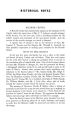
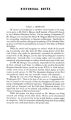
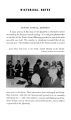
Show rmon leaders (1866). "Because they I offices . . . classified as ecclesiastical, tical and economic, . . . these leaders e able to stamp upon all . . . of early h the special features of their religion." Harper's Weekly, 1866 EARLY MORMON LOYALTY AND THE LEADERSHIP OF BRIGHAM YOUNG ByPhilip A.M.Taylor* The disasters which assailed the Mormon pioneers in Utah are well known. Grasshoppers ate the crops. Drought caused them to wither. Severe winters killed cattle. Floods washed out primitive dams of earth and timber.1 But apart from such crises the pioneers faced a life of continuous effort and considerable hardship. A typical journey from the Middle West to Utah included severe storms, stampedes of cattle, snakebites and sickness among cattle and horses, frequent breakdowns of wagons, accidents from firearms or from being run over by wagon wheels, childbirths, illnesses, and deaths. It always involved the toil of walking ten, fifteen, or twenty miles a day, herding cattle, hunting, ferrying or fording rivers, and keeping guard at night - all in the heat * Dr. Taylor is resident tutor for Dudley and Southwest Staffordshire, University of Birmingham Department of Extra-mural Studies, Birmingham, England. The autlior has contributed other articles to the Quarterly on Mormon migration, which was the study for his Ph.D. dissertation at the University of Cambridge, 1952. 1 Heber C. Kimball's letters on food shortage are in The Latter-day Saints' Millennial Star, XVIII (Liverpool, 1856), 395-96, 476-77. See also reports of the Scandinavians at Hyrum in William Mulder, Homeward to Zion: The Mormon Migration from Scandinavia (Minneapolis, 1957), 216. Difficulties with dams are described in Leonard J. Arrington, "Taming the Turbulent Sevier," Western Humanities Review, V (Autumn, 1951), esp. 395-99 404-5 • and in James H. McClintock, Mormon Settlement in Arizona: A Record of Peaceful Conquest of the Desert (Phoenix, 1921), 141-48, 162, 182-83, 191. 104 UTAH HISTORICAL QUARTERLY and dust of summer.2 Within Utah, the founding of settlements involved massive labor in constructing irrigation canals. It involved living, at first in wagons or tents, or in log cabins with roofs of poles, straw and dirt, with no real doors or windows." Even when communities were more firmly established, the pioneers had to labor hard as farmers in arid country. They ploughed, sowed, harvested, and threshed. They planted fruit trees and laid out gardens. They cut and stacked hay. They hauled loads of fodder, grain, manure, stone, and timber. They built their own houses, walls, bake-ovens, and stables. They did most of their own carpentry, glazing, plastering, and painting. They shod horses. They repaired gates, tools, and wagons. They traveled to other settlements for millstones, ironwork, blasting-powder, and odier articles not produced locally. They took their own produce to other communities for barter. They co-operated in a variety of public projects, including the raising of Church Teams to aid emigrants from Europe.4 They were expected, throughout, to attend conscientiously to religious and social duties. A Mormon at Salt Lake City in 1848 wrote in his diary: "there seemes to be more labor laid out for the summar than can be done in four years."5 Not all Mormons proved capable of living and serving loyally in such conditions. As early as 1848, the companies led by Brigham Young on his final journey to Utah met two families returning to the settled United States. California attracted others, including a few of the pioneers of 1847. The Lyman-Rich company of 1851, bound for California, was far more numerous than the church authorities had planned. Not all obeyed the recall from San Bernardino in 1857, and some who did drifted back later, like the group which passed John D. Lee's home in 1860. During the 1860's, small bodies leaving Utah included recendy arrived Scandinavians, while the United States Army helped a larger body of discontented people to leave.1"' There were movements of reli- 2 The items are taken from John D. Lee's journal of 1848, edited by Robert G. Cleland and Juanita Brooks as A Mormon Chronicle: The Diaries of John D. Lee, 1848-1876 (2 vols., San Marino, 1955), I, 30-79. See also my article, "Emigrants' Problems in Crossing the West," University of Birmingham Historical Journal, V (No. 1, 1955), 83-102. 3 Joel E. Ricks and Everett L. Cooley, eds., The History of a Valley: Cache Valley, Utah-Idaho (Logan, 1956), 149-50 describes the Hyrum canal, 47 describes Charles W. Nibley's first home in Cache Valley. i A Mormon Chronicle, I, 230-89 describes Lee's farming operations for 1860. 5 "Diary of Lorenzo Dow Young," Utah Historical Quarterly, XIV (1946), 165. " A Mormon Chronicle, I, 52-54, 274. Andrew Jenson, Latter-day Saints Biographical Encyclopedia (4 vols., Salt Lake City, 1900-1936), IV, 695, 703, 721. George William and Helen Pruitt Beattie, Heritage of the Valley: San Bernardino's First Century (Pasadena, 1939), 171, 311-13. Hubert H. Bancroft, History of Utah, 1540-1886 (San Francisco, 1890), 320, 645. Mulder, Homeward to Zion, 182-84. MORMON LEADERSHIP AND LOYALTY 105 gious dissent, such as the Morrisites of the 1860's. The Reorganized Church undertook some missionary work in Utah a little later.7 There were examples of unwillingness to perform allotted tasks, as when, in 1867, only a fifth or a quarter of the Muddy River settlers obeyed the first call of the church authorities.8 Some of Brigham Young's own denunciations may be discounted as a preacher's stock-in-trade. But some of his condemnation of fraud in recording tithing, unauthorized borrowing in the name of the church, and repudiation of private debts incurred by elders on missions abroad, was precise enough. Diaries, too, furnish many examples of disputes between communities over timber, disputes between individuals over water, trespasses on property, interruption of meetings, fighting and threats, and disobedience of authority, as when John D. Lee rejected his bishop's choice of topic for a sermon and, taking one of his own, turned the meeting almost into a debate.9 Yet, with these failings and much grumbling, a vast amount of work was done. Great numbers of men and women proved capable of sustained loyalty, even of heroism. Many volunteered to travel to new settlements, accepting without question yet another uprooting. Oliver Huntington sold his property and presented himself at the rendezvous on no firmer basis than a report by friends that his name had been read out at a conference as one chosen to settle southern Utah.10 There were hundreds of volunteers for relief expedidons to meet immigrants and, later, for the Church Teams. Great numbers of men, leaving their families in Utah, went on missions overseas. Behind all such actions, to repeat the point, lay the backbreaking toil of farming in a harsh terrain, of building up primitive industries, of organizing communications. The student who is neither American nor Mormon may well be impressed by the high standard of loyalty and by the effectiveness of leadership which the story of early Utah reveals. Yet questions will arise in his ' O n the Morrisites, see George Bartholomew Arbaugh, Revelation in Mormonism: Its Character and Changing Forms (Chicago, 1932), 183-94. See also Bancroft, History of Utah, 643-44 on the Gladdenites. s "St. George Stake History" (unpublished, Church of Jesus Christ of Latter-day Saints Historian's Library, Salt Lake City), October 15, 1868. See also Brigham Young's remarks about hesitancy in volunteering in Deseret News, October 23, 1861. "journal of Discourses (26 vols., Liverpool, 1854-1886), III, 340-42. Millennial Star, XXII (1860), 755-56; XXXI (1869), 475. A Mormon Chronicle, esp. I, 266-68, 276-77; II, 22-23, 32-34, 80-81, 128-30. Some of the latter evidence may show no more than that Lee was a difficult man to work with. 10 Oliver B. Huntington Journal (typescript, Utah State Historical Society, Salt Lake City), II, 120. See also A Mormon Chronicle, I, 132-33, for Lee's acceptance of the call to Iron County in 1850, his expectation of financial loss outweighed by his loyalty to Brigham Young. •;..'. V'd''.: Immigrant train in Echo Canyon enroute to Salt Lake City in 1867. The poles of the transcontinental telegraph can be observed in the background. UTAH STATE HISTORICAL SOCIETY PHOTOGRAPH mind. How far was this loyalty the simple result of conversion to a new faith ? Did that faith contain within itself principles peculiarly conducive to loyalty and sound leadership? How far did the leaders consciously foster loyalty ? Did they do so by intimidation or by anydiing that could be called propaganda? The pages which follow, presenting evidence most of which comes from familiar printed sources, comprise reflections upon these questions. Any such discussion must begin by noting that Mormon society in early Utah was dominated by adult volunteers. There were thousands of children born into Mormon families during Brigham Young's presidency. But the people who took the initiative, who set die tone of the community, were men and women who had turned from a former religious opinion to a new one presented to them by Mormon missionaries. In Scandinavia, as far as the evidence goes, they were former Lutherans, dissenters from official Lutheranism, or Baptists; in Britain, Methodists and other nonconformists. Because they experienced a conversion under the influence of Mormon doctrine and social ideas, they were oriented towards acceptance of many heavy tasks in the service of their new faith. MORMON LEADERSHIP AND LOYALTY 107 This initial willingness on the part of the converts was reinforced by the nature of the Mormon faith. Mormonism included, indeed, many of the elements of traditional Protestantism. But it included two special features of great significance. First, it laid down the ideal of a perfect society to be built in a precisely defined region of the United States. That society was to be built under the influence of a church which, through Joseph Smith's revelations, had been established in a condition of apostolic purity. It would become the headquarters of Christ's millennial rule. It followed that all tasks, whether preaching the gospel, founding settlements, organizing immigration, or performing the humblest domestic or local duties, gained dignity from the fact that they contributed to the growth of the Kingdom; and that those who performed them were co-operating with God in working out His revealed purposes. In Mormon teaching everyone was engaged in a lifelong "mission," and there was no firm distinction between "secular'' and "spiritual." Brigham Young explained: Anything that pertains to the building up of the Lord's kingdom on earth, whether it be in preaching the Gospel, or building Temples to his name, we have been taught to consider a spiritual work, though it evidently requires the strength of the natural body to perform it.11 Second, the Mormon Church professed to base its teachings on the revelations of an inspired prophet, and claimed that Joseph Smith had restored a priesthood of unique authority. The church viewed itself as authoritative against all other religious groups: thus Brigham Young could say that John Wesley had been as good a man as had ever lived, but that success in building the Kingdom had eluded him because he had lacked the priesthood.12 It was authoritative as against private judgment and any spiritual illumination received by individuals: thus Young could teach that All gifts and endowments given of the Lord to members of His church are not given to control the church; but they are under the control and guidance of the priesthood, and are judged of by it.13 It was authoritative as against conventional ideas of private property: hence the institution of tithing and the experiments with a more completely communitarian economic life. It was authoritative for all mankind in all places: hence world-wide missionary efforts. It was authori- 11 fournal of Discourses, II, 95. "Ibid., VII, 5. 13 Ibid., XI, 136. See also Thomas F. O'Dea, The Mormons (Chicago, 1957), 155-60, 108 UTAH HISTORICAL QUARTERLY tative for all mankind in all ages: hence the ordinances for the dead practiced in the temples. Guided by revelation as interpreted by leaders with authority, faithful Mormons were progressing from their limited mundane status to one which might ultimately approximate to that of gods. But in a sense there was equality between every piece of work done during that progress, thus Brigham Young could preach about the work which Joseph Smith was already doing in the world of spirits. But it was equally characteristic of Mormon thought that, when resistance was encountered to a levy for the construction of the Deseret Telegraph in 1867, the bishop of Moroni could vindicate the authority of the priesthood in these words: "The Lord spoke to Brigham, Brigham to the Bishops, and the Bishops to the people. It had been so with regard to putting up telegraph poles." 14 The Mormon idea was vividly summed up by Brigham Young: I have looked upon the community of Latter-day Saints in vision and beheld them organized as one great family of heaven, each person performing his several duties in his line of industry, working for the good of the whole more than for individual aggrandizement; and in this I have beheld the most beautiful order that the mind of man can contemplate, and the grandest results for the upbuilding of the kingdom of God and the spread of righteousness upon the earth.15 The converts who accepted such teaching, as expressed in the sermons of Brigham Young or lesser authorities, in articles in the Millennial Star, or in letters from friends and relatives in Utah,16 were then subjected, in fact if not by intention, to a double process of sifting. Conversions in overseas missions were numerous, but so were excommunications. In the British Mission in the half year ending December, 1851, there were 3,625 baptisms, to make a total membership of 32,894. But there were 1,583 excommunications. Professor Mulder's systematic figures for the Scandinavian Mission suggest that between a quarter and a "Leonard J. Arrington, "The Deseret Telegraph, A Church-owned Public Utility," Journal of Economic History, XI (Spring, 1951), 127, quoting unpublished records of Moroni Ward for 1867. 10 Journal of Discourses, XII, 153. "'In 1853 John Salkield received from his brother the following: "Dont imagine you have heard the Gospel from a man in a Methodist or Protestant pulpitt this is moon-shine it is not the light of the Gospel no the difference is as great as between black and white the truth is the Devil has a thousand systems upon the face of the earth in order to deceive men and they cannot see which is the best." The letter is in the British Library of Political and Economic Science, London. It was discovered by Dr. Bernard Crick during his preparation, with Miriam Alman, of A Guide to Manuscripts relating to America in Great Britain and Ireland (Oxford, 1961). A transcript of this and all other Mormon letters in the collection, by the present writer, are now in the possession of the Utah State Historical Society. MORMON LEADERSHIP AND LOYALTY 109 third of all converts fell away from the church, and that in some early years more people were excommunicated than emigrated to Utah.17 It is true that the missionaries made efforts to secure repentance and restoration to fellowship on the part of such fallen brethren,18 but those who emigrated from Europe as Mormons were those who had remained faithful or, having fallen, had given some proof of amendment of life. The second stage of sifting cannot be established so accurately, but the evidence is suggestive. Mulder found diat in the 1850's, 2,989 Mormon emigrants left Denmark, but that there were no more than 1,824 persons of Danish birth in Utah at the 1860 census.19 Deaths during the decade have to be considered, but it would seem that desertion on the journey, or shortly after arrival, occurred on an appreciable scale. With this in mind, a rather more elaborate calculation has been made for British Mormons. The church's British emigration during the 1850's numbered 16,356. It is impossible to say with certainty how many died on the way to Utah; nor is it possible to say what the deadi-rate for British-born in Utah, as distinct from other elements in the population, may have been. Supposing that 500 died at sea or crossing the United States, and assuming a death-rate of 20/1,000 per annum (higher than Utah as a whole but lower than Britain), and remembering that account has to be taken of some 1,600 survivors of the British-born already there in 1850, then in 1860 there should have been about 16,100 British-born inhabitants of Utah. The census showed, instead, 9,540. In other words, something like 6,600 are "missing," or some 7,000 if the death-rate is taken as 15/1,000. For the 1860's, on the other hand, the figure is of the order of 500, making allowance, this time, for about 600 British-born persons living in the Mormon districts of Idaho. With the early Utah censuses of questionable accuracy, no perfect validity can be claimed for these figures; though it would be no better to accept Bancroft's or someone else's guesses. But the two figures for missing emigrants correspond, roughly, to figures which can be found elsewhere in the Mormon records: the numbers of persons permitted, or encouraged, to migrate to the eastern United States, find employment, and save money for the final stage of the journey to Utah, in years when the church could advance little financial aid. In the absence of better "Millennial Star, XIV (1852), 15; similarly, XVII (1855), 75, with 1,396 excommunications to 2,317 baptisms in a membership of 29,441. Mulder, Homeward to Zion, 104-6. 1S William Empey Diary 1852-4 (typescript, Utah State Historical Society), 43. Minutes of a special council held at Birmingham, Millennial Star, XVIII (1856), 582-83. 19 Mulder, Homeward to Zion, 182. HO UTAH HISTORICAL QUARTERLY evidence, it may be best to conclude that most of these persons failed to reach Utah.20 For such failure there may have been many solid reasons. But it is perhaps safe to suggest that these people and those cut off from the church in Britain, represented, in Mormon terms, the weaker elements, and that those who, in the face of many difficulties, reached Utah, possessed at least some of the qualities needed for successful pioneering work within the Mormon system. Mormon spokesmen were wont to say that one of the principal reasons for going to Utah was to live in a society where the laws of God were taught and enforced by inspired leaders. A verse of hymn 123 of the 1890 church hymnal published in the British Mission put it: For there we shall be taught The law that will go forth, With truth and wisdom fraught, To govern all the earth; For ever there his ways we'll tread, And save ourselves with all our dead. There is no need to say more about the basic spiritual claim. But it is of the utmost importance to examine the character of Mormon leadership in rather more mundane terms. It will be argued that die Mormon high command consisted of men of very great ability and wide experience; that these men were linked by a variety of close ties; that they exercised power for a very long time; that their leadership was made easier by the scale of the church in early Utah; that the entire church structure was such as to emphasize leadership at every level; and that the leaders not only had "ecclesiastical" functions, but occupied positions of influence in all political and economic institutions. The factor of ability may be regarded as accidental; but it cannot be overlooked. No one would deny that, in Brigham Young, the Mormons had a leader of remarkable talents. But it is surely true that he might have remained in obscurity, his talents unrecognized even by himself, had he not been stimulated by the personality and ideas of Joseph Smith, and had he not been given within the new church, tasks of increasing responsibility. Certainly Young never tired of acknowledging his debt to the original Mormon Prophet; and although he did not mean the words in exactly the sense of this paragraph, he spoke truly when he 20 The evidence is in the United States census for 1860 and 1870, and in Millennial Star. Even with the help of official passenger lists and the church shipping books (Church of Jesus Christ of Latter-day Saints Historian's Library), figures for deaths on the journey cannot be considered complete. MORMON LEADERSHIP AND LOYALTY III said: " 'Mormonism' has done everything for me that ever has been done for me on the earth; . . . ." 21 At his funeral in 1877, George Q. Cannon said of Brigham Young: "He has been the brain, die eye, the ear, die mouth and hand for the entire people. . . . Nothing was too small for his mind; nothing was too large." 22 There is more here than pious exaggeration. Young had remarkable determination and force of character, great power of speech, complete devotion to the fundamentals of Mormonism, and a very wide range of practical interests. His sermons ranged from the most sweeping cosmological speculations to the smallest details of rearing children.23 But it is fair to say that in the story of Mormon development he contributed far more to practical affairs than to theology. He himself said, when providing a welcome to immigrants in 1856: "Prayer is good, but when [as on this occasion] baked potatoes and pudding and milk are needed, prayer will not supply their place... ."2i Even more emphatically he declared: Elders may preach long discourses concerning what took place in the days of Adam, what occurred before the creation, and what will take place thousands of years from now, talking of things . . . of which they are ignorant, feeding the people on wind; but that is not my method of teaching. My desire is to teach the people what they should do now, and let the millennium take care of itself.25 This has in it an element of preacher's exaggeration; but it represents the general bias of his mind. As for Young's authority, evidence for its effectiveness comes from hostile witnesses, like President Buchanan in his Annual Message during the Mormon War, and from his own followers, as when in the winter of 1846-47 John D. Lee remarked of the High Council: "we never take up any thing that Pres Young lays down." 26 Yet while all this is true, the secret of Mormon loyalty could 21 Journal of Discourses, III, 320. See also III, 51, "I feel like shouting hallejujah, all the time, when I think that I ever knew Joseph Smith, . . . ." and 308-9, which has recollections of the impression made by Smith and the Book of Mormon. ''Millennial Star, XXXIX (1877), 643. 23 Contrast Journal of Discourses, III, 356, with IX, 188-89, XII, 201, or XIX, 67-68. Some sermons preached by Young in 1872 are in William Mulder and A. Russell Morten-sen, eds., Among the Mormons: Historic Accounts by Contemporary Observers (New York, 1958), 387-89. 24 LeRoy R. and Ann W. Hafen, Handcarts to Zion: The Story of a Unique Western Migration, 1856-1860 (Glendale, 1960), 139. 35 fournal of Discourses, XII, 228. 25 Buchanan's message is in James D. Richardson, Messages and Papers of the Presidents (Washington, 1907), V, 454-56. Lee's report is in A Mormon Chronicle, I, 10. See also the report of George A. Smith's overriding of camp opinion on building a bridge, by 112 UTAH HISTORICAL QUARTERLY not have lain solely in the leadership, however dynamic, of one man. The church survived Brigham Young's death and the succession of subsequent presidents without the turmoil of the 1844 period, and despite the acute conflicts with the federal government. The leadership as a whole must therefore be scrutinized. Personal friendship, and in a few instances family relationship, linked members of the Mormon higher command; and the early church sanctioned the practice of adoption of one adult by anodier; this was the bond which linked John D. Lee to Brigham Young.27 But more important was the fact that they shared certain crucial experiences in the history of the church. The men who, between 1847 and Brigham Young's death, held the highest offices in the church - First Presidency, the Twelve, the First Seven Presidents of the Seventies, the Presiding Patriarch, and the Presiding Bishop - numbered thirty-five. Twenty-nine had had some adult acquaintance with Joseph Smith. Eleven could remember the march of Zion's Camp to Missouri in 1834. Several could recall the spiritual fervor which attended the dedication of the Kirtland Temple. Many had experienced the expulsion from Missouri in 1838, though this was so prominent in Mormon preaching that it might have lived in men's minds even in the absence of personal knowledge. The trek across Iowa in 1846 was another common heritage. Eleven had been among the pioneers of 1847, and one had made the long march with the Mormon Battalion. Such men were bound together by ties of emotion as well as by formal organization and the sharing of common tasks in the present. There was an amazing continuity in the Mormon higher command. Of the same thirty-five men, ten had reached one of the highest offices by the age of thirty, and another sixteen by forty. Thirteen of them, living to a ripe old age, held such offices for more than forty years, and another eight between thirty and forty. One of Brigham Young's associates from the 1840's, Lorenzo Snow, was president of the church in 1900."s a reference to Brigham Young's wishes, Gustive O. Larson, ed., "Journal of the Iron County Mission, John D. Lee, Clerk," Utah Historical Quarterly, XX (April, 1952), 123-24. Note too, Orson Hyde's sermon asserting direct divine approval of Young as president of the church, cited in A Mormon Chronicle, I, 278 and 331, footnote 90. 27 A Mormon Chronicle, I, IX; 115-28, footnotes 8, 19, 44, 142, give other examples. 2S This and the preceding paragraph are based on Jenson, Biographical Encyclopedia, the early entries in Vol. I. The work is made easier by the fact - in itself so characteristic of Mormon thinking - that the principle of organization in this volume is not chronology or the alphabet, but the subjects' rank in the church, from Joseph Smith downwards. The sense of hierarchy is so strong that those high officers, rather numerous, who apostatized between 1837 and 1844, are included. MORMON LEADERSHIP AND LOYALTY 113 In this connection the scale of the early Mormon community seems relevant. In 1850 the Mormons in Utah, if the census can be accepted, numbered fewer than 12,000. In the whole world, church members cannot greatly have exceeded 50,000. At Young's death the figure was perhaps three times as great, with most of them in Utah and the surrounding region. The unit of comparison, therefore, is not so much with a nation or a modern American state, as with a town of middle size, or even (in the very earliest years in Utah) a division of a modern army.29 Especially when helped by teachers and deacons, a bishop could know every family under his jurisdiction. Everyone from bishop upward could be known to the First Presidency; for at no time before Brigham Young's death would bishops, stake presidents and high councils, presidents of overseas missions and their presidents of districts and conferences, and other men of similar importance, have numbered much more than 500. Everyone knows that Mormon organization was elaborate and Mormon record keeping thorough. But the system was far removed from an impersonal bureaucracy. If the structure of die church provided a ladder of ambition up which, in the service of a great cause, men could find satisfaction in climbing, the scale of the church also made possible personal knowledge of subordinates' capacities and superiors' trustworthiness, close supervision of day-to-day performance, and the handing on, by word of mouth as well as in writing, of the fruits of experience. Authority was made effective through the entire system by what may be termed the principle of "presidency." That this principle was applied at all levels of the formal church structure - wards, stakes, and the whole church in Utah, branches, conferences, districts, and missions outside it - is common knowledge. But it was applied equally in all enterprises, however small, which stood in any way apart from that structure. This was true of groups sent to found new settlements in Utah. It was true of companies of converts crossing the Atlantic or the American West.30 In undertakings of that order of difficulty and complexity, it is not hard to see the justification for a firmly settled authority. 20 I have in mind the dictum of Field Marshal Slim: "A division . . is the smallest formation that is a complete orchestra of war and the largest in which every man can know you," Defeat into Victory (London, 1956), 1. 30 See my articles, "Mormons and Gentiles on the Atlantic," and "The Mormon Crossing of the United States," Utah Historical Quarterly, XXIV (October, 1956), esp. 204-5, and XXV (October, 1957), esp. 327-28. The smallest ship's companies were involved: David Hoadley in 1865, with twenty-four persons, Lucy Thompson in 1856, with fourteen, and Neva in 1855, with thirteen. See also "Journal of the Iron County Mission,' Utah Historical Quarterly, XX, 117-18; and, for a company as late as 1900 bound for a new settlement in Wyoming, Harold E. Briggs, Frontiers of the Northwest: A History of the Upper Missouri Valley (New York, 1940), 471-73. 114 UTAH HISTORICAL QUARTERLY But the rule applied also to very small groups. Forty missionaries going eastward across mountains and plains had a president, so had a score of them returning across the Atlantic.31 Also a variety of small groups in and around Utah had presidents: the small band of Mormon Battalion members who went to Utah from California in 1848; the thirty-nine men of the Green River Mission of 1853; the seven men returning for supplies from Salmon River in 1855; the group sent in 1855 with church herds to Cache Valley; the relief expedition of 1856 to aid the handcart immigrants; John D. Lee's company to help in the evacuation of the northern settlements during the Mormon War; the teams of men who built the wall around Mount Pleasant in 1859; the Mormons who joined freight trains in 1865 as teamsters to finance the westward crossing of their families; and the six men who, in 1880, went to work under contract for the Central Pacific Coal and Coke Company, in Sanpete County.32 The principle was so much taken for granted that John D. Lee could write in his journal of "presiding" over a dance. At the other extreme of significance, Brigham Young found it equally natural to speak of God as presiding over millions of worlds.3" The Mormon leaders, it is already clear, occupied far more than positions in an ecclesiastical system. They took the initiative in planning the development of the entire society of Utah. They discussed economic policy. When this had been decided upon, they brought together the members of their own communities, explained what had to be done, and directed all efforts in the required direction. This can be seen again and again: in the basic work of irrigation; in efforts to promote manufacturing; in organizing aid to immigration; in building communications; in promoting co-operative trading; in mobilizing resources for such public works as temples.34 In doing this, the leaders accumulated a great store 31 Jenson, Biographical Encvclopedia, I, 59, 193-94. Oliver B. Huntington Journal, I, 152. Millennial Star, XV (1853), 94; XLI (1879), 314. 32 Life of a Pioneer, being the Autobiography of James S. Brown (Salt Lake City, 1900), 109, 305-8. Benjamin Cummings Journal (typescript, Utah State Historical Society), Part II, 13. Oliver B. Huntington Journal, II, 105. History of a Valley, 29. A Mormon Chronicle, I, 156-58. Mulder, Homeward to Zion, 110. Millennial Star, XXVII (1865), 477-78; XLII (1880), 333. 33 A Mormon Chronicle, I, 247. Journal of Discourses, I, 39. Similarly, "organize" is a basic word in Mormon theology, denoting the good and constructive principle in the universe, as against the forces of evil, which are viewed as destructive and tending towards chaos. 34 Leonard J. Arrington, Great Basin Kingdom, An Economic History of the Latter-day Saints, 1830-1900 (Cambridge, 1958), has many examples of the work of bishops and other leaders in economic enterprises. Thus, 245-51 for the School of the Prophets and its offshoots, as institutions for discussion and planning; 262-63, 271-72, 280-81, 284-87 for local work in railroad building; 294-98 for the launching of co-operatives; 339-41 for the building of temples. MORMON LEADERSHIP AND LOYALTY 115 of experience, proved their competence to themselves, and displayed it to dieir superiors. Because they held offices which in other communities might be classified as ecclesiastical, political, and economic, often all at the same time, diese leaders were able to stamp upon all the institutions of early Utah the special features of their religion. Thus the laws of Utah Territory in the 1850's, and still more obviously those of die preceding State of Deseret, were characteristically Mormon in their treatment of dueling, profanity, sexual offences, and superfluous or vexatious litigation.35 But more was affected than specific legislation. The spirit of the whole political system was Mormon rather than merely mid-nineteenth century American. It was customary for an official slate of candidates to be nominated and rare - indeed it would have been deemed scandalous - for an opposition to appear. In one largely Scandinavian community in 1872, the bishop advised "every man when the day for voting comes to go and deposit our votes before going to our labors and prove by our actions that we will sustain the Holy Priesthood." 3G Political voting, in short, was regarded as the equivalent of the church practice of "sustaining" the authorities. Brigham Young summed up this view in 1847 by saying: "It is the right of the Twelve to nominate the officers and the people to receive them." 37 It follows, therefore, that the pervasiveness and continuity of Mormon leadership bodi facilitated the co-ordination of practical tasks and reinforced the natural trend among converts towards ideological solidarity. This will become even clearer as individual examples are presented, drawn from two levels of authority within the church. Of the thirty-five occupants of the highest offices, twenty-four went on missions overseas, nine of them for a total of more than five years. Eighteen held public office within the State of Deseret or Utah Territory. Others organized settlements or groups of settlements. Four individual examples may be given. Wilford Woodruff, twenty-six years of age MFor example, Acts, Resolutions and Memorials Territory of Utah (Salt Lake City, 1855), esp. 128, 169, 186-88, 199-200. 30 Mulder, Homeward to Zion, 193. Compare the remarks on the "Iron County ticket" in "Journal of the Iron County Mission," Utah Historical Quarterly, XX, 278-79; the threat of excommunication against an opposition candidate for the San Bernardino Board of Supervisors, Beattie, Heritage of the Valley, 230-31; and the meeting of Logan City Council in 1866 at which Apostle Ezra T. Benson "made a few remarks upon their duties," History of a Valley, 103. 37 Quoted from Howard Egan's diary in Dale L. Morgan, The State of Deseret, Utah Historical Quarterly, VIII (1940), 69. Millennial Star, XIV (1852), 653, reports one of the regular toasts at Salt Lake City Pioneer Day celebrations: "Politics, the pestilential itch of governments, cured only with hot brimstone." Another toast attacked lawyers. 116 UTAH HISTORICAL QUARTERLY when converted to Mormonism, was an apostle at thirty-two, undertook two British and several American missions, and traveled, on his own estimate, 172,369 miles, preaching 3,526 sermons. He sat in the Deseret and Utah legislatures. President of the Twelve Apostles forty-one years after joining that quorum, he held the office for nine years, and still lived to be president of the church for another nine. Lorenzo Snow was converted at twenty-two and joined the Twelve at thirty-five. He led one mission to Britain, one to Italy and one to Hawaii. He sat in the territorial legislature and directed settlement in Box Elder County. He became president of the Twelve Apostles after forty years, and president of the church nine years later. Charles C. Rich was baptized at twenty-three, became an apostle at forty, and was counselor to the presidency of the stake which was Utah's government in 1847-48. He was a senator of the State of Deseret after helping to write its constitution. He sat in the territorial legislature and was major general in the Nauvoo Legion, the Utah Militia. He spent one mission in Britain, presided for eight years in California, and directed settlement in Bear River Valley. Last, Daniel H. Wells, converted at thirty-two, was an apostle by forty-three, and second counselor to Brigham Young, was attorney general and later chief justice of the State of Deseret, sat in the territorial legislature, was lieutenant general in the Nauvoo Legion, was for ten years mayor of Salt Lake City, and went on two missions to Europe.38 Four examples may be given of men lower down in the church, though still in important positions. John Steele, converted in Scotland, a member of the Mormon Battalion but sent back sick, reached Salt Lake City within a week of its foundation. He was a pioneer in Iron County, and counselor to the stake presidency in that region even before he had completed naturalization proceedings. He became mayor of Parowan and county judge. He helped found Las Vegas and undertook a mission to die Navajo Indians. Later he held office in Washington County, and at die age of fifty-six returned to Britain on a one-year mission.39 Christo^ pher Layton, another British convert, was in the Mormon Battalion. He was an immigration agent, ran a store at Carson Valley, was a pioneer at Kaysville and bishop there at the age of forty-one. He sat in the territorial legislature, and ended his life as president of St. Joseph Stake in 38 This is based on Jenson, Biographical Encyclopedia, I. Mormon biographical material is so complete that a far more comprehensive study of careers could be undertaken: :i useful exercise, perhaps, for a senior or master's dissertation by a student living in Utah. 30 "Extracts from the Journal of John Steele," Utah Historical Quarterly, VI (January, 1933), 3-28. MORMON LEADERSHIP AND LOYALTY 117 Arizona.10 Leonard E. Harrington combined the offices of bishop of American Fork, justice of the peace, postmaster, member of the lower house of the legislature, and adjutant of the local militia. He was at once mayor, bishop, and representative for more than thirty years before his death.41 Finally, James S. Brown, member of the Mormon Battalion, went on a mission to Hawaii. He joined Orson Hyde in the Green River Mission, bought cattle in the Middle West for Mormon immigrants, led one immigrant company from the Missouri, then went on a mission to Britain and brought back another.42 In their several ranks, then, the leaders of early Mormon Utah worked under conditions which encouraged versatility and developed their powers. They worked under a supervision which could be close and personal. They worked within a system diat gave great weight to their undifferentiated secular and spiritual authority. They were able, in consequence, to help make of early Utah a society of remarkable unity. Such an experienced, self-confident, and well-integrated leadership might be expected to make positive efforts towards promoting and reinforcing the loyalty of church members in Utah. At the time many writers insisted that die primary effort made was less propaganda than intimidation: the widespread threat and use of violence. Had these critics troubled to make the comparison, they might have admitted that there was less, not more, violence in Utah than elsewhere in the far West. But because of the nature of church organization, and the overwhelming predominance of the Mormons during the first generation of settlement in Utah, they were able to claim that such violence as occurred was planned and directed by church authority. Inevitably it is hard, after a whole century, to reach a conclusive judgment on their accusations. A few episodes are mainly clear. Thanks to Juanita Brooks we know a high proportion of the facts about the Mountain Meadows massacre of 1857: the stirring of emotions by fanatical leaders in southern Utah; the knowledge of extreme conflict between the church and the government of the United States; the desire for vengeance on anyone responsible for the church's early sufferings; the killing of some 120 emigrants on their way to California; and the condoning and con- *° John Q. Cannon, ed., Autobiography of Christopher Lay ton: with an account of his funeral, a personal sketch, etc., . . . (Salt Lake City, 1911), passim. 11 "Journal of Leonard E. Harrington," Utah Historical Quarterly, VIII (January, 1940), 19, 64. 42 Life of a Pioneer, passim. 118 UTAH HISTORICAL QUARTERLY cealing of the crime by the highest church authorities.43 The suppression of the Morrisites in 1862 is equally clear: dissenters within the church rather than presumed enemies from outside; deaths variously estimated as ten or fourteen; but the same violence on the part of local leaders, with no censure from their superiors after the event. Beyond these occurrences, the critics can muster something like thirty instances, in which they can accuse the church of causing the death of its enemies or critics. Some of them they mention on hearsay and with no details whatsoever. Some, a moderate critic like T. B. H. Stenhouse can admit, are quite unproven. Those which most critics insist upon include a few instances of voluntary acceptance of death under the Blood Atonement doctrine preached during 1856;44 the arbitrary killing of a few criminals; and several acts of personal vengeance. The point is that everyone inside and outside the church in the middle of the nineteenth century expected violence because of the present relations between Utah and the rest of the nation, and the past history of those relations. And because almost all inhabitants of Utah were Mormons, and, therefore, every killer was likely to hold some rank in the church, it was inevitable that people should assume that all violence was planned. It is still possible to entertain suspicions in certain cases; but quite impossible to furnish proof.45 That an atmosphere of violence existed, however, is beyond question. It is not hard to explain. The Mormons reached Utah only as the consequence of persecution. They were forced into a severe struggle to build a community, or even, at times, to sustain life. In the earliest years they desired a rather complete separation from the United States,40 though they proved ready to admit that this was not practicable. They felt insecure because of the past record of the outside world's attitude towards them. Under territorial government, they saw men appointed from Washington, some of whom were incompetent, some corrupt, and 43 Juanita Brooks, The Mountain Meadows Massacre (Stanford, 1950), especially such a speech as that of Isaac C. Haight, 33. " See Brigham Young's own pronouncement in Journal of Discourses, IV, 53-54. 45 Apart from Bancroft, see T. B. H. Stenhouse, The Rock_y Mountain Saints: A Full and Complete History of the Mormons, . . . (New York, 1873), and Fanny Stenhouse, "Tell It All": The Story of a Life's Experience in Mormonism (Hartford, 1874). The former is the more moderate, lacking as he does his wife's obsession with the evils of plural marriage. On page 303ff. he puts forward the argument that the full horrors of a police state would have been seen in Utah, had it not been for the effects of federal government hostility. He is, of course, on firmer ground in asserting, page 403ff., diat attempts to investigate the allegations of violence through the courts were systematically frustrated by the Mormon community. "See the account of a speech by Brigham Young, July 28, 1847, quoted from Norton Jacob's diary in Dale L. Morgan, The Great Salt La\e (Indianapolis, 1947), 201-2. The last pages of the present article deal further with the theme of persecution. MORMON LEADERSHIP AND LOYALTY 119 some avowed enemies of the church. In 1857-58 they witnessed a military campaign directed against Utah. From the early '60's they saw the beginnings of a Congressional campaign against plural marriage. On die other hand they were convinced that they had been chosen by God to build a perfect society, and, in due time, to lead the world, while their enemies would be doomed to total catastrophe. All the ingredients of fanatical emotion were present. Threats were freely expressed against enemies without and dissenters or backsliders within. Some of these threats were quite precisely directed. John D. Lee records in one of his journals that at a meeting of the Council of Fifty, early in 1849, Brigham Young alleged the existence of hoarding at a time of great scarcity. He remarked that those who persisted in thus causing hardship to the church's poorer members "may be thankful if their heads are not found wallowing in die snow." A milder version of these remarks was given in public the following Sunday, but even they, Lee thought, were enough to produce noticeable repentance.47 It is harder to be sure of the effect, or even the intention, of Young's address in March, 1856, when the movement known as the Reformation was bringing about violent utterances on all sides.4S He proclaimed: The time is coming when justice will be laid to the line and righteousness to the plummet; when we shall take the old broad sword and ask, "Are you for God?" and if you are not heartily on the Lord's side, you will be hewn down.19 Although this was a general promise of doom for the unrighteous, it is something more than a stock ingredient in a sermon; for Young's personal standing and his great authority in Utah were quite unlike those of an ordinary preacher. But the expression about justice and righteousness, clothed in Old Testament language, became a very common one in Young's sermons, just as did the more colloquial threat to send offenders "to hell across lots." It would be foolish to argue that such threats were unimportant. But rather often they seem to have been designed, not so much to frighten particular wrongdoers, or to predict any acts of intimidation, but rather to stir up feelings of solidarity among the faithful by demonstrating the vigor of the leaders. Surely that was the significance of the sermon, early in 1853, directed against the Gladdenite movement. " A Mormon Chronicle, I, 88-89. 45 For a discussion of the Reformation see Gustive O. Larson, "The Mormon Reformation," Utah Historical Quarterly, XXVI (January, 1958), 44-63. 18 Journal of Discourses, III, 226, £~c~- ^ * ^ 7»t\ ^S-Sl&t.&JlrOtt-i C&7 i^^ ^ &£&*7$f *& ^~^£- £)^£^Le*6 ^ z77jz**7zsc^y>>-*- $ 7sl <SU*-i~-v$- c3c^-^r *J -j£u*J^ _ ^_^f A^-c^r <5£>----.. .. ,t*s s& t^j**.' esiT^ji s&/&»~* e^ /%£"•£;<'7~^~ ^f i^cS^fi. tic**. c2**-i- £«->-•--«^ f £W_-4 sl^^U-c ^ - 7^~- ^ - ^ *4Ufr Asut^J5r '^ZSgatr &4j&~i ^ /// €^7 .^Z**^*^ *** 7~6^%~ -*""-6i£*t*~is <*-**< * ^ > V -'A-c £*-* an. ^t^-^C (L-c&^L- 4h<~a? *~ .^Z^*~} ^-*<z._^_^r -%L si~^*2^ /fifc~Jt /p~<-e^~. f*: ^VS/ &7,fcy ,» stL*£*L«vt~ r«-uyt ^ ^ ^ j f c , ^ . . ^ ^ 7,C6r r*. &£ S/n*76; e&4~r> 7r7t ^Pc/W. ~&r <^<*,tj. *&? -&L jJc&S&~A *7»JV sr xr/LU. J^i-JfU^Sl flt tt-t- ^f- .-A r V t ^ . P r y ' 7" • « ^ ^ w . f • c7i^.j.,et^ tL.^^yJLp l*J^*0c^-MsycJ^ff0^^&^ {iT^Ta 7/6y..a>tfr, &<^tf7,***.*. &/7t. v/f.'.dt, &ji* 7-pfc J7 jtf^l' v^Uy.tf. ^ , , ^ $ &M***.: lll»»i»»WM!BBgMH»PP!B -e^> j£<£-.f^f^ ffi7^L>J7%JLfe) yLcj:u&.~ •%£*77^Lp-.„>,«&•«* n. M^^^7^yu-sf''L*e •£„. a& &,f./.4 « 7#£ 7,7^-^:/7 7s»...•/*;t*~*~_*~«~ v-<~-^. t«-<-^< .~-*l ^ C # 7 */&__ 0i^t.,**<_ A JTt; 4Lt.7ef4.. os-> *-£*/^•^^•'•^ &-'l*/£~~t- L- '~i~*~c <-^ « . / . < t < a . - J% t*^**,u^~£a. I' - uf£ <-i>v aC/L-^^ ,-C** / « ..-^rrtr. J i aJU (*7t7*,.tir/^^ y ««-»^^ *.y, ^-c *C.-fe <^" ,.{>• fe /•»*<_, (/h^^j: Vx.~Jcr4£^ ~&~vCi- (-X ^ y .£ .- , , ^ j^k* ^. -fr.'ca.'t.'j^., S* fj. J C ^ . ; . ^ ^-'^- -/HL. o / ! ^ *V£-Z'™'-'---• j?-C*r •<**• J?%--0-v &•£- Ci~J4f% $«*, i ^/&**^-*^_ et*£/±&^ jfln*.£^^ i* 4. C*z~*. <?'/>•} <% ft«~-7-**~.**-*^Jk, J7/t -// /Jifc^ X/,e**i*. ... s~£«.^J&* /<f7,'-a£^/U~i«^. General Order No. 2 issued by Governor Brigham Young requiring that all surplus stock not needed for "teams and Milk" be driven to Salt Lake City and placed in the hands of the Presiding Bishop. Special Order No. 26 calling a "court of Enquiry" to investigate charges of mutinous conduct of persons resisting General Order No. 2. Proceedings in the case of one of those charged with mutinous conduct. UTAH STATE ARCHIVES 122 UTAH HISTORICAL QUARTERLY "I say," shouted Brigham Young, "rather than that apostates should flourish here, I will unsheath my bowie knife, and conquer or die." The congregation responded with cries of "Go it! Go it!" 50 In a close-knit community like early Utah, it may be argued that violence or even extreme threats would be far less important than less tangible day-to-day social pressures. Small communities, led by men who combined church and political office, would make dissent, or neglect of duty, very difficult for the individual, without recourse to actions of a sensational kind. But there is danger in stressing even this negative force. Given the rapid influx of twice-sifted adult converts, it was far more important to sustain or heighten the loyalty of the faithful, in their harsh daily struggles in Utah, than to intimidate the disloyal or wreak vengeance upon outside enemies.51 The next step in this discussion must be to examine the measures taken to stimulate a sense of solidarity by stressing, in writing, preaching, and public ceremonies, certain themes in Mormon doctrine and history. The analysis can best begin with Pioneer Day: the anniversary, that is to say, of the founding of Salt Lake City on July 24, 1847. The first of these celebrations took place in 1849. The day began with the hoisting of a United States flag, sixty-five feet long on a Liberty Pole one-hundred and four feet high, to the accompaniment of a salute of six guns, the ringing of a bell brought from Nauvoo, and the playing of a band. While the mass of church members assembled in the bowery, a procession set off to bring the president from his house. The return march began at nine o'clock. Horace S. Eldredge was marshal at the head of the procession, and was followed by a band and twelve bishops carrying banners. After them came twenty-four young men, each with sheathed sword and copies of the Constitution and the Declaration of Independence. With them was a banner inscribed "The Zion of die Lord." There followed twenty-four girls, each with a Bible and a Book of Mormon, their banner reading "Hail to the Chieftain." The First Presidency and the Twelve Apostles came next, then twelve more bishops, then a detachment of Silver Greys, the mounted militia. When all were assembled in the bowery, the Constitution and Declaration were presented, amid cheers, to Brigham Young, and the latter was read aloud. After songs " Ibid., I, 83. cl Brigham Young himself emphasized the fact that the immigration of converts was bound to include some unreliable elements, but he preferred to run the risk, and devote his efforts to improving and moulding the new arrivals - ibid., IV, 22-23; Millennial Star, XXXI (1869), 476-77. MORMON LEADERSHIP AND LOYALTY 123 and poems, Charles C. Rich reviewed the events of the two years in Utah, and Young and Heber C. Kimball also spoke. Thousands of Saints then sat down to dinner nearby, joined as guests by many California emigrants and a few Indians. Around diem, after the meal, moved a procession, while bells, cannon, and muskets sounded. The meeting reassembled for twenty-four regular toasts - to the Constitution, President Young, the fathers and mothers in Israel, the church, "Industry and Intelligence," and so on - and volunteer toasts followed. After more songs and band-playing, Parley P. Pratt and Brigham Young made speeches, and John Taylor gave the benediction.52 The celebration of 1852 was similar, but included also in the procession twenty-four aged fathers and twenty-four mothers, the authorities of the university, and representatives of the Salt Lake City trades.53 In 1856 Pioneer Day was celebrated not in the city but in Big Cottonwood Canyon. The proceedings lasted from the evening of the 23 to the morning of the 25; but, apart from a higher proportion of songs, including comic songs, their character was similar.54 A particularly elaborate ceremony was staged in 1880, the jubilee year of the church. The procession was three miles long, and was directed by the man who had been bugler to the pioneers in 1847. There were five wagon-loads of survivors of that expedition, as well as representatives of Zion's Camp of 1834 and die Mormon Battalion of 1846. Members of each quorum of the priesthood, of the relief societies, of Sunday schools, and of the crafts were present. Agriculture was represented, and cars in the procession symbolized the telegraph and the overland mail. Another car carried girls representing religion - standing on a platform - history, geography, science, and art. The flags of twenty-five nations were carried: those which had contributed converts to the church. Fifteen thousand people gathered in the tabernacle, while many more stood outside. On either side of the organ were pictures of Utah in 1847 - wilderness - and in 1880 - garden - while flags and portraits of Brigham Young were prominent. Prayers, poems, songs, and speeches formed die program, which ended with an address by President John Taylor, the "Hallelujah Chorus," and a benediction.55 It was not only at Salt Lake City that Pioneer Day was celebrated. Banquets, dances, salutes of guns, and firework displays can all be found "-Ibid., XI (1849), 353-59. 53 Ibid., XIV (1852), 609-14, 625-30, 652-54. "Ibid., XVIII (1856), 673-80. "Ibid., XLII (1880), 529-32, 545-48, 561-64, 577-83, 593-96, 609-13, 625-26, 644-46, 658-60. 124 UTAH HISTORICAL QUARTERLY in the smaller communities during the 1860's and 1870's.56 The settlement of Harmony in 1867 saw a band serenading John D. Lee early in the morning. After he had regaled the bandsmen with beer, cakes, and pies, a procession was formed. The band was led by Lee himself representing the pioneers, though he had not in fact been one of them, and James Pace of the Mormon Battalion. There were twenty-four girls, twenty-four young men, twenty-four fathers, and twenty-four mothers, while a crowd of citizens brought up the rear. They marched around for an hour before assembling in the bowery. Music and speeches lasted two hours; and after dinner and a long interval, dancing began in the meetinghouse.57 In or about 1890, a photograph of celebrations at St. George shows a few of the pioneers still present, together with survivors from the handcart companies of 1856-60.58 There are records of Pioneer Day among the Mormons of Staten Island in I86059 and among a group of converts on board the Constitution in 1868, with "hoisting flags, shooting rockets, and illuminating die ship. Speeches, songs and toasts were indulged in, added to which the captain provided a good dinner for the Elders returning home." 60 Several themes stand out in all these ceremonies, themes of importance to the church which were repeated again and again. Apart from the simple symbolism of the number twenty-four, and the platform to show the primacy of religion over all knowledge, diey can be listed thus: the fellowship of all Mormons within a world-wide church; solidarity between the leaders and ordinary members; the history of the church as a story of hardship and persecution; the achieving of prosperity in the mountains; and the assurance of ultimate triumph. Each theme was also set forth in a whole range of activities beyond Pioneer Day. Together, they made up the image of Mormonism which, out of the total of beliefs and practices and experiences, the leaders wished to select for special emphasis. In large measure the theme of the world-wide church could be set forth in print. Members of the overseas missions were kept in touch with events in Utah, through articles commonly bearing the title "News from Home." But the Utah Mormons were also told of progress in the 00 "Journal of Leonard E. Harrington," Utah Historical Quarterly, VIII, 41, 47. Millennial Star, XXXVII (1875), 545-51. " A Mormon Chronicle, II, 82-83; see also, for 1868, II, 103. BSNels Anderson, Desert Saints: the Mormon Frontier in Utah (Chicago, 1942), 441, s° Millennial Star, XXII (1860), 649. 00 Ibid., XXX (1868), 572. MORMON LEADERSHIP AND LOYALTY 125 mission field. Apart from printed news and sermons, information was constantly flowing in with the immigrants. Letters were exchanged with relatives in Europe. Missionaries who came back to Utah were expected to talk about their experiences, whether at large-scale conferences or at small meetings in the wards.01 The church's leaders were presented as inspired teachers, but also as human beings for whom members might feel sympathy and affection. The twice-yearly conferences at Salt Lake City provided one form of personal contact between them and large numbers of Saints, for thousands of people attended meetings for several days. Policy was explained and much business was transacted. But even more important was the opportunity for the leaders to exhort, denounce, or ridicule, while encountering the enthusiastic response of the rank-and-file. The very nature of the Mormon Church, in which most men occupied some rank in the priesthood and many women were members of auxiliary organizations, fostered a sense of participation in decisions. In day-to-day practice in the settlements, action resulted from a mingling of initiative taken by forceful leaders, persuasion in open meetings, arousing of enthusiasm for putting into effect principles already broadly accepted, and application of powerful social pressure against slackness or persistent dissent. The recruiting of the Church Teams to aid the immigration of the '60's furnishes the clearest examples.62 In a more public and formal sense, however, a sense of participation was also encouraged. Not only were members expected to ratify individual decisions at conferences, and approve the appointment of men to missions or other duties, but periodically they went through the procedure of "sustaining" all the authorities, from the First Presidency down to the lowest quorum of the priesthood. This 01 "Journal of Leonard E. Harrington," Utah Historical Quarterly, VIII, 44, 64. A Mormon Chronicle, II, 42; and II, 99 shows Lee receiving letters from two of his sons on missions in Britain. "Journal of the Iron County Mission," Utah Historical Quarterly, XX, 262, shows an address, during the expedition, on the introduction of Mormonism into Britain. Later, some private visitors went to the British Mission from Utah, for there are reports of their return with emigrating converts on board the steamships - Millennial Star, XL (1878), 330; XLII (1880), 682; XLIII (1881), 411; XLIV (1882), 250; XLV (1883), 249, 573. Remember, too, that all my accounts of Pioneer Day in Utah have been drawn from Millennial Star, the official periodical of the British Mission. 62 Apart from the material in Arrington, Great Basin Kingdom, referred to in footnote thirty-four, see the following: Don Carlos Johnson, A Brief History of Springville, Utah, from its first settlement, September 18, 1850, to the 18th day of September 1900. Fifty years (Springville, 1900), 78; William R. Palmer, "The Pioneering Mormon," The Improvement Era, XLV (August, 1942), 540; History of a Valley, 167; A Mormon Chronicle, II, 102-3. There are many other examples, of course, in the "Journal History" of the church and the stake histories in the Church of Jesus Christ of Latter-day Saints Historian's Library. 126 UTAH HISTORICAL QUARTERLY procedure can be found at Salt Lake City, in smaller communities in and around Utah, and among Mormon converts in mid-Atlantic.63 In Utah itself, it was not necessary to rely entirely on the conferences. Brigham Young spent much time touring the settlements, and in his later years spent each winter at St. George. When he visited the southern communities in 1861, the fort at Harmony hoisted a flag, a banquet was prepared, and the president preached a two-hour sermon. Eight years later, Young's party filled eight carriages. The president was serenaded early in the morning by a band, while a crowd of people waited outside his house to pay their respects. A procession was formed, bearing banners with such inscriptions as "Welcome Brigham, the Friend of Mankind." Young preached once, then a little later came back to take part in two whole days of preaching, which, of course, in- 03 A few examples will suffice. Millennial Star, XII (1850), 257-58; XVII (1855), 513-14; XVIII (1856), 68-69 - conferences at Salt Lake City. Ibid., XXXV (1873), 790 - a stake conference in Idaho. Ibid., X (1848), 147-52 - London, Warwickshire, Sheffield conferences in the British Mission. Ibid., XVI (1854), 366 - the emigrant ship John M. Wood. "Journal of Archer Walters," The Improvement Era, XXXIX (September, 1936), 544-45 -• another emigrant company on the Adantic. Mulder, Homeward to Zion, 161 - Scandinavian emigrants encamped at Keokuk, Iowa, on their way to Utah. In Journal of Discourses, XIV, 91-92, Brigham Young refers to the "Oneness and unanimity" displayed by the Saints in the ceremony of sustaining. In a private communication Professor Arrington claims to have found two or three examples of an ordinary church member's originating a motion against sustaining an officer. I, myself, have found none: a superior officer always took the initiative. Brigham Young and a party on tour to an outlying Mormon settlement. UTAH STATE HISTORICAL SOCIETY PHOTOGRAPH MORMON LEADERSHIP AND LOYALTY 127 eluded much practical advice as well as exhortation on the Word of Wisdom and the Order of Enoch.64 When he returned to Salt Lake City in 1867, bands, militia, companies of young people with banners, and thousands of citizens escorted him along the road. And then, after his arrival, they filed past his mansion, while the president waved his hat to diem.65 Occasions such as these gave an opportunity for popularizing doctrine, in an intimate fashion possible only within a tightly-knit church. When Brigham Young visited Moroni in 1868, William Lewis composed a song on the Word of Wisdom, one verse of which ran: Our father Adam and our mother Eve, Could not have been tempted to believe, That whisky was "the med'eine to cure cough and cold," "And tea to comfort them when old;" They were not sickly, and it appears, They lived for more than nine hundred years. (CHORUS) Take away the whisky, the coffee and the tea, Cold water is the drink for me.60 Similarly, Pioneer Day in 1856 produced the toast: "Mormonism: a plurality of worlds, a plurality of gods, and a plurality of wives, with all truth to all eternity." But the demonstration of solidarity with the leaders was even more prominent, as in the song by W. G. Mills which was another feature of the 1856 gathering: The Scot may praise his tow'ring hills, The Swiss his craggy peaks, And sing with rapture that he feels The Liberty he seeks; Yet, though he scorn the tyrant's chains, And smile at death's alarms; The tyrant ERROR o'er them reigns, And grasps them in his arms. (CHORUS) But here, with heav'ns pure light above, And loftier hills displayed, Are truth, and liberty, and love By holy men conveyed. 04 A Mormon Chronicle, I, 312-15; II, 112-18. See also "Journal of Leonard E. Harrington," Utah Historical Quarterly, VIII, 36, for a tour in 1863. Brigham Young's journeys were often reported among other Utah news in Millennial Star. ra A Mormon Chronicle, II, 71-72. " Millennial Star, XXX (1868), 707-8. 128 UTAH HISTORICAL QUARTERLY The last verse ran: Our Brigham, and oiir Heber too, With Jedediah Grant, This triune power to bring us through, Are all the guide we want; God bless them! May they live to spend Many such days on earth, That they may see the work extend Majestically forth.67 One further way of establishing the sense of contact between the great men of the church and the ordinary member was to publish excerpts from the journals which the former had kept during their early labors. This was done especially in the overseas missions, where personal contact could never be important. Since it was the duty of elders to keep a journal, "so that the generations to come may learn of our doings, and of the work of God in our day," 68 it was easy to publish such accounts. Millennial Star contained serials of Joseph Smith's own narrative, Brigham Young's journal for a period which included his British mission, and Orson Pratt's account of the pioneers of 1847.69 As is to be expected of a church whose claim depends on a revelation at a precise moment of time, the Mormon sense of history has always been keen. Documents have been collected with die utmost zeal, though, naturally enough, they have been used rather to substantiate teachings than to support critical scholarship in the modern academic sense. Above all, church history has been set forth as a record of persecution suffered by the faithful at the hands of the inhabitants of Babylon, the unredeemed world. There was nothing contrived about this. The persecutions took place, and many Mormons alive in Brigham Young's time had had direct experience of friends killed, of violence at the hands of mobs, of lost homes, and of great hardships occasioned by successive "Ibid., XVIII (1856), 677-78. "Ibid., I (1840), 159-61. See also X (1848), 85, which underlines the duty of leaders of emigrant companies; and XI (1849), 151-53, where, under the heading "Keep a true and faithful record," it is held to be especially important to preserve accounts of works of healing and other phenomena tending to prove the authenticity of the church's claims. Edward Wheelock Tullidge, History of Salt Lake City (Salt Lake City, 1886), 253, prints an order on journal-keeping, addressed by Daniel H. Wells to a militia detachment sent to guard a mail route against the Indians in 1862. m The "History of Joseph Smith" appeared in Millennial Star during 1842-45; Orson Pratt's journal in the early months of 1850; Brigham Young's in 1863-64; while Parley P. Pratt's account of the Missouri phase of church history, and Heber C. Kimball's journal, both began in 1876. MORMON LEADERSHIP AND LOYALTY 129 moves to escape the church's enemies.70 But the emphasis placed upon such experiences is none the less striking. When church leaders told William Hepworth Dixon about the exodus from Nauvoo in 1846, they must have used characteristic vigor in their description, for he found it "a story to wring and yet nerve the hearts of all generous men." 71 The perceptive use of the two verbs must be underlined. The very first number of Millennial Star had on its title page a long subtitle which included the words: ". . . the Doctrine, Principles, Rise, Progress, Success, Opposition, Persecution, &c. of the church. . . ." In the third number the editor expressed amazement that any missionaries had been able to make their way from the Middle West to Britain, in the face of "sword, flame, dungeons, chains, and sickness, and hunger, and thirst, and poverty, and . . . all the combined powers of darkness, . . . . " ~'~ In 1841 when the foundation of the church was being celebrated on April 6, by a parade at Nauvoo, Sidney Rigdon " . . . called to review the scenes of tribulation and anguish through which the Saints had passed, the barbarous cruelties inflicted upon them for their faith and attachment to the cause of their God, . . . ."r3 One of the toasts during the 1849 Pioneer Day festivities was to The Persecutors: "They that drove the Saints into the wilderness, like them that cast Shadrach, Meschach, and Abednego into Nebuchadnezzar's furnace, have to try the same fire." In 1852 one of the songs contained the verse: His grace sustained us when our foes, In mobbing rage against us rose;.. .74 In the following year when the cornerstone of the temple was laid at Salt Lake City, speeches referred to the Nauvoo Temple, the martyrdom of Joseph Smith, and the Saints' sufferings at Winter Quarters.75 A year later again, on Pioneer Day, Leo Hawkins made a speech "in behalf of the young men," in which occurred the words: "Born among mobs and cradled on the billows of persecution, we have learned to appreciate the banquet of peace that we enjoy, in the valleys of Ephraim." "' The 70 The point is made forcefully by Ray B. West, Kingdom of the Saints: the Story of Brigham "Young and the Mormons (New York, 1957), 353. 71 William H. Dixon, New America (London, 1867), I, 229. ""•Millennial Star, I (1840), 1, 52. 73/&V.,II(1841),26. 71 Ibid., XI (1849), 356-57; XIV (1852), 610. 70 Journal of Discourses, II, 29-33. 70 Quoted Nibley, Brigham Young, 223-24. 130 UTAH HISTORICAL QUARTERLY Mormon War produced renewed intensity of feeling on such subjects, and a hymn was sung in 1858 with the verse: Remember the wrongs of Missouri; Forget not the fate of Nauvoo. When the God-hating foe is before you, Stand firm and be faithful and true.77 Two years later again, at Cedar City's Pioneer Day celebrations, Apostle George A. Smith "nariatd the suffering of the Saints from the rise of this church to the presant time. His speech produced a thrilli[n]g & doleful sensation, . . . ." 78 Mormon preoccupation with this theme was not confined to formal public occasions. In 1848 Parley P. Pratt had die experience, unusual because of his many missions, of being at home for the birthday - the eleventh - of his first-born son. After dinner Pratt exhorted the child to remember his responsibilities and duties. I rehearsed to him my own sufferings, and the sufferings of my family, and of the Church while in the States - telling him of the murder of our prophets and Saints, and how we had been driven to the mountains, robbed and plundered of a very large amount of property and possessions. The day was spent most pleasantly and profitably by all.79 In 1860 to give one final example, John D. Lee had a painting made for his family hall at Washington in southwestern Utah. It depicted the murder of Joseph and Hyrum Smith, and Joseph's last address to the Nauvoo Legion. When it was first exhibited, Lee "assisted in giving a historical account of the whole Tragedy." so When the site of the St. George Temple was dedicated, George A. Smith prayed: "Our Father, do thou avenge the wrongs of thy people upon their enemies; pour out upon them the wrath which thou hast in store for them."s i In moments of crisis it is not surprising that some Mormons wished to take a personal share in that retribution. Joseph 77 Quoted West, Kingdom of the Saints, 267. Brother Dunbar sang it during a meeting between Brigham Young and Governor Cumming. 78 A Mormon Chronicle, I, 264. When Smith spoke at the Salt Lake City Tabernacle in 1868, his address reinforced die historical narrative with quotations from Joseph Smith's revelations, Colonel Kane's report from Winter Quarters, and correspondence between the Mormon leaders and the federal government during the 1840's - Millennial Star, XXX (1868), 752-57, 769-73, 785-89,801-6. 70 Parley P. Pratt [son], ed., Autobiography of Parley Parker Pratt, One of the Twelve Apostles of the Church of Jesus Christ of Latter-day Saints, . . . (4th ed., Salt Lake City, 1950), 362. 80 A Mormon Chronicle, I, 239. 81 Millennial Star, XXXVI (1874), 253. MORMON LEADERSHIP AND LOYALTY 131 Allen Stout records that when he saw the dead bodies of Joseph and Hyrum Smith he resolved . . . that I would never let an opportunity go unimproved of avenging their blood upon the heads of the enemies of the Church . . . I hope to avenge their blood, but if I do not I will teach my children and children's children to the fourth generation as long as there is one descendant of the murderers on the earth.82 It was feeling of this sort that was played upon by the speeches of such men as Isaac C. Haight, to precipitate the Mountain Meadows massacre; and even after that, George A. Smith could talk to John D. Lee about the return of thousands of Mormons to recover the lost ground in Missouri.83 Although almost none of the threats were translated into action, the early Mormons commonly used violent language against their enemies; and it seems fair to argue that this fostering of a sense of unity in the face of deadly odds was more important than any intimidation directed against elements within Utah. At Winter Quarters in 1848, Brigham Young can be found calling down curses on an Indian agent and on all the Gentiles of the vicinity. Later, in Utah, he was ready to proclaim that Presidents Polk and Taylor were both in hell.84 Even so, he was not always violent enough to satisfy his followers. Talking to Dr. Forney, Indian agent, in 1859 about persecutions in general and the Mormon War in particular, John D. Lee said that Brigham Young had been too patient about the federal expedition: If He felt as I do, they would Stand their ground, & when they would come with their writs, just Send them cross lots to Hell, through that dark & lonesome Road, from whence no traveler ever returns. This is my feelings, Mr. Forney, & you & Government May thank Brigham Young for the lives of that army. Had it not been for the respect that this People had for him (B.Y.) that army would have been used up & not a grese spot of them would have been found now.85 Much of Mormon strong language was used to describe a vengeance which they assumed the Lord had already dealt out to their persecutors. In December, 1849, the Frontier Guardian of Kanesville carried a letter from Mormons who had recently made the journey towards Salt Lake 82 Quoted by Brooks, Mountain Meadows Massacre, 41, footnote 20. szIbid., 33. A Mormon Chronicle, I, 296-97; and I, 314 for Brigham Young's remarks at Mountain Meadows in 1861. 81 Ibid., I, 27. Journal of Discourses, V, 232. Brooks, Mountain Meadows Massacre, 19 footnote 2, has Heber C. Kimball's curse on President Buchanan for starting die Mormon War. 85 A Mormon Chronicle, I, 211. 132 UTAH HISTORICAL QUARTERLY City. At South Pass they had seen rough tombstones and scattered bones. One of the graves was that of E. Dodd of Gallatin, Missouri. They suspected that this man had been one of die Missouri mob of 1838, and deemed it a righteous retribution.86 In far stronger terms Parley P. Pratt recorded the fate of one of the mob who had lynched Joseph Smith, and of two of the Missouri mob, who rotted away, one of them to such an extent that "they gathered up the rotten mass in a blanket and buried him, widiout awaiting a coffin." 87 The address at the cornerstone ceremony at the temple, and the speech for the young men, already referred to, show that the climate of opinion in early Utah included more than a simple obsession with persecution. In the Mormon view God had sustained the church, which had survived its earlier hardships and would triumph over any that were still to come. That was the last theme in all the writings and speeches of Brigham Young's time, designed to consolidate Mormon loyalty. At the 1855 conference the president himself prayed: "Thou hast removed us far from our pursuers, from those that have sought to> oppress us, and from those who have killed our Prophet and destroyed many of thy Saints." 8S Many years later, when the completion of the Utah Southern Railroad was being celebrated, George A. Smith exclaimed: "We are thankful to our heavenly Father that he delivered us from persecution,... gave us these valleys to improve and inherit, blessed the desert land and made it fruitful, and blessed the labor of our hands "89 That the Saints, under inspired leadership and with their deep sense of unity, would emerge triumphant was still, and with more solid evidence to back it, a concept fresh in men's minds a generation later. When the small settlement of Enterprise celebrated Pioneer Day in 1908, an old man, Lyman Woods, was called to the platform because he was the only inhabitant who had seen Joseph Smith. He had seen him, he recalled, in full dress uniform at the head of the Nauvoo Legion. He had seen him wrestling with young men on the green. The prophet had blessed him. Characteristically, his discourse ended, amid a chorus of aniens, with the words: "We had fifty years of persecution, but now we are safe. The Church of God is planted on the mountain tops where all the world can see.""° 80 Quoted Bancroft, History of Utah, 422 footnote. "Autobiography of Parley Parker Pratt, 424-25. Normon F. Furniss, The Mormon Conflict 1850-1859 (New Haven, 1960), 54-55, describes the long series of Mormon reports on the decline and fall of Judge Drummond, who in their opinion bore a heavy responsibility for the outbreak of the Mormon War. 88 Millennial Star, XVIII (1856), 66. mIbid.,XXXVl (1874), 2. 00 Anderson, Desert Saints, 5-6. |