| OCR Text |
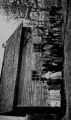
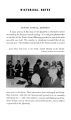
Show w I" h- LL 0 < LU Li. 0 (/) K < III >- > _l r™ -PW^ 0 H 0) < LU or or (/) < < 0 iii AUTOBIOGRAPHY OF HOSEA STOUT, 1810 TO 1835 Edited by Reed A. Stout [CONTINUED FROM WINTER ISSUE OF THE Quarterly] 1824 This spring my father put in a crop on the place where he lived & among other things put in a large quantity of cabbage which grew to an uncommon size. I worked with him untill about June and tiien hired to a man named Job Cooley, where I staid about a month and was employed at hoeing corn. After this, I went to live with a man named Benjamin Howell, who lived some more than a mile from home. When I went there to live, I felt as if I was seperated entirely from my little brother & sister who was very near to me, and for several days I thought of home & cried all the time that I was alone although I could run home any time in an hour; but it was the first time I was ever seperated from them for Cooley lived within a few hundred yards from my fathers I was engaged here at hoeing corn untill harvest and then put to harvesting. This was new work to me and went hard with me & I did not like it, but I was releived however from this for I got word from my mother that she was worse & wanted to see me. So I went home and staid a few days In the mein-time [I] informed them how I was treated and my father would not let me go back but sent me back after my clothes. I went but did not tell that I was not coming to live with them any more but said I wanted to stay with my mother untill she got better for that was her request. Howell was not at home but his wife gave me what clothes I took there and said that he had told her not to let me have any more I suppose they had expected that I would not come back to live. He had bought me some light, cheap summer clothers for "Sunday" amounting perhaps to one dollar and a half. 150 UTAH HISTORICAL QUARTERLY So he kept that and would allow me nodiing for my work. He had treated me hard all the time I was with him and in fact he was mean, narrow contracted, and dishonest man & totally unfit to bring up a boy. I had to work very hard while there. When I came home I found my modier much worse, for she was now very low, she continued to sink untill the 28th day of July when she died By her death I lost the only unwavering friend that I had and our family was now left like a ship without a rudder to be the sport of misfortune and I severely felt and realized her loss, and now when deprived of her, could begin to see my own ingrattitude and disobedince to her, and when too late would gladly have served her. The rest of the family now remained together a short time but did not go into any arraingements to live but all seemed lossed and knew not what to do, for our helm was gone. The loss of my mother was a misfortune which reached my heart and caused me deep and lasting trouble, which I feel to this day when I ponder on her tenderness and goodness to me. Notwithstanding the lapse of twenty-three years between us and the many privations, misfortunes, losses in friends & perils which I have encountered since. Not long after the death of my mother I went and worked for an old fat rich Quaker named John Fallis. Here I was put at making and mowing or packing away hay. He had a number of hands at work and I enjoyed myself well. I worked for \2y2 cents a day untill I got cloth for a round about coat, and then went to live with his son-in-law Eli Harvey, who lived about 4 miles from there on the Lebanon road. This seemed to me to be going to a strange and foreign land. When I got there, I was struck with the familiarity of the place for as I came from Lebanon last year as mentioned before, well filled with cider oil, I had stopped to rest on the large projecting roots of a popler of uncommon size, about seven feet [in] diameter which from its singularity & size drew my attention & I had often thought of it It stood close to the road in an old "deadening" where I knew some body contemplated making a farm but appeared to me to be a "wildering maize" secluded from the haunts of man. Here I found my new home and to me fell the task to convert this wilderness of dead timber into a fruitful field. Fallis took me down there & I went to work . There had been a small crop of corn put in last spring & a house built. Harvey was doing well. AUTOBIOGRAPHY OF HOSEA STOUT 151 Drawing of Lebanon, Ohio, 1846. It was in 1823 that Hosea accompanied his father to Lebanon and returned home "well filled with cider oil." The following year, Hosea went to work on a farm on the Lebanon road which belonged to Eli Harvey, a man who made an everlasting impression on him. COURTESY WARREN COUNTY HISTORICAL SOCIETY, OHIO Ktr\ •- >\}%Z [ij.,.-,-J. * • My first work was to pick and burn brush. He was a pushing man in business and well calculated to learn a "spoilt child" to work I had to work hard earley and late I generally went home every Saturday to see my folks. He was the best man I ever lived with, good, kind, and obliging19 [He] would exact all that I could do and no more & was a good judge of the amount of work a boy should do. I soon found that he only wanted the fair thing and would not be satisfied without it He never misused, never repremanded or seemed to be dissatisfied with out I was to blame and I soon loved, obeyed, and respectd him and, what was still more strange I worked well and became interested in his welfare a thing before unknown to me. Eli, was also a Quaker. This was the first summer that he had been married Here I enjoyed myself better than I ever had done before and felt that I was in a way to learn to be some account Hitherto I did not think I was doing well and had nothing to encourage me, but now, full of hopes and bright expectations I assumed new life and determined to be worth something I staid here till cold weather and went home again and again sank back into dispondency and gloom without anything before me to stimulate [me] to action 18 Eli Harvey was to have an enduring influence upon Hosea Stout. Twenty-seven years after first going to live with Eli Harvey, Hosea Stout named a son born in Salt Lake City, September 17, 1851, Eli Harvey Stout. 152 UTAH HISTORICAL QUARTERLY After remaining at home a while inactive, my father took a notion to take me to willmington to learn a trade. He there put me to live with a man named Isaiah Morris, who was clerk of the circuit court Morris only wanted a boy to do his work, such as making fires taking care of the horses and such like drudgery and to this occupation I was doomed to serve for a season. He never allowed me to eat untill himself and all his family had done and then I came and "picked the bones" He was a very popular and influential man and was withal a good sort of a fellow, but too rich and consequential to stoop to tutor me more than to answer his purpose and further he cared not for my well-fare. When I first came he gave me very positive orders not to be out after night as was the custom with other boys here, and that I had to be civil and industrous, which I thought at the time was perfectly right and intended strictly to observe it, for I had been thus far raised in a civil Quaker settlement and was in fact an uncommon civil boy, for the simple reason that I had never yet had the opportunity to learn anything else. The sequel will show how well I retained my loyalty and first love for I was not there many days before the Presidential election came off which resulted in the election of John Quincy Adams to the Presidency. I was not allowed to go to see what was going on and be an eye witness to the election; but was engaged in burying cabbage close to the Court house and could hear the oaths and shouts for their respective candidates usual on such occasions all [of] which was so wild and uncivil to me that I did not know what to think for it was the first election I ever saw or even heard of. The day passed off, and after dark the boys took the streets and commenced [shouting] mostly for Henry Clay, "Hurrah for Clay." "Hurrah for Adams, "Hurrah for Jackson" was ringing all over town. Some of Morris family wanted me to go and stop the boys, and accordingly I went, for I verily thought [this] was most ridiculous. I did not lecture them long, for as soon as I came in company [with the boys], one of the boys told me to never mind but to Hurrah for Clay, which was no sooner said than I also took fire and commenced I believe louder than any one else. In a moment all my gravity was gone and I was the wildest one in the company, so unaccustomed was I to such freaks that once engaged [I] did not know how to govern myself, but [was] like a tame well diciplined young horse [which when] taken on AUTOBIOGRAPHY OF HOSEA STOUT 153 supprise by a frightened wild drove is more impetu[ou]s than the rest, for I knew not what ailed me. We continued thus along time when I sobered down and went home & very gravely complained at the reckless noisy boys who did not regard the good order of the place. I was mightily taken up with the lively rude and good natured town boys at this time and thought them far preferable to my old civil Quaker comrades and was now anticipating great joy to be had in their society on "Sundays" when we could rove in innocent civil and friendly droves uninterupted by any thing to mar our good feeling and play; but in this I was doomed to be disappointed for the first Sunday when I met with a gang of them to "bask in plasure" they according to their custom had me to break as they called it for they alway made a country boy fight before they would acknowledge him as a regular playmate This was something I was not prepared for and the last thing which I wished to do for I had the best of feelings for them all and only wanted innocent amusement. Accordingly they commenced the opperation by aggravating me in every way that they could calling all manner of ill names and cursing me for a coward, while others were on my side & would tell me how to do and what was wanted and if I would whip any of the them all would be right, promising to see me have fair play Others told me how these same boys treated them when they first came in town to live. There was one boy who I knew before he came to town for he had been one of our neighbours and he was now the foremost one to aggravate me His name was Elihu Millikin. Annother larger boy named Brooks Griffith told me that when he first came Elihu treated him as he was now me and that he took a long stick and began to poke his nose, saying that he would snuff the candle, and that he gave Elihu a good whipping and ever since Elihu had been a good friend to him and if I would only whip him that he knew Elihu would afterwards be a good friend to me and that I would be obliged to whip someone before I could have any peace with the boys Elihu heard all that was said and confirmed it but said I was such a coward that I darst not fight and swore that he would snuff my candle and so saying he took a long mullin stalk and commenced at my nose. This began to put me in the proper mood for the case in hand. Previously to this I had declared my unwillingness to fight and my feeling were so wounded at the ill treatment of the 6 boys that I wept with grief and disappointment 154 UTAH HISTORICAL QUARTERLY Elihu had not snuffed long at my nose before I told him what he might depend on in case he persisted but this only made him worse & he swore I darst not touch him. About this time some of the boys gave me a push against him; at which he swore and threatned most bitterly while the boys repeatedly pushed me on him anxious to see a fight and I was now getting in the notion fast and when they pushed would yield to it a few times and at last, vexed all most to desperation I jumped at him and knocked him down and before he could recover, gave him three severe kicks in the small of the back which all most broke him down. He was in an instant scarcely able to walk and now cried and screamed most unmercifully for he was badly whiped. While I was at this the boys all shouted for me and unanimously hailed me as a first rate fellow except Elihu and he swore that he would yet have revenge, but I swore that if he attempted anything again I would whip him ten times worse for I was now ready for any kind of a fight and perfectly regardless of the consequences Such was the manner of my initiation into manners and customs of the town boys. Elihu, became a great friend of mine afterwards as the boys had told me but not steadfastly a friend untill I gave him three or four more severe whippings, after which he was always ready to take up on my side whether I was right or wrong With all my civil Quaker habits and the disgust with which I first looked on the behavior of these boys I was soon one of the worst in town and in fact many became ashamed of me and often reproved me who I once thought so reckless and wild. We would meet together late at night and wander in droves stoning houses and abusing the more civil part of [the] community and particularly if we had any thing against a man we were shore to do him a displeasure. This was the first winter I was there. Such was a specimen of my life with the boys notwithstanding Morris' orders to the contrary. I went home to see my people once and Allen came part of the way home with me, which was the last time I ever saw any of my people for years. Not many weeks after this I came to see my people again full of joy and gratification with a light heart at the prospect of again being with my brother and sisters once more. I came near the house and commenced making a noise to cause some of them to come out to see what was the matter, and then hid to dis- AUTOBIOGRAPHY OF HOSEA STOUT 155 appoint them; but I soon found myself more sadly disapointed, for no one came out and wondering at the cause I went to the house and dien found they had gone. The house was desolate. I knew in a moment that they had gone to Cincinnati for father had been making such calculations. I found myself in this lonely desolate place of my former joys, All gone far away & I here alone whereas I had anticipated so much satisfaction at this moment. But O, my people are gone It is impossible to describe my feelings. After looking around on the desolation which now brooded over everything in view I commenced weeping & most bitterly too. It seemed that I was the most forsaken being on earth and now doomed to eternal loneliness and sorrow & I must mourn out the remainder of my day. It seemed that I could heare the weak plantiff voice of my departed mother admonishing me to do better and would look in the house but alas she was gone & I truly alone and where is the family Every object before me was a witness of better & happy day but all gone by all these things conspired to awaken my feelings and sorrow It was now for the first time that my head pained me & seemed that my senses would leave with trouble I wept long and loud.20 At length I washed my face at a brook and dried up my tears and went to our nearest neighbor (Grandfather Simcock) to hear all that I could about the family. I put on as a cheerful countenance as I could and went in. They confirmed my first idea that they had gone to Cincinnati21 and after staying there an hour or two I started home again, to Wilmington weeping and lamenting as I went & cast many a long lingering sorrowful look back to see my little brother I came to the place where he had accompanied me to when I saw him last and there seemed to part with him again. It is hard for a person to conceive the agony I was in when I came home and let Morris' folks know what had happened. 20 Hosea was fourteen years old at this time. 21 In the fall of 1824, Hosea's father, Joseph Stout, with his daughters, Mary, Anna, and Lydia, and his son, Allen Joseph, moved to Cincinnati. After remaining mere a few weeks, they moved to the falls of the Ohio River, near Louisville, where they spent the winter. There Mary married Nicholas Jameson. In the spring of 1825, Hosea's father, leaving his daughter, Lydia, with Mary, but accompanied by Anna and Allen Joseph, set out by river boat for Little Rock, Arkansas. On the way he had a falling out with the boat captain, so went ashore before reaching Little Rock. Eventually, he joined his brother, Ephraim, in Washington County, Missouri, and moved with him to Tazewell County, Illinois. In 1827 he left Anna and Allen Joseph in Illinois and returned to Ohio. A full account of these events is contained in the Journal of Allen Joseph Stout, typescripts in the library of the Utah State Historical Society and in the Henry E. Huntington Library and Art Gallery, at San Marino, California, 7- - / *4€i •4 fat i»**# ^ ^ tfGk. fU<* -**Jr d*t€€tt. s/Ttu^J*- trvtJi +4*t-r'fcte*. ^ o r\ - * t ^-<%*» i4M*? ST*. *Hi tyu/4A*/ /H**te J<*<^ &<ef*z-/. §AJ*@t J- 7C0&•*€*%?&• > • */rK%\je*4* **-*» Oft, -•*< imJ&fS&f/ iruf. -f f****** Vtefactf/ V § 4%^tJt j*4*tri*-t. u*M.*7uLm>* if%t%ms%- €*/• $4 iff 7ff ^nM^*^% /Ju^ $/>?wJ&t*fa'~ j A«* 4tu^*r*$ C4rt***tMA*+pK{ 4iA^^*J^r&1 ? / < a ^ i **& H-gU* 7~f*~frfft*<£ H&C&944, 0HL*tX fit •Jt 0 ^ # £ M M H t &CtSk •& £*c<S7 A page from Hosea Stout's autobiography describing his feelings at finding himself forsaken by his family at the age of fourteen. AUTOBIOGRAPHY OF HOSEA STOUT 157 I served Morris purpose very well for a while but became dissatisfied for he did not treat me well. He would not get me any new cloths for winter which I needed badly, but would have me wear some of his old one which made me look very odd for he was a large man. I knew I was not well treated and had no reason to expect anything for my advantage Neither good food clothing or any chan[c]e to go to school but saw I was only intended as a servant and I decreed in my heart to be of no use to him. This caused me to seek ways to shune work which thing I found I had quite a tallent and was soon able to make him earn all that I did before he could get me at it right. I would take care of the horses because I loved them and not for his sake. During this winter I often heard from my father by the mail boys who went to Cincinnati twice a week (about 55 miles) which was some consolation to me even to hear from them and I expected that my father would come after me in the spring & I would go away, which kept up my spirits no little. Thus passed this year as far as I can remember 1825 This year found me about as before described, and not much advantage to Mr. Morris, and looking for my father to come after me which kept me in great suspense for months and very uneasey. In the spring I was put to gardening. This occupation suited me very well had I been satisfied with my home and future prospects. In the summer I was most of my time rainging around town and through the surrounding country and up and down the creeks, with other like truants I evidently grew worse every day. Some times I would go alone to the destrict of my former days with my brother and rove through the woods whifch] we had been used to and give myself up to weeping & mourning in solitary loneliness It was there I would resolve to amend my ways and do better for I knew I was going to ruin but had not government over myself to keep me strait when in town. I would resolve to join the Methodist some times but did not know how neither had the moral courage [to] enquire, at other times I would resolve to leave town and go to a place better calculated to teach me better things but did not know how to leave Morris, because my father enjoined it on me to stay there and that seemed sacred to me now. 158 UTAH HISTORICAL QUARTERLY Amidst all these good and bad feelings I was tossed and would hardly get into town before all was over for the first boy I met I was as bad as ever notwithstanding my better desires when alone Upon the whole in all my wild career, I was uncommonly wrought on about religion when my mind could be brought to reflection, and had any of the religious part of [the] community undertaken it would soon have brought me to the, "anxious seat" to get religion, but who would have thought so of me ? Some times I went to see my uncle Isaac's and my cousins. On one occasion I took Elihu along with me, while there I had a quarrel with a neighbor boy who was playing with us & my cousins, which gave them a full specimen of my "manner of speech" which perfectly astonished them for it was to them as rediculous as such tilings was to me when I first went to town They informed my uncle of these things, who was not satisfied to see me let run thus uncontrolled and untaught, so he went and complained to Morris about it and wanted me to come away. My uncle was a particular friend to Morris & he did not wish to do anything to displease him and so he agreed to do as he [my Uncle Isaac Stout] desired. Thus by doing evil, good came for my outragious bad language & habits served to awaken my uncle to a sense of duty and thus delivered me from such a place which nothing else could for Eli Harvey had been to see me to go and live with him again a thing most desireable to me, but Morris objected & I undertook to run away which he found out and pursuaded me not to do notwithstanding he so readily yielded to my uncle. Accordingly in December I left him and went and lived with my cousin Jesse Stout, where I staid till the end of the year Here I was at once delivered from all bad company at which I felt happy & had the society of my cousins to play with. Jesse was a very civil Quaker but would chop fire wood on the Sabbath. This I thought most sacralagious, for it was not alowed in town & I was consciencious about it as bad as I was & thought I would prepare wood for him the day before. Such a mixture of religion and devilment. 1826 This year found me with Jesse Stout. I cut my foot in the later part of winter which disabled my from work and I went to stay with my uncle While here doing nothing I took a notion to learn to wright, so my cousin Isaac, who was about my age undertook to learn me. He AUTOBIOGRAPHY OF HOSEA STOUT 159 wrote a good hand. Suffice it to say it was not long before I wrote a tolerably legible hand. When I was able to work I went to Jesse's again and he set me to studdying arithmetic at which I soon learnt the first rules This was a great start to me in education and gave me such a taste for it that I could not be satisfied Had Morris taken any pains with me I now could have been a tolerable good schollar. I resolved now to have an education and to that end all my drought and intentions were bent Some time in April Eli Harvey, learning where I was, came to see me and wanted me to live with him again which I was glad to do & it also suited Jessee very well for he did not need me & accordingly went immediately home with him I now felt perfectly restored and redeemed from all trouble for I had often thought and sighed for the privilege of again living with him. I was here put to regular work again for the first time since I left him & rejoiced at the privilege but found I had contracted indolent habits which however he was well calculated to cure without any harsh words or bad feelings. I commenced by preparing the ground for a crop, by burning up the logs & limbs which had fallen in the winter. When the time came I was put to ploughing. This suited me well. Scene illustrating the period and area where Hosea worked as a farm hand. "[He] was delighted with a farmer's occupation and . . . worked hard." COURTESY UNITED STATES DEPARTMENT OF AGRICULTURE 160 UTAH HISTORICAL QUARTERLY I was delighted with a farmers occupation and can say that I worked hard this summer. It was a Quaker custom to go to meeting twice a week and this privilege was granted to me and [I] mostly went and civilly and willingly conformed to all the sober habits of a Quaker life and took a great interest in Harvey's wellfare. All the boys in the neighborhood were civil Quakers & I could have no bad company had I desired it. I felt like I was doing some good for mys[e]lf and hopes began to arise again This summer was spent in all the common occupations of farming and clearing ground at such times as we were not needed on the farm. I was also very attentive to my book and improved every leisure moment I had and was always assisted by Eli when needed in anythings I could not understand, for he was a good school master, and ready to teach which was a great benefit to me. I will mention a word about Quaker meetings. When you go to a quaker meeting you will sit with your hat on & nothing said, that is all sit with hats on no one speaks unless the spirit moves him to. Meeting lasts generally about one hour. They "break" or dismiss meeting by the head ones Shaking hands and then all arise and go out. - This winter Eli took up a school about one & half miles from his house and I went to school to him for a term of three months. I made great proficiency in my studdies this winter. Besides improving my hand writing considerable I went about one third through the arithmetic. I gave close attention to study and would not allow myself time to play but seldom. I was well done by this year by Eli for besides sending me to school three month and my victuals and clothes he gave me a new suit of cloths which was entirely ahead of anything I had ever had before and [I] now made a fine tall appearance & I then thought very grand. This closes the history of this year. 1827 This spring I commenced work; after school was out, with Eli, on new terms. Instead of working for my vuictals and clothes as usual, Eli thought I ought to have something more, so he proposed giving me three dollars pr month for five months, besides doing my washing mending, and making my clothes. I was to "take the weather as it comes" as the saying then was that is counting wet and dry. This was his own arraingement and I agreed to it not doubting his judgement which was AUTOBIOGRAPHY OF HOSEA STOUT 161 however for those times about right He also used to give me extra jobs and pay me for it which considerably increased my wages. I worked out the five months without loosing a single day for if I was sick he always lost the time and not me. I worked as before at farming. At the end of die five months he was eight dollars in my debt for which he gave me his note five of which was to be in cash and the residue in cloth. This was also his own contract. After I was done work here I worked at several different places as I met with chances, mostly for eighteen cents pr day and also was back and forth to my uncle Isaac's several times, but my home [was] at Eli's. In the fall Eli paid me the five dollars in money which was the first time I ever had more than a dollar at once & I now thought of laying it up to buy land as soon as I could get enough. I went to Willmington this summer a time or two, & there saw my old town mates but had no disposition to live there nor did I like their company, for I was now fairly a Quaker in my heart and intended some day, when I learnt how, to join their society. I was in fact a truly religious boy but no one knew or even supposed that I had any such feelings. Thus passed off this summer and fall and in the winter Eli Harvey took up another school where he did last year & I went and lived with David Harvey his brother & went to school to Eli I worked evenings & mornings for my board and was to work one week for him after school was out. I was very attentive to my studies this winter and made about the same proficiency as I did last winter and went about two thirds through the arithmetic. I seldom went to play at noon. This winter I had an affair with one of the school boys which I believe taught me the first lessen I ever received on human nature. „ There was a boy named Samuel Savage who was not a Quaker. He was a most profane and quarelsome fellow and all the boys and girls at school hated him. He was alway disputing at play time and threatning to fight while he well knew the Quaker boys would not; but I often heard them wish some one would whip him. At length he commenced abusing me. A thing I would by no means bear so I told him one day in great earnest that I would whip him if he did not behave which only made him worse, for he did not believe me and accordingly the next day he brought a number of small stones in his pocket and showed them to me in time of school and was making his 162 UTAH HISTORICAL QUARTERLY brags all the forenoon how he would use them on me if I attempted to hurt him. All the boys and girls expressed their disapprobation at his conduct and unanimously declared that he ought to be whiped I knew I had the decision of the whole school on my side and verily thought it would be a righteous act to whip him and also a great accommodation to all the schollars accordingly at play time I went out with the rest to play ball & he was very crabbid and swore if I hit him with the ball even when it was in order that he would hit me with a stone so die first chan[c]e for a throw I got I aimed at him while he squared himself to throw back; But I was at him before he had time to throw back and while he was taking the stone out of his pocket [I] jumped on him and gave him a most unmerciful beating over the head with my fist which almost entirely disabled me from writing for a day or so. Eli soon came out and gave me a severe repremand for my "Town boy capers" and threatened to dismiss me from school. The schollars unanimously turned against me and simpathized for Samuel Savage calling me fighter. I now found I had done a thankless job for it was as much to accommodate them as to gratify my own feelings. The fact was they did not really want any one whiped and while saying so did not expect to see it done. Whereas I was in earnest and thought they were also. This was heralded all over the setdement to my disadvantage but I stood up for myself. I learned that it was not good policy to do fighting for people who had not corurage or a disposition to do it for themselves and it proved a useful lessen to me in after life and caused me to begin to observe the inconstancy and ingratitude of mankind & no doubt it has prevented me from falling into worse difficulties by trying to help those who will not help themselves For if you ever do you may depend on being forsaken in times of trouble. My sister Mary, who moved to Cincinnatti widi my father in tHfe fall of 1824, had been married to a man named [Nicholas] Jameson at or near a place then called the 18 mile Island below Louisvill I believe on the Ohio river She was married January 7th 1825 She had one son called Benjamin Walter Jameson, who was born December 3rd 1825 and died October the 3rd 1826. My father had moved from Cincinnati down the river stopping at several places for a short time untill he came to the above named point AUTOBIOGRAPHY OF HOSEA STOUT 163 where Mary was married from whence he proceeded on as will be related hereafter, scattering his family by the way. This fall My Uncle Isaac received a letter from Jameson which informed us that Ma[r]y was dead. She died January the 5th 1827, of consumption, I think. During the term of the above named school I went to my uncles on a visit, as was always my custom occasionally when I was informed of the death of Mary & the situation of my peple diere. This news was communicated to me immediately upon my coming into the hous, which perfectly shocked me and filled me with grief & sorrow which I could only give vent to in a flood of tears. There is a possibility of me being mistaken in the time I received the above news It might have been last winter. 1828 This Spring when the school was out I was almost entirely destitute for clothes for such had been my eagerness for schooling that I would not stop untill the expiration of the term and on die last day of the school I was litterally flying in rags with both knees out bare and had not went to meeting or any pub[l]ic place except school for a long time. After the school was out I commenced work again with double dilligence, determined now to fit myself out again widi respectable clothing, accordingly I commenced work again for EH Harvey first for twenty-five cents a day. I then went to work for a man named Ezekiel Hornaday for four dollars pr month at preparing and putting in spring crops. I believe I worked for him two montiis and then Jesse Harvey a Doctor and cousin to Eli came and offered me five dollars a month to work for him. To which propersition I accepted and quit Ezikiel to his great disappointment and chagrin for Jesse had fairley over bid and underminded him. but I Did not think anything about [this] at the time but the first chance Eli Harvey got he told me that Jessee had no right to interfere without first going to see Ezekiel & having an understanding with him. I then thought so too but it was now too late for I had bargained with Jessee and went accordingly. He [Jesse Harvey] set me to clearing ground and rolling logs alone and of course I done but little. Sometimes he would come out and work and tear about a while fresh from his apothecary shop and then hint to me that I ourght to work accordingly. 164 UTAH HISTORICAL QUARTERLY After a while he set me to ploughing with a weak starved poor team and a bad plough on the new rooty ground at which I made poor headway. His horses were fed on a scant portion of bran and were in fact unable to work. He had likewise some old ground to plough at which I done very well at for a while. He never had enough cooked to eat and this had always been said of him that he starved his hands. In fact he was a mean narrow contracted little souled man, having but last winter finished his studdies at Cincinnatti & now had this spring set up for business, deeply in debt, and had no practice worth naming. He sat in his house and spent his time in reading and his studdies and at the same time was unable to support his family, which was large He had evidently undertook to cut a big figure before he was properly qualified for it He was not very po[p]ular. He was ready to grind down a hired boy like me for a trifle. The result was, I soon became dissatisfied and tried as little to please him as he did to do justice by me and we fell out before harvest and parted. On settlement he refused to pay me all my dues and acted most rascally and mean with me. After leaving him I worked but little more in that settlement but while there made my home at Eli's. During the time of Harvest I went from this settlement to my uncles again and there commenced going to school to George Carter who had taught school at a school house near Lytle's creek meetinghous, almost time out of mind, for all that now lived in the vicinity had been educated by him who were under middle age. He had educated all my uncle's family many of whom were now married & many of his former pupils were now sending their children to him also. He was a good schollar and teacher. I boarded at my uncles & went to school to him & commenced the studdy of English Grammar by Saml Kirkham at which I had allready quite a smattering. I went about six weeks to him during which time I applied myself closely to my studdys & acquired a tolerable good knowledge of grammar. I also assisted my uncle to do his harvesting. While here going to school one of my second cousins Stephen Stout came and wanted me to go to the Illinois with him as he was going to move this fall to which I agreed in case he could take also my sister AUTOBIOGRAPHY OF HOSEA STOUT 165 Peggy [Margaret] also which he did for it all suited him very well and accordingly I now began to arrainge my business for it. My sister Margaret had as before mentioned started to Tennessee to my uncle Samuel Stouts with Staunton, but her husband [William Stout] overtook them and she was again induced to live with him and not go to my uncles so they were together a short time & he again left her somewhere in Kentucky, in a most desolate condition shortly after which she was del[i]vered of a son [Samuel] October the 8th 1824 who died Nov. 1826. Being left in her delicate situation in a strange land poor and destitute she suffered incredibly but at length obtained news somehow or other of Jameson & her twin sister Mary his [Jameson's] wife contrived means [for Margaret] to come to her. When she came she was sick and scarcely able to walk & So was Mary also sick Their meeting can better be imagined than described for Mary was not apprized of her coming untill she saw her at her door & both wept unable to speak for a while. She [Margaret] remained with Mary untill her death and in the spring of the present year came here again and had remained here untill the time now mentioned. I wound up my schooling sold off my desk & things that I could not move & then went to Todd's Fork22 again to settle up some out standing accounts I had there. While there Eli Harvey wanted to know what I was going to do. I told him I was going to Mackinaw.23 This he did not like, for upon some others corning up and making similar inquiries Eli told them that I was going to the lead mines24 where it was no harm to swear. He thought that the Mackinaw country [Illinois] & lead mines was all one and such was the universal idea although it was 180 miles to the lead mines from Mackinaw. The fame of the profanity of the lead mines was proverbial & Eli thought it would be my ruin to go there. I wound up my business there and bid them all farewell for the last time and have never saw them since. "Todd's Fork begins northeast of Wilmington and flows in a generally southwesterly direction through Clinton and Warren counties, Ohio, to its juncture with the Little Miami River. 23 Mackinaw, Illinois, is about twenty miles west of Bloomington and about the same distance southeast of Peoria. In 1828 Mackinaw was the county seat of Tazewell County, but in 1831, the county seat was moved to Pekin. 24 In the early 1800's, large quantities of lead and zinc were mined in the extreme northwestern part of Illinois, around the city of Galena. 166 UTAH HISTORICAL QUARTERLY Shortly after this my sister Margaret & myself went home with Stephen stout to prepare for our intended journey. He lived on Grassy Run about 12 miles from my uncles & beyond willmington that is North East. This [the place where cousin Stephen Stout lived] was a level flat wet country and very uninviting being the heads of the Todd's Fork & Lytle creeks and some others. I here had several cousins and formed a fast and quick acquaintance with many. I here first began to keep company with the girls and now began to wish I was married I staid here some two or three weeks while Stephen was preparing to move & we then moved down on Todds Fork near Centre Meeting house where his father lived and there prepared for his final start. While here I returned to my uncles [Isaac Stout's] to bid them all farewell and staid all night and the next day went back when nothing now remained but to go but before I start I will say a word about my fadier. He had returned here about one year ago and had been living mostly by himself during the time & I had been to see him several times and staid all night He came by Jamesons on his way here & had brought back my little Sister Lydia so that now there was five of the family in the settle[ment] of Lytles creek namely Lydia Margaret, Sarah, myself & my father. Anna & Allen were now in Illinois near where I was going So you see we were now going to have another seperation for none but myself & Margaret were going. My father had bound my sister Lydia to Adam Reynard a distant relation so I did not expect to see them again for years. After returning from my uncles I believe we started the next day (Sept 9th) leaving my cousins with tears in our eyes, and pursuid our journey West. We | Hosea, Margaret, and Stephen Stout] traveled through Waynesville Dayton &c Ohio to Richmond and along the National road25 to Indianapolis, Indiana. Allmost all the road from Richmond 2sIn 1806 Congress granted an appropriation for the building of a highway leading west through the Appalachians. This highway came to be known as the National Road. It began at Cumberland, Maryland, and by 1820 had progressed as far as Wheeling. From Wheeling, the need for the road was not so great as westward travel could continue by river boat. Nonetheless, the building of the highway continued toward St. Louis, but in 1836, it was discontinued after reaching Vandalia, Illinois. A. B. Hulbert, Paths of Inland Commerce (New Haven, 1920), passim. Illustration of travel on completed portion of the Cumberland or National Road, which was begun in 1806. In 1828 when Hosea traveled over the road in Indiana on his way to Illinois, he described it as "full of logs and trees felled across the road and lay there while we had to zigzag from side to side of the road across the State through a disagreeable mud." COURTESY THE LIBRARY OF CONGRESS to Indiana was uncommonly bad. The land was a flat level Beech land thick set with spice wood. The National road was now being cut out, which had been let out in different jobs & was now full of logs and trees felled across the road and lay there while we had to zigzag from side to side of the road across the State through a disagreeable mud all the way I drove Stephens cattle and came on foot all the way. I believe we were sixteen days journeying. After crossing the Wabash river we soon came to the grand prairie which I had heard so much talk about and it was truly a grand scenery to me for I gazed upon the boundless ocean of meadow before me, which seemed to meet the horrizon on all sides except an ocasional grove which presented a dark line in the distance, with unmingled delight. It was the first time that my eyes ever beheld such a wide expanse. Just before me I thought I beheld a beautiful elevation some twenty feet high like a wave & to that I pushed forward to have a more wide and ". . . we soon came to the grand prairie . . . and it was truly a grand scenery to me for I gazed upon the boundless ocean of meadow before me, which seemed to meet the horrizon on all sides except an ocasional grove which presented a dark Hne in the distance, with unmingled delight. . . . I was highly pleased with a prairie country from that day forth until now." DRAWING BY ROY OLSON extended view from its sumit of the wide spred prairie but I traveled hard for [a] long time still looking forward to the high grounds before me untill weary and fatigued I looked back & saw another elevation behind me which explained the matter for I did not know how to look upon a prairie & my eyes had decieved me for the country was a beautiful level. I gazed with admiration and delight upon the beautiful scenery before me as I journeyed along, untill my eyes pained me and my head ached which was in consequence of not being accustomed to such an extended view, I suppose. It was in the afternoon, & over a level dry prairie before I came to any timber or found watter. This was my initiation into a prairie life in recieving which I partook of both the good & the bad in a measure, for I was allmost suffocated with heat and drouth when I got through and eagerly plunged into the first brook I came to, with the cattle & all drank together of a putrid stagnant stream & better watter I thought I never drank, but not with standing all this I was highly pleased with a prairie country from that day forth until now. Suffice it to say our journey was now through prairie all the way passing through groves like islands in the midst of the ocean AUTOBIOGRAPHY OF HOSEA STOUT 169 It was a rich & beautiful country through which we passed and [was] now under a rapid state of improvement and cultivation. This was about the 20th day of September, when I first came into the prairie. We arrived at the end of our journey about the 25th of September where we found my uncle Ephraim and all his family. Jesse Stout, son of my uncle Isaac and some more, settled in a grove called Stout's Grove, from my uncle Ephraim who was the first settler in the grove although there was now a number of inhabitants in it many of whom had good farms, now open & some was just beginning20 But the whole county around was new notwithstanding all the groves had now more or less inhabitants in them. Stout's Grove was a most beautiful and delightful place, with good timber and prairie well calculated for farming. It was from one to four miles wide & five or six long and lay about six or seven miles East of Mackinaw town the county seat of Tazewell County in which the grove lay. From the most elevated parts of the prairie near this grove you have an extended view of the wide spread prairies before you bespotted with beautiful groves of timber so well calculated to captivate the feelings of a new comer & I was truly captivated, and am to this day with that country. I remained a few days here during which time I visited all my relations in the grove, and rested from my journey, for I was almost given out with sore feet from hard walking and fatigue, after which I proposed going to where my brother & sister Allen & Anna was, a distance of about 20 miles West. I started on foot and went to a grove about seven miles off on a stream called little Mackinaw Here my uncle Samuel Stout and the most of his children lived. They had lately came from Tennessee. I ~" Stout's Grove was located six or seven miles east of Mackinaw and occupied much of what is now Danvers Township in the northwestern part of McLean County, Illinois. Prior to 1831 it was in Tazewell County. A map published by Peter Folsom, county surveyor of McLean County in 1856, showed Stout's Grove as containing 11,200 acres. Historical Encyclopedia of Illinois and History of McLean County (Chicago, 1908), I, 626. In 1825 Hosea Stout's uncle, Ephraim Stout, and cousin, Ephraim, Jr., and dieir families with Ephraim's nephew, Amasa Stout, moved from Washington County, Missouri, to Tazewell County, Illinois, and settled at the southeast corner of Stout's Grove about twelve miles west of Bloomington and about one mile west of the present town of Danvers, Illinois. There they established the settlement of Stout's Grove. According to the journal of Hosea Stout's younger brother, Allen Joseph, he, Anna, their father, and also their paternal grandmother accompanied Ephraim Stout on his move from Missouri to Stout's Grove. Hosea's father, however, did not remain very long but moved on to Galena in northwestern Illinois and finally returned to Ohio, leaving Allen Joseph and Anna at Dillon's Settlement. 170 UTAH HISTORICAL QUARTERLY went to my uncles & he not being at home, made myself know to the family, all who seemed glad to see me. After staying an hour or so and taking dinner I proceeded on passing by some of my cousins, to whom I also introduced myself and was well recieved, from there I proceeded to Samuel Whiten a cousin, and staid all night & in the morning procured a horse of him belonging to Amasa Stout in Stouts Grove, and started to Dillen's Settlement.27 So called where Anna & Allen lived. I undertook to take a near rout to the settlement through the woods and got lost amidst the hill in an oak woods called "barrens" 2S Here I wandered untill noon and at length found myself to the East of Little Mackinaw grove and finding another new cousin, whom I had not before seen (John Stout, called Big John)29 [I] got directions how to cross the Mackinaw river and go to the place I intended & so I proceeded onwards and in the evening found Anna & Allen. Anna was living at Daniel Hodson's formerly of Ohio Clinton County, & Allen with Martin Myers Son-in-law to Hodson. Anna knew me on sight but Allen had lost all knowledge of my looks & knew me not. They were doing well and was exceedingly rejoiced to see me. I came here in a worn out situation for I had had a hard days ride in my wanderings having no saddle. I here rested myself and some more and in a day or two I set out for Stout's Grove again accompanied by my Sister Anna. We set out on horseback I still had no saddle which made my ride anything but pleasant and agreeable. We returned home by way of Mackinaw town. I was taken sick on the way and had to lay down several times before I got to town in the prairie for I was very stupid & sleepy and would fall to sleep almost as soon as I was down. Had not Anna been along to wake me up no doubt but I should have lain there till dark for I was very sick, weak & stupid. "' Dillon Settlement, about twenty miles southwest of Stout's Grove, was settled in 1823 by Nathan Dillon, reputedly the first settler in Tazewell County, Illinois. Hosea Stout spells the name of this settlement in various ways throughout his autobiography. 28 Barrens are level tracts of land poorly forested and commonly having light sandy soil, such as pine barrens and oak barrens. 20 Little Mackinaw Grove, about seven miles southwest of Mackinaw, Illinois, on the Little Mackinaw River, was first settled by Samuel and John Stout. Samuel was a brother, and John a cousin of Hosea's father. On June 24, 1827, John Stout and Samuel Stout's daughter Fannie, were married in the first marriage performed after the organization of Tazewell County. He would appear to be the "Big John" hereafter referred to by Hosea. History of Tazewell County (Chicago, 1879), 211-12. AUTOBIOGRAPHY OF HOSEA STOUT 171 However we made out to get to Mackinaw town in the afternoon & put up at a public house, which was in fact all the house then occupied in the place. There was some more houses however but no ground improved. The city was thick set with oak shrubs & hazel and all the small shrubry common to the barrens also some scattering oak trees. It looked but little like a town & county seat It lay about one mile East of the Mackinaw river and if improved would be a handsom town. There was no store or grocery The house was kept by Mr. Jonas Hittle,30 a clever, fine man We were well received by his wife who went to preparing our dinner; but I could not set up and called for a bed and laid down. When dinner was prepared I was unable to eat and had all the symtoms of an approaching spell of sickness and so Anna eat her dinner and went on to Stout's Grove, being very anxious to see Margaret, and left me at Hittle's, where I was kindly treated by his wife for several days during which time I was very sick Mrs. Hittle was kind and attentive to me while here & I wanted for nothing. As soon as I was able to go I was sent for and took up to the grove and in a few days was able to go around. My sickness came on by hard travelling on the journey & exposure on the road. I was not here long before I began to think about going to work. Before I go [telling of my going] to work however I will inform you of another circumstance. Amasa Stout a cousin was to be married in a short time after I came there. He lived at my uncle Ephraims [and] had been with him for the last ten years There were great preperations being made for the wedding & invitations were given to allmost to all the surrounding country. The day came at length for the wedding. The party had mostly convened at the girls mothers about 4 miles below my uncles, towards Mackinaw town I was yet very weak & feeble & did not go down; but waited till they came along. They came forming a long procession by two's on horseback when I & my sister anna joined them. Margaret not being able to go. 30 Jonas Hittle is reported to have been the first justice of the peace in Tazewell County. On March 3, 1828, he applied to the county commissioners' court of Tazewell County for a license to operate a tavern. This was granted, but the license restricted the rates he could charge to 6!4 cents per person for lodging and 18% cents for each meal, ibid., 234. 172 UTAH HISTORICAL QUARTERLY We had now to go about six miles to Brown's grove31 to the residence of "Preacher" Brown who was to solemnize the nuptials. We had a pleasant ride, each one selecting the girl that suited him best and rode with her if he could get the chan[c]e Some however got "cut out" on the way The Parson & family were all ready for us, together with a large company met on the occasion. Bars & gates were opened for us when we came The procession marched three times around his house and then all dismounted and went in. I was introduced to the Parson who gave me his hand for better acquaintance as he said for he knew my father in Tennessee. We had not been there long before, the parties were lawfully married and seated when all hands went in succession to wish them much joy, shaking hands & the men kissing the bride I did not partake in this for I did not know what it meant for it was the first time ever I saw any one married only in the Quaker way. My uncle David Stout lived in this [Brown's] grove. He had a large family & some of his boys and girls were along with us. After we were through here we all returned to the Brides mother's, (widow Smith) where we spent the night in plays, songs chat & sparking according to the New country customs which was entirely new to me, but easy to learn. I joined in all these amusements and enjoyed myself uncommonly well We spent the whole night. I in the morning we all went to uncle Ephraims to the "Infair"32 where we were recieved well. Uncle took up a large quantity of honey of which he had an abundance and here we feasted and enjoyed ourselves uncommonly well untill we all were willing to go home. So much for the new country wedding. I was much pleased with the appearance of this company, which was so different from any I had ever before witnessed and yet [was] so easy, familiar, and accessible in their manners. They were dressed in plain clothes the young men had every variety of "home made" common blue & different home died bark coulered 11 Brown's Grove comprised some 560 acres. It was named for the Reverend William Brown, referred to as "Preacher" Brown, who moved there from Tennessee in 1826, but thereafter moved to Mackinaw. The marriage of Amasa Stout and Susan Smith was performed by him October 15, 1828. Mrs. George Spangler, "Early Marriages in Tazewell County," Journal of the Illinois State Historical Society, XIV (April, 1931), 145. 32 "Infair" is a Scottish and regional American term applied to a celebration in connection with a wedding, installation of a new minister or other special event. AUTOBIOGRAPHY OF HOSEA STOUT 173 jeans, very ordinary hats & in fact every thing made in keeping with the kind of clothes The girls dressed in common calico but few had any thing but calico bonnetts & all made simple & plain all perfectly harmonized with the Quaker teachings of plainess which I had allwa[y]s heard but never saw acted out before. Some how or other I felt perfectly at home with them although in ohio I considered my best to be but ordinary yet on this occasion I entirely out shined them all, & eagerly drank in the customs of the county, captivated as much at their rustic manners as at the beautiful new country. All these things together made me unusually well contented & I according wrote to ohio to inform my relations there how well I was suited. After the wedding & I had recovered my strength my cousin Ephraim proposed hiring me a month and offered me ten dollars this seemed a most exhorbitant price for five in ohio was the most I had ever got & the best hands there got but eight. It was allmost as much as my conscience would allow to take notwithstanding it was the current wages. I was here accounted a full hand. I finished this month for my cousin & set in for another at eight dollars as it was now in the winter. We was employed at gathering corn mostly. Business was carried on here very differently from any way I had been accustomed to in ohio for instead of being up and out at work at daylight driving and pushing everything we never went to' work untill after late breakfast and then no hurry and would stop along time before night. I felt restless at this way of doing business which seemed so verry slow, after working with Harvey as long as I had. I was in a hurry but all was satisfied & would pay me for my time and have it idled away thus. This winter Margaret was taken with the consumption & her and Anna went to Dillon's Settlement to have her attended by Dr. Griffith33 a celebrated phisician who lived there. They staid there a while and returned back, bringing Allen along with them and he made cousin Ephraims his home and Margaret & Anna made their home at Uncle Ephraims while I was at work as above, alternately for both my uncle [Ephraim] & cousin [Ephraim, Jr.] as it suited my convenience 33 A "Dr. Griffith" is listed as having practiced medicine in Pekin at the time of an epidemic of Asiatic Cholera in Tazewell County in the summer of 1834. 174 UTAH HISTORICAL QUARTERLY This was our situation about mid winter. I had in this grove [Stout's], Brown's Grove & Little Mackinaw [Grove] Three Uncles' and about 70 cousins and my old Grandmother Stout now upwards of 90 years old She was not able to walk & was very childish she was very glad to see us and called us Jo's children. She was constantly attended by an old maiden aunt her daughter Margaret Stout who was over 70 years I had likewise another aunt on Little Mackinaw.34 Jesse Stout took up a school late this winter to which I went a short time and improved in the arithmetic and writing, considerably35 His school lasted untill time to stop for spring crops. [To Be Continued In Summer Quarterly] 31 Hosea Stout's three uncles living in Tazewell County were his father's brothers, Ephraim living at Stout's Grove, David who had settled at Brown's Grove, and Samuel living at Little Mackinaw Grove. The aunt referred to as living on Little Mackinaw was probably his father's sister, Rachel. Hosea's paternal grandmother, Rachel Chancy Stout, at this time was 87 years of age, and his aunt, Margaret, sister of his father, was 63 years of age. Rachel Chancy Stout died in 1831. 35 Jesse Stout, son of Hosea's uncle, Isaac, had recently moved to Tazewell County, Illinois, from Clinton County, Ohio, where he had previously taught Hosea in school. |