| OCR Text |
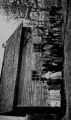
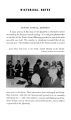
Show nograph of Hosea Stout about 1852. • narrative . . . of his life, . . . 'rangely fascinating, and reads like mpossible tale. And it is beautiful-old, with great simplicity. . . ." AUTOBIOGRAPHY OF HOSEA STOUT, 1810 TO 1835 Edited by Reed A. Stout* INTRODUCTION Few people have had a greater sense of history than the Mormons of the middle nineteenth century. Possibly none have been more disposed than they to make a day to day record and chronicle of their experiences, thoughts, and observations. That this is so is quite understandable in view of the early Mormon certainty that they were living in a period of apocalypse. To them, the heavens were again opened after being closed for almost two thousand years. Man was once more in communication with God, and a prophet was again on earth receiving the word and the will of the Lord. The divine church was in process of being restored, and the holy priesthood, long ago taken from man, was being returned. Events were preparing the world for the second coming of Christ. * Mr. Stout, a great-grandson of Hosea, is a practicing lawyer in Los Angeles, California. Numerous individuals have provided assistance in editing this autobiography: Leslie Bliss, of the Henry E. Huntington Library, San Marino, California; Norma Chad-wick Arnold, great-granddaughter of Hosea Stout, Portland, Oregon; Lafayette C. Lee, grandson of Hosea Stout, Salt Lake City, Utah; Helen Claire Stout, great-great-granddaughter of Hosea Stout, Washington, D.C.; Herald F. Stout, author of Stout and Allied Families, San Diego, California; E. L. Cooley and Juanita Brooks, of the Utah State Historical Society; and Earl E. Olson, of the L.D.S. Church Historian's office. 54 UTAH HISTORICAL QUARTERLY Miracles and heavenly manifestations were commonplace. In such a period it was only natural that whatever reasons men have even in ordinary times to keep diaries and write memoirs would compel diese early Mormons to record the exciting and stirring things they were seeing and doing. But perhaps even more important in giving these early Mormons a feeling of history and a reason for keeping journals and records, were the examples and instructions of their leaders. Their prophet, Joseph Smith, kept a daily journal, and in the earliest days of the Church of Jesus Christ of Latter-day Saints, he instructed his chief lieutenant, Oliver Cowdery, to act as historian and recorder.1 Other church leaders likewise kept daily journals. Early in the year 1831, just a few months after the church was organized, the keeping of official records was given a divine stamp of approval when Joseph Smith announced a revelation calling John Whitmer to be church historian "to keep the church record and history continually."2 Not only did Joseph Smith see to it that persons in authority in the church kept regular records of their own, but he also urged the ordinary rank and file of the church to do die same. With die murder of Joseph Smith and his brother Hyrum June 27, 1844, the leadership of the church passed to the Quorum of Twelve Apostles and its president, Brigham Young. The keeping of records and writing of journals received added stress and impetus under this leadership. Willard Richards was appointed church historian, and he and other of the authorities labored day after day compiling a history of the church. Committees were designated in Nauvoo to write histories of various organizations of the Mormon people and events in the life of die church. In the priesthood quorums each member was urged to prepare his own biography as part of a regular quorum project. As the Mormons evacuated their city of Nauvoo in 1846 to escape a growing storm of hostility and as tiieir exodus to the valley of the Great Salt Lake got under way, they were given specific instruction by their leaders, "Let every Elder keep a journal . . ."3 1 Joseph Smith, History of the Church of Jesus Christ of Latter-Day Saints (Salt Lake City, 1902), I, 166. ' The Doctrine and Covenants of the Church of Jesus Christ of Latter-Day Saints (Salt Lake City, 1954), Sec. 47. 3 "General EspisUe from the Council of the Twelve Apostles to the Church of Jesus Christ of Latter-day Saints, abroad, dispersed throughout the Earth, . . ." written at Winter Quarters and signed by Brigham Young, December 23, 1847, in behalf of the Quorum of the Twelve Apostles. The Latter-day Saints Millennial Star, X (Liverpool, England, 1848), 85. AUTOBIOGRAPHY OF HOSEA STOUT 55 So, whether because of a natural tendency man has to keep diaries or because of the examples and instructions of their leaders, the early Mormons have bequeathed to us a wealth of records, journals, diaries, biographies, and personal histories. In these they have traced the days of the church as it moved from New York State, through Ohio, and on to Jackson and Caldwell counties in Missouri, and then to Nauvoo, Illinois. In greater measure, they have chronicled their struggles from Nauvoo through the snow, rain, and mud, past the way-stations of Garden Grove, Mt. Pisgah, and Kanesville, Iowa and Winter Quarters, Nebraska. And in even more abundance they have pictured the minutiae of daily pioneer life in their diaries and histories as the Saints (as the Mormons called themselves) rolled in covered wagons, pushed handcarts through the heat of summer and bitter cold of winter over the prairies to the Rocky Mountains, and as they established their homes in the Great Basin. Historians, reviewing the writings of the early Mormons, have marveled at the persistence and tenacity with which they combined the writing of their journals and histories with the privations of pioneer life. Among the most persevering and thorough of the early Mormon diarists was Hosea Stout. His journal commencing in 1844 and continuing until 1866 provides a vivid picture by a keen observer of critical periods in the history of the Mormon people and their church. As chief of police in Nauvoo, clerk of the high council, and colonel and acting brigadier-general of the Nauvoo Legion, he was an active participant in the period of confusion in Nauvoo following the murder of Joseph Smith and in the subsequent conflict leading to the abandonment of the city. He and the police directed the first crossings of the Mississippi River from Nauvoo. His detailed descriptions of the crossings and the hardships of the journey of the advance parties of Saints across Iowa to Winter Quarters are unmatched by any account heretofore published. As an on-the-spot observer, clerk of the high council, and captain of police at Winter Quarters, Hosea Stout chronicled in his journals the turmoil of establishing a temporary home for thousands of refugees; the task of providing protection against marauding Indians; the jealousies, bickerings, and falling away by many of the Saints from the church; and the preparations for the journey on to the Rocky Mountains. While not a member of the first pioneer group to enter the valley of the Great Salt Lake, Hosea led an expedition west from Winter Quarters for the relief of the band under Brigham Young 56 UTAH HISTORICAL QUARTERLY returning in the fall of 1847 from the Great Basin. Moving from Winter Quarters to Salt Lake City in 1848, he acted as attorney for Brigham Young and was appointed attorney general for the territory of Utah. In these capacities and as regent for the University of Deseret, judge advocate of the Nauvoo Legion, member of the territorial legislature, publisher of an early newspaper, and as an interested participant, Hosea Stout observed and recorded from day to day die details of early pioneer life, conflict with the federal government, and the growth of an empire in the Great Basin. The Stout journals, except for a portion in the library of the Historian of the Church of Jesus Christ of Latter-day Saints covering a period of a few months, are in the library of the Utah State Historical Society in Salt Lake City. In addition to the journals there exist two autobiographies, one at the Historical Society, the other at the L.D.S. Historian's library. Typescripts have been made of the journals and the autobiographies, and these have been deposited in several libraries across the United States. In these libraries, the journals and autobiographies have received the attention of students and writers dealing with western and Mormon history and have been extensively quoted.4 Recognizing the importance of the Hosea Stout journals and the interest that would be given them if made available for more general circulation, the Utah State Historical Society is now engaged in having them prepared for publication under the editorship of Mrs. Juanita Brooks,5 well-known writer in the field of western and Mormon history. Since the autobiographies are likely to be of as much interest to some scholars as the journals themselves, they will appear in this and following issues of the Quarterly. 4 The Hosea Stout journals and autobiographies have been the basis for a biography written by Wayne Stout, Hosea Stout, Utah's Pioneer Statesman (Salt Lake City, 1953) and have supplied material for a family history by the same author entided Our Pioneer Ancestors, Genealogical and Biographical Histories of the Cox-Stout Families (Salt Lake City, 1944). The Hosea Stout journals have also been referred to and quoted in numerous articles appearing in periodicals and various books concerned with western and Mormon history. Among such books may be mentioned Bernard DeVoto, The Year o) Decision: 1846 (Boston, 1943); Preston Nibley, Exodus to Greatness (Salt Lake City, 1947); Juanita Brooks, The Mountain Meadows Massacre (Stanford, 1950); Dale L. Morgan, ed., The Overland Diary of James A. Pritchard from Kentucky to California in 1849 (San Francisco, 1959); LeRoy Hafen and Ann W. Hafen, Handcarts to Zion (Glendale, 1960). 5 Juanita Brooks has written numerous articles on the subject of Utah and the West appearing in the Utah Historical Quarterly, Western Humanities Review, and other periodicals. She is author of The Mountain Meadows Massacre (Stanford, 1950) and John Doyle Lee, Zealot - Pioneer Builder - Scapegoat (Glendale, 1961), and co-editor of A Mormon Chronicle: The Diaries of John D. Lee, 1846-1876 (San Marino, 1955). AUTOBIOGRAPHY OF HOSEA STOUT 57 The autobiographies provide an introduction to the journals and touch upon subjects of interest in the early history of Kentucky, the Shaker religion and life in their communities, incidents in southeastern Ohio and central Illinois during the early part of the nineteenth century, the religious fervor on the frontier during this period, the Black Hawk War, and events and references to persons in the earliest days of the Mormon Church. During the winter of 1846-47, the first autobiography was written by Hosea Stout at Winter Quarters on the banks of the Missouri River, where the Saints were stationed after their crossing of Iowa from Nauvoo to prepare for the coming move to establish their homes in the Rocky Mountains. At the time he was writing this autobiography, Hosea was perhaps mindful that Brigham Young a short time before had instructed him to continue his daily journal because the period through which the Mormons were then passing would be among the most important in the history of the world. Until February 6, 1847, Hosea Stout and his family lived at Winter Quarters in a tent, the same tent he had lived in for a year since he first pitched it on the west bank of the Mississippi River after leaving Nauvoo. After that date he lived in a log house built by himself, which he describes as "12 feet square on the outside." In these cramped quarters, but protected from the cold, wind, and snow encountered while on patrol duty, and after the minutes of the high council of which he was clerk were written, Hosea Stout went to work on his autobiography.6 The first autobiography covering the period 1810 to 1835 was written in a notebook 6J4 x 3% inches in size. After continuing in considerable detail for 125 pages, the narrative abruptly ends. That Hosea Stout intended to continue is manifest from his statement in the next to last sentence in the autobiography in which he refers to his purchase of a mill seat that resulted in a lawsuit "as will be hereafter seen." Certainly the promise of a further statement regarding the lawsuit is inconsistent with his discontinuance of the autobiography. Possibly, however, the press of duties of pioneer life, the preparation " Concerning Hosea Stout and the autobiography, John Henry Evans wrote in Charles Coulson Rich, Pioneer Builder of the West (New York, 1936), 21, "His narrative . of his life, which has never been published, is strangely fascinating, and reads like an impossible tale. And it is beautifully told, with great simplicity. . . "Stout had some rare gifts. A student by nature, he observed men and events with curious scrutiny. His mind was keen and penetrating. He was particularly concerned with mathematics. Always industrious as well as ambitious, he had gone to school more than most Westerners of the period. . . 58 UTAH HISTORICAL QUARTERLY for the move to the Rocky Mountains, and the time required to keep up his daily journal prevented further work on the autobiography. The second autobiography written by Hosea Stout in 1845 for the Eleventh Quorum of Seventies in Nauvoo, Illinois, is much shorter than the first and touches briefly upon the period covered in the first. However, where the first autobiography ends in 1835, the second continues until 1844. Herein Hosea describes his move from Illinois to Missouri to join the Mormons in Caldwell County where he participated in the conflicts between Mormons and Missourians. After the battle of Crooked River, Hosea recounts his flight from Missouri and other events leading to the period in his life when his journal begins on October 4, 1844. The narrative here appearing is exactly as written by Hosea Stout as he sat in his small log cabin over a century ago. Original spelling, grammar, and punctuation have been retained. AUTOBIOGRAPHY In giving the history of ones life it is necessary also that a person should give a short account of his ancestors; which I will do and also somediing about my fathers family and the family of my mother. My grandfather,1 who was a quaker, resided in North-Carolina, Oxford County, where also my father was born [June 25, 1773],2 and raised untill he was about sixteen or seventeen years of age. About that time my grandfather, after loosing nearly all his property by lawsuits, and family removed to East Tennessee, where they lived untill my father was about twenty-five years of age. My father then went back to North Carolina to the house of my grandmother, who was a widow, by the name of Pleasant Smith,3 who was also a Quaker. She was an aunt to my father that is his mother's sister. She had five daughters and two sons. Her daughters names are Esther, Anna, 1 Hosea Stout's paternal grandfather was Samuel Stout, born April 10, 1740, in Lancaster, Pennsylvania, a son of Peter Stout, a Quaker who moved with his family in 1762 to a Quaker setdement on Cane Creek in Orange County, North Carolina. On October 10, 1762, Samuel Stout married Rachel Chancy (or Chauncey), and about 1786 moved to Tennessee, but returned to North Carolina in 1792. Samuel Stout's son Joseph, was father of Hosea. 2 The years in which events occurred in the lives of members of Hosea Stout's family are inserted by interlineation in the autobiography, but they do not appear to be in his handwriting. Moreover, the years as inserted are not always correct. Since these do not appear to have been supplied by Hosea Stout, the years here shown in brackets have been corrected where incorrect, and the full dates, where known, have been added. 3 Pleasant Smith, here referred to by Hosea Stout as his grandmother, was his maternal grandmother. She was a sister of Rachel Chancy, Hosea Stout's paternal grandmother. She married Daniel Smith, who died in 1791. U^K. ;f/tt</} O/H Yt it nf l$Z ft I J&W >*f +M4 ftp II (J •yu'ce/-"<tf f<^* ln?7 <**/((iJ+>*- .JmHtfcfca a. .7/</>f/^ftce*t-ir-nf ,7 ..firs //ncfj/tU'/ / v » « i i » l/ t*n.tiL (tfr f, i,r a{Je Jem*, /ft %ty /\,l••^t*f•,.-y>y fa-ifd^. . / / y C/ ?-r^i*C / « Uu\^, J^4f to e*s ^L /faa. P ' ° '"/J '' ? ^ %- '' ' A l+nttTX. i t t j ysaj m.7fi-wt dtj&tZn. ^t.'"-0un4*^^~ Cifi&x CH^'hf /yiAm£f a-f( ?i<*fa#j6jc*^Ay JtfH***^- , ~~7iu 0 , «-n c( let ryxtjf (, tfl^c?" ^ & W"~J!f ,^^5«**- j i i*Htrn tfUf ,£tv«it ttu/t'/C' yn^/^ffu^ {oaJ ff T W " Facsimile of the First Page of the Autobiography. 60 UTAH HISTORICAL QUARTERLY Abigail, Sarah, & Rebecca. Her sons names are Thomas and Daniel. They were but boys when my father came there. He staid there one summer and raised a crop with them and in the fall he was married [November 3, 1798] to her daughter Anna. Now the widow was not well pleased with them, for they ran away and was married contrary to the rules of their society, which thing is esteemed a sin among the Quakers, and will excommunicate one from their society if they do not make satisfaction. Nor could they do any other way for my father had been previously cut off from their Church for enlisting in the army. However they came home again & was received by my grandmother. Shortly after my father & mother removed to East Tennessee where they stayed till they had five children namely Rebecca [1799?], Sarah [1800], Samuel [1802], Mary & Margaret [1804]. The two latter were twins, and the two boys [Samuel and Daniel] died when they were very young. They then moved to Madison County Kentucky and there remained untill they had two children more namely Anna [1806] and Daniel [1808] they then removed to Mercer County, [Kentucky,4 where] Myself Cynthia [1812] and Joseph Allen [December 5, 1815] was born. (I was born September 18th 1810) Cynthia died when she was but 4 or five years old. He [my father] lived near a Shaker5 Village called Pleasant Hill when I was born. About or a little after Cynthia was born he [my father] had bad luck, from sickness and other misfortunes, which quite discouraged him; and indu[c]ed him to put his children out. The Shakers, finding he was inclined to let them go, came and influenced him to let them have 1 Mercer County is in the central portion of the state of Kentucky, south of Frankfort in the bluegrass country. r' Shaker is the name commonly given to members of the religious sect properly named "The United Society of Believers in Christ's Second Appearing," also known as "The Millennial Church." Having its beginning in a Quaker revival in England in 1747, the sect moved to America in 1774. Under the leadership of Anna Lee, disciples were gathered in New York and in New England. In 1805 Shaker preachers were sent to Kentucky, where they acquired converts and established a temporary settlement on Shawnee Run in Mercer County near Lexington. From 1805 to 1812, the Shakers acquired 3,000 acres of land nearby, and in 1812 they established their settlement at Pleasant Hill near Harrodsburg, the county seat of Mercer County. There they constructed some twenty brick and stone buildings. The Shaker settlement at Pleasant Hill flourished until about 1875, and then commenced to decline, and was finally ended in 1910. The Shakers refused to accept marriage as a Christian institution, and believed in a life of celibacy, common possession of property, nonresistance, and open confession of sins. Their common name "Shaker" was derived from their practice of accompanying their religious worship with singing and dancing and the shaking and contorting of their bodies. AUTOBIOGRAPHY OF HOSEA STOUT 61 them, to go to school, accordingly all his children were taken by them.6 My brother Joseph Allen was not yet born. My Sister Rebecca was, at this time about sixteen or seventeen years old. It was in the Spring of the year 1814. She, I think, joined them from her own free will and accord, and remained with them untill she died. She was, ever from the time she joined them, a firm believer in their faith & doctrine and became an influentual and worthy "Sister" among them, one on whom they bestowed their greatest confidence and was appointed what they call a "Deaconess" 7 who have the charge and superintendence of work of the "Sisters". She died about the year 1825 of the consumption. The first year we were there my Sister Cynthia died. About three years after we went there [about 1817] my Sister Sally [Sarah] left them and went home to my father's house. After we went there we were separated, as is their custom. The boys are taken & classed with a family8 of boys of their own age, and the girls are taken and like-wise classed with girls of their own age;9 each class was put under the superintendance of one or more "Sisters" acording as the number may require. After the boys became larger, say, seven or eight, they were taken and put under the care of one or two men. I was first put under the care of two women with the smallest class of boys; but the man, who had the charge of the larger boys had also the oversight of us, to see that we might be kept in proper subjection, least we might become to unruly for the "Sisters." I had not been there long before I was called upon to "confess my sins." I had been, previous to this, allowed to run almost at large, to go where I pleased & make as much noise as I saw proper, which was not allowable widi those who were diciplined and brought under the rigor of their rules. They had however ex-celent rules for the government of their children They were not al- 0 Membership in the Shaker faith consisted solely of converts and the unmarried mothers and homeless children the Shakers took in. The Shaker birth rate of zero resulting from their edict against cohabitation of married couples, and the growth of outside social services that drastically cut down the numbers of children brought to them to care for, have made the sect virtually extinct. 7 In the Shaker community, deacons and deaconesses had charge of temporal matters and elders and elderesses of spiritual affairs. Edward Deming Andrews, The People Called Shakers (New York, 1953), 255-60. s Shakers were organized in orders referred to as "families.'' The Shaker community at Pleasant Hill, which attained a maximum membership of about 500 persons, was composed of eight families. Ibid., 58, 291. ' The Millennial Laws of the Shakers provided that boys and girls "should never be schooled together." Ibid., 276. 62 UTAH HISTORICAL QUARTERLY lowed to fight and quarrel nor have any disputation among themselves. In playing they were not allowed to make much noise, nor go only on certain prescribed premises; and a transgression of these rules were a sin which we had to confess, which we always did; we were afraid not to do it least the "bad man" should get us; and if this was not enough we were still afraid least some one of our comerades would betray us, and then we would come under the displeasure of the Mistress, and also, be in danger of going to the "Bad place" which place was often held up to us in a most aggravated sense. I have sat and trembled for myself while hearing this awful place described, by them, to my young mind. These rules were necessary to keep a large company of boys in proper subordination. Perhaps I may say more of their instructions and rules as I go along: but to return to my subject. At the time I was called upon "to confess" I was playing with some other little Shaker boys and while I was passing by a house a man, by the name of John Shane, who had the superintendance of the larger class of boys, and consequently over me too, called me into> the house, and asked me if I did not think it was time I had confessed my sins. This embarrassed me, I told him I did not know. However I knew very well what he ment. He then had me confess. I do not now recollect what I did confess. I remember that he asked me if that was all. I told him it was. He, then, let me go and join my comrades again. From this time I had, as also all the rest of the boys, to confess our sins every night,10 so strict were we taught to confess the truth & tell all that we had done, that was wrong, that I have known them sometimes to get up out of their beds and confess things which they had forgotten: not daring to let it go till the next night for fear they might die and the "Bad man" would get them. We would scroupulously tell all we had said or done through the day that was not according to the rules laid down, though it might cause us to get a severe reprimand and sometimes a moderate flogging. '"Concerning confession of sins, the Millennial Laws of the Shakers provided; "No Believers [Shakers] can be justified in keeping any sin covered, under any pretence whatever, but all are required to make confession thereof to those who are appointed in the order of God to hear them. "2. If any member should know of any sin or actual transgression of the Law of Christ, in any one of the family or society, and have reason to believe the same is not known, or has not been confessed in order, the member to whom the matter is known is bound to reveal it to the Elders, so that sin may be put away, otherwise they participate in the guilt and condemnation thereof." Ibid., 261. AUTOBIOGRAPHY OF HOSEA STOUT 63 I staid a considerable length of time in this class, but I do not know how long. While living here my little sister Cynthia died [December 4, 1815] & I well remember seeing the funeral concourse of people marching to her burial. From this place we were removed to another part of the village and put under the care and instructions of two Sisters by the names of Nelly Flemmings and Maria Sailor, if I mistake not. In a house adjoining, to the one in which we were put, was a larger class of boys, who were from about 8 to 16 years of age. They were under the care of a man named Anthony Dunlavy, who also had the oversight of us. But he never administered in this part of his office only when some of us were too unruly for the women. Here we had something to do besides play. There were, I think, about 20 maybe 30 of us. We were now learned how to brade straw for hats. Those in this class were from 4 to 8 years of age and some of this class were lately brought in from the country and entirely undiciplined. It was astonishing to see the work we done. While at our work, we were seated on long benches, as in a school, and each one had his task to do, which he generally done. I have known some of them to move the mark (a piece of straw tied around their brade) on their brade and thus get his task done a long time before the rest of us But he was sure to be detected For when he should have braded enough for a hat, it would be all examined and measured over again and if he had cheated he was sure to be severely punished for his dishonesty. The usual methods of punishment, which those two women used with us, were whipping, making us stay in the house in play time, and sometimes brade in the mean time, putting us under the floor in a little dark hole dug out for the purpose of putting roots &c in to keep them from the frost. While there, if this did not humble us enough, they would frighten us with horid stories about the "Bad man" coming and catching us. I have been almost scared out of my wits while in this dark and dreary place and would make any kind of a promise they would demand to be liberated and so would almost all the rest. 64 UTAH HISTORICAL QUARTERLY I shall never forget one time when one of the most obstinate boys was frightned into submission. He had been whiped about the time we were going to bed and would not hush crying. They in vain attempted to stop him untill at length diey told him if he did not hush they would call in the Bad man who would carry him away. He still continued to ball louder than ever, while some of the rest of us were in great suspense least he might thus bring the old gentleman on to us. At len[g]th one of the women went to the door and commenced calling. Our fears increasing at the same time. In a few minutes we heard a loud gruff surley voice demand what was wanting, to which she replied there was a bad boy who would not mind her & she wanted him to take him away to the bad place (hell) He then called quite loud for the boy who was still crying and did not stop untill she commenced pulling him out of bed. This was Dunlavy who had altered his voice. This left an impressive lessen on our minds and made us more ready to mind When we first heard the old man speak, we covered up our heads (for we had just gone to bed) and lay trembling least we should be all carried away together. Such stories as these were continually impressed upon our minds and such was my ideas of the "Bad Man" being around my bed of night that I have often lain trembling with fear, not daring to move, and imagined that I could see him ready to take me "of[f] to' his dark hole" But now for the subject again: After we had done brading we were allowed to go and play awhile and then come in and larn our books. It was here that my young idea was first "taught to shoot." I here learned my letters & soon after learned to spell. The times for our lessons, our brading, & our play, was judiciously arrainged, not kept at either long enough to weary us. I consider the regulations good and well adapted to keep a large number of boys in subjection. In the morning when we get up after washing and performing our morning devotional services, which was by singing and dancing The "Sisters" under whose care we were would sing a Shaker song and all the boys dance. At certain parts of the song, we had to AUTOBIOGRAPHY OF HOSEA STOUT 65 run around in a circle, sometimes also clapping our hands, shouting, & making a great noise & uproar. The like performances were gone through in the evening. Always at meal time, when seated around the table, before we commenced eating, we had to kneal down and shut our eyes about one minute then all rising up at the same time, would take our seats again and commence eating While eating we were not allowed to speak unless spoken to, by those who waited on the table. We were taught when we wanted any thing though it was from the smallest person, to ask them to do it "if they would be so kind", It was in a comparable Shaker schoolroom at Pleasant Hill, Kentucky, that Hosea first "learned my letters & soon after learned to spell." COURTESY OXFORD UNIVERSITY PRESS. The People Called Shakers, BY E. u. ANDREWS. 66 UTAH HISTORICAL QUARTERLY and after they had done it, the person would say, "I thank you kindly". To which the other answers "you are kindly welcome", and such like civilities in all cases were punctually observed. I have often thought if fathers and those who have die charge of families would adopt some of their rules and mode of dicipline, it would be a great improvement to their peace and social happiness. Thus having good order and quietude instead of a continual scene of disobedience bickering, strife, quarrelling, contradicting each other, bad language backbiting, and the like, and an eternal rotine of ill manners, bad conduct &c. the example being allways set by the parents or guardian. But now for the subject again The first time that ever I remember seeing my brother Joseph Allen was while living here. My mother used to come to see me and bring him along with her. She would bring apples and other little articles to please me. I remember that she took me out doors once, to have a talk with me & gave me an apple telling me to be a good boy, and had me to eat there, least the other boys might get it away from me. I reluctantly went out with her and was in a hurry to go in again, least the boys might think I loved her, for we were taught to spurn the idea of paternal affection. I did not yet realize the kind hand of maternal affection that was want to administer to me but deprived of the privelege only in this clandestine way. We were moved from, this place to another part of the village & there put under the sole care of Anthony Dunlavy & James Davis Here we had more priviledes only We were kept at our books and other employments, as they saw proper from time to time. While here I learned to read tollerably well. On the 21st day of August 1818, (on the Sabbath) some of the boys told me that my father was coming ("Old Jo. Stout" as we called him) whereupon I ran and hid but Dunlavy made me come back. It was while the Shakers were gone to meeting. He told Dunlavy that he had come after me to go and stay a week with my mother as she was very anxious to see me. Dunlavy, aware of his intentions, would not consent. They had a long talk but to no purpose. In the minetime I went off to play rolling a hoop, & still holding on to it slowly. At length my father came to me and endeavoured to pursuade me to go But I refused, all his arguments had no effect on me. AUTOBIOGRAPHY OF HOSEA STOUT 67 After both of us returned to the house, Dunlavy still refusing my father picked me up and set me on his shoulder and walked off with me. I screamed and cried as loud as I could; and tried to get away but, in vain. My nois soon aroused the whole place and out came the "Sisters," screaming crying and begging him to let me go. There was no resistance offered by the men, it being contrary to their faith.11 Had there been any, they might have easily prevented him & rescued me. Among the rest of the women were my own sisters who were more earnest than the rest for having me retained. He Stopped a while to expostulate and told them that he would bring me back next Sabbath, but this done no good towards satisfying, so he went off with me. I had been taught that the "worldlings" had nothing to eat and if I left them, [the Shakers, I] would starve so when my father started away with me I was frightened because I did not expect to live untill next Sunday, and thought that my doom was sealed and I must surely die. As he was travelling along I took particular notice of every thing I passed & viewed the situation of the country intending to run away the first chance. At length we passed through a low bottom of sugar maple where the dark gloom which overshadowed me, caused such a lonesome & solitary feeling as I viewed this dark cool, damp, "wildering maze, as I sat on his shoulder & the cobwebs drawing over my face that I gave up the last & my lingering ferlorn hope of escape for I was affraid to pass alone through this trackless, and dismal forest I had never before been in a thick forrest like that. My last hope had now f[l]ed, to starve was inevitable now & I was almost in despair and began to weep and wail my unhappy fate. But my father assured me that I should not die but have plenty to eat and return next Sunday. But I did not believe him. So> strong had the impression been made on my mind that the "worldlings" did not have enough to keep them from starving allmost & sometimes to> death. At length we arrived at home, where I met with my mother, Sister Sarah & brother Joseph Allen, all who were very glad to see me, But to me it was no joy, for the fear of starving still lingered within me, and I felt more like a condemned criminal than a son just returning to the sweet embraces of an affectionate and doating mother. 11 "All wrestling, scuffling, beating, striking, or fighting'' was forbidden by the gospel of the Shakers. Ibid., 278. 68 UTAH HISTORICAL QUARTERLY My father at this time was tending a mill for Robert Reagan on Shaw[n]ee Run creek, some four or five miles from Pleasant hill & perhaps as far from the junction of that stream with the Kentucky river He lived in an adjoining room to the mill. I had not been there but a few hours, before I went to play with my brother, and in throwing stones in the mill dam, I undioughtedly hollowed, and was immediately, so consience smitten at that transgression that I stopped my sport a few minutes and finally resolved that I would remember & confess it when I returned to Pleasant Hill the next Sunday. So strictly scrupulous was I to obey the instructions of my Shaker tutors. In the afternoon my father and all the family went down die creek to amuse me by fishing I thought this a most flagrant violation of the law of God, and, although well amused, was still afraid of the consequences but comforted myself with a determination to confess all, when I returned next Sunday and this satisfied or lulled my conscience. After we returned home several of the neighbours came in to see me. All with one accord endeavoured to turn me against the "Shakers. Among the rest was a Mr. Lee, who came swaggering along half drunk & commenced praising me & telling me what a fine boy I was giving me as he spoke a dollar in silver and wanted me to say if I would not leave the Shakers, to which I consented to do, as I became now convinced that they were my friends & were kind to me and would not kill me nor starve me to death as I had been taught. I began to think the Shakers had taught me wrong & first gave up the idea of confessing my sins any more & in a few hours more was entirely converted over to the ways of the world and at dark was perfectly turned against the Shakers and would have abhored the idea of going back any more. A new scene of things now had to be entered into. Being now out of the reach of Shaker dicipline & having no sins to confess, no boys to tell on me, but all willing to hide every mean trick, I soon was well initiated into all the rude mischief which the white, black, and yellow customers of a large mill & distillery could bring forth and went forth and acted in all cases perfectly free and uncounscience-bound and had now only to seek to keep it from my parents & no fears of the "Bad-Man" My mother paid strict attention to my education and kept me at my book more or less every day, and I was sure to have a lessen to studdy every time I was caught in mischief. AUTOBIOGRAPHY OF HOSEA STOUT 69 During the winter my uncle Ephraim Stout12 and his sone, Ephraim, came to see us from Misssouri. They were on a general visit to see all his brothers & sisters. They remained there some time and while there he induced my father to move to Ohio to my uncle Isaac Stout13 Accordingly in die following spring he [my father] started, and stopped [on die way to Ohio] about one week in the edge of Pleasant Hill. Here I had an opportunity of seeing my four sisters [Rebecca, Mary, Margaret, and Anna] and old playmates again, all who earnestly endeavoured to induce me to come back and live with them; but I was now as much averse to them as I was to the worldings last fall when I was taken away I even scorned die idea of being called a Shaker boy. We passed dirough Lexington & I think Georgetown and crossed the Ohio river at Cincinnatti and from thence to Lebanon, and arrived at my uncles in Clinton County, Ohio about three miles West of Wilmington the county seat, on Lytle's Creek14 We were conducted to the residence of my uncle's by a man named James McVey, one of his neighbours, who announced to- him that we had come whereupon they all ran out to meet us in great joy & excitement. Some weeping some laughing. My uncle Isaac came hobbling down the hill to meet us. I was astonished to see how much he resembled Anthony Dunlavy, my old Shaker tutor for he looked almost exactly like him We stayed here perhaps three or four weeks, during which time I became very intimate with my two cousins Isaac jr. & Isaiah the latter in particular, in whose company I had great pleasure. "Ephraim Stout, brother of Hosea Stout's father, appears to have been an adventurous and restless person who preferred not to live too close to civilization. Born in North Carolina in 1775, he lived a while in eastern Tennessee and then moved to Washington County, Missouri. Of him, it was written in Dr. E. Duis, The Good Old Times in McLean County, Illinois (Bloomington, Illinois, 1874), 217-18: "Ephraim Stout was a great hunter, greater than Nimrod, or Esau, or Daniel Boone, indeed the latter had been a companion to Ephraim, and many were the stories told by him of their adventures together. When Ephraim was a young man he became married, of course, but no sooner had he done so than he regretted it bitterly. He loved his wife with all the love of a young husband, but he happened to meet with Lewis and Clark, government agents, who were going to explore Oregon Territory, and his marriage prevented him from going with diem. Then there was wailing and gnashing of teeth, and he declared he would give five hundred dollars to be unmarried!" 13 Isaac Stout, an older brodier of Hosea's father, moved from Tennessee to Clinton County, Ohio, in 1807, where he died in 1853. 14 Hosea's uncles, Isaac and David, his Aunt Mary and Cousin John appear to have settled near Wilmington on Lyde's Creek, a stream flowing westerly from Wilmington to its junction with Todd Fork about a mile east of the westerly line of Clinton County. TO UTAH HISTORICAL QUARTERLY My father rented a farm bout one mile South from my uncle's, & we removed there & began to clear and prepare the ground for a Spring crop. My situation was now materially changed, being separated from my two cousins society, I was put to work, picking up and burning brush. This was fine sport for me at first, but I soon found that it was work, which I did not relish quite so well as playing with my cousins: but when I would not pick brush fast enough to suit my father, he would apply one to my back, as a prompter for me to put away childish things. When summer came I was put to pulling weeds: but as soon as I was left alone would stop and go to play, which seldom failed to bring down the prompter on me when my father came: it done good however, about as long as it was in opperation, for he was no sooner gone than I was to play again. One day, being impatient at my indolence and me arguing that I was not used to work; after giving me a severe flogging, [my father] put a chain around my neck and started away, swearing that he would "usen" me. I supposed he was going to hang me forthwith & began to beg most lustily and promise to do better: but he went on paying no attention to me & took me out in the corn field, to a green beach tree and tied me to a long "swinging limb" and there set me to pulling up the weeds which were "in the reach of my cable tow" and went away. As soon as he was gone & I saw he had no notion of hanging me, I laid down in the shade and went to sleep soundly. The next thing I knew he had me by die chain using a beach limb as usual, swearing it was more trouble to make me work than my neck was worth. The above is a fair specimen of my industry for several years Sometimes I wished myself back among the Shakers, who I thought would not want me to work so hard, & if they did I would not be so solitary and alone; but knowing I could not get back, [I] would comfort myself with the idea that I would some day be "Big enough" to treat my father as he had me & to this end would try & remember all he said to me that I might return the same to him, which was no small comfort to me. I sometimes could prevail on my mother to let my brother Allen go out to work with me, but never failed to set him at something he could not do & on his failure would most unmercifully beat & whip him and then make him promise not to tell on me, swearing if he did I would kill him the next time I got him out. AUTOBIOGRAPHY OF HOSEA STOUT 71 The little fellow would not know what to do. If he went with me I was sure to beat him shamefully & if he refused to go [I] would whip him for that the first oppertunity. If I chanced to mark him, I told him what to say when questioned which he never failed to do but once and was not then believed but I learned him better than to ever tell again. Notwithstanding my tyranny and ill treatment, he always loved, feard and obeyed me & was kind & docile, ever ready to take my advice & instructions, which made me repent of my abuse to him & [I] would resolve to do so no more, which would last till he done something to displease me. Thus passed away the summer of 1819. The first summer after I came to Ohio. In the fall my father took a place about one quarter of a mile East from here, which had belonged to my cousin Jessee Stout.15 Here my sister Lydia was born on the third day of January 1820. The settlement where we now lived was Quakers as also [were] my Uncle and all my relations & we were all or nearly all who were not. My mother had a long and severe spell of sickness this winter & was unable to go out of the house untill in the spring. My father opened a large sugar orchard this spring and made a great quantity of sugar. Here he would leave me to attend the camp alone in the night. When summer [1820] came I was again put to work in the corn field & other like agracultural pursuits, with about similar specimens of industry on my part as last summer. He [my father] raised also this season a large crop of excellent wheat. This year a man named Joel Allen, a distant relation of my fathers came into this settlement and put up at my uncle Isaac's, [and] commenced shoe-making for a livelihood, but in reality as a cover to his real character, for he had not been there long before he started to run away with one of my uncle's girls (Lydia)36 & was overtaken by the old man and she was brought home and saved from infamy and ruin, for soon it was ascertained that [he] had been previously maried several times. He married several times near here & left his wives after living with them about seven or eight months. 15 Jesse Stout, born in 1794, was a son of Isaac Stout. 10 Lydia was Isaac Stout's seventeen year old daughter. She died in 1824. She is not to be confused with Hosea Stout's younger sister Lydia Roena. 72 UTAH HISTORICAL QUARTERLY This fall My-self and Allen had a hard spell of the Mumps. I in particular was very bad. This winter I was sent to school to a man by the name of Hiram Madden; but did not go long before a difficulty arose between me and some other schollars, and my father interfearing, caused a general disturbance, & I was taken away. A.D. 1821. This spring we moved about a half a mile south from where we now lived, to a place which my fadier had made some kind on contract to purchase, but never did. Here we raised another crop and also a very large crop of flax which yielded uncommonly well This summer we recieved a letter from two of my sisters at Pleasant Hill Kentucky, desiring my father to come after them as they had left die Shakers. He went after them; but before he got there; the shakers had induced them to come back. So he was disappointed and very much put out both with his daughters & the Shakers. A.D. 1822. My youngest sister (Elizabeth) was born this spring. This was my mother's youngest child. My father had made a bargain, and either rented or leased a place south from here, of a man named Adam Reynard17 where he put in a crop. Some time in the summer we receved another letter from my sister Mary desiring my father to come again and bring her home, as she had left the Shakers again. He went and found her living at one of his old friends Daniel Burfett's, who had allways been a good frend to my father. While he was there preparing to start home my sister Anna left the shakers and came also. I had now left with the Shakers two more sisters, Rebeca & Margaret. It was with great joy that my old mother saw two more of her daughters, who had been absent some seven years, but now restored to her embraces. 17 According to Hosea Stout, Adam Reynard was a distant relative. On June 13, 1834, Adam Reynard, Jr., married Isaac Stout's daughter, Mary. This marriage may be the reason Hosea Stout described Adam Reynard as a distant relative at the time he wrote his autobiography in the winter of 1846-47. AUTOBIOGRAPHY OF HOSEA STOUT 73 This winter Allen & my two youngest sisters, Lydia & Elizabeth, had the hooping cough which lasted all winter. Some time this winter we received another letter from Kentucky from my sister Margaret, who had also left [the Shakers] and was at old friend Burfett He [my father] went after her and took my sister Anna along, thinking perhaps she might induce Rebecca to come also But in this they were disappointed They however brought home Margaret some time in February 1823. - A.D. 1823. Earley this spring after returning from Kentucky my father bought in a large quantity of geese and undertook the business of "growing feathers" as the place on which we now lived had an abundance of grass and was well calculated to diat business But in die summer they became so anoying and troublesome to one of our neighbours (Grand-Dadda Simcock as we called him) diat he sold them off again before he effected much in the "feathered kingdom" This summer my father raised a large crop on "Old Reynards place" again consisting principally of pumpkins, squashes, some corn and beans, melons and in the fall a large quant[it]y of turnips & parsnips. This crop was raised on new ground which he had cleared the last year on a new contract which he had made to have the use of the land thus cleared for five years Some time in the fore part of the summer or in the spring a man who called his name William Stout a weaver by trade came into the settlement and became acquainted with my sister Margaret and obtained my fathers consent to marry her. When the time drew near to be married he proposed to< go to Lebanon as he had friends there to which my father objected, where upon they ran away, Mary going with them. This put the old man out very much and he concluded to let them go but some of his friends pursuaided him to go after them. Accordingly he started taking me along as I afterwards learned, to assist in killing "Bill" When we got there we found at the Clerks office diat they were not married but getting on the track found them about dark about one mile from Lebanon. He [William Stout] had gone to work at his trade with a good old long faced Du[t]ch Baptist and when he saw us was very much 74 UTAH HISTORICAL QUARTERLY disconserted and knew not what to say. My father abruptly demanded to know what he had done as he had for; but Bill could not say much. The girls were now for the first time convinced that they had acted imprudently; and for the first time had to reflect that their exit from home was looked upon by the public as sencureable and their first impulse was never to return home again. But my father soon got them convinced of the best way to pursue & Mary agreed to return. That night June the 6th, Bill was married to Margaret, which ended my father's jurisdiction over her. They had a good chance to make a living there by weaving so they staid and the next day we came home, with Mary along with us. This was the first "Long journey" I had taken being 20 miles, to walk in a long dry summer day bare foot with only a shirt, hat & pantaloons on, my feet wore out on the gravel and I found it hard "sledding" Comming home however was not quite so hard, for about half way home and when very tired we came in company with a man who had two barrells of cider oil, very good. He was drawing it to Wilmington to sell. When he started to travel it commenced to foment and he drew out some and put in water thinking to stop it, but it made it worse. This my father knew but said nothing. At length it became so bad that he commenced drawing it out and we all went to drinking at a round rate. This was fine times for me and made the road easy. It was the first I ever tasted & pleased me well Not knowing its power I drank deep, and long before I got home was under full sail beyond the bounds of cares and sorrow. Everything seemed to rejoice. We came home thus in the evening of the 7th of June. None of the rest had partook so liberally as I, & were right side up when they came home, and of course I was the only one who could rejoice under the circumstances. So much for Bill. I was taken down with, what was called the French measles, soon after our return from Lebanon. Allen & my two youngest sisters also had the same complaint. We were very sick and for a while it was doubtful whether we would live or die; but we however all recovered. We had but just recovered from the attact of the French measles before we were taken down with the spotted measles. My father did not escape this time but came very near dying. My youngest sister (Elizabeth) after partially recovering was taken down with a relapse and died. All the rest recovered after a very severe spell. AUTOBIOGRAPHY OF HOSEA STOUT 75 This fall my father sold out his claims on the "Reynard place" for some cattle & a rifle, to Reynard & he then commenced to butchering and selling beef at which he done well for a short time. This he had also done some summers previously with good success. This summer my father took a notion to make his fortune by raising castor oil beans and had me and my brother [Allen] to plant large quantities of them both in and out of the fields and in the fall we geathered part of them & they spoilt on our hands and we never made anything by it. Bill Stout came back this fall to see us and left Margaret at Lebanon He was here a day or two and would give us no' satisfaction as to what he intended to do and so my father got in a rage at him and ordered him away, threatning to shoot him if he did not instantly g[o]. Bill however did not appear alarmed and said nodiing It however proved only a "flare up" for the old man cooled off and done nodiing & Bill went home and moved back in a short time & settled about four miles from here and went to weaving. His wife [Margaret] was very sick this fall and came home to live, but Bill never came in the house again, but went off some where, and was gone untill near spring His wife had agreed to leave him and go to Tennessee to her uncle Samuel Stout, my father's brother18 She accordingly started with a man & his wife, who was here by the name of Stanton. He lived near my uncle Samuel & was here on a visit to see his brother. Bill came in the settlement soon after they left and started after them and overtook them and prevailed on her to> live with him again. This fall my mother was taken down with the consumption and before spring was confined to her bed. This I believe closes the year as to anything of a characteristic nature, in the affairs of my fathers family. [To Be Continued In Spring Quarterly] 1S Samuel Stout, born in 1771, was an older brother of Hosea's father. He settled in Tennessee, and thereafter about 1827, he moved to Tazewell County, Illinois, being the first setder in a community called Litde Mackinaw. |