| OCR Text |
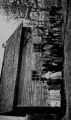
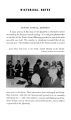
Show :nt Christopher's Mission to the Navajo is established by The Reverend H. Baxter ebler, Episcopalian missionary, in 1942. COURTESY SAINT CHRISTOPHER'S MISSION TO THE NAVAJO THE SOCIAL AND CULTURAL PATTERNS OF THE NAVAJO INDIANS By The Reverend H. Baxter Liebler* It is a privilege to address any interested group on the subject of Navajo culture. It is a pleasure, moreover, to speak to a group of people who do not need to be reminded that American history did not begin with the landing of the Pilgrims at Plymouth Rock, or even with Columbus' first landfall in 1492. The discovery during recent decades, of more and more specimens of thirteenth century architecture; the identification of human artifacts tentatively dated as far back as 12000 B.C.; and many other considerations have conditioned us to a realization that the land in which we live has seen the rise and fall of many peoples. Many of us think of the Navajo as a people who live in Arizona or New Mexico. Now, the Navajo people also inhabit a part of our great state of Utah, but it is only very recently that this fact is becoming more generally known. Furthermore, they are United States citizens. As you know, all American Indians were made citizens after World War I in recognition of the military services which many of them had rendered in that war. However, that citizenship was to some degree limited; it was limited primarily by what is known as "wardship" - the Indians are wards of the United States government. Just what this wardship really * Father Liebler is founder and vicar of Saint Christopher's Mission to the Navajo, Bluff, Utah. This article was taken from the address presented at the Tenth Annual Meeting of the Utah State Historical Society, May 12, 1962. 300 UTAH HISTORICAL QUARTERLY means is a moot question. It means a certain degree of care and concern for their welfare, to be sure, but to what extent it limits the rights of the wards has never been precisely defined. Certainly the popular concept that Indians are confined to their reservations is an erroneous one; they are not so confined, at least by any outward act or regulation on the part of our government or its officials. The Navajo is free to come and go as he wishes throughout this country, provided he has the means to travel and is not a vagrant. But strangely enough very seldom does it happen that he wants to do so. Until a very few years ago few of the Navajos went off the reservation except to work temporarily on the railroads in order to make a little money to pay their bills at the local trading post. And then they went in gangs and were watched over by the superintendents of these gangs. They were brought in from the reservation by the trader who was paid around twenty dollars a head for producing able-bodied Navajos. A certain number of them had to be English-speaking, in order to act as interpreters or as subforemen, so that the white foreman could channel his instructions through them to the individual Navajo or group. With the exception of this railroad work and some seasonal crop work in beans, beets, and potatoes, there was little to take the Navajos off the reservation. On the reservation they could live where they wished; they had to pay no rent; they could live off the land; they could graze their sheep, subject only to certain limitations by the grazing laws and by the grazing committees that enforce these laws. They could use the resources of the land; they could cut down such trees as they needed to build their houses; they could talk widi people of their own kind in their own language. Therefore, since all these things could be done nowhere else, the logical tendency has been for them to stay on the reservation. Many of these points which I have just mentioned are important considerations in connection with this whole subject of the Navajo cultural pattern, but before discussing them further, let us see if we can perhaps approach our subject with some definite idea of what we mean by culture. Culture has been variously defined by anthropologists. One definition which I saw, I think, on the doorway of the Peabody Museum at Yale, says: "Culture is man's reaction to his environment." Well, that is a pretty short definition, and like all short definitions it is inadequate and needs to be explained. For example, half-a-dozen people look at a beautiful sunset and each reacts to it in his own way. You can say per- NAVAJO INDIAN CULTURE 301 haps that these people reflect their culture by their reaction to their environment. But that is certainly not what we mean by culture. Let us try to be more explicit. Any given group of people, placed in strange surroundings with no resources except such that the environment may afford, is forced for the purpose of self-preservation to make use of whatever resources it can find. Now the obvious basic essentials of survival are food and drink, shelter and clothing - these last two items varying in degree and quantity according to the climate. How the group goes about the task of supplying itself with these essentials lays the basic pattern of that particular culture. Later come transportation and aesthetic satisfactions ranging from play to creative art. From this definition it is easy to see that the Indians who lived in the desert, for instance, should have a different culture from those who lived in the eastern woodlands or from those who lived on the Plains between the Rocky Mountains and the Mississippi River. The Navajo culture is far more complex than that of the Plains Indian, but before we discuss that let us go back to the Peabody definition of culture, "man's reaction to his environment," and inquire as to how the Navajo people came to live in the area where they are now. There are several theories about it, but I think anthropologists for the most part are agreed that what is referred to by them as "old Navajo land," roughly the area now occupied by the Jicarilla Apache Reservation in northwestern New Mexico, and possibly southern Colorado', was the first place where Navajos came into contact with the first whites who came into this part of the country. These were, as you know, the Spaniards. The length of time in which the Navajos had lived in that part of the country is again something that the anthropologists alone can tell us, and they cannot tell us very definitely since, being scientists, they keep their minds open and do not leap to conclusions. One thing, however, may give us a clue: in the Navajo's own legends, in his songs, he speaks of coming from a country which was to the east and to the north of where he is living now. If that refers to what the anthropologists call "old Navajo land," well and good; if it refers to somewhere else, somebody will find it out one of these days. Playing a little bit more with this word "culture," the dictionary tells us that it is based on a Latin word colere - to cultivate the ground. We retain it still in our words "agriculture" and "horticulture," and it has been used in a great many other combinations. But its basic meaning is to till the ground, to plow it up, to cultivate it. From this comes our word "cult," which means both a debased type of worship and a 302 UTAH HISTORICAL QUARTERLY highly exalted form of worship. Curiously enough, I do not think it is used for anything in between. We talk about "fanatical cults," and we talk about "the cult of the most High God." It is also related to our word "color" and to one who inhabits or lives in a land where he cultivates it, an "incolant." Everyone who has ever studied Latin has struggled with Julius Caesar's Gallic Wars, and almost everybody who got that far somehow learned the opening line Gallia omnis divisa est in partes tres quorum unam incolunt Galli. "All Gaul is divided into three parts, in one of which the Gauls are incolants" - they are inhabitants of it. More than that, they cultivate it. In other words they have identified themselves with the soil. They have stopped wandering around and they have begun to stand. Our word "state" is important in this connection too; the word "state" was first used to imply a settled condition in contrast to a nomadic existence - people wandered around, but when they stand, when they become static and take root in a given place, then the state has its beginning. The German language gives us a fascinating clue at this point. A farmer is ein Bauer. Now, bauen is the verb "to build." When hunters and nomads began to plant and cultivate the land, they built - and the farmer is the Bauer, the one who builds, having a more or less fixed habitation. When man begins to make himself static new problems arise. He has to have some sort of shelter. How effective is this shelter and what is it going to be made of? He must have food. Where does he get it ? Where does it come from ? Is he going to grab anything at all diat is edible and eat it? How selective can he be about it? All these things make for the incolant, the inhabitant, and, by extension, the cultivator. The culture of any given group begins to grow in and by the process of solving the several problems I have just mentioned. In the case of die Navajos, once they abandoned their nomadic way of life and became "incolants," they found out, just like almost all of the Indian peoples of America, that the cone-shaped or dome-shaped building is the safest of all buildings for form of structure. If the Plains Indian, for example, had made his tepee in the form of a wall tent, or like the Arab-style tents with the four-sided base and umbrella top, it would not have stood against the storms and the winds that swept over the Plains. Nor would the Navajos' buildings have stood up as they do to this day. Because they are dome-shaped or cone-shaped, the wind has less resistance, therefore, the building is far more durable than it would be in any other shape that man knows. This was undoubtedly discovered in an empirical sort of way, by trial and error. They found that the buildings NAVAJO INDIAN CULTURE 303 that were dome- or cone-shaped stood up; those that were shaped odier-wise did not. And so the Navajos adopted the same style of pole structure that the Plains Indians used, only instead of covering them with buffalo hide, because they did not have buffalo hide, they covered them with brush and mud - and there is no type of insulation more effective than mud. In fact the Navajo hogan of today is an excellent type of architecture, that can vie with almost anything that you can mention, but it does imply a certain degree of stability - of staticness, of stateness - because you cannot pick it up and move it very easily. It takes several days to move a hogan, so the alternative has been to build several of them in various places. When the grazing gives out in one area, the Navajos can move to another one. In the summertime the Indians are content with shades, that is, buildings made of brush or, in higher elevations, of juniper, fir, or pifion branches. In the lower elevations shades are made of branches of cottonwood, which act very much the way Venetian blinds do; they let the air through and shut the sunlight out, and they are probably the finest natural air-cooled, air-conditioned buildings that anyone could find anywhere. They are, however, less than completely satisfactory in a heavy downpour of rain, so they do have some little disadvantages. These two types of buildings, the hogan which is solid, strong, and well insulated against the storms of winter, and the shade, the chaha'o, for summer, are the two commonest forms of dwellings, and they are built out of the environment. What a man finds nearby is what he uses. If in the area there is rock that has natural cleavage, the Navajos naturally build their hogans of stonemasonry up to the roof, and very fine stone-masonry you will find in some of them, too. Then the roof is constructed in much the same way medieval arching and vaulting were done, by drawing each course a little closer to the middle until there is just an opening sufficient for the smoke from the fire below to find its way out. In other areas where natural cleavage rock is absent, logs are used from the ground up, in one of three well-defined styles. Food was the next thing to think about - in fact, chronologically speaking, perhaps we should have started with the food, as a man can get pretty hungry before finishing his hogan. In his original habitat, wherever that may have been, the Navajo had learned that there were certain roots that were edible, that there were certain flora which would make satisfactory food, and this knowledge he brought with him. Hunting - rabbits, squirrels, small game of one sort or another - was naturally a skill that he brought along with him. Almost certainly he "^h ipattJfeN^ Sfjg^ "$S§0$*i?i *0h The average hogan, home of the Navajo Indian, is ten, twelve, or fourteen feet in diameter. Constructed with materials provided by the environment, it is very solid, strong, and well insulated against the storms of wintertime. UTAH STATE HISTORICAL SOCIETY PHOTOGRAPH brought the bow along; if he did not he picked it up from the Pueblo, who at that time had developed the bow and was no longer using the throw-stick (attlatl), which the older Pueblo peoples had used centuries before. So the bow and arrow were ready to hand, and how strong your bow is, how big your animal is, are two things which grow together. The Plains Indian had to have a strong bow, and an effective one, in order to kill the buffalo. The Indian who lived in the Southwest needed no larger bow than one that would kill an elk or deer. But for the most part, I think the rabbit formed the simplest type of flesh food. There can be little doubt that the chief, cultivated crop was maize. The name itself indicates that it was a late introduction into Navajo life - it is called "enemy food," naddd. Probably it was often stolen from the Pueblos in raids, but certainly it was also cultivated in small fields by the Navajos themselves. Apparently, the Navajos never stayed on their farmlands except during the planting and the productive season. In the wintertime they were off somewhere else, perhaps in the higher reaches where there was more fuel to keep them warm and where there NAVAJO INDIAN CULTURE 305 were larger animals that they could hunt. When the Indians did farm, it was in the river bottoms in the areas that could be irrigated, and they learned to grind their corn in the Pueblo style and to lay it away for winter use. Certain berries were also ground and dried; fruits were also dried and laid away for winter. Our next basic essential for survival is clothing. Navajo clothing was made of animal skins or woven cloth. The earliest Navajos who came to the attention of any man who could leave written records which were not pure hearsay used one of two types of clothing. The clothing was either made from animal skins, which had a lot in common with the dress of the Indians of the Plains or even of the eastern woodlands, or those which were made of woven material, either of cotton or of wool, which were as far as I know peculiar to the Indians of the Southwest. The woman's dress was made of wool or of skin. The wool dress, biil, can still be found occasionally. It was very much like a paper doll's clothing. A little girl cuts out her paper doll and then she cuts out the dress, which has little tabs that fold back over the shoulders, and there, the doll is all dressed. However, she is obviously not to be looked at from the rear. The Navajo woman, on the other hand, had to be looked at from all angles, and so she had two paper-doll-style dresses woven of wool, one in the front and one in the back. They were first of all tied together, and later, when metal came in, they were fastened together with silver buckles or some form of clasp, one on each shoulder. A belt around the middle further ensured that all ideals of modesty could be observed. This, with the spiral deerskin leggings of the Pueblos, was the main article of attire for the Navajo woman when she first appears on our scene. The present costume of the Navajo woman probably dates from the period of her imprisonment at Fort Sumner, 1864-1868. Her old clothing wore out, and Uncle Sam issued yard goods. The army officers' wives showed the Navajos how to make skirts and blouses in the same pattern as they were then wearing. So the "typical Navajo costume" is actually a replica of the dresses of our grandmothers of eighty or one hundred years ago. It still prevails on the reservation, and until a few years ago it was virtually universal. But why did the Navajo dress style not change when the style of the white woman changed ? The explanation lies in the environment of the Navajo. A hogan is small. I do not think I have ever seen one that was more than twenty-eight or thirty feet across, and even that is very rare. More likely they are ten, twelve, or fourteen feet in diameter on the ground plan. Now, when all the members of a family unit live in one 306 UTAH HISTORICAL QUARTERLY room, and live by raising sheep, they naturally have to be ready to get up and move when the grazing gets poor. The wagon has only been introduced into the Navajo countries during the last hundred years, although it came in very fast. Let us say you are moving from one location to another and you are moving by wagon. Naturally, you do not want to make four or five trips; you want to move everything in one load. And since the average Navajo family consists of six to fifteen people, by the time you get your Sunday clothes or your changes of garments, your cooking utensils, your stove, your rifles, your bows and arrows, and various other personal things all loaded onto the wagon, there just is not any room left for furniture. And that means that there is nothing to sit down on in a hogan except the floor. So you sit on the floor. Well, you ladies do not need to exercise your imaginations very much to realize that if you are going to sit on the floor you are going to wear long skirts, because it would be very hard to sit on the floor in short skirts and still be a lady! This is a typical example of how the culture determines the style of dress. Details, such as color and decorations, are a matter of personal choice, but the long skirt belongs to the semi-nomadic type of fife that is the Navajo's reaction to his environment. For much the same reason the long skirt is also essential when riding a horse. The sidesaddle never became a part of the Navajo equipage. You, therefore, need a very full and very long skirt to ride in a dignified fashion if you are a Navajo lady; a short skirt again would be entirely out of place, from the standpoint of comfort and practicability as well as modesty. However, now that the pickup truck is coming in, this phase of culture at least is changing. Many Navajo women are now wearing the same kind of clothes you ladies are wearing, because it is now possible to have TV chairs, even if you do not have television. It is possible to have davenports, beds with mattresses, and so forth, because a family can now move from one location to another, maybe five, ten, or fifteen miles away, and make four or five trips in the pickup in the course of a day in order to carry these things. Here you see the breakup of the old Navajo culture because the environment is changing, even if only by the introduction of the pickup. Greater mobility immediately causes a change in the culture, as we have seen before, because the cultural condition which had been forced by the limitations of transportation - that is, by the wagon - has ceased to exist and the larger capacity of the pickup, capacity for speed as well as tonnage, has taken its place. Furthermore, the pickup may NAVAJO INDIAN CULTURE 307 introduce the supermarket into the picture. In the days of the wagon, the Navajo depended upon the trading post, which would be within possibly a half-day's travel by horse and wagon, for the supplies that he needed. The pickup can, in many instances, bring him in a comparable length of time into a small town where grocery stores run their business very much like those in large cities. Prices are considerably lower than those at the trading posts, and many gadgets can be purchased at the same time to amuse the children and the adults. Things start to come in that the trader would never have thought of putting into a trading post in the country. Lumber can be brought in by pickup, and imitations, though inferior imitations, of poor white man's houses begin to take the place of the beautiful and fitting hogan - fitting in the sense of blending into the background of the country, belonging to the country. Tar paper covered shacks have in many areas replaced the hogan, much to the loss not only of picturesqueness but of health, because these shacks are neither as well ventilated nor as well insulated as is the hogan. Other products of the white man have had their influence upon the Navajo. White flour came in even before the wagon did. It reduced the health level, and the introduction of candy, pop, and similar things has had a detrimental effect upon their teeth. Contacts with whites through the ability of the pickup to bring the Navajos into' towns has increased their exposure to disease. The ordinary communicable diseases of white people are now common amongst the Navajos. We expect the children to have chickenpox, measles, and all the other things that young, white children have, which in olden days the Navajos did not have. Venereal disease also has been introduced, and, of course, tuberculosis was a major killer up until a few years ago when the last of the diehards consented to X-rays and treatment with the miracle drugs at healing centers. Thus, the dog as the transportation medium, the horse as the transportation medium, and the car as the transportation medium, have each in succession had a tremendous effect upon the culture of our people. At this point, and even at the risk of some possible confusion, I think it is important to our understanding of the Navajo to make what is termed in the movies a "flash back." We have been looking at the Navajo as he is best known to white observers in the past few decades, but we do not really begin to know these people until we take a good look into something at least of their known history. They had no historiographers amongst them; they had no written language; and The cultural condition of the Navajos which had been forced upon them by the limitations of transportation has undergone numerous changes. The dog, horse, wagon, and pickup as transportation mediums, have each in succession been responsible for changes in the culture of the Navajos. UTAH STATE HISTORICAL SOCIETY PHOTOGRAPH stories were carried on from generation to generation simply by oral tradition handed down from father to son. I think the earliest records of any literate peoples and their contact with the Navajos go back to about 1626 and a few years later, when several of die Franciscan missionaries made reports of their contact with the Navajos. But the reports are very rudimentary and do not tell us much. It is only after the independence of Mexico from Spanish rule was officially recognized by the Treaty of Cordoba in 1821 that we begin to learn more about the Navajos. Then in 1848 the United States took over the whole of this part of the country from Mexico by the Treaty of Guadalupe Hidalgo, and we began to have close contact with the Navajos and learn more about them. In 1862, almost twenty years after the United States took over the former Mexican territory, our government began to be cognizant of the fact that the Navajos were a very troublesome people. By 1863 some NAVAJO INDIAN CULTURE 309 years after the gold rush had begun, the government got tired of hearing of attacks on wagon trains. At first people came to California by ship around Cape Horn, but in later years they had begun to cross by land over the Santa Fe and Chisholm trails, and many of them were set upon by small groups of Navajos, with the result that the army was brought in. Kit Carson was given the job of destroying the Navajo country, burning crops and running off livestock. He rounded up, near Fort Defiance, a large number of Navajos who> had submitted, and they marched off to a place in New Mexico variously known as Fort Sumner, Teesnosbos, or Bosco Redondo, according to what language you spoke. Here they were kept for four years. This pilgrimage, if you can call it that, was commonly known as "The Long Walk." The Navajos were kept in concentration camps under very bad conditions the entire time. After four years in the concentration camp the Navajos were anxious to return to their homes and to accept any kind of agreement whatever. A treaty was signed, and it was signed by men who were designated as head men. Remember, there was never a chief over the whole of the Navajo people; there was never one person who could make any obligation which would be binding upon all the Navajos. About nine thousand Indians were relocated in the heart of what is now the Navajo Reservation. Around this time was introduced the greatest cultural factor known to us in Navajo history - the sheep. Thousands of Merino sheep were placed on the reservation, each head of a family having an allotment; wagons, work horses, blankets, and flour were distributed, and from here on the Navajo was on his own. Traders settled in strategic spots, and the economic system which has prevailed for a century came into being. The individual Navajo established credit by the simple expedient of showing how many sheep he had, and promising to bring his wool to the trader every spring and his excess lambs in the autumn. He soon learned not to spend too much; if his account was not put in balance the trader warned him to go easy for the next six months, and usually there was little trouble. Often, for years on end no money crossed the counter, even the payment for weaving was usually in merchandise rather than in cash. The effect was obvious. There was, and is today, no feeling of insecurity if a man has not a cent in his pocket. There was no bank; there was no safe place to keep money. The situation was ideal, but for the inevitable effect on the Navajo. He did not learn the value of money. 310 UTAH HISTORICAL QUARTERLY He learned no sense of responsibility to meet his obligations promptly. His innate honesty, plus the needling of the trader, forbade his forgetting his debt, but as long as he intended to pay "sometime" his conscience rested easy. If another trader a few miles away offered a higher price for wool or lambs, he felt no compunction in changing his outlet - he would go back to the first trader next year, what more could anyone ask? There is plenty of time. And instead of expecting to pay interest on past-due accounts, he expected to get a treat from the trader when he finally did meet his obligation. Traditionally, this was a large can of tomatoes and some sugar. Later pop was substituted. And thirdly, when he did have money in his pocket, as when he got paid off for his work on the railroad, it burned holes in his pocket, and he spent it fast, lest it be stolen or lost. One of the most far-reaching provisions of the treaty was that a school and teacher would be provided for every thirty Navajo children who could be induced or compelled to attend school. Compulsion, alas, was the chief recruiting instrument. There are records of riders going off with ropes and actually kidnapping the children and taking them off to school. Many children were lost; they did not know their own names and did not know how to go back home when the schools were closed in the summer. Those who did go back were declared by their parents to be unfit for the work of a home. They had forgotten how to herd sheep; they had forgotten how to do the many tasks that are necessary in a Navajo home. The wave of resentment against the schools came and with it the sense of the uselessness of education. There are people now in the Navajo country who still remember the Navajos' protesting the senselessness of schools and of learning the English language. They said, in effect: "Nobody talks English except traders and school teachers, and the traders can almost all speak Navajo and we do not need the school teachers, so why should we learn to speak, much less to read and to write English." This was a perfectly reasonable viewpoint as long as the Navajo country was the whole world to these people. It was especially forceful in view of the fact diat the children who had been at school all winter were not able to herd sheep any better than, or even as well as, the children who had been kept out of school for this essential purpose. An obvious corollary to this attitude towards education is that naturally the brightest children, who were the most useful at home, most able to take care of the sheep and do other duties around the house which naturally fall to the children, would be kept at home and the stupid children who were not worth much anyhow NAVAJO INDIAN CULTURE 311 would be sent off to school. This is a very widespread thing even today and you will seldom find the brightest children in the schools if the parents can possibly avoid sending diem off. Having used the movie device of the flash back, let us now use the other movie technique of the close-up. Let us jump into the jeep now and drive off to a typical collection of three or four Navajo houses. As we approach what is obviously the main house, we perhaps see a woman out in the woodpile with an axe chopping some firewood, which she stacks up. As she sees us coming she drops her axe, walks straight to the door of the house, opens it, goes inside, and slams the door behind her. Well, actually it took me some time to get over the feeling that "there is a place I am surely not wanted." But we learned in time. The proper procedure is to follow her into the house - not to knock at the door, she knows there is somebody coming - to step inside die door, and to stand by the side of the door for a few moments. This undoubtedly was originally, and may well be today, a simple device to allow the pupils of one's eyes to expand, because if the sun is shining brightly outside it is almost impossible to see anything in a hogan when you first go in. Then, when you are able to see everything very nicely, you notice that here she sits in the south part of the hogan - the door of the hogan is, of course, towards the east, and, therefore, she will be seated to your left. She is sometimes surrounded by her smaller children, and possibly you will see the older children, the six-, eight-, ten-year olds, in the south or north part of the hogan. Then you step over to her and greet her. She extends her hand, not with a grip or a grasp, but in the technique sometimes known as the "dead fish." You take her hand in the same semi-limp style, give it a very, very gentle squeeze. Perhaps if she has a box of some sort or even some crudely-made stools, you may be invited to sit down, or very likely, in the case of a priest calling, she will have already spread a blanket in the west part of the hogan, on which he can sit. He will probably be invited to have some prayers. Well, you start having some conversation, perhaps with your hostess. Let us assume that these are people with whom you are as yet unacquainted; you might ask who lives in the hogan over this way, and she will say "Oh, that is for storage purposes." And who fives in the other hogan, over in the other direction? "Why, that is my daughter, my married daughter." And this brings up the attitude of the Navajos toward marriage. Marriage is a covenant relationship between a man and a woman, normally a lifelong union. One of our workers, very soon after the establishment of our mission, had a conversation with one of our Navajo NAVAJO INDIAN CULTURE 313 neighbors. He was one who had lived amongst white people more than any others in that area. The particular reason for this interview was that the Navajo wanted to borrow thirty dollars, and the not-unreasonable counter question came, what do you want it for ? And he said, Well, my oldest boy wants to get married and he wants to marry Shorty's daughter, Jessie; he would like to marry the other one, but she is the pretty one and he cannot afford her, but for thirty dollars and a bracelet I can get him the second daughter. She is a little bit lame and she is not as pretty as the other one, but that is the best we can do. Well, as you may imagine, our worker was horrified at this idea of buying a wife, and she said to him: Lorenzo, do Navajo children ever get married because they love each other and want each other? Do you have to buy a wife just as if you were buying groceries or buying a horse? This is something that you have outgrown now, something that belongs to the childhood of your people. He just let her talk on until she got her neck stuck way out, and then he opened up. He said, Listen. Sure, I have been with white people; I know. White man wants a wife, he do not buy no wife, he do not pay the father anything. No. What does he do? Well, first he asks girl "will you marry me?" And she says "yes." Right here on this finger - one hundred dollars for a ring. One hundred dollars for a diamond ring, right there on that finger. Then he got to have piece of land, maybe costs two, three thousand dollars. Then he got to have a house, maybe cost forty, fifty thousand dollars, and he got to> have furniture inside it, and he got to have plates and knives and forks. Then he has to have big wedding, invite lots of people, costs lots of money; got to have flowers. Got to have church, got to pay the preacher, got to pay man to clean up church afterwards - listen, all I want is thirty dollars. Needless to say, he got his thirty dollars. It still comes hard to us until we stop to think about the economic background of the institution of marriage and the dowry. A dowry was a sum of money paid by the bride's father to the prospective husband. Now in those days, or in the countries where the dowry prevailed, an unmarried daughter was a liability, financially speaking. She had to be clothed, fed, not to mention educated, and she was a nonproductive unit in the family. Therefore, any young man who took her over was entitled, by the very nature of the thing, to a consideration. This would allow him to get established perhaps in better quarters, more suitable for a married couple than his previous bachelor quarters 314 UTAH HISTORICAL QUARTERLY had been. It was a perfectly clear and well-understood thing. The father was not bribing somebody to take the girl off his hands; he was simply making an economic adjustment which was well understood and became a part of die mores, or customs, of the people. Amongst the Navajos it is exactly the opposite; an unmarried daughter is an asset. From early childhood a daughter has been taught to take care of the younger children. Most Navajo families have a child every other year. A few families have a child every year, for it is not unusual to have families of eight, ten, twelve, fourteen, sixteen, as many as eighteen children. But this is only possible, without hiring baby sitters, because of the cultural custom of teaching a child, especially a girl-child, to assume the care of the child perhaps two children below her in the scale as soon as she is physically able to do so. Consequently, her mother is relieved of the greater part of the care of the children, with the exception of the newest-born and possibly the one before that. These girls are taught to weave usually shortly before or after puberty, and they become again an asset from that point of view. They are taught to herd sheep as early as four and five years of age. Although they are not entrusted with the shearing, they are helpful in that process also, bringing in the sheep, catching the ones that are wanted and bringing them to the mother or the father. This girl, then, is an economic asset to her family, and when a young man comes paying his suit and making eyes at her, naturally, he is going to have to pay. So the pattern has been very definitely established - boy meets girl, boy likes girl, girl likes boy. Then comes the all-important first question: "What clan do you belong to?" If they belong to the same clan or related clans, or if their fathers belong to' the same clan, the whole thing is off right there. Such a union is unthinkable, even if the boy and girl concerned are complete strangers to each other. The clan relationship is equal to the relationship of brother and sister amongst us. But, assuming that all the clan taboos are taken care of, then the prospective bridegroom goes back to his parents. He says, I saw such-and-such a girl. I think she is a very nice girl and would make me a good wife. They say she is a good weaver and a good herder, and I like her and she likes me. She said it would be all right if our parents agree. So, after a very short delay, if any, the father and mother put on their best clothes and their jewels, and they solemnly proceed to the home of the prospective bride's parents. There, all matters are thoroughly discussed. It may take a whole day. The question of the clans is gone into NAVAJO INDIAN CULTURE 315 again and must be thoroughly and satisfactorily cleared. Then a price is arrived at; it may take a good deal of bargaining; it is perfectly friendly; there is no enmity whatever about it. If the parents of the bride seem to be too grasping, there are arguments showing why this is not possible, or why, in the opinion of the others, the price is exorbitant. Sooner or later a consensus is reached and all arrangements are made, including the day of the ceremony. Invitations are sent out to all relatives, neighbors, and friends, and usually there is a large gathering. The ceremony itself is a very simple one. As in Christian teaching, it recognizes the fact that the bride and groom are, as we say in Catholic theology, the ministers of the sacrament. They marry each other; nobody marries them. A medicine man normally conducts certain prayers. There is a mixing of meal in a basket, a special wedding basket which is usually of the sort that is made in our country by the Utes to the north. Then there is a common eating out of this one dish after it has been properly sprinkled with tadidiin, that is, corn pollen, and then there is a series of speeches by the older men on the subject that used to be called "how to be happy though married," and after this they disperse. This is the marriage pattern and it is normally, as I say, a lifelong union. Occasionally there comes apparently a personality clash or some other thing which makes it necessary in the minds of all concerned for a divorce. Usually the cause of the divorce is thoroughly discussed by both families together in conference, and if they decide that a separation is inevitable, a separation is duly effected. It is commonly said in the books that a woman can divorce her husband simply by putting his personal belongings outside the hogan. When he comes in he knows he is finished. Or a man leaves his wife by stepping over the fire - rather difficult to do now that they have stoves and stovepipes - but he steps over the fire and walks out, and then she knows that he is not coming back. In any case the house belongs to the woman, and the man is out of house as well as out of luck. This sort of divorce proceeding is perhaps occasionally found, but the commoner one is the complete conference of all the family, and this arrangement which we call "group dynamics" solves a great many problems. The Navajo knew about group dynamics long before we of the Anglo-culture took it over. I cannot leave that subject without speaking about the mother-in-law taboo. As soon as the marriage arrangements are completed between the families of the two who are to be married, the bridegroom does not look at or speak to his spouse's mother. There is no enmity; there is no sullenness; there is no quarreling - you cannot quarrel if 316 UTAH HISTORICAL QUARTERLY you cannot talk. This is a very wonderful and wise provision, as long as it is almost universally observed. The Navajos have no joke books, so they do not miss having this perennial source of amusement that we have depended on for many years, the famous mother-in-law jokes. The Navajo has, one might say, three group relationships. There is the immediate biological family - mother, father, and children. Beyond that diere is the extended family, which contains what we would call cousins, both paternal and maternal, who are regarded as siblings. These are called father and mother, and are treated precisely as such, and their children are called brother or sister, by the children of the original family. This is known by the anthropologists as the "extended family." And then there is something still greater which for lack of another word we call an "outfit." This includes the clan members of both sides of the family, and they may be called upon for decisions in extremely important matters. Now a person's clan is always that of his or her mother. You are also "born for your father's clan." For example you ask a man what his clan is, and he will say "Todichini - I am of the Todichini [bitter water or alkali water] clan, born for Tdba [waterside]." There are probably twenty-eight or thirty major clans amongst the Navajo people. These clans are exogamous, which means that you cannot marry within your own clan. Therefore, every family represents clearly two separate and distinct clans. Within each clan there are anywhere from five to ten related clans, and it is sometimes debated whether a person can marry into a related clan or not. The strength of this particular taboo varies from one area to another. I wish to say something about morals. A certain type of visitor to our country is particularly interested in the morals of the Navajo. Curiously enough, this word "morals" is almost always associated in people's minds with sexual morality. As a matter of fact the whole word "morals" needs a great deal of explanation. Originally it meant "social customs." Today we have elevated it, I think due to Christian moral theology, to certain principles which we consider to be right or wrong, whether or not another group considers them similarly. Now the attitude of the Navajo towards the subject of morality - sexual morality - is not difficult to understand if we stop to think again in terms of what a culture is. I spoke about marriage and how it is brought about. If a prospective bridegroom has any reason to suspect that within the next six or eight months his bride is likely to give birth to a child which is not his, he is going to feel that he has been hoodwinked, in that he is going to have to support a child which is not his NAVAJO INDIAN CULTURE 317 own. To what extent the laws against adultery and fornication are based on this economic motive is a question which other people know a great deal more about than I do. But certainly amongst the Navajos it is recognized, and for that reason a mother is very careful in her rearing of her girls. Under the old culture at least, before the schools began to be an important element in the changing culture, you would never see a girl walking by herself. She was always accompanied by some other member of her family. A girl is never sent out to herd by herself; always somebody goes with her, the mother herself, even. She does not go anywhere unless accompanied by a member of her family or of the very extended family. Sleeping as they do, all in one hogan, there are certain dangers, since hospitality is one of the laws of desert life and any passing stranger is invited to stay overnight if he bids for such an invitation. But since they are, as it were, all in one room, such an idea of violation of hospitality is virtually unthinkable. It is clear then that the morality of the Navajo- in his undisturbed cultural condition is above reproach. The influence of white civilization has not been ordinarily to the good in this matter. Two influences have come in which are directly concerned. One is schools, another is state aid to relieve poverty. The schools have taken die children away from their families, away from their environment, and brought them together under, for the most part, white teachers and dormitory attendants who may, perhaps, be educated Navajos. By educated we mean somebody who has gone through grade school and possibly even high school. And these individuals are not particularly interested in the maintenance of Navajo culture. One result is that the children at first are frightfully shocked at the things they are expected to do. In their supervised recreation, for example, they are expected to dance, and it is impossible for you or me to understand what it means when a child is told to dance with a girl whom he knows to be of his own clan. This is the sort of thing that just is not done amongst the Navajos, but when he goes to school he is taught that he must do what he is told to do. The result is that he grits his teeth and does as best he can that which he knows to be shockingly wrong. Such a thing undermines the respect which he had in the olden days for the taboos of his people. The other factor I mentioned was state welfare. In view of the way things have turned out, I regret to say that our mission was a pioneer in getting state aid. One of the things you can do with a hungry man is to feed him, and one thing you can do with a poor man is to give him an allowance of some money - but you still do not touch his mind. One 318 UTAH HISTORICAL QUARTERLY of the elements in welfare is what is known as ADC (Aid for Dependent Children). A widow who has children and no source of income is taken care of by the state, instead of being expected to hire out as a worker and neglect her children. An unmarried woman who has had a child or two may appeal for ADC and get it. She finds perhaps that if she has one child she gets so much money every month; if she has another child, she gets a considerable increase. What is more natural, since her culture is a means of getting what people need - food, clothing, shelter, and so forth - than that she should figure out some way of getting three, four, or five children. Since that is what Uncle Sam wants, that is what he shall have. It reminds me of the story that Ernest Thompson Seton told many years ago about a Navajo who ploughed in all his hay and planted loco weed, because the agent had told him that he would pay twenty dollars a ton for loco weed brought in, whereas he was only getting eighteen dollars for his hay. Another one along the same lines is the story about die man who had a coyote ranch where he was raising coyotes for the bounty on the pelts. Now, let us go back to the hogan where we were a while ago. I feel quite sure that blindfolded I could go into a Navajo hogan where I had never been before, and I could show you where the staple groceries are kept and where the suitcases, containing the outseason and extra ceremonial clothing of the people, are piled one upon the odier horizontally. If there are two wives in the family I could show you where the groceries belonging to the other wife are kept. This exactness is not simple conservatism; this is an element in culture, a way of life. All of you who have ever moved from one house to another have been keenly aware of the problem: "What shall we do with this? Where shall we put the piano? Where shall we put the furniture?" These are some of the many trying things about moving. The Navajo, as we have seen, has to move frequently because of the grazing. In a semi-arid area forage for sheep is scanty, and a matter of weeks, months at the most, makes it necessary to move to another hogan. Once you have solved the problem of where everything shall go, it no longer exists. Therefore, each hogan is arranged in exactly the same way as the other was. The shelves, if they have them, or old orange crates piled one on top of the other, where the dishes and cooking utensils and the staple foods are kept, are just to the left of the door. The rifles, or bows and arrows, are about one hundred and sixty degrees around the circle. The pile of suitcases are almost directly opposite the door, maybe one hundred and eighty degrees from the entrance. If there are two wives living in the same hogan, you find NAVAJO INDIAN CULTURE 3ig another set of dishes and staple groceries and other things in the shelves or the orange crates just to the right of the door, to the north side of the hogan, as you come in. Again, this is a cultural pattern which has been developed in order to save a great deal of trouble and questions when you move from one place to another. One of the moves that takes place in a great many families is in the spring of the year, when families or parts of families move to what they call their garden or farm, da'ddk'e. At this farm they plant. They prepare the land, irrigate, and so on. The fields are planted with corn or whatever the Indians happen to have. Peach trees are cared for, and a late pruning is done shortly before the seeding of the annual crops. The family will go back to their more-or-less fixed home, returning again to the garden at suitable times if irrigation is going to be necessary. They will return to the farm when the apricots are ready to be picked, dried, and laid away for winter use. They will come back again later when the peaches are ready to be so cared for. They do the same with grapes, and finally with the corn and melons, which are usually the last crop. After that, their farm is usually abandoned until the following spring, when they return to do the whole thing over again. I spoke a short time ago about hospitality. If a person wants hospitality it would normally consist of overnight lodging and food. You can walk into a Navajo hogan when the family is engaged in a meal, and they will extend a hand (perhaps greasy from food), greet you, and invite you to sit down, but not to the meal. The meal is being served from the floor, with all the members of the family squatted around. In the center there is perhaps spread on the ground a sheepskin with the wool side down, or possibly a piece of oilcloth or canvas which serves as a tablecloth. In the middle of this there is a bowl containing whatever type of food is available, and alongside of it is perhaps a tin plate with loaf after loaf of Navajo bread. Navajo bread is usually about one-half to one inch thick and the size of an ordinary dinner plate or frying pan in which it is usually cooked, and each member of the family picks up a piece of this bread, breaks off as much as he wants, and tosses the rest back in the pile. With this as an implement he dips into the dish where the stew, or whatever the main dish of the meal is, and from that he feeds himself. If there is meat, and there sometimes is meat, he will usually have a knife in his left hand, insert a chunk of meat into his mouth and grasp it with his teeth, holding the larger portion between the folded piece of his bread. Then with his knife he 320 UTAH HISTORICAL QUARTERLY will saw off as much as he thinks he can masticate readily, being very careful, of course, not to cut off his nose at the same time. When he has taken care of that, he gets a little more, and the process is repeated. Now, a stranger is not invited to partake of the meal. But if he just says two words, dichin nishli (I am hungry), he is immediately shown a place to sit down and join in with the meal. But the initiative must come from the guest. Similarly, with overnight entertainment, the common invitation of a prospective guest to become a guest is, "Where shall I sleep?" He does not say, "Have you a place for me to sleep?" or "Would it be convenient?" or anything like that. It is just, "Where shall I sleep ?" And if you have your own blankets, as you should certainly have if you are traveling, you are shown a spot in the hogan where you may spend the night. In the morning you will have the customary coffee and bread which constitutes the morning meal at an early hour, usually shortly after dawn. This is a necessary factor in desert life. There are no restaurants; there are no hotels, no motels. A man intending to undertake a journey of several hundred miles will catch and saddle his horse, tie his blanket on the cantle of the saddle and set off, knowing that wherever he finds a hogan he will find something to eat and a place to spend the night. Seldom does he have to roll himself up in his own blanket out-of-doors. This naturally entails a reciprocal relationship. He knows that at his own hogan this type of hospitality must at all times be available to strangers who come in. Any man who refuses hospitality to passing strangers very soon becomes known as one who does not extend hospitality and reciprocal measures are taken by the community. This happens very rarely, and I think is purely in the realm of the hypothetical at this time. Another factor in the change of culture, which I regret to say is not always for the better, is missions. Their influence is considerable as represented in the attitude of the Indian toward transportation. Missionaries drive all over the country in jeeps and other vehicles. One of our workers not very long ago saw two or three women sitting by the roadside, obviously waiting for a ride. The missionary worker said, "Do you want to get in? Do you want a ride?" The Indians said, "Oh, yes. We want to go right where you are going." One of them enlarged on this point by saying, "We was just a-wishing and a-wishing that a missionary would come along." And our worker naively thought that the woman was longing for the consolation of the gospel, but it was very obvious that what she wanted was transportation and of the most modern type which could be provided by the missionaries. NAVAJO INDIAN CULTURE 321 Similarly, with the clothing which many missions distribute either free or for a very slight consideration, the culture of the Navajos is being changed. No matter how much the Indians love their old style of dress, with the coming of the pickup truck and increased mobility, and the fact that the clothing distributed by the mission is quite practical, the old style of dress is dying out. Clothing of the white man, especially amongst the children, is rapidly taking the place of the traditional Navajo dress. I am always being asked about the Indian attitude toward missionaries. Well, it is similar to their attitude toward the government with regard to education and other things of that sort. We, the Navajos, are doing a great favor to Washington by sending our children to Washington schools. In the same way, we are doing the missionaries a great favor by attending church services, and in return for this free gift that we are making to the missionaries we expect certain considerations and favors. It is an extremely difficult thing to get over the idea that the missionary is there for the benefit of the Navajo and is not being paid or rewarded, by their participation. For this reason it is very difficult to answer the question as to the number of converts and adherents that any particular mission has. You can always fill a meeting if you make sufficient inducements in the way of food or other desirable things. The effects which missions have had upon the Navajo people are difficult to evaluate. Different people with different viewpoints would naturally differ widely in their evaluation. I cannot speak without prejudice in this matter, obviously, since I have very definite ideas as to what I think religion ought to do for people. But it is quite clear that both the missions and the schools have had a very serious influence upon the thinking of the younger generation. The lack of opportunity for those who live in the boarding schools or in the mission areas for participation in the ordinary rites which are part of the life of the Navajo has made a difference. The ridicule to which Navajo' customs are exposed on the part of some school officials, and, I am afraid by many missionaries, creates split loyalties, and a very serious psychological problem can easily arise as a result of this. Probably the most confusing of all is the multiplicity and variety of Christian missions. This is a subject on which I have very definite views, and it is a fact that the Navajos are unspeakably confused by the presentation of variant forms of Christianity which, obviously, are irreconcilable with one another. The mere fact that one can choose what kind of Christ one wishes to follow, or even whether one wishes to fol- 322 UTAH HISTORICAL QUARTERLY low Christ at all, is leaving a fundamentally important decision in the hands of a child or an adult who- is obviously incompetent to make a wise judgment because he has no basis on which to make that judgment. The only criterion the Indians have to follow is the very obvious one that missionaries give out things and the one which gives out the most is the one which will have the most adherents. Better still, from the Navajo point of view, is a nominal adherence to three or four or more kinds of Christian missions, in the hope that material benefits will be received from all of them. This is technically known as "making the rounds." This confusion expresses itself in some such words as these: I do not believe the old stuff any more. I do not believe the things my father and my mother believe. I do not believe those gods any more - I still think there are ghosts; I still think there are things we should be afraid of, but I do not believe in the things that they have to do all the time. I do not know what to believe because one missionary says one thing, one says the other thing. All say, "do not go any other place, just come to my church," and I do not know what to do. We cannot help being sympathetic with this viewpoint, but naturally none of us is in a position to give a final answer, or perhaps we are all in a position to give a final answer. They should come to my church and then everything will be fine! Another question that is frequently asked is about die influence of the discovery of uranium and oil on the reservation. Both of these have made more employment for individual Navajos. Whether diis is a good thing or not is open to debate. Without the ability to read, write, or conduct a bank account, they become spendthrifts very readily, as soon as they command high wages. All Navajo tradition is against hoarding money, and the knowledge diat your money is likely to be stolen from you if you leave it lying around the house is enough to make you want to spend it just as quickly as it comes in. I do not know more than half a dozen Navajos in our particular area who have bank accounts, and more than half of these have some white man maintain it for them. The result is that men who are able to earn eight, ten, twelve, or fifteen dollars a day for semi-skilled labor in the mines or in the oil fields are getting it and spending it. There is no reserve for old age; there is no purchasing, even, of personal insurance. They do not expect to pay for medical work done for them, so there is no point in having medical insurance. They have a low standard of living. They can live in tents or hogans which they make themselves. There is no rent to pay, no utilities to pay, and they are naturally a serious competition for the white -3B •JHET ^LJ 'w*i» Missions have been a factor in changing Navajo culture by introducing children to white man's education and machinery. COURTESY SAINT CHRISTOPHER'S MISSION TO THE NAVAJO laborer, skilled or semi-skilled, who would like to have the position but cannot afford to work quite as cheaply. The tribe, as a tribe, receives royalties for all the uranium and oil that is taken off the reservation. This has amounted to millions of dollars, much of which is being used wisely by the tribe for improvements which should eventually benefit all of the people. Once in awhile there comes a call to have this money distributed per capita throughout the whole Navajo nation. The Navajos are excellent mechanics, reports to the contrary notwithstanding. They can make an old jalopy work with a piece of baling wire, or perhaps some chewing gum or something of the sort. They are almost magical in the ways in which they can make a car work, which you or I would abandon as utterly useless. They are exasperating to any trained automobile mechanic who employs them, because their methods 324 UTAH HISTORICAL QUARTERLY are so completely unorthodox. However, as far as repairing their own cars is concerned, it is really remarkable the way a man who' is unable to read or write, who can speak only a few dozen words of English, knows exactly how to fix a broken distributor head, put in a new clutch, or adjust his generator. This is also true with regard to other skills. The Indians catch on very quickly to the things they need to do, although they do not like to be forced into a mold and made to do everything exactly the right way. People often ask about the Navajo religion. This is supposed to be my special field, so what I say is likely to be very much colored by my own beliefs. Whether we can speak of a Navajo religion or not depends on what we mean by religion. In the Judeo-Christian tradition the idea of religion is expressed in the word "binding back," or a union of the soul with God. In Navajo usage, and in much of present-day Christianity, religion is intended to do us some particular good in a material way. It is very easy to criticize the Navajo for saying he wants religion because it heals his sickness; because it takes away his headache or his bellyache, or whatever is ailing him (his bad dreams or other penalties that have come upon him for the violation, perhaps, of some taboo); or because it gives him good fortune in hunting, in marriage, or in any other pursuit that he happens to be undertaking at the time. But we should perhaps be rather careful about that ourselves, because I have known many Christian people who have joined churches because they wanted to meet desirable people and "get in with the best people." They wanted to "have something to uplift them" and "give them something to live by for the rest of the week." They wanted to find peace of mind and all that sort of thing, and that is exactly what the Navajo> is going after. It has been said that the difference between magic and religion is that magic attempts to force the deity to do the will of the "shaman" or the medicine man, whereas religion is designed to bring the will of man into conformity with that of God. These are obviously diametrically opposed to one another, and yet there is a point where the two' come together. The Lord's Prayer, for example, as given by Our Saviour, has three petitions for the glory of God, which indicates that the one who is praying is trying to put himself in the position of a liege to his lord. The concluding petitions are all for the benefit of the liegeman. It is, therefore, not so very shocking to us to find that the Navajo ceremonial is done for a very specific purpose - to get something for the patient or worshipper. We use, in our own mission, an adaptation of a medicine NAVAJO INDIAN CULTURE 325 man's prayer, which contains such phrases as these following. In the original prayer it said, "I am performing this rite according to what you tell us to do; consequently, you must do what we want you to do." With a very, very slight change in the wording it turns out to be this, "We are performing a rite which you have commanded us to make, and we pray you that we may live according to your commandments." In other words we are doing what we are told to do primarily not to get something for ourselves, but to fulfill the will of the Deity. And we pray for what we call Grace, in order that we may become pleasing to our Heavenly Father. There is nothing in the Navajo religion which corresponds, for example, to the Christian calendar, with Christmas, Good Friday, Easter Day, and Pentecost, but there are rites, recognized rites, in connection with the events in a person's life. The first laugh of a baby, the puberty ceremonial, marriage, and death are marked by prescribed ceremonials. Furthermore, such important events as planting, harvesting, etc., are always accompanied by religious exercises. I have not found in Navajo religion anything corresponding to what we speak of as intercessory prayer. A man prays for himself. He hires a medicine man to come in to perform a rite over him. If someone else wants a part in that he must sweeten the kitty and he may come in, but this does not lessen the force of the good that comes to the original person who hired the medicine man. I have not found in Navajo religion anything that corresponds to a belief in one, single god; not even what is known as "henotheism," or one god who is above all the other gods. There seems to be a complexity of supernatural beings, some of whom are good and want to work well for mankind if they are properly approached; others who are disposed toward evil must be placated in order that they do not work evil against us. I do not say that there is no monotheism amongst Navajos; I simply say that I have not come across it, excepting where it is obviously a result of exposure to Christian missionaries, of which the informant may, perhaps, be quite unconscious. But it does not seem to be imbedded in the rites or the ancient traditions of the people themselves. |