| OCR Text |
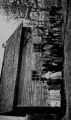
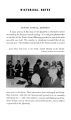
Show • IMMfcV1**- i^^T^E Dome-shaped beaver lodge and a beaver, vhich played a prominent part in the early •conomic development of the West, because 'he furs commanded a ready market in Eu-vpe and were almost the only New World •ommodity affording immediate returns. COURTESY Salt Lake Tribune, INSET CURTESY UTAH STATE DEPARTMENT OF FISH AND GAME THE POISONOUS BEAVER OF SICK RIVER By R. Wharton Gaul* The river on which we were now encamped, and the fortunate and timely discovery of which had saved us from the last extremity of thirst, is called 'La Riviere Maladi' (Sick River) and owes its name to the fact that the beaver found upon it, if eaten by the unwary hunter, causes him to have a singular fit, the symptoms of which are, stiffness of the neck, pains in the bones, and nervous contortions of the face. A party of half-starved trappers found their way to this stream a few years since, and observing plenty of beaver 'signs,' immediately set their traps, in order to secure provisions. At dawn the next day, several fine large fat beavers were taken, and skinned, dressed and cooked, with the least possible delay. The hungry trappers fed ravenously upon the smoking viands, and soon left scarce a single bone unpicked. Two or three hours elapsed, when several of the party were seized with a violent cramp in the muscles of the neck; severe shooting pains darted through the frame, and the features became hideously convulsed.1 In these words, Warren Ferris, in 1830, gave us one of the earliest descriptions of a peculiar illness following ingestion of beaver meat from a certain stream well-known to the fur trappers of the Rocky Mountains. A study of the literature of the American fur trade reveals * Dr. Gaul is a practicing orthopedic surgeon of Charlotte, North Carolina, who has an ardent interest in the history of the West. 1 Warren A. Ferris, Life in the Rocky Mountains, 1830-1835. Annotated by J. Cecil Alter (Salt Lake City, 1940), 57-58. 264 UTAH HISTORICAL QUARTERLY many instances of similar occurrence. We will consider them in the light of current medical knowledge and perhaps gain insight into the problem of the poisonous beaver of Sick River. There is an element of confusion in the literature regarding the waters referred to in the various descriptions of poisoning. As we shall subsequently see, both of the present "Malad rivers," one a tributary of the Bear River and the other representing the upper waters of the Big Wood River, were sources of the illness. Several other well-known streams are involved in the story. As far as possible, we will let the partisans, brigade leaders, and trappers tell their own story, a mystery as yet incompletely solved. Alexander Ross of Hudson's Bay Company encountered the poisonous beaver in 1824. His party camped on the Big Wood and set traps in the evening. The next morning, some of his men dined on the previous night's beaver yield. Two hours had not elapsed before thirty-seven persons were seized with gripings and laid up. The sickness first showed itself in a pain about the kidneys, then the stomach, and afterwards the back of the neck and all the nerves, and by and by the whole system became affected. The sufferers were almost speechless and motionless, having scarcely the power to stir yet suffering great pain, which caused froth about the mouth. I was seriously alarmed.2 After applying some home remedies to the stricken trappers, . . . we examined the flesh of the beaver and found it much whiter and softer, and the people who had eaten of it said much sweeter to the taste than the flesh of beaver generally. As there was no wood about the banks of the river we supposed these animals must have lived on roots, and in their food have eaten some poisonous roots which although not strong enough to destroy them was sufficiently deleterious to injure us, and from this it was that I named this stream Riviere aux Malades.3 Thus, by 1824, while the competition between the brigades of Hudson's Bay Company and the far-ranging trappers of the Rocky Mountain Fur Company was just beginning to reach its peak, and while beaver were still abundant on the innumerable streams of the West, the picture of poisoned beaver trappers was already beginning to be well recognized. There are yet other incidents in the literature of the fur trade relating to poisonous beaver. Joe Meek, relating his adventures to Mrs. ' Alexander Ross, The Fur Hunters of the Far West (Norman, 1956), 276. 3 Ibid., 277. POISONOUS BEAVER OF SICK RIVER 265 Frances Victor, tells of a trapping party under Milton Sublette which, in 1832, found its way to the region of the Humboldt and Owyhee rivers in northern Nevada and adjacent Oregon and Idaho. He states, Owing to the arid and barren nature of these plains, the largest game to be found was the beaver, whose flesh proved to be poisonous from the creature having eaten of the wild parsnip in the absence of its favorite food. The men were made ill by eating of beaver flesh. . . .4 Isaac P. Rose, who was present with this party, confirms the fact. "At first they tried to eat the flesh of the beaver, but this was soon discovered to be poisonous from the fact the beaver feeds on wild parsnip which abounds on the Humboldt River." 5 Continuing our search, we find a report by Nathaniel J. Wyeth in January, 1835, that some of his men became ill after eating beaver caught on or near the Deschutes River. "They reported to me that the beaver on this creek had made them sick. Probably this was what was the matter with me. [Wyeth had suffered from fever and indigestion two days previously.] There is plenty of wild parsnip here."6 Although he gives few details, one of his men had suffered from numbness in his hips from eating the beaver meat. Osborne Russell encountered a similar situation in 1842. While trapping the region between the Bear and Snake rivers, he comments, The next day we travelled South about 15 Mis thro, a low defile and the day following we crossed the divide and fell onto a stream called "Malade" or Sick river which empties into Bear river about 10 Mis from the mouth. This stream takes its name from the Beaver which inhabit it living on poison roots. Those who eat their meat in a few hours become sick at the stomach and the whole system is filled with cramps and severe pains but I have never known or heard of a persons dying with this disease[.] 7 Aubrey L. Haines, editor of Russell's Journal, refers to a map of Alexander Ross' showing River Malade entering the Snake River from the north just below Snake Falls, thus identifying it with a portion of 1 Frances Fuller Victor, The River of the West. Life and Adventure in the Rocky Mountains and Oregon; Embracing Events in the Life-Time of Mountain-Man and Pioneer: . (Hartford and Toledo, 1870), 104. 5 James B. Marsh, Four Years in the Rockies or, The Adventures of Isaac P. Rose (Columbus, 1950), 88. "F. G. Young, ed., The Correspondence and journals of Captain Nathaniel J. Wyeth, 1831-6; a Record of Two Expeditions for the Occupation of the Oregon Country, with Maps, Introduction and Index, Sources of the History of Oregon (Eugene, 1899), I, 244. 7 Osborne Russell, Journal of a Trapper. Biography and maps by Aubrey L. Haines (Portland, 1955), 124. 266 UTAH HISTORICAL QUARTERLY the Big Wood River of Idaho.8 Russell himself referred to the other Malad River, a tributary of the Bear lying in Idaho and Utah. Ferris later in his narrative states, There is a small stream flowing into the Big Lake, the beaver taken from which, produce the same effect. It is the universal belief among hunters, that the beaver in these two streams feed upon some root or plant peculiar to the locality, which gives their flesh the strange quality of causing such indisposition. This is the only mode in which I ever heard the phenomena attempted to be explained, and it is most probably correct.9 Wild parsnip and poisonous roots! Already the solution seems to be in sight. It is apparent that the credit for the early documentation of this subject is based upon the journals of leaders of the various Snake Country expeditions of the North West and Hudson's Bay companies.10 The brigades of Ross, McDonald, McKenzie, and others had crisscrossed and opened up the country in an effort to strip the streams of beaver before the onrush of the Americans. By early 1824 Jedediah Smith had crossed South Pass, and Etienne Provost had arrived on Green River from Taos.11 It was only too apparent that the country would soon fall into the hands of the Americans. This fact, plus the need to increase the return of beaver from the far-western reaches of the Hudson's Bay empire, were the factors leading up to the Snake Country expeditions.12 And it is only fitting that it is from the journal of perhaps the most outstanding Hudson's Bay leader of this era, Peter Skene Ogden, that we first begin to solve the problem of the poisonous beaver of Sick River. In Ogden's journal of the 1825-26 expedition, we read, Friday, 3rd. [March, 1826] Reached River Malade, Sickly River, and encamped on this river, a fine large stream; derives its name from the beaver living on a poisonous root. Formerly, in 1819 [probably Donald McKenzie's 'Ibid., 172. ' Ferris, Life in the Rocky Mountains, 58. 10 For a brief resume of the Snake Country expeditions, see Harrison C. Dale, The Ashley-Smith Explorations and the Discovery of a Central Route to the Pacific 1822-29 (Glendale, 1941), 40ff. 11 Dale Morgan, Jedediah Smith and the Opening of the West (Indianapolis and New York, 1953), 92, 144. '" For the reasons underlying the necessity of increasing the yield from the former North West Company territory, see Frederick Merk, Fur Trade and Empire, George Simpson's Journal . . . (Cambridge, 1931). Area in which the poisonings of trappers took pl^ce. expedition], all who ate of the beaver taken here were seriously ill. Beaver here must subsist on roots.13 T. C. Elliott identifies Ogden's Malade River as the present Big Wood River of Idaho. Ogden subsequently moved to Raft River where we read of his experiences. "Tuesday, May 9th. Half the camp ill from meat of beaver fat from eating hemlock." 14 Shades of Socrates! We will consider the subject of hemlock later. And finally we read that John Work, on March 21, 1832, while on the Salmon River or its Lemhi tributary, records a death of singular concern to our study. "In the afternoon after " T. C. Elliott, ed., "The Peter Skene Ogden Journals, Snake Expedition, 1825-1826,' The Quarterly of the Oregon Historical Society, X (December, 1909), 355. "Ibid., 361. 268 UTAH HISTORICAL QUARTERLY encamping, a youth, M. Plante's brother-in-law aged sixteen or seventeen years, ate hemlock root in a mistake; was poisoned, and died in a short time." 15 In this case, no beaver acted as intermediary host to modify the poison and one of the few, if not the only, death from this source is recorded. Inquiry was directed to the state of Idaho to ascertain what poisonous plants were known to biologists in the area. W. M. Shaw of the Department of Fish and Game replied as follows: There are very few poisonous plants in Idaho that a trapper would find in the Big Wood River or Malad watersheds that he could consume a lethal dose of if taken directly without the possibility of secondary poisoning from flesh of the beaver. The water hemlock, Cicuta sp. is the most poisonous plant in the state. It is found to some extent along practically all water courses in the southern half of the state. . . . Another poisonous plant is the death camas, Zigadenus sp. which is found growing on the plains and range lands of this area.10 Turning to sources of information on water hemlock, further light is cast on our study.17 We learn that the active ingredient is termed conium, and that it is an alkaloid whose primary effect is at the junction of nerves with their muscles - the so-called motor end plate. Its effects are severe muscular weakness and paralysis of respiration. We also learn that its common names are spotted or fool's parsley. This, then, must be the substance encountered by Sublette's party in 1832, and by Wyeth in 1835, although it was termed parsnip by both groups. Just exactly why the beaver were unaffected odier than the flesh being white and sweet, we cannot say. Perhaps the beaver were immune through selective breeding, or by acquired immunity. Certainly the poison was markedly attenuated by beaver-ingestion, as no deaths are recorded except when the root was eaten directly. M William S. Lewis and Paul C. Phillips, eds., The Journal of John Work, A Chief- Trader of the Hudson's Bay Company . . . (Cleveland, 1923), 139. ?° Letter from W. M. Shaw, Department of Fish and Game, state of Idaho, to die writer, dated February 3, 1961. The clinical picture of camas poisoning is that of shock, accompanied by nausea and vomiting. Mr. Shaw was also kind enough to document the case of a cowhand who died as a result of eating hemlock in 1890. "He mistook the water hemlock for the wild edible camas in roasting the tuberous root. Mr. was cautioned by his hunting partner, . . . that this plant was wild parsnip and very poisonous and not to eat it. Mr. replied that it was camas and that he had eaten lots of it and knew what he was doing. Perhaps he did. Anyway, the coroner and investigating party buried him on the spot on Jack's Creek." Letter dated March 8, 1961. 17 For information on Hemlock, see Dispensatory of the United States (25th ed Philadelphia, 1955), 1644. POISONOUS BEAVER OF SICK RIVER 269 This would appear to solve the problem of the poisonous beaver of Sick River, but such is not the case. We cannot ignore yet another description offered by Warren Ferris. He observed one of his companions who partook of beaver flesh on the Big Wood River. . . . he was observed to turn pale, his head turned slowly towards his left shoulder, and became fixed, his mouth was stretched round almost to his ear on the same side, and twitched violently, as if in the vain endeavor to extricate itself from so unnatural a position, and his body was drawn into the most pitiable and yet ludicrous deformity.18 J. Cecil Alter who edited this particular edition of Life in the Rocky Mountains, states that the beaver were diseased;19 and Bernard DeVoto was of a somewhat similar opinion. Referring to the Big Wood River, DeVoto states, "This is the Malade, Maladi, Sick and Sickly River of the literature, so named because a party of trappers were made violently sick tiiere by a meal of spoiled beaver meat." 2° While Alter and DeVoto are in error, it must also be admitted that the description is not that of hemlock poisoning. Consider then the following: At first a stiffness of the face and neck muscles occurs, followed by hyperactive reflexes of all muscles. Later, coordinate reflex activity is replaced by muscle twitchings and a spinal convulsion. A characteristic position of the body occurs due to the action of all the stronger groups of muscles. The back is arched in a position of marked opisthotonos. The legs are adducted and extended, and the feet turned in; the fists are clenched and the facial muscles are tightly contracted, producing the risus sardonicus: . . . . The patient remains conscious and is in severe pain. After such a convulsion, which lasts a minute or more, there is a period of relaxation with depression, and in some cases, unconsciousness due to apnea and anoxemia. In ten to fifteen minutes, another spinal convulsion occurs.21 These are the symptoms of strychnine poisoning. Strychnine is an alkaloid derived from the seeds, and to a lesser extent, from the roots and bark of the tree, Strychnos Nux Vomica. This tree and a half-dozen related Strychnos varieties are native to both the East and West Indies, India, China, and the Philippines. There are no species known to grow on the North American continent. The seed, nux vomica, is the chief source of strychnine, a substance which has a powerful effect "Ferris, Life in the Rocky Mountains, 58. 19 Ibid., 56, footnote 4. 20 Bernard DeVoto, Across the Wide Missouri (Boston, 1947), 424, footnote 3. ;1 Mitchell-Nelson, Textbook of Pediatrics (Philadelphia, 1950), 753-54. 270 UTAH HISTORICAL QUARTER i on the spinal cord. (As noted above the chief effects are the risus sar-donicus and opisthotonos.) Ferris (actually one of his companions named Stevens) apparently witnessed a strychnine convulsion. There are three catagories of the substances which could have been involved in the picture presented. Briefly noted, they are medicines, food poisoning, and inadvertant consumption of poisonous plants. Considering first medicines, we have reason to believe that there may have been camphor among the trappers.22 Camphor causes stimulation of the brain leading to convulsions and coma, if enough is swallowed. It is possible that it could mimic strychnine, but it has a strong aroma and taste, and the chance seems remote that camphor would be consumed unintentionally. Mercury23 was often present but the effects of large doses are vomiting, diarrhea, and collapse. Laudanum24 (opium) was in common use but depresses rather than stimulates die brain. Quinine25 is a stimulant but its effects are to a large extent visual symptoms. Magnesia and lead26 were present but may be discarded. Turning to food poisoning, we find that most of the common organisms responsible for illness from spoiled food cause gastrointestinal symptoms. Botulism, due to a specific organism, presents the picture of profound collapse. Ergot, a fungus rarely found in rye flour, causes muscle spasms, coma, and death. And as a final consideration, the poisonous fishes that are known are chiefly of the salt-water variety. Finally, several plants are worthy of consideration. Lathyrism, due to several varieties of the pea family, causes vomiting and cramping when consumed in excess. The meadow saffron can cause vomiting and collapse, as can consumption of white snake-root. Larkspur and monks-head root contain aconite. Poisoning with this substance leads 22 William Becknell mentions camphor in a letter to Governor Baca of New Mexico, October 29, 1824. See Robert Glass Cleland, This Reckless Breed of Men: The Trappers and Fur Traders of the Southwest (New York, 1950), 45-46. Perhaps we should give camphor more serious consideration. Like strychnine, it stimulates the brain, and like strychnine, is derived from an Asiatic tree. But there are objections as noted in the text. Still, suppose another trapper put camphor in a companion's meat, or suppose the eater used it for seasoning. 1 "The Journal of Narcissa Whitman," Transactions of the Oregon Pioneer Association of 1891 (Portland, 1893), 166; Fur Trade and Empire, 99. -l Kate L. Gregg, ed., The Road to Sante Fe: The Journal and Diaries of George Champlin Sibley (Albuquerque, 1952), 149. The reader will note that I have omitted references to medical sources at this stage. The various substances discussed can be found in standard texts of medicine, pediatrics, and toxicology. 23 "Journal of Narcissa Whitman," Transactions of the Oregon Pioneer Association, 166. 20 Annie Heloise Abel, ed., Chardon's Journal at Fort Clark, 1834-1839 . (Pierre, 1932), 132. I- ISONOUS BEAVER OF SICK RIVER 271 to a generalized tingling sensation followed by cardiac arrest and death. Certain of the Amanita family of mushrooms cause severe cramping and vomiting, while one group can produce hallucinations and death. And there are others, but no where do we encounter the risus sardoni-cus and opisthotonos of strychnine. Only two other diseases produce a similar picture, spinal meningitis, ruled out by the spontaneous and prompt recovery, and clinical tetanus, invariably fatal at this stage. It is interesting to speculate on the source of the substance responsible for the illness described in the Ferris narrative. Strychnine is not reported among the trappers, nor is there a Strychnos species known in the West. Furthermore, we are told that the illness followed ingestion of beaver meat. Possibly we are investigating a purely personal reaction to conium as manifested by one trapper, i.e., an idiosyncrasy. If this is die case, we have strayed far afield. If not, the final secret of the Poisonous Beaver of Sick River remains beyond our ken. |