| OCR Text |
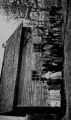
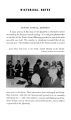
Show \The cohesion of the Mormon community plus the typical nucleated village pattern of settlement brought about a contrasting pattern of utilization of the Homestead Act. Coalville, Summit County, Utah, in 1869. COURTESY UNION PACIFIC RAILROAD THE HOMESTEAD ACT: VISION AND REALITY By Lawrence B. Lee* It is fitting and appropriate to commemorate the centennial of the Morrill Land-Grant College Act and the Homestead Act in this summer of 1962. They are both truly landmarks in the agricultural history of this nation. Although representatives of western states and territories supported both measures in 1862, there was some awareness at the time that the location of the Morrill land-grants would interfere with the homesteader's search for a western home, a situation amply borne out in the settlement history of Kansas and California for example.1 How important the Homestead Act was in the settlement of the post-Civil War West has been a question that has intrigued publicists and the public as well as historians since 1862. A numerous literature has developed which has included partisan political commentary emphasizing its beneficient role in planting freedom-loving American yeoman farmers in the western wilderness.2 It has included more sober ap- * Dr. Lee is on the history faculty at San Jose State College, California. The author has contributed previously to the Quarterly on homesteading in the West. 1U.S., Congressional Globe, 37th Cong., 2d Sess., 1861-62, 2441; Lawrence B. Lee, "Kansas and the Homestead Act, 1862-1905" (Ph.D. dissertation, University of Chicago, 1957); Paul W. Gates, "California's Agricultural College Lands," Pacific Historical Review, XXX (May, 1961), 103-22. 2 J. G. Nicolay and John Hay, eds., Abraham Lincoln Complete Works (New York, 1902), II, 452; Congressional Globe, 42d Cong., 3d Sess., 1872-73, 106; George Julian, "Our Land Policy," Atlantic Monthly, XLIII (March, 1879), 328; Knute Nelson, "Sum- 216 UTAH HISTORICAL QUARTERLY praisals of the workings of the Homestead Statute under adverse conditions during the 1870's and 1880's. The report of the memorable Public Lands Commission of 1879 with its accompanying documentary volume entitled The Public Domain . . . , by Thomas Donaldson, typifys the restrained enthusiasm with which these experts viewed the operations of the Homestead Act where arable land still remained.3 In the meantime land reformers were scrutinizing the whole public land disposal system and condemning the various land settlement laws including the cash commutation provision of the Homestead Law together with the loose administration of those laws by a sometimes corrupt and always understaffed and inefficient General Land Office.4 The public lands General Revision Act of 1891 stilled criticism of the Homestead Act temporarily only to have it renewed as a part of the Conservation Movement in the Roosevelt and Taft administrations.5 A more dispassionate interpretation of the American public land system came from university circles where Shosuke Sato's Johns Hopkins doctoral dissertation in 1886 predicted of the Homestead Act "that it will remain as the land law of the United States as long as the public lands continue to exist."6 The much amended Homestead Act of 1862 is still on the statute books at this century point in its existence. In the 1920's Benjamin Hibbard's standard History of the Public Land Policies dealt with the origins of the law and presented a realistic analysis of its shortcomings, particularly its inapplicability in the semi-arid regions of the West.7 The historiography of the Homestead Act grew prodigiously during the 1930's as an accompaniment, perhaps, of the depression-oriented reaction to die Turner "Thesis" or ideas associated with it.8 Undoubtedly, the most provocative article subjecting mary of Our Most Important Land Laws," Annals of the American Academy of Political and Social Science, XXXIII (May, 1909), 129; U.S., Congress, Senate, George R. Wick-ham, "Sixty-two Years of the Homestead Law," 68th Cong., 1st Sess., 1923-24, Senate Doc, 113, p. 1. 3 U.S., Congress, House, Thomas Donaldson, The Public Domain: Its History with Statistics. . . , 46th Cong., 3d Sess., 1880-81, House Doc., 47, p. 350. 4 Edward T. Peters, "Evils of Our Public Land Policy," Century Magazine, XXV (February, 1883), 599-601; Harold H. Dunham, Government Handout (Ann Arbor, 1941); George L. Anderson, "The Administration of Federal Land Laws in Western Kansas, 1880-1890: A Factor in Adjustment to a New Environment," Kansas Historical Quarterly, XX (November, 1952), 233-51. '' E. Louise Peffer, The Closing of the Public Domain (Stanford, 1951). c Shosuke Sato, History of the Land Question in the United Slates (Baltimore, 1886), 178. 'Benjamin Hibbard, A History of the Public Land Policies (New York, 1924). 8 Gene M. Gressley, "The Turner Thesis - A Problem in Historiography," Agricultural History, XXXII (October, 1958), 227-49. THE HOMESTEAD ACT 217 the Homestead Statute to review was Professor Paul Gates' "The Homestead Law in an Incongruous Land System," which documented in meticulous detail the conclusions of such nineteenth century land reformers as George Julian, and with its special insights, set the stage for a broad-gauged revision of traditional views.9 A generation of historians has since the decade of the 1930's exposed our land settlement laws to searching inquiry so that college students today no longer believe, as their parents did before them, that the Homestead Act in and by itself accounted for the settlement of the "Farmer's Last Frontier." A survey of the contemporary literature on the operations of the Homestead Law brings to light the following corrections of traditional views. There is a surprising consensus of opinion here represented.10 We have learned, for example, that the Homestead Act by itself did not play the all-important role in attracting European immigrants to western prairies that was once assumed.11 Most of us now believe that the Homestead Law's free land served inadequately as a "safety-valve" for distraught workingmen in eastern cities.12 And notably, the homestead measure failed in its most vaunted promise of seating a numerous agrarian, free-holding population on limited acreage tracts for a lifetime tenure on Uncle Sam's public domain open to settlement following the Civil War.13 The incongruity of the public land system after 1862 meant that the speculators and monopolists of various descriptions were able to use competing methods of public auction, private entry, sale of Indian reservation land, and location by warrant and scrip to deny to* the homesteader vast regions of the remaining arable land.14 Critics also pointed out that the Homestead Act appeared too late in our nation's agricultural settlement history to apply to the humid regions where the quarter-section tract might be earned legitimately by "Julian, "Our Land Policy," Atlantic Monthly, XLIII, 325-37; George Julian, "Railway Influence in the Land Office," North American Review, CXXXVI (March, 1883), 237-56; Paul W. Gates, "The Homestead Law in an Incongruous Land System," American Historical Review, XLI (July, 1936), 652-81. 10 Allan G. Bogue, Money at Interest (Ithaca, 1955); Gates, "The Homestead Law in an Incongruous Land System," American Historical Review, XLI, 652-81; Roy M. Robbins, Our Landed Heritage (Princeton, 1942); Fred A. Shannon, The Farmer's Last Frontier (New York, 1945); Helene S. Zahler, Eastern Workingmen and National Land Policy, 1829-1862 (New York, 1941). 11 Fred A. Shannon, "A Post Mortem on the Labor-Safety-Valve Theory," Agricultural History, XIX (January, 1945), 31-37. "Gressley, "The Turner Thesis," Agricultural History, XXXII, 234-35. 13 Gates, "The Homestead Law in an Incongruous Land System," American Historical Review, XI, 652-81. 14 Ibid. 218 UTAH HISTORICAL QUARTERLY five years of actual residence and cultivation as set forth in the statute.15 State and railroad grants were recognized to have denied vast acreage to the homestead entryman and were a part of that incongruous public lands disposal system to which the Homestead Act was superadded.1" The cash purchase or commutation clause of the original Homestead Statute, the Pre-emption Act, the Timber Culture Act, and in certain states and territories the Desert Land Act and die Timber and Stone Act worked against the implementation of the homestead principle.17 Today's historians of the public domain have highlighted the sorry record of fraud and maladministration of the land laws through which both the settler-speculator and the corporate interest blocked achievement of the "homes for the homeless" ideal on the western prairies, plains, and valleys.18 Others have attempted to explain the shortcomings of homesteading in operation by attacking as faulty the assumptions upon which the original statute was based: the belief that stability of tenure was a frontier trait, that the nation's well-being increased with the multiplication of farm owners, that agricultural settlement in the West depended upon the donation function of the Homestead Act and, finally, that the industrial sector of the economy could never offer superior opportunities for a livelihood to those derived from the land.19 In their effect these generalizations added up to a melancholy appraisal of the Homestead Act, especially when they were buttressed by figures which showed the high failure rate of homestead entrymen, the relatively small proportion of federal land disposed of under the Homestead Act, and the alarming rate of tenancy in the Plains states noted in the census reports starting in 1880.20 Is this, then, the reality of the Homestead Act's operation? Is there not more to be ^Hibbard, History of the Public Land Policies, 409; Walter P. Webb, The Great Plains (New York, 1931), 407; Everett E. Edwards, "American Agriculture - The First 300 Years," Farmers In A Changing World, 1940 Yearbook of Agriculture (Washington, 1940), 222. 10 Gates, "The Homestead Law in an Incongruous Land System," Ameiican Historical Review, XLI, 657. '' Robbins, Our Landed Heritage, 268. 18 Shannon, Farmer's Last Frontier, 55-56; Harold H. Dunham, "Some Crucial Years of the General Land Office, 1875-1890," Agricultural History, XI (April, 1937), 117-41; Anderson, "Administration of Federal Land Laws in Western Kansas," Kansas Historical Quarterly, XX, 233-51. "James C. Malin, "Mobility and History," Agricultural History, XVII (October, 1943), 177-91; Chester Martin, Dominion Lands Policy (Toronto, 1938), 374; Henry N. Smith, Virgin Land (Cambridge, 1950), 220-45. 20 Paul W. Gates, "Recent Land Policies of the Federal Government," Certain Aspects of Land Problems and Government Land Policies (Washington, 1935); Shannon, Farmer's Last Frontier, 51-57. THE HOMESTEAD ACT 219 said about the vision of the Homestead Statute and the reality of its utilization than has been expressed in the historiography of the law to this date? It would appear so. A new perspective for the Homestead Act is needed in this centenary year which can build upon and enrich our present substantial understanding of this "our most important land law." Two inquiries may be pursued to give meaning to the one hundred-year vision and reality of the Homestead Act. The first inquiry involves research in depth into the homesteading process, using the detailed district land office records and county deed records of state or territory in conjunction with manuscript, newspaper, and published local history sources to depict the homestead settlement process and the success of the entry-men in achieving one of the goals of the original homestead vision. The second inquiry will relate to the history of homestead legislation, why the homestead system in one form or another has persisted to the present day. It is a fact well worth noting that up to> 1960, two' hundred and eighty-seven million acres of the United States public domain has passed into private ownership through the media of the original Homestead Act and its amendments and that this amount constitutes approximately twenty-eight per cent of all United States public lands alienated.21 Furthermore, homestead entries are still being made, though pretty much restricted to the federal lands in Alaska. And while the residence period has been shortened from five to three years and tangible evidence of residence and cultivation has to be demonstrated year-by- year rather than by final proof affidavit of same as formerly, still, it is essentially the same process.22 Here is a continuity in American public lands history that is exemplary and demanding explication. Investigation of the factors that accounted for the persisting popularity of the homestead system must take into account the content of the vision lying behind the Homestead Act. As a matter of common knowledge it is generally understood that the original Homestead Act was the product of organized effort by representatives of the East and of the West in the halls of Congress.23 21 Marion Clawson and Burnell Held, The Federal Lands: Their Use and Management (Baltimore, 1957), 26; U.S., Bureau of Land Management, Statistical Appendix 1960 (Washington, 1961), 7. 22 Code of Federal Regulations of the United States of America, Title 43. 23 George M. Stephenson, The Political History of the Public Lands from 1840 to 1862 (Boston, 1917); Robbins, Our Landed Heritage, 150-82; Hibbard, History of the Public Land Policies, 347-85. 220 UTAH HISTORICAL QUARTERLY Not so clearly apparent is the role played by these two sections, made up of new states and territories as time went on, in molding the subsequent history of the Homestead Law. At the beginning there was not one homestead vision, but two visions; one identified widi the East and one with the West.24 Senators and representatives from the two sections agreed that the bill would give "homes for the homeless and land to the landless" and diat settlement would be expedited. Both visions incorporated the idea of settlement as the goal to be advanced by the measure, but the eastern members, prompted by National Reform Association proposals, concentrated on the individual settler in the settlement picture and wrote stringent requirements into the law setting up a five-year residence and cultivation condition.25 The Homestead Act vision of the western members had as its goal die encouragement of settlement, but a special kind of settlement, the enticement of a numerous population to the West, the rapid alienation of federal title, and the passage of the land into a taxable status so as to support community development and subsequent prosperity. In the subsequent years as the frontier of agricultural settlement continued to move westward, spokesmen for the East lavished sentimental affection on the individual homesteader who won a permanent home for himself in the West by observing the statute's requirements: five years of continuous residence and cultivation, prohibition of transfer of right, land limited to one hundred and sixty acres, and one entry per President Abraham Lincoln signed the Homestead Act in 1862, which opened up millions of acres of the public domain for settlement and development by farmers and stockmen. COURTESY THE LINCOLN NATIONAL LIFE INSURANCE COMPANY 'Rush Welter, "The Frontier West as Image of American Society: Conservative Attitudes Before the Civil War," Mississippi Valley Historical Review XLVI (March, 1960), 593-614. 23 Zahler, Eastern Workingmen and National Land Policy, 117. THE HOMESTEAD ACT 221 applicant. They looked at any variance from this pattern as a fradu-lent misappropriation of the public domain. As land reformers they set themselves sternly against legislative or administrative liberalization of Homestead Act requirements. Their vision of the Homestead Act became the standard described by such phrases as "the homestead ideal" or "the spirit of the homestead law" so often alluded to in public print or Congressional debate. When the "spirit of the homestead law" was invoked an appeal was made to the yeoman farmer, an agrarian symbol of surpassing durability in the American heritage of values.26 It was this vision of the homestead that was used as the standard by which our contemporary school of historians have measured the shortcomings of the act. Meanwhile the western vision of the Homestead Statute was achieving a transformation of the law. It has been said that the "land interests of the West have always dictated our land laws and controlled the policy of the Land Office." 27 A case for western influence if not dictation in land policy matters can be traced back at least to the Pre-emption Act (1841). Provisions of the Pre-emption Act and Homestead Act bore a striking similarity to one another especially in point of residence requirements. Pre-emption tests were for a bona fide residence; improvements and cultivation were carried over by the General Land Office to apply in like manner to the individual homesteader. The bete noire of western Congressmen was the eastern speculator who at public land sales or by private entry engrossed the best agricultural land in the West. The residence requirement in the Pre-emption Act and Homestead Act thus protected the western settler from the eastern monopolist. A five-year stint on the land instead of the Pre-emption Act's two* years was, however, believed excessive according to the western view. Thus the experience under the Oregon Donation Act was cited before 1862 to indicate dissatisfaction in the West with the lengthened probationary period before the settler's prescriptive right was converted into fee simple ownership.28 Hardship was imposed on the West because land remained off the tax rolls, improvements were delayed so diat settlers were discouraged, and a general advancement of the states and territories in the West 20 Smith, Virgin Land. 27 Seth K. Humphrey, "What is the Matter with Our Land Laws," Atlantic Monthly, CII (July, 1908), 2. 28 U.S., Secretary of the Interior, Annual Report 1859, 36th Cong., 1st Sess., 1859- 60, House Ex. Doc. 2, p. 95-96. 222 UTAH HISTORICAL QUARTERLY was consequently postponed.29 These reasons offer an explanation why the cash commutation clause, which allowed an entryman to buy his homestead tract after a six-month residence period, was written into the Homestead Act and why the Pre-emption Act continued on the books until 1891. The West wanted it this way. The influence of the West was also paramount in most amendments to the original Homestead Law enacted by Congress from 1865 to 1891 and beyond.30 Space precludes a detailed analysis of the separate statutes each with its spokesman defending the proposed liberalization of the original statute in behalf of the long-suffering, western settler.31 By 1904, however, the individual entryman under the federal homestead laws had been given statutory leaves of absence for reasons varying from droughts and grasshopper plagues to forest fires; he could make his final proof affidavits before his friends and neighbors, the county officials, instead of federal district land officers; he could also initiate a contest against another claimant and was awarded die right of entry if abandonment or noncompliance were proven.32 Claim jumping, hardly in keeping with the easterner's vision of the homestead spirit, became a frontier avocation as a consequence of this statutory boost. At the same time Congress made legal the long-standing, western practice of relinquishment, which violated the letter as well as the spirit of the original Homestead Law, additional entries as well as so-called second entries were acceptable in law as long as the maximum quarter-section grant was not exceeded.33 The record is clear: the West was in the saddle and achieving the transformation of the Homestead Act after its own vision of the purposes of this beneficient legislation so as to bring into private ownership the maximum of federal acres in western states and territories. At this point in the appraisal of homestead legislation, something should be said about studying the homestead setdement process in 20 Ibid.; James M. Bergquist, "The Oregon Donation Act and the National Land Policy," Oregon Historical Quarterly, LVIII (March, 1957), 17-35. 30 Lee, "Kansas and the Homestead Act," 114-74; Hibbard, History of the Public Land Policies, 386-409. 31 Act of March 21, 1864, U.S., Statutes at Large, XIII, 35; Act of June 21, 1866, U.S., Statutes, XIV, 66; Act of June 22, 1874, U.S., Statutes, XVIII, 192; Act of December 28, 1874, U.S., Statutes, XVIII, 294; Act of March 3, 1877, U.S., Statutes, XIX, 403; Act of June 3, 1878, U.S., Statutes, XX, 91; Act of March 3, 1879, U.S., Statutes, XX, 472; Act of May 14, 1880, U.S., Statutes, XXI, 169; Act of March 2, 1889, U.S., Statutes, XXV, 854; Act of July 26, 1892, U.S., Statutes, XXVII, 270; Act of July 26, 1894, U.S., Statutes, XXVIII, 123. 32 Act of May 14, 1880, U.S., Statutes, XXI, 141. 33 Act of April 28, 1904, U.S., Statutes, XXXIII, 527. THE HOMESTEAD ACT 223 detail in states or territories of the West and the methodology employed. Let me explain briefly the application of one method to the Kansas homesteading scene for the years 1862-1904.34 The local district land office tract books and monthly abstract of final homestead entries were the basic sources along with the county deed and patent records though the survey plats and field notes were also consulted.35 The monthly abstracts were used to plot final homestead acreage on regional maps of Kansas to determine the heaviest concentrations of final entries and approximate settlement years. When this technique was applied to a band of government-survey townships, sixty-seven in all, running across the state of Kansas from east to west, information thus obtained proved, indisputably, that the eastern third of the state had relatively few successful homesteaders, that the belt of five counties in central Kansas had the greatest percentage of five-year homesteaders, and that western Kansas counties settled in the mid- 1880's was settled less heavily by homesteaders.36 The tract books offered the most complete information on land disposal. Here with a page devoted to each quarter section were listed seriatim the name of each applicant with date and name of pertinent land law. These entries were posted to disclose die final disposition showing abandonments, contests, and successful owner of final receipt and patent.37 In the Kansas study a sample township was selected in each of the fifteen counties that stretched across the waist of Kansas. Land disposal charts were then made indicating the proportion disposed of under the Homestead Act, by Homestead Act commutation, dirough pre-emption, under the Timber Culture Act, and by location of military bounty warrant, agricultural college scrip or other scrip. The process necessitated working with some three thousand entries and the compilation of all filing and entry data for each quarter section with subsequent deed transfers after patent or final certificate noted showing the title had passed to the individual entryman.38 34 Lee, "Kansas and the Homestead Act." 33 Robert Harrison, "Public Land Records of the Federal Government," Mississippi Valley Historical Review, XLI (September, 1954), 277-88. 30 Lee, "Kansas and the Homestead Act." 37 Paul W. Gates, "Research in the History of American Land Tenure,"Agricultural History, XXVIII (July, 1954), 121-26; Thomas LeDuc, "The Disposal of the Public Domain on the Trans-Mississippi Plain: Some Opportunities for Investigation," Agricultural History, XXIV (October, 1950), 199-204. 38 Lee, "Kansas and the Homestead Act"; methodology employed was suggested in part by the following studies: Arthur F. Bentley, "The Condition of the Western Farmer as Illustrated by the Economic History of a Nebraska Township," Johns Hopkins Univer- 224 UTAH HISTORICAL QUARTERLY The information disclosed by data on months and years of homestead entries, relinquishments, cancellations, final certificates, contests, and parallel data for other land settlement laws proved invaluable in plotting out settlement eras, in noting the degree of abandonment and contests on homesteaded acres, and the number of multiple entries by homesteaders. The county deed record books then were consulted, and they provided conclusions for questions on longevity of homesteaders' tenure after final certificate date. Mortgage data also obtained from county records disclosed the prevalence of homestead commutation in western Kansas. Conclusions about Kansas homesteading during the period of primary settlement were then obtained by correlating the above information with the facts of Kansas local history for the last three decades of the nineteenth century. The region of significant utilization of the Homestead Act was found to be the sections west of the 97th meridian and the era of homesteader primary settlement to be confined largely to the periods: 1870-1874,1878-1880, and 1885-1890. These time periods corresponded roughly to an upturn in the business cycle for the nation and years of above average rainfall in central and western Kansas.39 Most critics of the Homestead Act's operations have been concerned with the high failure rate of the entrymen. The Kansas data sity Studies in Historical and Political Science (July-August, 1893); Joseph Schafer, "The Wisconsin Domesday Book; a Method of Research for Agricultural Historians," Agricultural History, XIV (January, 1940), 23-32; Bogue, Money at Interest; John A. Caylor, "The Disposition of the Public Domain in Pierce County, Nebraska" (Ph.D. dissertation, University of Nebraska, 1951). 3°Lee, "Kansas and the Homestead Act," 568-69. Homesteads in Kansas and South Dakota. The homestead vision in both the East and West advanced the concept of "homes for THE HOMESTEAD ACT 225 brought insight to this phenomenon. The correlation of abandonment dates with years of drought offered an obvious answer for a large percentage of failures. However, voluntary relinquishment of homestead rights (actually a failure) was associated with inflated land values and the practice of selling improvements as well as rights to newly-arrived settlers. This study estimated that twenty percent of Kansas homestead entrymen practiced relinquishment, and this technically illegal transaction was until 1880 practiced to the greatest degree in central Kansas. This was a typically western reaction to the settlers' financial circumstances and was a concomitant of the rise of land prices above the government minimum of a dollar and a quarter an acre.40 In western Kansas counties, in the settlement period of the 1880's, market conditions brought even higher returns so that homestead entrymen were willing and able through loans advanced by mortgage loan companies to pay the two hundred dollars required as the commutation price by the government so that they could then sell purchased acres entered under the Homestead Act to newly-arrived settlers and make a profit for their pains.41 The point needs stressing, however, that true homesteading in the mode of the eastern reformer's vision was carried on successfully in central Kansas counties where in sample counties, the five-year homesteaders perfected their entries on as much as sixty, eighty-five, and eighty-seven per cent of the available government land. Moreover, more than a third of these final homesteaders were still in possession * Ibid., 296-304. 'Ibid., 408-52. the homeless and land to the landless" and incorporated the idea of settlement as the goal to be advanced by the Homestead Act. COURTESY UNITED STATES DEPARTMENT OF AGRICULTURE 226 UTAH HISTORICAL QUARTERLY of their tracts fifteen years following entry date, a notable achievement when placed against some statements derogatory of the efficacy of homestead legislation.42 The reality squared with the eastern vision of the Homestead Law in some places in the West. Other type studies in depth may demonstrate a similar concordance in other states and territories. For the most part it was a different matter in the Mountain and Pacific Coast states and territories where homesteading in the manner envisioned by idealistic eastern vision and in accordance with the stringent residence and cultivation requirements of the statute proved impossible of fulfillment. The statute had been tailored to fit the needs of the individual farm family as the agent for the advance of the farmer's frontier. In the West beyond the lOOdi meridian with few exceptions farming was carried on almost ab initio through either a combination of individuals or by combinations of capital. Under these conditions the individual homestead entryman was out-of-place unless he could co-operate with his fellows and build through shared labor in the absence of capital the necessary irrigation works essential to agricultural advancement. It is interesting to note as a measure of the strength of the homestead ideal in Congress that all bills advocating land-grants for irrigating companies in the West in the 1870's were summarily rejected.43 Corporate development of western agriculture was not to receive direct Congressional support. Nor was Congress agreeable to the recommendations of Land Commissioner Samuel S. Burdett in 1875 that the public domain west of the 100th meridian be opened to public sale and subsequent private entry by corporate interests.44 The approach adopted by a Congress enamored of the homestead ideal, eastern style, stressing the role of the yeoman farmer in meeting the problems of adaptation in a semi-arid western environment was to open the avenues by which the settler could acquire additional acreage. Thus the Pre-emption Act, despite a barrage of criticism from eastern members of Congress, was kept on the books; the Timber Culture Act provided an additional quarter section for the hard-pressed settler; and the Desert Land Act ostensibly was designed to encourage the individual settler in the West to start irrigation projects on his "Ibid., 559-91. "3 John T. Ganoe, "The Origin of a National Reclamation Policy," Mississippi Valley Historical Review, XVIII (June, 1931), 34-52. " U.S., Commissioner of the General Land Office, Annual Report, 1875, 9. THE HOMESTEAD ACT 227 own initiative.4" The truth became apparent that neither additional land-grants nor even a cash subsidy of modest proportions for the individual homesteader, as proposed at one time in Congress, would achieve a successful utilization of the Homestead Act in the public domain west of the 100th meridian.4" John Wesley Powell's Report of the Lands of the Arid Region of the United States contained a suggested change of the Homestead Law to provide for colony-type homesteads in the West as a possible solution.47 This proposal went back in origin certainly as far as the National Reform Association of the 1840's and borrowed from the experience of the Union Colony in Colorado and the Mormon agricultural developments in Utah.48 The Mormon agricultural adaptation to the Great Basin environment involved the successful development of irrigation institutions.49 Of almost equal importance to the growing of crops in the semi-arid valleys of Utah Territory was the successful acquisition of title to public domain lands which Mormon colonists had occupied and farmed between 1847 and 1869 when the first federal land office was opened in the territory. Following 1869 and the completion of the transcontinental railroad, Utah Territory was opened up to the outside world as never before, and Brigham Young and the hierarchy of the Church of Jesus Christ of Latter-day Saints endeavored to secure federal patents to all land occupied by their faithful/'" The Homestead Act was one means by which a United States title could be established, but other laws were employed, such as the Pre-emption Act, the Timber Culture Act, inconceivable as it may sound, the federal Townsite Law of 1867, and most appropriately, the Desert Land Act.01 The Homestead Law was certainly not indispensible to the agricultural settlement of Utah. The Mormon authorities thought all the federal laws inappropriate to their peculiar needs except perhaps the Townsite Law. The Homestead Law when strictly enforced caused the Latter-day Saints some strictures of conscience. Nevertheless, the "Act of March 3, 1877, U.S., Statutes, XIX, 377. '"U.S., Congressional Record, 45th Cong., 3d Sess., 1878-79, 768. " John Wesley Powell, Report on the Lands of the Arid Region of the United States (Washington, 1879). " "Irrigation: The Cooperative System of Utah," New York Times, October 29, 1873. "'George Thomas, The Development of Institutions under Irrigation with Special Reference to Early Utah Conditions (New York, 1920). '"' Lawrence H. Lee, "Homesteading in Zion," Utah Historical Quarterly, XXVIII (January, I960), 2'l-30. '"Deseret News (Salt Lake City), September 24, 1879. 228 UTAH HISTORICAL QUARTERLY Homestead Act provided one exceptional advantage since it required no large purchase price which was advantageous to an area that was extremely short of specie during the community's formative years. The prevailing theme at the Salt Lake City Land Office was speed as homestead entries were filed and final proofs later offered on Homestead Law tracts. Living under conditions of federal governmental harrass-ment from 1857 to 1896, the Mormon community was obsessed with anxiety that Gentile land jumpers would use the federal land office machinery to appropriate land that the Mormons had cultivated since foundation days.52 Some of this anxiety was merited in connection with homestead entries because Mormon homesteading fell short of technical compliance with the statute's terms in several particulars. Mormon homesteading was different from homesteading on other frontiers.53 The cohesion of the Mormon community, die single-minded determination to exclude Gentiles from the agricultural lands of Utah, the necessities of an irrigation-based agriculture, and the typical nucleated village pattern of settlement as well as the Mormon's peculiar institution, polygamy, all effected a contrasting pattern of Homestead Act utilization. The news organ of the Mormons, the Deseret News, carried all announcements touching on land office regulations. The erstwhile secretary of Brigham Young, William Clayton, served as a go-between for the bishops (leaders) of the wards (church parishes) in Salt Lake City and outlying settlements and the federal land office where the federal appointees sometimes made life difficult for the self-styled "Desert Saints." 54 These land officers also proved their capacity to co-operate with the Mormons and winked at a major violation of the Homestead Act requirements.55 Mormon homestead entrymen did not live on their homestead tracts, and although they could attest to a constructive residence by camping overnight in a wagon once every six months, 52 The Latter-day Saints' Millennial Star, XXXI (Liverpool, 1869), 647. 53 Conclusions on the operation of the Homestead Act in Utah Territory were based on "Register of Entries made at the Land Office at Salt Lake City under the Homestead Act from the 1st day of April, 1869 to . ." (Salt Lake City) and county "Abstract Books" (Salt Lake City). "'William Clayton to D. Candland, September 6, 1876, February 21, 1877, in William Clayton Letterbooks, 1860-1879, Group II, A (Utah Manuscripts, Bancroft Library, Berkeley, California). M William Clayton to Edward Partridge, March 14, 1879, in William Clayton Letterbooks, 1860-1879, Group II, A. 230 UTAH HISTORICAL QUARTERLY their residences were actually in the famed Mormon villages several miles removed from their entries. Contests did not arise because neither the sparse non-Mormon population or federal land officers wished to take issue with this state of affairs. Contests between Mormons were settled in ecclesiastical courts.56 The records at the Salt Lake City Land Office disclosed merely twenty-six contests filed during the first decade of homesteading when at the same time 4,100 entries had been recorded;57 the decade of the eighties saw only sixty-two more contests. Until 1879 the federal land department permitted the practice of plural homestead entries.58 Polygamous wives of Mormons entered homesteads as "heads of families," and on perfection of the entries they were transferred to the individual lord and master of the Mormon household. The Utah Gentile population was incensed at this recognition of the institution of polygamy and encouragement of what they called "the Mormon land monopoly." 59 Another unique feature of Mormon homesteading was the practice of L.D.S. ward bishops serving as the trustees for their parishoners in homestead matters. The bishop would make die official homestead entry at the land office for a quarter section of land on which several of his "flock" had their relatively small, irrigated plots granted them by church fathers many years previously. When the final proof was made the bishop then deeded each of the subdivision tracts out of the larger homestead acreage to the actual occupants.60 The allotment owners thus acquired Homestead Act land through their trustee, and these Mormon homesteaders in effect then established a lifetime tenure on homesteaded land. Mormon homesteading was not exactly colony homesteading, but it demonstrated how the Homestead Act could be employed in combination with irrigation agriculture in the West. Up to 1905 a million acres of Utah's share of the public domain had passed into private ownership through the agency of the Homestead Laws, while Kansas' record for the same date was eleven million acres, and California's final homestead acreage totalled five million acres."1 cliNels Anderson, Desert Saints: The Mormon Frontier in Utah (Chicago, 1942), 274, 338. 57 "Register of Homestead Entries" (Salt Lake Cin;. "Deseret News, October 1, 1879. ™Salt Lake Tribune, July 16, 1876. "Thomas, Development of Institutions under Irrigation, 41. "'U.S., Public Lands Commission, Report 1903-05, 58th Cong., 3d Sess., 1903-05, House Ex. Doc. 189, p. 175. THE HOMESTEAD ACT 231 California's experience with the Homestead Statute was something like that of Kansas and was also not dissimilar to the Utah settlement pattern. Its varied climate and topography explain this apparent paradox. The early Gold Rush period saw an opinion favoring the homestead principle, but circumstances always seemed to militate against the seating of a large, agrarian population on homestead tracts in California. Arguments of the Eastern National Land Reformers were current in California in the 1850's, and a donation policy modeled after that of Oregon was earnestly advocated so as to prevent speculative engrossment of the land through location of military bounty warrants.02 Congress did not establish a land office in die state until 1853, and then, because of the slow progress of the surveys in the regions where arable land prevailed, die first sale of offered land did not occur until 1858.63 Very litde notice was taken of the passage of the Homestead Act, and, even a decade later, a commentator on the agricultural scene noted widespread ignorance in the countryside of the fact diat "Uncle Sam would give anyone a farm of land for nothing." 64 In the meantime the post-Civil War emigration to California had set in, and San Francisco's moneyed interests hastened to locate agricultural college warrants and various forms of acceptable scrip on the choicest acres in the Sacramento and San Joaquin valleys.00 Others acquired large estates through purchase of state swamp and school lands, and still others were owners of Mexican grants which had been confirmed by federal authority.66 Land monopoly represented the prevailing state of affairs in the fertile valleys of California by the 1870's, and homestead entries, though encouraged by die press and immigration boosting agencies, came late and were established on second-rate land for the most part.67 In the running debate that ensued in the 1870's over the state of land monopoly in California, the point was made diat die small farmer had had his opportunity under the settlement laws before the capitalists acquired their large acreage, and diat the droughty condition in the Central Valley dictated large operations and the employ- 82 Alia California (San Francisco), December 29, 184*). August 6, 1851. "Daily Alta California, May 3, 1858. " California Farmer (San Francisco), July 4. 1862; Stockton Independent, September 4. 1867; John Hayes, "A New View of the Labor Question," Overland Monthly, VI (February, 1871), 140-47. E Gates, "California's Agricultural College Lands," Pacific Historical Review, XXX. 103-22. 66County "Patent Record Books" (Fresno). 57 Ibid. 232 UTAH HISTORICAL QUARTERLY ment of irrigation.68 Whatever the cause, substantially less than a million acres of final Homestead Act land had been acquired in California by 1880.69 California public opinion and the California delegation in Congress reflected this concern over the apparent lack of opportunity for the small farmer in their state, and bills were proposed which gave California some notoriety in its attempt to modify land legislation to suit western conditions. For example as early as 1869 suggestions were made for enlarged homestead entries running from a section to a thousand acres and especially adaptable to grazing purposes.70 Californians also anticipated the demands for classification of the public domain, a recommendation later made by the Public Lands Commission of 1879.71 The Desert Land Act and its precursor, the Lassen County Act, introduced by Californians, were designed ostensibly to help out the small farmer by enabling him to purchase at minimum prices a whole section of land, the returns from which were deemed ample to pay for irrigation works.72 Almost as soon as these bills became law, however, it was apparent that they were being used by corporate interests in the West for land monopolization. Revelations of the fraudulent use of the Homestead Act came first. An amendment to the Soliders' and Sailors' Homestead Act (1872) permitted additional entries to be made by any Union veteran to bring his maximum holdings to one hundred and sixty acres, and the important feature was that the additional entry did not have to be on land contiguous to the initial entry.73 Enterprising agents went through the Middle West buying up applications for these additional soldiers' and sailors' homestead entries that were assignable and freely "locatable" and sold diem to such California capitalists as Alvinza Hayward and others who used them to locate choice timber land acreage in California.74 The public also learned that other large land owners, including Henry Miller, J. B. Haggin, and William Carr, were using dummy entrymen under the 88 Daily Alta California, June 30, 1868. ""U.S., Congress, House, Donaldson, The Public Domain, 355. m Daily Alta California, May 3, 1869. 71 J. Hayes, "Wants and Advantages of California," Overland Monthly, VIII (October. 1872), 338-47; Daily Alia California, February 14, 1870. '-Ibid., February 26, 1875; Act of March 3, 1877, U.S., Statutes, XIX, 377. 73 Act of March 3, 1873, U.S., Statutes, XVII, 605. "Daily Alta California, March 11, 1876, March 13, 1876. THE HOMESTEAD ACT 233 Homestead Act and the Desert Land Act to enlarge their holdings in the San Joaquin and Tulare valleys.75 Manifestly, fraud was being perpetrated under the land settlement laws in the West, but these laws and especially the Homestead Act with its five-year settlement requirement were not adapted to the land of little rainfall. Westerners realized this but the eastern land reformers in Congress did not, and their response to the overwhelming evidence of misappropriation of the public lands was enactment of the General Land Law Revision Act of 1891.76 This act represented a partial triumph for the eastern view of the Homestead Act. The Desert Land Act was kept on the books as a special concession to the West's peculiar conditions, but the Homestead Act stood alone as the agency by which the settler could acquire a farm on the public domain. The Pre-emption Act and the Timber Culture Act were terminated, and the commutation feature of the Homestead Act required a fourteen-month instead of a six-month residence requirement before cash purchase was permitted. Limitations of space preclude an examination of twentieth century developments of the homestead story, but this analysis of Homestead Act amendments and operations has been ably presented elsewhere. 77 The theme remained the same. The Homestead Act received a new lease on life in the first decade of the new century as dry farming techniques, the Newlands Reclamation Act, and the press of population all worked to achieve new records in Homestead Act entries and transfers of acreage.78 President Theodore Roosevelt re-embellished the image of the yeoman homestead farmer, and with the revelations of his Public Lands Commission, 1903-05, before the public, secured a vigorous enforcement of the residence provisions of the Homestead Act.79 Special investigators turned up evidence which demonstrated shortcomings in compliance and evoked a continuing demand from western Congressmen for modification of the act.80 The West had won support 73 L. A. Winchell, A History of Fresno County and the San foaquin Valley (Fresno, 1933); Daily Alta California, December 6, 1877; Stockton Daily Independent, December 7, 1877, January 3, 1878. 70 Robbins, Our Landed Heritage, 285-98. "Peffer, Closing of the Public Domain, 134-68. 78 U.S., Bureau of Census, Historical Statistics of United States, Colonial Times to 1957, 237. ™ James D. Richardson, comp., Messages and Papers of the Presidents (New York, 1897-1917), XIV, 6725. 80 Francis P. Elliott, "The West and the President's Public Land Policy," The World Today, XIII (August, 1907), 836-41. 234 UTAH HISTORICAL QUARTERLY for the Newlands Reclamation Bill from President Roosevelt primarily because it promised the survival of the homestead principle in arid regions.81 The quarter-section homestead tract survived dien, where irrigation facilities were created by federal governmental support and supplanted the older system of shared labor and territorial enterprise of the Mormons. The West also insisted upon and achieved against vehement re-sistence from eastern devotees of the homestead principle a series of drastic alterations of the original Homestead Act. The Kinkaid Act (1904) granted section-sized homesteads for grazing purposes in western Nebraska, and when this plan had proved its worth locally, it was extended generally after 1916 in the western states.82 Congressmen of the Mountain and Pacific Coast states secured an enlarged homestead of three hundred and twenty acres in 1909 to enable westerners to farm the high bench land and distant valleys where irrigation was not feasible and dry farming techniques might succeed.83 Residence was required, and in addition cultivation had to be proven for a fourth of the acreage. Finally, the example set by the Canadian Homestead Act and concern over the exodus of American Plains states farmers to Canada achieved a reduction of the original residence time in the Three Year Homestead Act passed in 1912.84 At every step of the way eastern opinion was voiced in Congress that the spirit of the Homestead Act was being transgressed. Westerners who looked with jaundiced eyes on the conservation-minded easterners' concern for the mythical or actual settler were willing to keep homestead statutes on the books as long as these measures could be made adaptable to the needs of the West which called for the removal of federal control from as many western acres as possible. In this way two different visions of the Homestead Act were sustained by East and West for over one hundred years and the reality of the act's operations has proven to be an embodiment of both visions. 81 Act of June 17, 1902, U.S., Statutes, XXXII, 388; U.S., Congressional Record, 57th Cong., 1st Sess., 1901-02, 6734, 6755, 6761. 82 Act of December 29, 1916, U.S., Statutes, XXXIX, 639; U.S., Congressional Record, 63d Cong., 3d Sess., 1914-15, 1811, Appendix 520. 83 Act of February 19, 1909, U.S., Statutes, XXXV, 639; U.S., Congressional Record, 60th Cong., 1st Sess., 1907-08, 2093, 6096, 6097; U.S., Congressional Record, 62d Cong., 2d Sess., 1911-12, 7565. 84 Act of June 6, 1912, U.S., Statutes, XXXVII, 123; Paul F. Sharp, "The American Farmer and the Last Best West," Agricultural History, XXII (1947), 65-75; U.S., Congressional Record, 62d Cong., 2d Sess., 1911-12, 3625, 3685-3716, 3897-8902. |