| OCR Text |
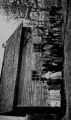
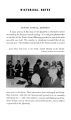
Show he march of longhorn cattle to Utah •trted in 1866. In 1870, 8,000 head came Utah, but as early as 1873 the demand r Texas cattle had somewhat lessened. Harper's Weekly, 1867 LONGHORNS COME TO UTAH By Don D. Walf\er* "CATTLE COMING," began a news note in the Salt Lake Daily Herald of September 3,1871. We learn that hosts of Texas cattle are on the plains traveling westward to supply the market in the Territories. It is understood that a large number are designed for Utah. Gilbert Webb has twenty-one hundred head somewhere in the neighborhood of Laramie, making his way towards Salt Lake.1 On the following day, the Herald reported that Len Wines was starting for Cheyenne to look after stock belonging to Wines, Kimball and Company. "He expects to ship three hundred head immediately by rail to Utah, and the company will ship three thousand head of assorted Texas cattle to this market in October." 2 Ten days later, the Herald editorialized: "It is a pity that we are called upon to chronicle such facts, for Utah, with her extensive ranges should export, not import, beef cattle." The trouble came, observed the writer, from the slaughtering of cows, heifers, and calves. In the territory, . . . as oxen became less in demand there seemed less desire to raise or retain them, and the cattle were sold and driven off in different directions. With * Dr. Walker is associate professor of English and director of the Institute of American Studies, University of Utah. He is presently working on a literary history of the cowboy. 1 Webb is listed as a herdsman in Gazetteer of Utah and Salt Lake City (1874). "Salt Lake Daily Herald, September 4, 1871. Len Wines was Leonard Wines, stock dealer. Kimball was probably H. P. Kimball, listed in the Utah Gazetteer (1884) as a stockraiser. 136 UTAH HISTORICAL QUARTERLY fewer cows in the Territory the slaughter of calves and heifers has increased, and the result to-day is, that feed for hundreds of thousands of cattle is wasting on the ranges and hillsides, while Texas cattle by the thousand are being driven across the plains to supply this market.3 For nearly a quarter of a century, although cattle had been coming to Utah, cattle had been going out of Utah too, in numbers large enough to make Utah economically important as a supplier of western markets. The heavy influx of Texas cattle thus represented significant changes in the economic pattern of the American West. Old stocks had become depleted. New markets, particularly mining camps, had developed. The cattle-producing pressure of older areas, particularly Texas, had broken the confinement imposed by the Civil War. A new equilibrium was rapidly developing, with economic forces marked by moving men and cattle. The beginning of Utah's cattle industry had been die 2,213 oxen and 887 cows which arrived with the first company in 1847. Economically shrewd, the Mormon leaders knew the necessity of cattle for both food and pulling power. In instructions sent back to those who would follow, they advised the gathering of "young stock by the way, which is much needed here, and will be ready s a l e . . . . In a year or two . . . young cattle will grow into teams." 4 The mining discoveries in California, then in Nevada, created a booming market which California growers were not able to supply. Utah cattle moved west,5 and Texas cattle trailed through Utah on the way to the mines. In 1853 a drove of thousands of work steers was taken to the Sacramento market, where they were reported sold at $250.00 per yoke.6 Major Howard Egan took large herds around the southern edge of the Great Salt Lake Desert on the way to California markets.7 In 1856 Granville W. Huffaker drove cattle to Truckee Meadows. Later 3 Salt Lake Daily Herald, September 14, 1 H71. 1 J. Cecil Alter, Utah, the Storied Domain, u Documentary History of Utah's Eventful Career (Chicago and New York, 1932), I, 82. " One observer remarked tiat ". . . the people of Utah, not being a meat eating people, were enabled to produce large herds of cattle which were sold to California dien to Nevada, later on to Idaho and Montana, and of more recent date to Wyoming and Colorado." Stock Raising in Utah (MS, Bancroft Library, Berkeley, California). In the period before the Civil War ". . . the Mormons had become well supplied with cattle and other live stock, and some of them made drives of cattle and sheep to California during the times when the demand for beef and mutton was pressing." James W. Freeman, ed., Prose and Poetry of the Live Stock Industry (Kansas City, Missouri, 1904), 441. 0 Clara M. Love, "History of the Cattle Industry in the Southwest," Southwestern Historical Quarterly, XIX (April, 1916), 381. 'Herbert O. Brayer, American Cattle Trails (Bayside, New York, 1952), 38-39. LONGHORNS COME TO UTAH 137 he established his own ranchos in the Meadows and Ruby Valley, and from these Nevada ranges he took cattle to the Comstock.8 In addition to these Utah exports, there were drives of Texas cattle through Utah on the way to the gold fields. Some of these herds moved up the Pecos, across to the Rio Grande Valley, then north into southern Colorado. Here they turned west to follow the Old Spanish Trail through southern Utah, Nevada, to California.9 Some 9,000 longhorns trailed this way in 1854. In Texas they were worth from $5.00 to $15.00 a head; in California they sold from $60.00 to $150.00 each.10 Other herds pushed on north in Colorado, crossed the White and Yampa rivers, and entered Brown's Hole. Here they wintered before going on north to Bridger, then west along the regular California trail. W. A. Peril took 1,100 head diis way; cattle he bought in Texas for $10.00 a head sold in California for $30.00.11 How many Texas cattle walked this northern route is perhaps impossible to determine. We do know, however, that a good many long-horns spent a sunny winter in Brown's Hole, after coming through Colorado or south from Wyoming. When Hayderi surveyed the Hole in October, 1869, he saw 2,200 head of Texas cattle driven into it from the east, to winter before going on to the California market. In his Report he noted that the Hole had been "a favorite locality for wintering stock for many years." 12 On June 8, 1871, as the second Powell expedition pulled along a quiet stretch of the Green River, the party was surprised to discover a camp, the temporary headquarters of the Harrell brothers, who were wintering 2,000 head on the trail to California. The cattlemen, who kept contact with the outside world by way of the railroad through Wyoming, had letters for the rivermen and the offer to take return mail out. Still another opportunity came in this meeting: the rivermen were able to lighten their boats by trading flour for fresh beef.13 Later that same year, Colonel J. J. Meyers, whose role in the drives to Utah will be told later, was reported planning to winter 3,000 head in s Granville W. Huffaker, Early Cattle Trade of Nevada (MS, Bancroft Library). 0 Brayer, Cattle Trails, 40. 10 Ibid. 11 Dick and Vivian Dunham, Our Strip of Land, a History of Daggett County, Utah (Lusk, Wyoming, 1947), 19. 12 F. V. Hayden, Preliminary Report of the United States Geological Survey of Wyoming, and Portions of Contiguous Territories (Washington, 1871), 64. "Frederick S. Dellenbaugh, A Canyon Voyage (New Haven, 1926), 30-31. See also Charles Kelly, ed., "Captain Francis Marion Bishop's Journal, August 15, 1870-June 3, 1872," Utah Historical Quarterly, XV (1947), 170. 138 UTAH HISTORICAL QUARTERLY ,0k m . j^^^M^m^^ Y«\1 / T^e «'/e o/ Fort IWy Crockett (1837), in Brown's Hole, Daggett County, Utah. The valley was a trappers retreat, outlaw handout, and favorite spot for wintering stoc\. COURTESY UNIVERSITY OF UTAH DEPARTMENT OF ANTHROPOLOfil Ruins of ranch in Brown's Hole. COURTESY UNIVERSITY OF UTA1 DEPARTMENT OF ANTHROP0L0OI LONGHORNS COME TO UTAH 139 the "Green river basin," seventy-five miles south of Rawlins.14 George Baggs herded 900 Texas steers in the Hole that winter,15 grazed them near Evanston the following summer, then sold them to William Crawford. Crawford, with J. S. Hoy, took these 900 "wild Texas cattle" back to the Hole for the winter of 1872. Almost trapped by a heavy early snowfall, they got the herd over the mountains and into this western Shangri-La of cowdom. While winter storms raged on the mountains around about, and snow fell deep and long until warm spring rains and summer came, down in Brown's Hole all was calm with bright sunshine, although cold enough to freeze Green river except where it ran rapidly.1" Already that winter the Hole was stocked with two large herds: one herd of 2,300 brought by Asa and Hugh Adair from Texas and another herd of 1,300 owned by a Mr. Keiser and a Mr. Gibson, also from Texas. The Adair cattle had come in September. The grass was pretty well gone. According to Hoy, of the 4,000 cattle in the Hole that winter "not less than 500 starved to death by spring." 1T Still another early user of the Hole was W. G. Tittsworth, who during the heavy snows of 1874-75 brought his cattle to this mountain haven.18 The march of Texas cattle to the Utah market apparently started in 1866, when John Hamilton Morgan and a friend contracted to drive a herd of longhorns from Missouri to Salt Lake City. Consigned to William Jennings, who owned a large slaughter yard and butcher shop, the cattle arrived on December 23, 1866, the first of thousands to make the long trek.19 The Texas invasion, as Ernest Staples Osgood called the northward spread of Texas cattle,20 had filled the plains of Kansas with herds ready to be shipped to eastern markets or ready to be moved on to unfilled ranges and markets in Wyoming, Montana, and Utah. In 1870 as many as 100,000 cattle were driven from Texas, 8,000 going to Utah,21 most of them hoofing the whole distance. The railroad was com- 14 Salt Lake Daily Tribune, September 7, 1871. 15 J. S. Hoy Manuscript (typescript, University of Utah Library, Salt Lake City), 126. "Ibid., 120-24. "Ibid., 127. lsIbid., 109. W. G. Tittsworth, Outsort Episodes (Avoca, Iowa, 1927), 162. '"Wain Sutton, ed., Utah, A Centennial History (New York, 1949), III, 478. 20 Ernest Staples Osgood, The Day of the Cattleman (Minneapolis, 1929), Chapter II. sl H. Latham, in Hayden, Preliminary Report, 256. This is, to say the least, a conservative estimate. James Cox, Historical and Biographical Record of the Cattle Industry and the Cattlemen of Texas and Adjacent Territory (St. Louis, 1894), 87, gave the "official figure" for Texas drives of 1870 as 350,000. 140 UTAH HISTORICAL QUARTERLY plete across the nation and some cattle rode the rails, but it was still cheaper to trail the longhorns. And it was perhaps easier and safer too. One expert observed, A ride on a railroad made a great strain on their nervous system, and an excited steer trying to plunge around in a crowded stockcar was pretty sure to damage some of his companions in misery. Furthermore, where there was so much spreading horn to be accomodated, not so much live beef could be put in a car.22 Among the leading cattlemen who brought herds to Utah in this period were George T. and William D. Reynolds. In 1870 from their ranch in Bent County, Colorado, they drove 900 longhorns north to Cheyenne, then west to Salt Lake, expecting to find a ready market. However, because of their youth - George was only twenty-six - Utah buyers apparently suspected diat George and William were not the proper owners of the herd. Finally they did sell their cattle, for $25.00 a head, and moved on with their profits to California. Here they bought a herd of horses, took delivery of them at Reno, and then returned to Colorado, where they disposed of the horses at a handsome profit.23 If the Reynolds brothers were young in years, they were certainly not young in frontier experience. In April, 1867, George, William, and eight others had engaged a party of Indians. One of the Indians, James Cox was to write, ran forward to meet them, . . . cursing, and firing at them with two revolvers. Mr. Reynolds [George] noticed that, although he leveled his arm properly in shooting, the revolver was invariably fired at an angle which threw the bullets far above their heads. Waiting until the Indian had emptied both weapons and unslung his bow, Mr. Reynolds fired, shooting him through the body, and as he turned to run, fired again with his revolver, breaking the Indian's neck. A running fight followed, and during its continuance Mr. Reynolds received a serious wound, an arrow passing through his body. He removed the wooden shaft from the wound, but the head of the arrow remained and he gave himself up for dead.24 In September, 1867, when Charles Goodnight and Oliver Loving had started for Colorado with a herd of 3,200 cattle, William had been 22 Prose and Poetry of the Live Stock Industry, 441. 23 Cox, Record of the Cattle Industry, 341. Prose and Poetry of the Live Stock Industry, 403, 544. 24 Cox, Record of the Cattle Industry, 340. More dian fifteen years later George Reynolds left his range long enough to travel to Kansas City to "waste his money on doctors and hospitals" having the arrowhead removed. Lewis Nordyke, Great Roundup, the Story of Texas and Southwestern Cowmen (New York, 1955), 104. LONGHORNS COME TO UTAH 141 one of the drivers. His forty-two head, representing his hard-earned start as a cattleman, had trailed north as his part of the great herd. When Loving had been killed by Indians, Reynolds had helped to bring the body back down the Pecos Trail to Weatherford, Texas.25 Four years later, in 1874, the brothers returned to Texas and bought a large herd of Texas cattle from Charles Rivers. On the eve of the roundup, as George Reynolds and Rivers slept under the same blanket, Indians attacked, running off the horses and fatally wounding Rivers. Though dying, the Weatherford rancher, true to the traditions of the cattle trade, insisted that the contract be fulfilled. His brother-in-law, J. C. Loving, completed the sale to the Reynolds brothers, and the cattle moved north toward the markets of Utah and Nevada. Once again, after the completion of their cattle drive the brothers returned to Colorado with a drove of horses.20 During those "bust" years of the early '70's, Dudley H. and J. W. Snyder also extended their cattle operations to Utah and Nevada.27 By 1875 Dudley had become perhaps the largest importer of Texas stock into Wyoming, where he and his brother owned large ranges and sold cattle to such big buyers as J. W. Iliff.28 In 1872 the Snyders sold a herd to John Tierman, Ingram and Company, of Salt Lake, and delivered the cattle at Goose Creek in Nevada.29 Still another Texas driver who brought cattle to Utah was James M. Daugherty. Like the Reynolds brothers, he entered the cattle business as a young man; like the Reynolds brothers, he experienced the frontier in one of its roughest periods. In 1866 when less than twenty years of age, he crossed the Red River with over 1,000 head of cattle and headed for St. Louis. On reaching Missouri, however, he was met by an organized mob which refused to let his cattle go on and which pulled him from his saddle, tied him to a tree, and whipped him in a brutal manner. Luckily, both the cattle and their driver finally escaped. For two decades, Jim Daugherty was a leading drover, moving from 1,000 to 4,000 head of 28 Cox, Record of the Cattle Industry, 343. 20 Ibid., 341. Prose and Poetry of the Live Stock Industry, 545. 27 Nordyke, Great Roundup, 163. 28 Maurice Frink, W. Turrentine Jackson, and Agnes Wright Spring, When Grass Was King (Boulder, Colorado, 1956), 399. 20 J. Marvin Hunter, ed., The Trail Drivers of Texas (Nashville, 1925), 1030. "By 1885, they were operating cattle outfits from the Gulf of Mexico to die Pacific Slope. Just before the wicked weather they were offered an even million dollars for their holdings. By the end of that winter they owed nearly that much and were selling out, retrenching and planning to get back in the saddle." Nordyke, Great Roundup, 164. 142 UTAH HISTORICAL QUARTERLY cattle to western Kansas annually and beyond Kansas to the Dakotas, Montana, Wyoming, Colorado, and Utah.30 Perhaps most important of all drovers, in numbers of cattle and in personal eminence, was Colonel J. J. Meyers. In 1871, 1872, 1873, and 1874, his herds arrived in the Utah Territory guided by some of the most colorful men of the Texas trade. Colonel Jack Meyers had commanded a Confederate company in the Civil War. He had brought the first cattle to Abilene.31 With a full beard and a build and stature that could "endure untold physical hardships without fatigue," he was an imposing leader of the growing cattle industry.32 From the middle '60's to his death late in 1874, he hired some of the best cowboys in the business. Among diese were Dick Head, Billy Campbell, Noah Ellis, J. J. Roberts, Mack Stewart, and the Garner brothers, Sam and T. J. R. G. "Dick" Head began working for the colonel at a salary of $30.00 per month. By the third year, however, he had taken entire control of his employer's trail business, with a salary of $1,800.00 a year and expenses. During seven years of driving for Meyers, he took herds to most of the great cowtowns of the West, to Abilene, Wichita, Ellsworth, and Dodge City, and to Cheyenne, Salt Lake City, to the Humboldt River in Nevada, and even across to California.33 Later he became manager of the Prairie Cattle Company.34 In 1871 Wash Murray and Sam Garner gathered a herd, sold it to Colonel Meyers, and delivered the cattle on the Solomon River in Kansas. From here Garner, working for Meyers, took the herd to Salt Lake City. The drover recalled: On this trip, we had a great many hardships. Snow fell so deep that it covered the grass and our cattle and horses froze to death right in camp, and many of our cattle died. The old wild beeves became as gentle as work oxen, and we could handle them easily enough, but the extreme cold caused us much suffering. Our oxen would bog down in the snow just the same as if it was mud, and we frequently were compelled to ram snow into their nostrils to make them get up and move. We had to walk about three hundred miles through the snow, for we could make no headway on horseback. We could not night herd because we were afoot, and it took us six weeks to make the trip, and when we arrived at the place of delivery the parties who had 80 Joseph G. McCoy, Historic Sketches of the Cattle Trade of the West and Southwest (Kansas City, Missouri, 1874), 24-27. Trail Drivers of Texas, 697. 31 Ibid., 14-15. Statement in a letter from W. P. Anderson. 32 McCoy, Historic Sketches, 75. 33 Trail Drivers of Texas, 735. " Louis Pelzer, The Cattleman's Frontier (Glendale, 1936), 126. The chuck wagon, mess wagon of the cow country, was usually an ordinary farm wagon fitted at the back end with a large box containing shelves and a lid at its rear that when lowered made a serviceable table. The life of a cowboy away from headquarters was always centered around the chuck wagon. It was his home, his bed and board, his hospital and office, his playground and social center. It was where he got his fresh horses. It meant fire, dry clothes, and companionship. At night it was his place of relaxation, where he spun his yarns, sang his songs, smoked his cigarettes, and spent the happiest years of his life. Nothing added more to the pleasure and harmony of the cowboy's rugged life than a well-appointed chuck wagon. COURTESY HISTORICAL SOCIETY OF MONTANA contracted for the cattle refused to receive them until the weather moderated, because they wanted to wait and see how many would die from the effects of the weather. It may have been good business on their part, but it gave us boys the devil to hold the herd still longer after all we had gone through to get them there.So The next year Garner again gathered cattle, 600 or 700 head, put them with Colonel Meyers' herd, and drove them to Salt Lake. Starting earlier, the drivers had little trouble. On the long trail from Lockhart, Texas, there were only a few stampedes and apparently no delays because of weather. However, just before reaching the point of delivery, ' Trail Drivers of Texas, 511. 144 UTAH HISTORICAL QUARTERLY the herd passed through a brushy section, and some of the cattle were lost. Sam Garner recalled, . . . Fanny Hart and myself went back about forty miles and found a lot of them which I sold to a fellow and got his check for them. We had to hire the horses we rode on this hunt, and paid three dollars per day for each of them besides a dollar and a half a day for boarding our own horses while we were away.36 Garner also remembered a slight moral problem brought on by the bareness of the country. While I believe in honesty under reasonable conditions, I did steal some oats for my horse on this trip. We had had a very hard day's drive through a region where there was no grass and when we came to a place where oats were stacked I just couldn't keep from swiping a few bundles for Old Doc.37 The herd reached Salt Lake about the first of October, and the drivers took a stage to Ogden, where they caught a train for Kansas City on their way home to Texas. Mack Stewart, who served as trail boss on this drive to Utah, later stirred up a lot of Texas excitement when he was thrown in a Mexican prison for an alleged shooting across the border. The colonel's customers, according to McCoy, were . . . genuine Mormons of the true polygamist faith . . . . little disposed to trade with, or buy anything of a Gentile. Therefore, to avoid this religious prejudice, and in order to get into and through the Territory without trouble, or having to pay exorbitant damage bills to the Latter Day Saints; it was his practice to instruct his men to tell every resident of Utah they met, that the cattle belonged to Heber Kimball, one of the elders or high priests in Mor-mondom. No matter whose farm the cattle run over nor how much damage they done to crops, it was all settled amicably by telling the residents that the cattle were Elder Kimball's. No charge or complaint was ever made, after that statement was heard, and it did appear that if Heber Kimball's cattle should run over the saints bodily and tread them into the earth, it would have been all right, and not a murmur would have been heard to escape their lips.38 According to McCoy, the colonel had no hand in the disposal of the cattle after their arrival in Utah. The Mormons appeared to consider it a great privilege to buy of the Sainted Elder [Kimball] although they were paying from one to three dollars in gold "Ibid., 523. "Ibid. " McCoy, Historic Sketches, 76-77. LONGHORNS COME TO UTAH 145 more per head for the cattle than they would have had to pay to the Gentile drover.39 Although the great river of Texas cattle continued to flow northward through the 1870's, the peak movement to Utah was of short duration. As early as 1873 there was some evidence that the demand for foreign cattle had lessened. Joseph G. McCoy wrote, "Utah, notwithstanding her great city, and her immense mining operations has now more than a supply of cattle for her own consumption, and is beginning to export cattle to Chicago and the east." In that year noted McCoy, "several thousand head of fat beeves were driven from Utah over the mountains to Cheyenne and there shipped to Chicago."40 Colonel Meyers took another large herd to Utah in 1874,41 but the evidence suggests that by the middle '70's Utah was ready to export again in considerable number. After a period of general weakness in the cattle industry the whole West was feeling revival. In spite of increasing range competition from sheep, the cattle industry in Utah shared this revival, with the old stocks now reinforced by a large number of outside cattle.42 The Salt Lake Daily Herald editorialized on September 11, 1878: Many thousands of Texas cattle were brought to Utah, at one time our ranges being almost exclusively stocked by them. . . . Within the past few years this has all be changed. Cattle are no longer coming west, but on the country [contrary], the territories . . . are driving large herds to the east. . . . The Texas cattle brought into the west have been crossed with better breeds and the quality of their progeny so improved by the introduction of fine-blooded stock as to bring a higher price in the eastern market. Last year and this season many thousand head of cattle were shipped and driven east from Utah and other territories, and a late estimate of the herds remaining places the total at 3,000,000 head. The movement of cattle out of Utah is another story, but a few historical facts will suggest its scope and importance. Before the completion of the transcontinental rail lines through Arizona, many Utah cattle had moved south to graze in that territory.43 In 1878 William Jordan Flake returned to Beaver, Utah, to get cattle with which to pay for land in Arizona. 44 By 1882, remembered Edgar Beecher Bronson, "Ibid., 77. 40 Ibid. 41 Trail Drivers of Texas, 637. 42 Prose and Poetry of the Live Stock Industry, 487. 43 Cox, Record of the Cattle Industry, 17. "Osmer D. Flake, William J. Flake, Pioneer-Colonizer (n.p., 1948), 79-81. The roundup, gathering of cattle, was the cattleman's harvest and was the most important function in cow country. There were two roundups a year, the spring roundup for the branding of the calf crop, and the fall roundup for the gathering of beeves for shipment and the branding of late calves and those which had been overlooked in the spring. The open roundup system lasted only a few years, but during its existence it was the event every cowman looked forward to with interest and eagerness. Not only was it his harvest time, but it was an opportunity to meet old friends and make new ones. COURTESY HISTORICAL SOCIETY OF MONTANA . . . annual trail drives into Wyoming from Texas, Utah, Oregon, and even Washington were doubling, increasing at a rate that made it sure the ranges would soon become so badly overcrowded that profitable breeding and beef fattening would be no longer possible.45 Bronson himself had earlier bought a herd of catde, 716 cows, each with a calf, from a Utah seller who had driven them from Utah.46 By the earlier '90's there were reports of overstocking and overgrazing in Utah.47 The census count of 1890 showed 78,047 cattle on the ranges of Utah and Nevada (25,791 cows, 16,858 yearlings, 10,984 twoyear olds, plus assorted others), but this inaccurate fact, wrote James Cox, "must have caused a smile to some of the big cattlemen of that portion of the country." '8 Certainly, there were cattle for export. In 1893 a herd of between 6,000 and 7,000 head passed through Glenwood Springs, Colorado, on its way from Utah to the Sweetwater range.1" 16 Reminiscences of a Ranchman (Chicago, 1910), 293-94. "•Ibid., 81. " Cox, Record of the Cattle Industry, 21 . '"Ibid,, 14. '"Ora Brooks Peake, The Colorado Range Cattle Industry (Glendale, 1937), 28. LONGHORNS COME TO UTAH 147 Well before the end of the century, the day of the longhorn was over. Fences had stopped his long walk northward. Other breeds, quicker to mature and with meat less tough to chew on, had won favor at ranch and market. Only nostalgia would keep him from extinction; in the timelessness of a Hollywood dream world he would wait in his city corral for his turn before the cameras. But just as he diminished as a flesh and blood fact, he grew as a literary image. He and his kind trailed by the thousands across the pages of history and fiction. In imagination, however, he always arrived in Abilene or Dodge, never in Salt Lake City. Aside from some literary reasons, the explanation is simple. No drover, so far as I know, ever kept a vivid journal of the trip; no literary cowboy like Andy Adams ever followed the trail to the Mormons. Yet the drives to Utah were a part of history too. If they seem minor in the total web of history, they nevertheless have their own charge of interest. If these drives, like others, seem daring in numbers of miles and numbers of cattle, we must remember that it was a time of large adventure. If the men who drove seem both wild and hard-working, we must remember that the frontier asked for both ex-huberance and dedication. In short and in truth, a real bit of history trails before us, in these Texas men and Texas cattle. |