| OCR Text |
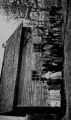
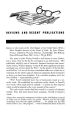
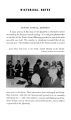
Show •" ', smim • • • ' » ' aEl!-Jr • ^» II V* IS . > *•'• * Frontier school, typical of the ones Hosea Stout attended when possible. Eventually he became a school master in 1832 and opened a school in Ox Bow Prairie, Illinois. COURTESY MISSOURI HISTORICAL SOCIETY AUTOBIOGRAPHY OF HOSEA STOUT, 1810 to 1835 Edited by Reed A. Stout [CONTINUED FROM SPRING ISSUE OF THE Quarterly] 1829 This year found me going to school. Margaret had been wearing out with the consuption all winter nor did any medical aid do her any good, as all fall under the with[er]ing touch of the consumption, so she fell. She died on the 28th day February and was buried in the buring ground in this grove [Stout's Grove], where as yet there had been but few cases. I worked awhile for Jessee Stout this spring and then went to work for Mr. James Watson, a brother-in-law to my uncle Ephraim, to fill a prior engagement which I had previously made with him, in the winter to pay for a colt I had purchased of him for 35 dollars in work & had made a turn of 8 dollars to my uncle in the winter & now was to pay the rest in holding the prairie plow at 50 cents pr. day. However I had made 2,000 rails for him previously that is hired most of it done. I worked along time for him and soon had my colt paid for. This was the first personal property I ever owned. Watson was a good man to work for I like to be with him but more of him hereafter. The past winter some time my relations, all of whom believed in the Quaker tenets of religion who had any real belief at all, That is 238 UTAH HISTORICAL QUARTERLY those in Stouts Grove, took a notion to hold Quaker meetings every sunday at Cousin Ephraim's and according they all would congregate on that day these accompanied by some more who was there who believed in the same faith. It was the request of the most faithful among them that I should attend punctually as my influence would induce the rest of the youngsters to attend, which thing I consented to for I was yet as Quakerish as ever in my feelings. We had several old fashioned Quaker meetings when the fame & the novelty thereof began to spread and attract the attention of the other young people and they altogether out of curiosity began to attend also not behaving any too well for they would wink & laugh at each other and inquire if the spirit moved them during meeting This I did not like for some of them were professors of religion and it gave me a very poor opinion of them. This was the first religious persecution. The inhabitants of this grove were all friendly and united untill now and after this religious move of the Quakers they manifested a narrow, bigoted feeling towards all the rest, and deprecated all who went to their meetings, which broke out in "open hostilities by & by.36 In the spring the Methodists & Cumberland Presbyterians37 some of each living in the grove, began to hold meetings & Anna who was 30 Of Ephraim Stout and his opposition to all except the Quaker religion, it is stated in Duis, The Good Old Times in McLean County, 218-19: "Ephraim Stout was a Quaker, and when he settled in Stout's Grove he thought he would make of it a Quaker settlement. He collected Quakers from far and near and everything seemed 'merry as a marriage bell'; but in an evil hour he allowed Squire Robb, who was a Cumberland Presbyterian, to come in to the settlement. Now Squire Robb had married a daughter of a gendeman named McClure [In August of 1821, Matdiew Robb married Mary McClure, daughter of Thomas McClure. ], and when the former setded in Stout's Grove the McClure family insisted on settling there too, and they were followed by some one else, and these by still others until that Quaker settlement was swallowed up, and the soul of poor old Ephraim Stout was racked within him. He was accustomed to live in the wild woods, and did not like to see so many people around him. When he was married he had promised his wife that he would always live in the forest where she could pick her own fire-wood, and when so many people came there and broke up his Quaker settlement, he picked up his gun and all his hunter's accoutrements and started for Iowa Territory and then for Oregon. In 1830 he was an old man, leaning on his staff for support, and when he told the stories of his adventures with Indians and with all the wild animals of the forest, it certainly seemed that it was time for him to rest from his labors and live the remainder of his life in peace; but there was no peace for him within the bounds of civilization, so he gathered together his worldly goods and went out to the still farther West." 37 Cumberland Presbyterians were members of a sect that separated from the Presbyterian Church in 1802 in southern Kentucky and Tennessee for the purpose of licensing and ordaining men who could not meet the educational qualifications established AUTOBIOGRAPHY OF HOSEA STOUT 239 a methodist would go, which soon started me & Allen I had no religious motive in going what ever. But when I would go my uncle & cousin Ephraim would show great dissatisfaction & chagrin, throwing out insulting & slanderous insinuations & sometimes lies about them [the Methodists], which soon set me to defending them, when It was not long before cousin Ephraim informed me that if I went to any but Quaker meetings I could not come to his house notwithstanding he was still my friend and if I should be taken sick he would be ever as ready to take me in and administer to me as ever he was. This information of Ephraim did not have much impression on me at first, but when I came to think upon it and found he had prescribed me in my religious opinions & was ready to turn me out of his house in case I did not hold to Quakerism, I began to despise him in my heart for as yet there had been no impression made on my mind religiously & I felt as well towards their Quaker meetings as ever & was just as willing to attend them notwithstanding I was going to the other meetings and gliding along with the tide of the young people, without having the subject of religion ever spoken of among us. He [Cousin Ephraim] was afraid I would lead his brothers and sisters off from Quakerism and took this method to separate us, for he said my Uncle [Ephraim] was of his opinion about me going to his house This was the beginning of a prejudice between us which never has as yet been overcome. I was living with James Watson at this time, and soon after I informed him of the conditions which I had to keep the friendship of my uncle & cousin upon and he spoke very positively against any such a bigoted set of religionests and advise me to simply keep away according to their request for there was more respectable people & more liberal minded in die grove than they, and I thought so too, but said nothing about it, and here the matter ended for the present. There had been a debating school got up in the winter which was composed of all parties at first I was appointed Clerk as I was altogether the best schollar in the grove. This did not continue long before religious bigotry began to show itself through in many places and the school ran out in the spring and died a natural death. Divisions now began to spread more and more untill in the summer or rather in the spring [1829] a Mr. Archibald Johnson took up a by the old Presbytery. This step was considered justified to meet the increased demand for preachers brought about by the religious revival on the frontier at the beginning of the nineteenth century. 240 UTAH HISTORICAL QUARTERLY school for a term of one year38 None of my relations or any of the Quaker party would send to him or have anything to do with it but got up a school of their own in opposition. This was called the Quaker school. During this time I was living with Watson and working to pay for my colt which I bought last winter of him, and now did not often go among my relations. Mr. Johnson was a young man of very ordinary talents and not a very good schollar but done well enough to teach a school here. He was a Cumberlanfd] Presbeterian exhorter, a very poor speaker withall & very narrow contracted & bigoted in his feelings but very zealous & would hold meetings & preach every Sunday in the different groves & some times here [in Stout's Grove]. Notwithstanding he was a clever honest & inoffensive man & I liked him tolerably well. He was too lazy to enjoy good health & would lay in bed till school time in the summer which made him look sickly & pale. About this time I had a falling out with cousin Ephraim and took Allen away from his house and he also came to Mr. Watsons and lived. Anna had also went away from our relations and was now living with Mathew Robb Esqr. We were now entirely on the anti Quaker party After we were done breaking prairie & the hurry of spring work was over I commenced going to school to Mr. Johnson and boarded at Watsons at 50 cents a week or a days work. Allen was also sent to school with me by Watson. I suppose I went about three months to school and here improved some little, my handwriting went through Kirkhams Grammar & also studdied arithmetic. Johnson was no very good schollar & when I left of[f] going to him was as good a schollar as he was. I enjoyed myself well while going to school for I was suited well with my home and school mates, many of whom were about my age [nineteen ] and we there formed ties of friendship which never has been severed. My uncle Ephraim, who was a wise & cunning old smooth toun-gued "Snake in the grass" took great umbrage at us all and to revenge himself somewhat, he being one of the County commissioners, reported 38 According to Owenetta Edwards, "Early Schools and Teachers in my County," Journal of the Illinois State Historical Society, XXIV (April, 1931), 14, "Archibald Johnson, who taught a subscription school about the winter of 1832-3 was the first teacher in Danvers [Illinois]. He was a Cumberland preacher and a good teacher. His price per scholar for a term of four months was $2.00. The second teacher was Lyman Porter; and the third was Hosea Stout, who was converted to Mormonism. He went to Nauvoo and afterwards to Salt Lake City, where he became one of the twelve apostles." The statement that Hosea Stout became one the Twelve Apostles of the Mormon Church is incorrect. AUTOBIOGRAPHY OF HOSEA STOUT 241 Allen as an orphan without a home and applied to the Commissioners Court to have a Guardian appointed so as to have him bound out as this would put him entirely out of my control for he was not willing for him to stay at Watson purely out of spite to us. When I learned this my wrath almost arose beyond endurance however no accident happened & so when I learned the law on the subject I made an agreement with Mr. Watson, who was willing to have Allen bound to him and then we went to the man who had been appointed his [Allen's] guardian & had him bound to Watson. Thus we thwarted my uncle's plans, for he intended to have him away from there. We were now all well satisfied now and here it rested for the present. From this time forth I detested both my uncle & cousin Ephraim39 for they were doing all that they could to breaks us down, but all the rest of the grove was on our side & we stood high in their estimation & had more friends than they. Some more of my cousins sided with them but still was friendly to us Uncles David & Samuel did not participate in this crusade against us neither did they say or do any thing in our favor but remained nutral & friendly to both & I never had any bad feelings towards them, notwithstanding I seldom now ever went among any of them. While I was going to school there was to be a camp meeting in Dillens settlement to which I & some more of my school mates went named Berry who professed to be religious. Anna was at this time there We went and I was introduced to the Preachers, all of whom seemed to take great notice of me and were very friendly & I was now in the midst of the holy Methodist religion and bouyed along on the tide I knew not how but I attended very strictly to preaching and was wonderfully wrought up and went forward to the anxious seat to be prayed for & here I struggled & prayed and contended for religion, a change of heart, to pass from death unto life &c &c. during the whole camp 30 Hosea's uncle, Ephraim Stout, is referred to in Duis, The Good Old Times in McLean County, 217, as the most eccentric man in the area. However, he is described somewhat more kindly in The History of McLean County, Illinois (Chicago, 1879), 567, which says of him as follows: "Ephraim Stout was a large man of commanding presence. His early education had been neglected, so that he could not be said to have much book knowledge; but his practical knowledge of the world was extensive, and his ability to judge the qualities of men almost complete. He and all those immediately connected with him were Friends [Quakers]. This man had a son named Ephraim, who was married and came to the Grove with his father. They lived at the Grove a long time, and then moved farther west, finally settling in Oregon." 242 UTAH HISTORICAL QUARTERLY meeting at the proper times, exceedingly sober and surley tried to the best of "my skill and ability" but did not effect anything. Did not realize what I had heard described so often by them & towards the last of the meeting when oppertunity was given I & all my school mates joined the Methodists on trial for six month as was their custom. The young Berrys were Cumberlands before and now came over to the Methodists Thus ended the meeting & I came home under "contrivance of mind" When I came home I still went to school & found that my literary desires were not overcome in the least by my religious ones for I made as great proficiency as ever. Joining the Methodist gave my uncle & cousin great scope to talk about me now and they did so I was very punctual to attend meetings now & after this we had regular preaching every week. & not long after a two days meeting thinking to spread the Holy fire a little more in this grove but in this they failed for no more joined. Matters rested dius for a time. Some time in the latter part of the season my father came from Ohio, bringing, Sarah & Lydia along with him He had managed to get Lydia away from Adam Reynard, to whom she was bound when I left, which thing he done by common consent of the parties Our whole family was now together who were now living consisting of six persons in all [Joseph; sons Hosea and Joseph Allen; daughters Anna, Lydia, and Sarah]. My father had got religion in Ohio & said he was glad to see me also inclined religiously. He was not here long before he began to interfere with the case of Allen's being bound, which caused him to have a terrible falling out with uncle Ephraim about which much was said. Allen and myself still at Mr. Watsons all this while. He [my father] fell out with almost all his brothers before he was here long & so he took a course to suit himself & before spring managed to have the indentures taken and Allen released & took him with him and went to live at Little Mackinaw. Sarah & Lydia was along also but I still remained at Watsons. This fall [1829] I went to Funk's grove40 about 12 miles south and worked awhile & cutting up corn for which I could get cash and then returned to Watson where I staid all winter 40 Funk's Grove, about twelve miles south of Stout's Grove, was named for Isaac Funk and his brother Abraham who settled there in 1824. The Grove comprised approximately 2,700 acres according to a survey map published by Peter Folsom, county surveyor of McLean County in 1856. AUTOBIOGRAPHY OF HOSEA STOUT 243 Our religion still went on & I attended a camp meeting in the Blooming grove41 as a regular Methodist We had also one in Stouts grove at all of these I was very zealous but still could not get the power Mr. Watson got religion at a camp meeting also and we had great times Watson joined the Cumberland & I soon discovered a hostile spirit between them and the Methodist which I thought very uncalled for It threw me much in the back grounds to hear preachers slander each other because of small different of opinion in "nonessentials" so called. 1830 I was quite religious this spring I worked some for Mr. Watson earley in the spring and then went down to Dillin's settlement to hire out in order to get me some clothes as I was now neady, but did not meet with an opportunity and came back to Stouts Grove and staid untill some time in the summer and again set out and went by there again to Pekin,42 a town on the Illinois river, and there found an op-pertunity to get work about 15 miles up the river on Ten mile creek where there was a mill in progress of building So I started in the afternoon to that place; but missed my road and got lost and wandered about untill near dark when I came to a man plowing in a field & I went to him to enquire the road & found that I had wandered some four or five miles out of the way. I staid all night here. The man's name was Morris Phelps,43 who, on finding out my business, proposed hiring me in case I did not suit myself at the place I was going to. The next morning I went on & arrived at the Ten Mile [Creek] at noon and went to work and only worked one day not liking neither the place, the kind of work, nor any of the men but felt myself in n Blooming Grove is now a part of the present city of Bloomington, Illinois, the county seat of McLean County. 42 Pekin, Illinois, is located on the east side of the Illinois River about five miles south of Peoria and about fifteen miles west of Mackinaw. In 1831 it became the county seat of Tazewell County. 43 Morris Phelps setded in Tazewell County a few miles west of Pekin shordy after his marriage in 1826. Soon after Hosea Stout ceased working for him, Phelps moved to the northern part of Illinois, where he became a convert to the Mormon religion. Upon being baptized a Mormon in August of 1831, he sold his possessions in Illinois and started for Jackson County, Missouri, to join the members of the church there. He was driven with other members of the church with which he had associated himself successively from Jackson County and from Caldwell County, Missouri, and Nauvoo, Illinois, and lie finally settled in Utah, where he died May 22, 1876. 244 UTAH HISTORICAL QUARTERLY perfect confinement so the next day after dinner, taking an order on a store in Pekin for 50 cents for my days work I set out on the back track & came to Mr. Phelp's again and made a bargain with him to work at ten dollars a month. The next morning I went to Pekin and took up my order & then returned to Dillen's Settlement to Mr. Hodson's where my sister Anna now lived and made arraingements to go to work for Mr. Phelps. I worked at Mr Phelp's two months. He was a tolerably good man to work for notwithstanding he oppressed me considerable in my wages on settlement and was very austeer and grouty at times. However I liked him on the main very well His wife was a fine clever woman and was very kind and good to me. He lived three miles from Peoria on the road leading from thence, through Dillon's settlement to Springfield at a place called the "Willow Springs" I was employed at farming rail making, and some times at work at a mill which he & some more were building on Farm creek.44 I enjoyed myself very well while here. Phelps was a Methodist back slider & his wife s[t]ill good in the faith which was company for me. I clothed myself up very well here and when I left he owed me seven dollars which he was to pay in a short time. There was a camp meeting in Dillen's Settlement while I was at work here to which Mr. Morris & wife & myself went. It was at the same place where I joined the Methodist last year. We had a good time here again for which I was hectored severely by Phelps & some others afterwards who did not believe in the Doctrine. While Here I first became acquainted with Charles C. Rich45 & his fathers family about whom we will speak more by & by. Charles was then an uncommon civil steady, honest young man but made no pretentions to religion & I soon had a great regard and attachment for him. " Farm Creek flows in a westerly direction through the northern portion of Tazewell County from near the town of Washington to its terminus at the Illinois River at the southern end of Lake Peoria. 45 Charles Coulson Rich was to become a life-long friend and associate of Hosea Stout, and their association was to become strengthened by their marriage to sisters, Hosea Stout marrying Samantha Peck in 1838 and Rich marrying Sarah Peck in 1846. In 1832 Rich joined the Mormon Church, and in 1836, he led converts of Mormonism in Tazewell County to Caldwell County, Missouri, to join the Saints there. Largely by reason of Rich's influence, Hosea Stout was himself converted to the Mormon faith and moved to Caldwell County. After the Saints were expelled from Missouri in 1838 and 1839, and established their city of Nauvoo in Hancock County, Illinois, Rich became a member of the city council and also of the High Council of die church there, and rose to high rank in the Nauvoo Legion, the military arm of the Mormons. In 1849 he was ordained a member of the Quorum of Twelve Aposdes of the Mormon Church. Fol- AUTOBIOGRAPHY OF HOSEA STOUT 245 Charles Coulson Rich was instrumental in converting Hosea Stout to the Mormon faith. COURTESY CHURCH OF JESUS CHRIST OF LATTER-DAY SAINTS HISTORIAN'S LIBRARY While at Mr. Morris Phelps I attended a meeting in Pleasant Grove for the purpose of forming a Temperance Society got up by Neil Johnson, a brother to Archabald, my teacher. He was the most eloquent preacher in all the country and now spoke loud and long against the practice of drinking ardent spirits and I was quite overcome by his arguments and altogedier converted & after meeting he called for volunteers to join the Temperance cause & I and 14 others came forward and gave our name as members. Drinking to excess was a thing which I never had even any temptation for and although I love a dram sometimes yet seldom ever drink when I have it by me Notwithstanding all that, [I am] constitutionally temperate. Yet I here joined the Temperance Society to' be reformed from drinking and at the time did not ever expect to taste another drop of ardent spirits again in my life what an absurdity after all was over I pondered deeply on the subject and continually felt like I wanted a dram yet firm in my resolution not to drink again. That night I dreamed a man handed me a bottle of whiskey & I drank deep. In the morning I still wanted some & did for days during which time I had the offer but refused It was a mystery to me why I so wanted it now for the first time in all my life and that after I had set out not to drink any more, but "when the law came sin revived" I suppose. Mr. Morris Phelps and all his neighbours thought very little of all this and came very near making me sick of my bargain for it did look foolish to me to quit that which I never did. While here [Willow Springs] I went over to Peoria, then called Fort Clark.46 It was a beautiful town site with only one or two log lowing the movement of the main body of the church to Utah, Rich, together with Amasa M. Lyman, also one of the Twelve Apostles of the church, founded the city of San Bernardino, California. Evans, Charles Coulson Rich. "Named after the frontier fighter, Colonel George Rogers Clark, the fort was erected by militia forces in 1813 and partially destroyed in 1818. 246 UTAH HISTORICAL QUARTERLY houses on it but did not look anything like a town. The remains of an old fort was still there. Lake Peoria lay on the East of the site and is a most beautiful sheet of water formed by a sudden expansion of the Illinois river. It terminates at the lower part of the town site where there was a ferry. The river here is verry narrow. When I was done work for Mr. Morris Phelps I went to see Anna and from thence returned to Stout's Grove again well clothed except shoes. I staid here some time and then set in with Mr. Jonas Hittle of Mackinaw town to work at a mill which he was now building on the Mackinaw just above town He had a number of hands at work we had a jolly time all worked well He was a fine man to work for done well by his hands & gave them plenty to eat and was liberal He [Jonas Hittle] furnished whiskey for his men every morning it being necessary for we had to work in the water sometimes. At first I was too conscientious to drink for which I was dully rallied by the rest who considered it worse than folly & nonsense for a sober temperate man to be under any obligations not to drink when it was for his health, & I thought so too. The temperence regulations allowed a man to use ardent spirits as medicine & recollecting this one morning I took the j ug and called the attention of the company who had assembled for the purpose of taking their morning dram, to witness that I took it as medicine at which all shouted applause & after this I always used it as I thought proper & have never since been priest bound on that subject nor done any harm in drinking on my own descretion This closes the history of my temperance society career for I never troubled myself any more about the Temperance cause. I worked some more than a month at Mr. Hittles & then went to Stouts Grove and set in with Mr. Watson to mow his hay While grinding the sythe I was taken with a severe attack of the fever which was followed by a hard spell of sickness. Mr. Watson becoming alarmed about me, sent to Hodson's after Anna who came and attended on me faithfully. I was sick some time with a fever untill I was very much reduced & weak and feeble The fever was succeeded by the chill fever47 47 In History of Tazewell County, 331, the malady that appears to have stricken Hosea Stout is described as follows: "One of the greatest obstacles, and one which wielded a very potent influence in retarding the early settlement of this county, was the 'chills and fever', or the 'ague', or the 'Illinois shakes', as it was variously styled. This disease was a terror to new comers. In the fall of the year everybody was afflicted with it. It was no respecter of persons; every- AUTOBIOGRAPHY OF HOSEA STOUT 247 & this continued to reduce me for a long time during which time I went to Mr. Mathew Robb's to stay, Anna still with me. While at Mr Watson's, there was a weding to come off at Mr Jonathan Hodges, whose daughter Sarah was to be married to John Ament. Sarah was one of my school mates last summer & we had now become very intimate & she had long since told me all her expectations about marrying and in fact she was a girl of the very first quality. I & Anna attended the weding While there I had a chill & was very sick with a high fever & was out of my senses most of the night. All else went off joyful & gay and all seemed to enjoy themselves except Ebene-zer Mitchel another school mate who had always untill a few days since expected to get this fair damsel himself. He was here & look bad enough while she was on the floor as all remarked. He was a dull stupid unsuspecting fellow and had been fairly duped by her. I had some hopes of soon being well while at Mr Robbs but was taken with a relapse, which was worse than the first spell. This came near using me up for I was now unable to walk around. Anna took a notion that if I could get to Dillen's Settlement that I would soon get well & so Mr Robb took us there where I staid all winter [1830] having a chill & fever every day I became so stupid that I would not move from the fire when my clothes would scorch till they would smoke. It is incredible what a stupifying effect that fell disease will have on anyone. I was at several different places while here this winter & experienced & tasted the very dregs of adversity for some places I was not welcome & I knew it & could not get away & who knows the disagreeable feeling to be in such a condition but those who have experienced it. Some time this winter Anna went to see Mr. Phelps to collect the amout coming to me which he promised to pay to her on a certain day in Pekin, and she went to get it and he did not come & we learned afterwards that he disappointed her purposly for he expected to move one shook with it, and it was in every person's system. They all looked pale and yellow as though they were frostbitten. It was not contagious, but was a kind of miasma that floated around in the atmosphere and was absorbed into the system. It continued to be absorbed from day to day, and week to week, until the whole body corporate became charged with it as with electricity, and then the shock came; and the shock was a regular shake, with a fixed beginning and an ending, coming on each day, or each alternate day, with a regularity that was surprising. After the shake came the fever, and this 'last estate was worse than the first'. It was a burning hot fever and lasted for hours. When you had the chill you couldn't get warm, and when you had the fever you couldn't get cool." 248 UTAH HISTORICAL QUARTERLY away shortly and cheat me out of it which thing a Mr. Sanford Porter a neighbour of his knowing the circumstances took up for me and made him pay him and he afterwards paid it to Anna. I will mention one man who seemed to express the warmest friendship and hospitality towards me while there sick and that was Mr William Eads.48 I started out to return to Stouts Grove on foot in the spring and came to his house and he objected to my going because he said I was not able & seemed such a warm friend & so willing [for me] to stay that I tarried longer I had been at his house in the winter and staid some week & was treated well. I never could forget his goodness to me in this one of the times of my greatest afflictions & deepest distress when a friend is so much needed and such a warm friend, in the midst of calamity, when all the world is cold and regardless to> your wants how good and consoling it is. I went from Mr. Eads' and traveled on foot towards Little mack-inaw to Stouts Grove. When I left Mr. Eads' I had not had the chills for some time & thought I could walk to Stouts Grove by taking this rout for I could stop occasionally. I went about 12 miles the first day it being very warm and pleasant but at night I had a light chill again. The next morning I felt very bad & hardly able to walk but I went on to my Uncle Samuels' about four miles [at Little Mackinaw], where I found them all well & glad to see me. Tonight I had the chill again which increased now and began to bring me down. I staid here a day or two, while here I went to see my father & Allen, Sally [Sarah] & Lydia who lived nearby and found them all well. I got an opportunity of going to Stouts Grove on horseback, with Saml. Stout jr. who was going there so I ventured & we set out and was overtaken by a rain storm & had to ride hard to get in without a wetting. We put up at Uncle Davids who lived in this grove now and that night I had a sever[e] turn of chill & fever & was out of my se[n]ses but they were very kind to me & done for me all they could. I had now arrived to the place whence I started and felt myself at home. I went around as I was able to visit my old neighbors & friends all who seemed glad to see me & treated me well but still I was troubled with lingering chills & fevers for a long time. 48 William Eads, together with William Davis, is reputed to have constructed the first grist mill in Tazewell County in 1825 near Pekin. Later on, Eads built a cotton gin in connection with the grist mill. AUTOBIOGRAPHY OF HOSEA STOUT 249 1831 The last winter was the hardest winter known in Illinois.49 The corn crops were not geathered The snow was uncommonly deep & people suffered extremely. Hardly able to geather corn to feed their stock & get their wood. For me I had the chill fever all winter which gave me the full enjoyment of its cooling effects. It is to this day well known by the name of the "cold winter" This summer was likewise very cold and crops yielded uncommonly poor. Such as was never known in this country. After I had made my visits to my friends not being able to do any work I commenced going to school to Mr. Porter50 who> was teaching here & boarded at Mr. Jonathan Hodges where I staid all summer. Here I finished my education which only consisted in a knowledge of Reading, Writing, Arithmetic, English Grammar, Geography and a tolerable insite of Logic. All excep the last I had a good knowledge and for these times was a good education. Towards the latter part of the season I began to feel like I could labor again and accordingly set in to do work for Mr. Watson Mowing. I worked untill noon the first day and came in with another chill & was again laid low with the chill fever. I was now entirely disheartened and almost dispaired ever again being able to support myself During this Spell of Sickness I was but an expense again on my friends who however took good care of me, and rendered my situation as comfortable as possible. Sometime this summer my father took Allen and went down the Illinois [River] to parts unknown to any of the rest of us which was the last I heard of them for years.51 Stout's Grove, which had been famous for religion was now filled with jars and contentions about the "Non-essentials" as they termed some of the different tenats but sufficiently essential to keep them in a " I n History of Tazewell County, 214-15, the winter of 1830 is described as follows: "The big snow of 1830 will be remembered by all the old settlers. The snow began falling on the night of the 29th of December, and continued to fall for three days and nights, until it reached an average depth of about four feet, but drifting in places as high as eighteen to twenty feet. Great suffering was experienced in consequence." 50 Lyman Porter succeeded Archibald Johnson as schoolmaster at Stout's Grove, and was himself succeeded by Hosea Stout. 01 Hosea Stout's father and brother, Allen Joseph, journeyed down the Illinois River with the purpose of going to Texas. When within seven miles of the Texas border, they learned they could continue no further because of the outbreak of fighting between the Texans and Mexicans, they settled in southern Arkansas, where they remained until 1837. Journal of Allen Joseph Stout. 250 UTAH HISTORICAL QUARTERLY perpetual quarrel which nearly extinguished my religious fire no[t] believing that any good was in such spirits as they manifested. There was annother Camp meeting this fall here at which many very able preachers attended and made an uncommon effort to convert sinners to no effect The fact was their internal broils had resulted in a perfect want of confidence in each other and all these things were well known to the sinners who did not believe in them. This fall I recovered from my sickness again so that I commenced work and had tolerable success for awhile and again bright hopes arose & I began to form schemes to acquire property and make a respectable living. 1832 I lived with Col. Robert McClure52 this winter He was a kind and obliging man My prospects were now very good and I felt cheerful and happy But my joy was again to be turned in to sorrow and dispair for toward the latter part of the winter I was again taken down with a chill and was for three days perfectly delerious and by all die neighbors given up to die. After I had recovered my senses I was so much reduced that I could not sit up. This was the severest spell of sickness I had ever had but did not last long for I soon recovered so as to go around & in a short time felt quite well but without the hopes of ever being able to labor for a living. My friends now advised me to take up a school as they said I could do better at that business which would spare my health. This I concluded to do as a last and forlorn hope to a respectable living [for] which a natural backwardness almost disqualified me. Moreover I was now very destitute of clodiing and in fact could not make a respectable appearance among strangers. However by turning the avails of a colt which I had sold to Mr. Watson I made out to fix myself for the intended "Voyage" and earley in spring I set out accompanied by Benjamin Conger53 who was going along for the purpose of going to school to me. I was now fairly well launched out into the world having about 14 dollars in cash & but a poor outfit in clothing. °! Robert McClure, an early settler at Stout's Grove, acquired the military title of colonel by his service in the Black Hawk War. " Benjamin Conger is listed as having served in a company of Tazewell County volunteers for service in the Black Hawk War. The Conger family settled at Stout's Grove in 1829. AUTOBIOGRAPHY OF HOSEA STOUT 251 We travelled north to the Walnut Grove54 about 12 miles and staid all night at Hon. James Bird's with whom we were well acquainted. Here we had faint hopes of raising a school but found no chance for every one was busily engaged in putting in tiieir crops and at the best cared but too little about educating their children We went on the next day wending our way North but did not go far before Conger proposed going West down the Illinois river arguing that the best prospects were in that direction, to which I consented & travelled till noon took dinner & he was now quite home sick & dispaired of us ever doing any thing and so he turned in towards Mackinaw town & I journeyed to Dillon's Settlement to see my two sisters Anna & Lydia Here I tried for a school as some were desirious to have one while others did not. After several days of suspense I failed. I now began to think that I could not raise a school at this season of the year and upon the failure of this school I was left entirely discouraged and knew not what to do. I felt like I was totally abandoned to eternal disappointment, poverty and disgrace. Nothing but dark forebodings in view I retired to the broad prairie and sat down & wept bitterly and there alone & aloud mourned my hard fortune for a long time I felt that my life was only the sport of misfortune and sorrow After giving vent to my feelings I determined to leave entirely the land of my acquaintance & bad misfortunes & throw myself in the midst of strangers & see if a change of fortune would follow Knowing it could not well be worse. But where to go I knew not. While there I wrote the following letter to my sister Anna & left it with my little sister Lydia giving her instructions to give it to Anna herself & not to let anyone see it as I felt that my situation was perfectly disgraceful & was not willing for it to be known. Tazwell County Dillon's Settlement April 5th, 1832. Dear Sister, This is to let you know the situation I am in at present. I have tried to get a school in this settlement, but failed. What I shall do next I know not. It seems that misfortune comes upon me at every attempt to make an honest & respectable living. And if I can not make an honest living I am resolved not to live at all. I hope that Heaven may direct me in the way I should go. 54 Walnut Grove embraced the area around the present town of Eureka, about twenty miles west of Peoria and located northwest of Stout's Grove. Walnut Grove is now a part of Woodford County, Illinois. 252 UTAH HISTORICAL QUARTERLY I am resolved to live respectable if I do live I am now in the prairie not knowing where to go I hope you will not be disheartened if I leave the country. If I stay here I can make nothing. I will go wherever I think I can do the best and write you when I stop. If I stay here I am compassed with sickness and poverty & I do not see how much worse I can be off anywhere else. If I labor, sickness is sure to follow If I try any other way to make a livelihood I am attended with disappointment which is worse than sickness. What shall I do? I feel like a poor out cast without a friend to council or assist me or even to communicate my troubles to. May the Lord guide my steps in the right way and dispose of me as he sees best. If I knew what to do gladly would I drop my pen & do it quickly. When I shall see you I know not, but do the best you can till then. The day may come when prosperity may be in my favor & I enjoy life & peace better than I do now. No more. Your affectionate brother. Hosea Stout. After committing the above to my little sister I then went to Pekin, a town on the Illinois river & now the County seat of Tazwell County, with an intention of going with Col. R. McClure, who was going down the river to purchase a lot of seed corn. The corn last year being not ripe the whole country had to go south for seed corn, this spring. When I arrived at Pekin I found that McClure had just left, so> that I was again disappointed. My intention in going with him was that if I met with no opportunity of getting into business I might at least learn something about the ways of the world [of] which I knew myself to be grossly ignorant & at the same time I knew that McClure would do anything he could to advance my interest. I found my calculations again futile. I was now very unwell & hardly able to go about notwithstanding I went on travelling up die river & by falling in with Mr. Holland who had a waggon I rode home with him some 15 miles that night at Holland's Grove again intending to try my fortune to the North. Mr. Holland tryed to disuade me from going North not believing I could get a school & I had not much hopes myself But being unable to labor I went on the next day to one of my old acquaintance's William Burt on Crow Creek where I staid all night [Here I] was well treated and encouraged in my undertaking. He [William Burt] lived AUTOBIOGRAPHY OF HOSEA STOUT 253 in Stouts grove during my last sickness this spring & from whom I had recieved kind attention. The next day I went on to the Ox-Bow Prairie55 where I made my intentions and business known to two men who- gave me encouragements of raising a school and refered me to< Mr Asahel Hannum who they said could decide the case for me. This was on Sabbath. I went to see Mr. Hannum & made known my business, who was in favor of a school after very closely criticizing me as to my ability which I believe was to his satisfaction. He was a very stern man & yet kind & hospitable to me. I staid all night with him & in the morning drew up my article and went around the settlement to procure subscribers. Suffice it to say that I succeeded in making up a small school here, which was to commence the next Monday. I boarded at Mr. Hannum's untill then and was well treated by him During this week I became acquainted with nearly all the men in this place by going to a rail making frolic at Mr. Harts, & was well pleased with them as a general thing My school commenced and I done well for a short time & I believe to the satisfaction of all. It is well known by all that the Black Hawk War56 broke out this spring [1832] which after the exaggerated reports of Maj. Stillmans defeat raised such an excitement through this section of country that nearley all business was suspended. We were called upon to defend ourselves being the frontier county (Putnam) and one company raised 55 The Ox-Bow Prairie is the name given an irregularly shaped farming region about five miles in length from east to west and varying from one to two and a half miles in width from north to south. Formerly a part of Putnam County, the Ox-Bow Prairie was a part of the territory cut off from that county in 1835 to form Marshall County, Illinois. Asahel Hannum was one of the first settlers in die Ox-Bow Prairie. '"'' The Black Hawk War arose out of the refusal of a band of Sauk Indians under the leadership of their chief, Black Hawk, to move to a reservation west of the Mississippi River. After defeating a force under Major Stillman that had been sent after them, the Indians began depredations upon the white setdements, and a call was made for volunteers, and several companies of militia were organized as a precautionary measure along the east bank of the Illinois River. One of such companies was the 40th Regiment, Illinois Militia, commanded by John Strawn as colonel. On May 21, 1832, Hosea Stout volunteered for service in the 40th Regiment, and served in William Haws' company. The regiment was assigned to patrol along the Illinois River. As soon as it was determined there was no danger from the Indians in the vicinity, and following the defeat of Black Hawk in the Battle of Bad Axe, the members of the regiment were mustered out of service at Hennepin, Illinois, June 18, 1832. John Spencer Burt and W. E. Hawthorne, Past and Present of Marshall and Putnam Counties, Illinois (Chicago, 1907), 23 and Perry A. Armstrong, The Sauks and the Black Hawk War (Springfield, 1887), 684. 254 UTAH HISTORICAL QUARTERLY to rainge and patrol the country, which for a short time left us in the enjoyment of peace. I was never untill now brought sufficiently near the scenes of war to know what effect it would have on me. I had often heard its horrors portreyed. Often had I heard the demorilizing effect a soldiers life had upon people, all of which I desired to escape. I had yet great religious concern of mind & desired exceedingly to know how to make my calling & election sure & well knowing my own weakness in resisting evil I feared this demorilizing effect of a campaign even if I should escape the scalping knife now so much spoken of together with the horid accounts of Stillmans defeat. These things caused me deep trouble which however I kept con-sealed from others. On the contrary I deeply felt the necessity of rallying to the aid of my country & running my chance with the rest. I was certainly as pure and devoted a patriot as ever was. I felt that the interest of my country was above every thing else & I must defend it at the risk of my life & supposed that every one felt the same I did not even suspect that our rulers were full of the political intrigues which I afterwards learned So upon the whole I was now perfectly uncontaminated. With all these inocent feelings I attended a second call for more raingers at which the whole entire Regiment turned out & I with the rest not however without undergoing a considerable change of heart for the evil effects of a campaign & the scalping knife had both lost its terror to me & I only desired to march to meet the enemy such is the effect of martial music & warlike speech on the mind of man. Black Hawk, from a lithographed copy of a painting by C. B. King. COURTESY STATE HISTORICAL SOCIETY OF IOWA AUTOBIOGRAPHY OF HOSEA STOUT 255 My school was suspended & I engaged with the rest in our rainging excurtions from Hennepin the County seat down the river some twenty miles. This was the line to be guarded All to the West of the river at this point was evacuated by the whites This new life suited me well for my health had now been on the gain & I was well able to do all the duties of a soldier. Some time passed thus in the mean time we built a fort in the Ox Bow prairie where all the inhabitants fled for safety Some men were often so terrified that they could not be got to stand guard. False alarms were frequent & I often saw people ready to abandon the fort to the Indians for their own safety. I found that people were not so purely patriotic as I expected During the time of my service the Indians made a decent on some men who had gone to look to their farms about 15 miles from Hennepin and killed a man named Phillips & at another they killed some 15 persons [named] Halls & Pedigrews & carried two young Miss Halls captive.57 These things created a great excitement. The people in Pekin even fortified themselves. It is not needful for me to go into detail on this subject. Once during the war I made a visit to Stouts grove and back again This war was ended after the battle of Bad-ax & I returned to Stouts grove and tarried awhile & again in the fall returned to the Ox- Bow & took up another school for the term of three months, without any thing of particular importance transpiring except some three or four weddings & the two Miss Halls who had been taken captive by the Indians had now returned & were in this settlement. They were afterwards married to two brothers named Munson.58 After my school was out I returned to Stouts Grove again & now in good circumstances & tolerable plenty of money & uncommon good health. 57 One of the depredations by the Indians during the Black Hawk War was upon a little settlement on Indian Creek where the Davis, Hall, and Pettigrew families lived. After massacring the families, the Indians discovered two survivors, Rachel and Sylvia Hall, age fifteen and seventeen, who had escaped by concealing themselves. The Hall sisters were taken captive, but were eventually ransomed. History of Tazewell County, 261-62. 58 Hosea Stout appears to be mistaken when he states the Hall sisters married the Muson brothers. According to Spencer Ellsworth, Records of the Olden Times; or Fifty Years on the Prairies (Lacon, Illinois, 1880), 118, Rachel Hall married William Munson and Sylvia Hall married William Horn. 256 UTAH HISTORICAL QUARTERLY From here I set out for Dillon's Settlement to see Anna & Lydia as I had not hard anything particular about them since I left in the Spring. Upon arriving there I heard that she [Anna] was married & upon arriving at the place where Lydia was I heard that she [Anna] was married to a mormon widower who had five children58 This perfectly astonished me & I at first felt like simply going to see her for the purpose of telling my mind and then leaving her forever for I considered it a disgrace beyond endurance to be any way connected with the mormons & a widower too was too bad. I had only heard the gold Bible stories & the fortifying [of] Jackson county Mo60 & in short the common and universal slang then going about them & did not even once think but it was true. I thought deep all that night intending to morrow to see her for the last time. My agitation of mind was intense but on my way the next day I came to the more sober conclusion not to unbosom my feeling for as she was now fairly into a scrape not to irritate her feelings but let her enjoy herself if she could so I now hastened on with this view. When I arrived there I was met by her & introduced to Mr Jones who seemed glad to see me & in fact was a very clever & pleasant man against whom I could find no fault and had he not been a Mormon [I] should have been well enough pleased with [him]. But O! the stigma & disgrace inevitable to that name [Mormon]. This bore on my mind & weighed down my feelings while I endeavored to put on a cheerful & happy countenance. The subject of religion was not mentioned to me while I at the same time was anxious to go into an investigation of it. I found them living on Farm Creek. He [Benjamin Jones] was engaged at a saw mill with N. Wixom. This mill I assisted to build while I worked for Morris Phelps two years ago. 58 Anna Stout was married to Benjamin Jones November 29, 1832, by Charles Coulson Rich. Spangler, "Early Marriages in Tazewell County," Journal of the Illinois State Historical Society, XIV, 145. 00 Joseph Smith, the founder of die Church of Jesus Christ of Latter-day Saints more popularly known as the Mormon Church, claimed a heavenly being gave him information concerning records of the ancient inhabitants of America, written on plates of gold, and buried near Palmyra, New York. He translated the records, which were published as the Book of Mormon. In 1830 he established a church and in 1831 settled with a number of his adherants at Kirtland, Ohio, near the present city of Cleveland. Other of his followers established a branch of the church at Independence, Jackson County, Missouri. Opposition to the Mormons in Jackson County led to open hostilities against them during most of the year 1833, and at the end of the year they were expelled from Jackson County, many of them thereafter moving north to Clay and other adjoining counties in Missouri. AUTOBIOGRAPHY OF HOSEA STOUT 257 I staid here several days, during which time I saw C. C. Rich who was now a Mormon Elder. We spent several days together all of which time was spent investigating our religious tenats. Suffice it to say that we passed over the grounds of our different belief, refering our opinions wherever we differed to the Bible. It is not necessary to mention our investigation which resulted in all cases in die loss of my position while he always sustained his on the fairest possible terms. The perplexity which this threw me into can only be realized by those who has been through the same thing with the same anticipations before them that I had. I saw plainly that my positions were wrong & did also verily believe Mormonism to be correct. All my plans St calculations both spiritually and temporally were now futile. The agitation of my mind was intense & I did not know what to do. I could not forego the idea of joining the church for aside from the disgrace which would follow I was fearful least I should not live up to its precepts as I did with the methodists. I wanted confidence in myself After remaining here [Farm Creek] untill I had fairly investigated Mormonism & also [I] became acquainted with a number of Mormons whose society I was very fond but did not express it I returned to Stouts Grove where I commenced preaching the doctrine to the astonishment of all who knew me, yet at the same time [I] did not profess to believe it. I was astonished at myself when I saw with what ease & fluency I could confute any one who would oppose me. This raised a considerable excitement in the grove. Emboldened by my success I soon made it in my way to attack even the ministers who I believed did not understand the Scriptures & I also thought I had always the best of their arguments. Matters rested in this way while I made several visits back and forth to Jones always with one or two new mormon ideas to argue on my return to the grove. This winter I took up a school in the [Stout's] grove at which I done a very good business.61 01 According to Duis, The Good Old Times in McLean County, 217, the school taught by Hosea Stout "was attended by thirty or forty children, who came great distances and boarded with the farmers near by." 258 UTAH HISTORICAL QUARTERLY 1833 After my school was out I went up North near crow creek to Mr. Joseph Phillips and set in with him to raise a crop with him where I spent the summer without any thing of importance transpiring more than my studdying the principals of mormonism as I had opportunity from some mormons near the mouth of Crow Creek. I raised here a good crop of corn. I made several visits to the [Stout's] grove in the summer & after my crop was laid by I returned to Farm Creek to Benjamin Jones my brother-in-law. About this time Mr. Nathan Wixom the owner of the Farm Creek saw mill wishing to move North to a more new Country proposed to sell out his mill & improvements to Jones & myself. We accordingly b[o]ught him out for six hundred dollars. Sep 2nd62 We were to pay one third of the lumber we sawed untill the mill was paid for. This was a very fair opportunity for us for the rent of a saw mill in those days was one third while we could apply it on the payment I now had a permanent home living with my brother-in law Shortly after I came here to live I had a severe attack of chill fever & was sick several weeks. After recovering I returned to Mr. Phillips & geathered my corn & sold it to Wixom in part payment for the mill During the time I was here Mr. Phillips died. He had been failing all summer. It was while I was here on the night of the 13th of Nov. that the notable Meteoric shower took place about which so much has been said which happened while the mormons were driven out of Jackson County Missouri and now in the open fields. They hailed this as one of the signs of the Last days. I confess I did not know what to think of it. The sight was magnificent & grand.63 02 The sawmill on Farm Creek purchased from Nathan Wixom by Hosea Stout and Benjamin Jones was located three miles east of Peoria. oa On the night of November 13, 1833, while the Mormons were being expelled from Jackson County, Missouri, there was an unusually large occurrence of meteors in the skies. This was regarded by the Mormons as a heavenly manifestation connected with their expulsion. AUTOBIOGRAPHY OF HOSEA STOUT 259 After I returned home from Mr. Phillip's I was busily engaged with Jones in the affairs of the sawmill in procuring logs &c in time for business in the spring. Here I was well suited with the society I was in. There was mormon meetings once a week to which I attended and became intimate with the doctrines they professed & did most devoutly believe it. but I must confess that I was afraid to join them least I should not hold out faithful & thus make my situation worse. There was also good society here [Farm Creek] who were not mormons with all I became acquainted & in short was well suited with the people who resided here. It is hardly necessary for me to record the fluctuating feelings which I necessarily had to encounter between mormonism & the popular sects of the day for every one who had embraced mormonism has, I suppose experienced the same thing. I now assumed a more business-like life and soon became well known in the country around here which ends this year. 1834 We done good business this season with the mill & in the fall I found my-self in comfortable circumstances. This summer the Zion Camp64 marched up to Missouri to retake Jackson County under Joseph Smith jr. the Prophet. Hyrum Smith65 Lyman Wight06 & others passed by here on their way up to Jackson County & staid several days during which time they preached several times here. The effect of their preaching was powerful on me & when I considered that they were going up to Zion to fight for their lost inherit- 04 Following the expulsion of the Saints from Jackson County, a force of about 150 men was gathered at Kirtland, Ohio, to march to Missouri for the purpose of re-establishing the Mormons in Jackson County. By the time this force reached Missouri, its number had increased to about 200. Upon arrival in Missouri, the hostility of the people there to the Mormons made it evident that the "redemption of Zion" would have to await some other opportunity, and the force, known as Zion's Camp, was disbanded. On the eve of disbandment, cholera broke out in the Camp and thirteen of the members died. 05 From 1837 until 1841 Hyrum Smith, brother of the Mormon prophet, served as counselor to Joseph Smith, president of the church. In 1841 Hyrum assumed the office of patriarch of the church, which office he held until June 27, 1844, when he and Joseph were assassinated by a mob at Carthage, Illinois. 00 Lyman Wight, one of the prophet's most ardent early followers, was appointed an aposde in the church in 1841. Following the assassination of Joseph and Hyrum Smith in 1844, Wight refused to acknowledge the authority of the Quorum of Twelve Apostles under Brigham Young as successor to the prophet and led a body of adherents to Texas, where he died in 1858. ''77 After expulsion of the Saints from Jackson County, a force of men gathered at Kirtland, Ohio, to march to Missouri for the express purpose of re-establishing the Mormons on their lands. The force was known as Zion's Camp. COURTESY MRS. PEARL WILCOX ances under the special directions of God it was all that I could do to refrain from going. Jones and I let them have one yoke of oxen. Elder Charles C. Rich went with them. The events of this expedition is so well known that I need say nothing about it. Several were added to the mormon Church here this summer. So ends this year. 1835 We spent the past winter in cutting & drawing a large number of saw logs to the mill preparitory for the spring and also in getting out and selling a large quantity of hewed timber for the Peoria market at which we done a good & profitable business. We kept some six or eight hands hired at this time. Early in the spring we purchased an interest in a mill then building on Crow Creek in Putnam County for one hundred & fifty dollars There was two mill seats on this stream one owned by Jos. Martin & the other by Hadlock & Hunter. We bought out Hunter's share which was one half, AUTOBIOGRAPHY OF HOSEA STOUT 261 This was about one quarter of a mile below Martin's mill & in order to raise water [we] had to back water on him while he was trying to bluff us & thus obtain his mill seat. In this case we bought with our mill seat also a law-suit67 as will be hereafter seen. We also sold our Farm Creek mill to Jacob Hepperley.68 [To Be Continued In Fall Quarterly] c7 This may have been the same lawsuit as is referred to in Ellsworth, Records of the Olden Time, 359, "In 1834 Joe Martin put up a mill on Crow Creek, about forty rods below Owens' Mill, but his dam backed water upon the latter, and he could get no sufficient head. A lawsuit grew out of this affair, and Martin finally abandoned his mUl project here and went farther down the stream, where he began again on a sawmill, but shortly afterward sold to Samuel Headlock. . . ." 68 This entry concludes the first portion of the autobiography. The second autobiography is shorter, more concise, and less illuminating. It covers the whole period of Hosea Stout's life up to 1844. There is an overlapping of the years 1810-1835, already covered in this first portion of the autobiography. |