| OCR Text |
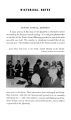
Show i*s Lithograph of Hosea Stout about 1845. COURTESY REED A. STOUT AUTOBIOGRAPHY OF HOSEA STOUT 1810 TO 1844 Edited by Reed A. Stout [CONTINUED FROM SUMMER ISSUE OF THE Quarterly] Hosea Stout son of Joseph and Anna Stout, who [Joseph] was the son of Samuel Stout, who was the son of Peter Stout, was born in the County of Mercer and State of Kentucky, near a small Shaker village called Pleasant Hill, on the 18th day of September 1810 and in the spring of the year 1819, removed with his parents to Clinton County Ohio and there on the 28th day of July 1824 his mother died and the following fall he went to Wilmington the County seat of Clinton and lived with Isiah Morris, and his father removed with his family to Cincinnati Ohio from thence to Louisville Kentucky, from thence to Missouri from thence to Illinois, leaving him [Hosea] with Mr. Morris, where he stayed untill the spring of 1826 when he left Mr. Morris and went and lived with Eli Harvey, who was a member of the Society of Quakers, he made his home there untill the summer of 1828 when he removed to with Stephen Stout his cousin, to Tazewell County Illinois, and remained in that vicinity untill the spring of the year April 5th 1832 when he went to Putnam County [Illinois] and there took up a school in what is called the Ox Bow prairie and after he had continued his school about one month there came orders from Govornor John Reynolds for a company of volunteers to be raised to guard the frontiers ™ In 1845 Hosea Stout wrote the following autobiographical sketch for the records of the Eleventh Quorum of Seventies in Nauvoo, Illinois. This composition is of interest because it is concerned principally with the period from 1835 to 1844, a period not covered in his previous autobiography. 334 UTAH HISTORICAL QUARTERLY of Putnam County against the invasions of the Sac & Fox Indians then at war with the whites on the North East parts of Illinois, and he dismissed his school and volunteered in what was termed the "Putnam County volunteers" where he continued as a Ranger untill near the close of the war when he returned back to Tazewell County and in the fall went back to Putnam County and again took up a school for a term of three months, after which he returned back to Tazewell and there took up another school for three months and in the Spring went to Putnam County and raised a crop with a Mr. Joseph Phillips, and in the fall which was in the year 1833 he went to the west part of Tazewell County, about 3 miles East of Peoria on Farm Creek and there, in Company with Benjamin Jone, who had marrid his sister Anna, purchased a saw mill where he continued untill the Spring of 1835 when they sold their mill and they in Company widi Samuel Hadlock built another saw mill in the south of Putnam County near the mouth of and on Crow Creek. While he resided on Farm Creek he became acquainted with the Latter Day Saints whose doctrine he believed the first time he ever heard it advanced. They remained in company [Hosea, Benjamin Jones, and Samuel Hadlock] untill in the fall of 1836. He then went to Tazewell County about 3 miles below their old saw mill to a Town on the Bank of the Illinois river Called Wesley City, where he went at the carpenters business in company with Benjm Jones untill in August 1837 when he and Mr Jones and several more families, who had also sold out for the same purpose, went to Caldwell County Missouri, for the purpose of being geathered with and associating with the Latter Day saints, where he purchased 200 acres of good tilable land and built him a house, and commenced opening a farm,70 He there became acquainted with and married Surmantha Peck, the daughter of Benjamin and Phebe 70 Concerning Hosea's activities while living in Wesley City, Tazewell County, Illinois, and the migration of the Mormons living there to Caldwell County, Missouri, in 1837, Allen Stout, Hosea's brother who returned to Tazewell County with his father from Arkansas after an absence of six years, wrote in his journal: ". . . Benjamin Jones who had married my sister Anna kept a boarding house [in Wesley City], and he and Hosea were at carpenter work with them, and at evenings I read the book of Doctrine and Covenants [a book of divine revelations considered by Mormons to have been given dieir prophet, Joseph Smith]; I could not get hold of a Book of Mormon. I went to a number of Sunday prayer meetings but still the most satisfaction I could get was what Hosei would tell me, for he was as well acquainted with the Gospel as he is now, but had not obeyed it yet. Soon after we got here Lyman Wight, Charles C. Rich and Morris Phelps came on from Missouri and held a meeting, so we all went to hear, and I was well pleased, and so was father, but to my great astonishment, some were very mad and said they did not teach the Scriptures. But I knew better for I was well acquainted with the Bible. "On the 5th of July, 1837, Father and I set out for Caldwell County, Missouri, in company with Anna and Jones' family, and what was called the 'Rich' branch of the AUTOBIOGRAPHY OF HOSEA STOUT 335 Peck, on the 7th day of January 1838 on the 26th day of August following he was baptized into the Church of Jesus Christ of Latter Day Saints by Elder Charles C. Rich, this was in the time that the mob was harrasing the church and the brethren were then under arms to defend themselves against the voilence of the mob. He entered the war with the rest of his brethren and was in all the difficulties, which they passed through in Caldwell & Davisse Counties, with the mob.71 On the morning of 26 day of October he was called upon while at home by one of the brethren, to go with a company, under the command of David W. Patten72 to rescue some of our brethren who had been taken prisoner by Church. C. C. Rich was our leader. Hosea, Benjamin [Jones] and Lydia staid behind to finish some jobs and settle some business, and then came on by water. We crossed the Mississippi at Quincy and traveled through Palmyra, Huntsville, Keetsville, and Carlton. We got to our journey's end about the 6th of August. My business on the road was to drive sheep and help Anna about the camping business. . . . Hosea and Ben soon came on and Hosea had a good bag of cash, so he entered 200 acres of good land, and we went to work and built a house on it, and Lydia kept house for us. . . " Journal of Allen Stout, 6-7. 71 Following their expulsion from Jackson County, Missouri, in 1833, and after a temporary stay in Clay County, the Mormons settled in 1836 in Caldwell County, Missouri, where they established their communities of Far West and Adam-ondi-Ahman. These settlements grew rapidly as Mormons poured into Caldwell and adjacent counties, most of diem in small groups, but many in large companies such as the expedition of over one hundred families comprising Kirtland Camp that journeyed in a body from Kirtland, Ohio, to Far West and Adam-ondi-Ahman in 1838. On August 6, 1838, hostilities between the Mormons and their neighbors broke out following an attempt to prevent the Mormons from voting. Both sides promptly took up arms against the other. Eventually the Mormons capitulated and were driven from the state of Missouri, from where they settled in Hancock County, Illinois, and established their city of Nauvoo. 72 David W. Patten was a member of the Council of Twelve Aposdes of the Mormon Church from 1835, when the council was first organized, until his death. "A'; has been fccie»ed ^echuirefco^Jwwi Christ«f!«{**Bay%*£?'of*'2611 "Riij? s i xt one thousand eight.Jtu^Kired andMfcirfy, ul*d Im£T>krrj\>«lai*ed BWOk juM$' and jggulatiota of s&ft ^urch; and is duly authorised to preacli t! 'ohhaldflice. 'v- ->^* /-•*.* ., • Given by the dtrectioaof a general conference of the authorities of said church, assetftMed in Nauvoo, •a th« *ii.th of ^Vj>ril, is the year of wit JUrard one thousand eight hundred and forty. jj» in the year ofour I gospel, agrt»bly"to the autho 4>/f tesC**^ ewieyr^a Baptismal certificate of Hosea Stout when he joined the Mormon Church. 336 UTAH HISTORICAL QUARTERLY a company of the mob under Capt Samuel Bogard [Bogart] then stationed on Crooked river about 4 miles west from his house, who they intended to put to death unless they should deny the doctrine of the Latter Day Saints.73 When they had come near the place where it was supposed the mob were encamped the company dismounted and fastened their horses to a fence and divided their compay into two parties one under David W. Patten and the other under Charles C. Rich, and proceeded to the place where it was thought they were, Captain Rich taking a cirtuous rout came in the rear that they might be surrounded before they were aware of their approach. They pursued their course to the place previously designated and there met but the mob not being there, they left a few men to guard the place where they had met and the Company marched on the road towards Crooked river which was near by in search of Bogards Company. They did not proceed far in that direction before they were hailed by somebody from behind a tree a few words passed and the man who was behind the tree fired and brought one of Pattens men to the ground, whose name was Obanion [Patrick O'Banion], who died that day. They then found that they were in the borders of Bogards Camp, the brethren pushed forward, being incenced at the treatment which they had received, and in a few moments were fired upon by Bogards whole company who were at this time within a few yards of D. W. Patten's Company. Patten ordered a charge which was made instantly and a severe and bloody conflict ensued which did not however last but a few moments, for Bogard, and the greatest part of his men, fled on the approch of the brethren. They were situated behind the bank of die river and had a fair view of the brethren, who were approaching from the East, and it being at the dawn of day [Bogart's company] could distinctly see them whereas they [Bogart's company] were almost entirely out of sight. The brethren rushed into their midst and sword in hand put to death every one who came in their way, all of Bogards company who did not run away with him were killed in a few moments. The mob had to make their retreat by running through croocked river at a place where the water was waist deep and before they could get across the brethren were on the bank, and many a mobber was there baptised without faith or repentance under the messingers of lead sent by the brethren and summoned to appear and give an account of his sewardship which was terminated in 73 On the night of October 24, 1838, Captain Bogart's company went to the home of Nathan Pinkham and took Pinkham, William Seeley, and Addison Green, all Mormons, prisoner. AUTOBIOGRAPHY OF HOSEA STOUT 337 an attempt to murder those who will Judge them at the Great day.74 Some as they were crossing the river would exclaim "we are brethren," to stay the brethren untill they could escape. In the first onset D. W. Patten was mortally wounded, and the command fell on Captain Rich The brethren had three killed and six wounded, the names of those who were killed were David W. Patten Patterson Obanion and Gideon Carter. The names of those who were wounded were Eli Chase, Norman Shearer, Curtis Hodges sr Arthur Millikin, Jos Holbrook and James Hendrix who had the cords of his neck cut with a ball which deprived him of the use of his limbs and he was found lying with his head down hill unable to help himself or even move hand or foot but could speak as well as ever, William Seeley one of the prisoners whom the mob had taken was Shot through the breast by them on the first approach of the brethren and was found with the blood running out of his mouth.75 David W. Patten lived to be taken about 6 miles from the field of battle and died, at Br. Stephen Winchester's76 The mob lost according to the best calculation which could be made by the brethren about 30, or forty men,77 the rest fled in every direction through Clay and Ray Counties reporting as they went that they had been attacted by 14 The comment that "many a mobber was there baptised without faith or repentance" refers to the Mormon belief that baptism must be accompanied by faith in Jesus Christ and repentance to effect salvation. The summons to appear and give an account of one's stewardship has reference to the appearance all are considered required to make before the Judgment Bar following death. And the observation that those killed by the Mormons in the Battle of Crooked River lost their lives "in an attempt to murder those who will Judge them at the Great day" arises out of the statement in Section 75 of the Doctrine and Covenants, which instructed the Mormon elders to carry the gospel from house-to-house, declaring "And in whatsoever house ye enter, and they receive you not, ye shall depart speedily from that house, and shake off the dust of your feet as a testimony against them. And you shall be filled with joy and gladness; and know this, that in the day of judgment you shall be judges of that house, and condemn them; And it shall be more tolerable for the heathen in the day of judgment, than for that house; . " This is interpreted by reference to John 5:20 and Matthew 19:28 as meaning that Christ, to whom God "hath committed all judgment," would sit in judgment upon all men, but that the elders would assist in the judgment of and would give testimony against, those who were offered but refused to receive the gospel. 75 Of the Mormons who were wounded, all recovered except James Hendrix. He was crippled for the remainder of his life. 70 Stephen Winchester acted as captain of a company in the march of Zion's Camp from Kirtland, Ohio, to Missouri in 1834. Thereafter he returned to Kirtland, but in 1837, he settled south of Far West, where he lived until the Saints were driven out of Missouri into Illinois. In 1846, he left Nauvoo, and after remaining at Winter Quarters until 1849, he moved to Salt Lake City, where he died in 1873'. 77 Hosea's report of the losses suffered by Bogart's company is greatly exaggerated. The number of casualties Bogart's force suffered is given as one killed and six wounded in History of Caldwell and Livingston Counties (St. Louis, 1886), 129-30. Stout's estimate, however, is not so exaggerated as the report given by members of Bogart's company that Bogart's command had been attacked by three hundred Mormons, and that the Mor- AUTOBIOGRAPHY OF HOSEA STOUT 339 the mormons and the whole of their Company killed and they alone was left to tell the tale. This created a great excitement throughout those counties and Govornor Boggs issued his order to exterminate the mormons or drive them from the State and made a demand for all those who had been in the Battle of Croocked river who were to be tried for murder. There was ten thousand men raised by order of the Govornor to put his exterminating order into execution and arrest those who had been in the battle78 and on the 28th day of Oct General Lucas with about three thousand men encamped near Far-West and demanded die leaders of the Church and also the brethren aforesaid upon the refusal of which he would sack and pillage the City. After several communications had passed between the parties, Presidents Joseph Smith jr Hyrum Smith, Sidney Rigdon, Parley P. Pratt, Lyman Wight, and George W. Robinson were delivered into the hands of the mob through the treacherous influence of G. M. Hinkle John Corrill, Reed Peck & some other false brethren.79 Resistance was now too late and all who had been in the Battle of Crooked river plainly saw what they had to expect. There was no alternative for them but to escape or fall into the hands of their enemies who had sworn their destruction consequently on the night of which the above named brethren was given into the hands of the mob, which was the 31st day of October, twenty seven of them made their escape about mid-night and proceeded north and at mom had killed ten, many others had been wounded, and most of the remainder had been taken prisoner. Report also was made to Governor Lilburn W. Boggs diat all of Bogart's command except three men had been massacred. 78 On the basis of reports of the Battle of Crooked River and odier reports of violence, Governor Lilburn W. Boggs issued an order to the state militia, referred to by the Mormons as his "extermination order," declaring the Mormons "in the attitude of an open and avowed defiance of the laws, and of having made war upon the people of this state" and decreeing diat "The Mormons must be treated as enemies, and must be exterminated or driven from the state if necessary for the public peace." Twenty-five hundred men were raised by order of Governor Boggs to carry the order into effect. Other forces were also ordered raised but the orders to raise these additional forces do not appear to have been carried out. 73 On October 31, 1838, the Mormons at Far West were preparing for battle with a force of some 2,200 to 3,000 men raised to carry Governor Boggs' extermination order into effect. Under a flag of truce, Colonel George M. Hinkle and John Corrill representing the Mormons met certain officers of the militia forces and secretly entered into an agreement to surrender and to give up the leaders of the church. Upon their return to Far West, Hinkle reported that the chief officers of the militia desired an interview with Joseph Smith and his counselor, Sidney Rigdon; aposdes, Parley P. Pratt and Lyman Wight; and church recorder, George W. Robinson, all of whom accompanied Hinkle back to the militia camp, where to their surprise they were delivered to the militia forces as prisoners of war. Hinkle, Corrill, Reed Peck, and others testified against the Mormon leaders so captured. Rollin J. Britton, "Early Days on Grand River and die Mormon War," Missouri Historical Review, XIII, 306-7; B. H. Roberts, A Comprehensive History of the Church of Jesus Christ of Latter-day Saints (Salt Lake City, 1930), I, 485-87. 340 UTAH HISTORICAL QUARTERLY the dawn of day were crossing Grand river about one mile above Adam ondi Ahman, among which number was the subject of this narrative.80 The account of the troubles of the brethren are not connected with his history and therefore will not be proper in this place. They continued their course North throug a howling wilderness, for eleven days when they arived at the settlements of the whites near the rapids of the Des Moines river in the Teritory of Iowa. The company however divided before they came to the settlement in order to avoid any excitement which might be created by so many men being together. When they left Far West and for two days after the wether was very warm and pleasant on the third day after they left a deep snow fell and the weather turned exceedingly cold and many of them being thinly clad suffered beyond description, from having to face the Northern winds. Their provisions likewise soon gave out and it was very seldom that they could procure any wild game, and they were near upon perishing of cold and hunger. The company which he was in came to the Mississippi river the next day after the other had crossed and from the increace of the running ice could not cross, and leaving one of their number Br R. [Robert] B. Thompson widi some [one with] whom he was acquainted went to the Quincy ferry which took them two days, and not being able to cross went back into the country and worked for their board two days after however sending Charles C. Rich over the river in a canoe. When they arrived at the Quincy ferry they met some of their brethren from Caldwell County and learned the fate of the church81 80 Besides Hosea, the twenty-seven who made their escape included Charles C. Rich; Lorenzo Dow and Phineas H. Young, both brothers of Brigham Young; Samuel H. Smith, a brother of the Mormon Prophet; Benjamin L. Clapp; Robert B. Thompson; Isaac Higbee; and Titus Billings. The flight of the twenty-seven from Missouri to avoid prosecution for murder because of their participation in the Battle of Crooked River was counseled by Brigham Young. General John B. Clark of the Missouri State Militia is reported to have dispatched a company of fifty armed men to follow and arrest them. Messengers were sent from Far West to report this to the fugitives, who upon learning they were being pursued vowed to fight if overtaken. After traveling about ten miles further, the twenty-seven camped on the edge of some timber on the north side of a prairie. Their pursuers are reputed to have camped on the soudi side of die prairie only four miles away. During the night a heavy snow fell. According to Mormon accounts, this storm was sent by the Lord so the militia forces could not follow the tracks of the fugitives. The militia company, being unable to follow, abandoned the pursuit and reported to their general that they were unable to overtake the Mormons because of the snow storm. Andrew Jenson, The Historical Record A Monthly Periodical (Salt Lake City, 1889), VII, 618-19. 81 Following the surrender of the church leaders by the treachery of Hinkle, other Mormons were captured and imprisoned. Most of those charged with crimes were tried and acquitted, and others escaped. In April, 1839, Joseph Smith and others imprisoned with him made their escape, apparently with the connivance of their guards. Meanwhile, most of the members of the church in Missouri left the state and moved eastward into Illinois. AUTOBIOGRAPHY OF HOSEA STOUT 341 but got no satisfactory accounts from their families They crossed the river and found some brethren who treated them kindly, where also some of their company came soon after, and they had the satisfaction of meeting each other once more when they were not exposed to mob violence. Several of the brethren then took a job of cutting cord wood on the islands just above Quincy where they had the pleasure of each other's society [unjinterupted and could receive the news from Far West as the brethren emegrated to Illinois; He there remained untill his wife came from Missouri, whe[re] they met each other in good health and spirits.8" They then moved about four miles East from Quincy to the Missionary Institute and remained there untill in April, then moved to Payson about 14 miles South East from Quincy and worked at the carpenters trade for a support during which time his wife was mostly confined to her bed in consequence of the exposures she had endured from the troubles in Missour and in removing to Illinois in the month of February. He remained there untill the 5th day of August following and then removed to Lee County Iowa, stopping about one week in Quincy. His wife was still very feeble and on the 29th day of November 1839 she died [in Lee County, Iowa]. In the month of March 1840 [he] removed to Nauvoo, Illinois83 He was ordained an 82 According to Allen Stout, he sold die crop raised on Hosea Stout's two hundred acre farm in Caldwell County "for 75 cents per barrel and got $20 which enabled Saman-dra [Hosea's wife] to get to Quincy, Illinois, where she found Hosea. I dien began to try to get Fadier and myself away for we were all forced to leave die State by the next spring. . . . Then I took Jones' team and joined with Brodier . . . Judd family and my father, and went to Quincy, Illinois. I found my brodier [Hosea] living near that city, and I left Father diere. . . ." Journal of Allen Joseph Stout, 9-10. 83 Of his and Hosea Stout's residence in Payson, Illinois, and Lee County, Iowa, and their move to Nauvoo, the city the Mormons established in Hancock County, Illinois, following their expulsion from Missouri, Allen Stout wrote, " . . . I then went out 14 miles [from Quincy] to a Iitde town called Payson and worked with my brother [Hosea] at carpenter and other work till the 5th of July, 1839, when Hosea, Thomas Rich [a cousin of Charles C. Rich who married Henrietta Peck, a sister of Hosea's wife] and Myself started for Commerce, afterwards called Nauvoo, and came here and stayed a few days and then went over the Mississippi River into Iowa, and then began to improve a place; and Hosea and Thomas returned back to Payson, while I stayed and worked on the house; but my healtii was so poor that I could do but litde now. Father and sister Sarah who had lately come from Ohio, left and went towards Missouri, but Sarah Died 25 miles below Quincy, of consumption; and Fadier went to uncle Jacob Stout's in [Washington County] Missouri, and died diere, also of consumption. He was about 73 years of age; and of [his] 12 children only four [Anna, Hosea, Allen, and Lydia] was left alive. During die remainder of the summer I worked at building a house for us to live in. I also made some rails to get me some clothing. . . . "On the 29th of November [1839], Samandia, my brother's wife died. "I then went back to Caldwell County, Missouri, and made a visit to see my sister Lydia [now married to John Larkey], and then returned to Iowa and spent the winter at work, sometimes making rails and some of the time building houses. In the spring of 1840 we all moved over to Nauvoo, . . ." Journal of Allen Joseph Stout, 10. 342 UTAH HISTORICAL QUARTERLY elder84 in the Church of Christ at the General Conference85 of said Church held at Nauvoo October the 5th 1839 under the hands of Elder Seymoure Branson.86 On the 8th of March 1840 he was appointed Clerk for the High Council87 of the Church of Jesus Christ of Latter Day Saints, at Nauvoo On the 16th day of May 1840 he was elected to the office of Second Lieutenant in the company of Light Infantry of volunteers in the second Batalion of the fifty ninth Regiment of Illinois militia at the organization of the said Company in Nauvoo. On the 29th day of November following he was married to Louisa Taylor daughter of William and Elizabeth Taylor. On Thursday the 4th day of February 1841 the Nauvoo Legion88 81 An "elder" is a member of one of the orders of the priesthood in the Mormon Church. Hosea Stout's ordination to die office of elder "under the hands" of Seymour Brunson refers to the Mormon practice of placing hands upon the head of one while he is being ordained to office or position in die church, or is receiving a blessing. 85 Pursuant to revelation announced by Joseph Smith in April, 1830, general conferences are held from time-to-time by the membership of die Mormon Church to carry out whatever church business may need to be done. The first general conference was held June 9, 1830. General conferences of the church are generally held in April and October of each year. 85 Seymour Brunson was one of the early converts to the Mormon faith and was active as a missionary following his baptism in January, 1831. In the spring of 1837, he settled near Far West in Caldwell County, Missouri. After being expelled from Missouri, he eventually moved to Nauvoo, where he served as a member of the High Council of die church from its organization in Nauvoo in October, 1839, until his deatii August 10, 1840. 87 The first High Council of the church was established by Joseph Smith in Kirdand, Ohio, February 12, 1834, with bodi judicial and administrative functions in the affairs of the church and its members. Thereafter a second High Council was formed July 3, 1834, in Missouri. As the church has grown and expanded, high councils have been organized in each ecclesiastical unit, called "stakes," of the church. In 1839 a stake was organized in bodi Nauvoo and in Iowa across the Mississippi River from Nauvoo, and a High Council was appointed for each. In addition to having a High Council, each stake is headed by a president having two counselors. A stake comprises a group of parishes, referred to as "wards." 88 Section 25 of die Act to Incorporate the City of Nauvoo, enacted by die Illinois Legislature in December, 1840, audiorized the city council to "organize the inhabitants of said city, subject to military duty, into a body of independent military men, to be called the 'Nauvoo Legion' . . . at the disposal.of die Mayor in executing the laws and ordinances of the city corporation, and die laws of die State, and at die disposal of the Governor for the public defense, and the execution of the laws of the State or of the United States." Pursuant to such authorization, die city council of Nauvoo passed an ordinance February 8, 1841, organizing the Nauvoo Legion. The Legion eventually numbered some four thousand men and was reputed to be the largest military organization in the United States, excepting only the regular army. The Legion was divided into two cohorts and dien into regiments, battalions, and companies. The first cohort comprised the horse or mounted troops, and the foot troops constituted die second cohort. Upon organization of die Legion, Joseph Smith, with the rank of lieutenant general, became its commander-in-chief, with John C. Bennett, who had been quartermaster general of the state of Illinois, the Legion's second-in-command. Wilson Law and Don Carlos Smith were placed in command of the AUTOBIOGRAPHY OF HOSEA STOUT 343 was organized by electing die general officers of the same as follows Joseph Smith Lieutenant General John C. Bennett89 Major General, Wilson Law90 Brigadier General first Cohort, & D. C. Smith91 Brigadier General Second Cohort the company aforesaid [the company of Light Infantry of volunteers in the Second Battalion of the Fifty-Ninth Regiment of Illinois Militia] was then and diere placed [as] the Second Company first Batalion first Regiment Second Cohort Nauvoo Legion and the captain A. P. Rockwood92 appointed Drill officer of the Legion with the rank of Colonel, and on die Saturday following he [Hosea] was elected Captain of said company to fill the vacancy of A. P. Rockwood. On the fourth day of September following he [Hosea] was elected Major of the Second Batalion first Regiment as aforesaid. On the 20th of May 1843, the Court Martial of the Nauvoo Legion93 passed a Resolution that the second Batallion as aforesaid should be organized into a Regiment of Light Infantry, which was numbered the fifth Regiment Second Cohort Nauvoo Legion which was organized on the 23rd day of June following and he was then elected Colonel of the same which he commanded as such during die war which was waged first and second cohorts, repectively. Hamilton Gardner, "The Nauvoo Legion, 1840-1845 - A Unique Military Organization," Journal of the Illinois State Historical Society, LIV (Summer, 1961), 181-97. "3 John Cook Bennett, referred to by Governor Thomas Ford, of Illinois, in his History of Illinois (New York, 1854), 263, as "probably the greatest scamp in the western country," joined the Mormon Church soon after the Saints moved to Nauvoo. He was showered by die Saints widi honor after honor, being elected mayor of Nauvoo, brigadier general of the Nauvoo Legion, and to odier offices. In 1843 he turned against die church and made many charges against Joseph Smith. For diis Bennett was excommunicated and, thereafter, was one of the bitterest opponents of the church. "William Law joined the Saints at Nauvoo in the latter part of 1839. On January 19, 1841, he was appointed counselor to Joseph Smith in die presidency of die church. In 1844 he turned against Joseph Smith and was excommunicated from die church and also court martialed from the Nauvoo Legion, with Hosea serving as a member of the court martial. He was one of the publishers of the Nauvoo Expositor. (See footnote 94.) D!Don Carlos Smith, a younger brother of Joseph Smith, was a publisher of the Times and Seasons, a member of the city council of Nauvoo, and brigadier general of the Nauvoo Legion. He died August 7, 1841. 03 Albert P. Rockwood joined the church in Kirdand, Ohio, in 1837, gadiered widi the Saints in Missouri, and then settled in Nauvoo. In December, 1845, he was ordained one of the First Presidents of Seventies. In 1847 Rockwood was one of die first body of pioneers to enter the Great Salt Lake Valley. WJ All commissioned officers of the Nauvoo Legion were organized by the city charter into a body referred to as a "Court Martial," with powers "to make, ordain, establish and execute all such laws and ordinances as may be considered necessary for the benefit, government, and regulation of said Legion" not inconsistent widi the Constitution of the United States or of the state of Illinois. The court martial was also empowered to nominate officers for commissions or for promotions. Thus, the court martial of the Nauvoo Legion was not analogous to the usual military court martial, which is a judicial body to try military personnel accused of violations of military regulations. 344 UTAH HISTORICAL QUARTERLY against the saints in June 1844 in which our beloved Prophet & seer Joseph Smith and Patriarch Hyrum Smith fell martyrs to the cause of God while the honor of the Governor and faith of the State [Illinois] was pledged for their safety.94 On the fourth day of October 1844 he was ordained an Elder in the Quorums of Seventies96 under the hands of Henry Jacobs, Benjm L. Clapp96 and Samuel Brown97 Presidents in said Quorums, and at the General Conference on the 8th day of said month he was ordained one of the Presidents & Clerk of the Eleventh Quorum of the Seventies upon nomination of President Brigham Young under the hands of Presidents Brigham Young and Amasa Lyman98 at the organization of said Quorum. "* On June 7, 1844, opponents of Joseph Smith published the first and only edition of a paper called the Nauvoo Expositor bitterly assailing the Mormon Prophet and advocating the repeal of the Nauvoo City Charter. The Nauvoo City Council countered by declaring the Expositor a nuisance and ordering it abated by the city marshal with whatever help he might need from the police and die Nauvoo Legion. The order was effectively carried out June 10, 1844, but resulted in the filing of a complaint before the justice of the peace at Carthage, the county seat of Hancock County, by die publishers of the Expositor. Joseph and Hyrum Smith and other members of die city council, City Marshal John P. Green, and die members of the police and Legion who had carried out the order were charged widi the crime of riot allegedly committed in the destruction of die presses of the Expositor. Thereupon martial law was declared in Nauvoo to prevent those so charged from being arrested. Finally, on June 24, 1844, diose so charged journeyed to Carthage and the following day surrendered upon being assured by Governor Thomas Ford that die state of Illinois would assure their safety. Upon die appearance of those charged widi committing riot, the justice of the peace at Carthage released all of them on bail and discharged all from custody except Joseph and Hyrum Smidi, who were arrested on a furdier charge of treason alleged to have been committed by die declaration of martial law in Nauvoo. While in jail on this new charge, Joseph and Hyrum were murdered by a mob June 27, 1844. °5By his ordination October 4, 1844, as an elder in die quorums of seventies, Hosea was charged with the duty and authority of preaching die gospel among the nations of the earth. Seventies and members of die odier orders of the priesthood in the Mormon Church are organized into bodies referred to as "quorums." Each full quorum of seventies consists of seventy members, of whom seven are chosen presidents of die quorum. The seven presidents of die first quorum preside as a council of seventies over all the odier quorums and dieir presidents. 00 Benjamin L. Clapp had participated with Hosea and others in the Batde of Crooked River and in die flight following die battle from Missouri into Iowa and on to Illinois. He became very active in missionary work while the Saints had their headquarters at Nauvoo. In December, 1845, he was named one of die presidents of the First Quorum of Seventies, but in 1859 he was excommunicated from the church. °7 Samuel Brown was one of the members of Zion's Camp in its march from Kirdand, Ohio, to Missouri in 1834, and upon his return to Kirtland he was ordained a member of the First Quorum of Seventies when the quorum was organized. 08 At this time Brigham Young held the office of president of the Council of Twelve Apostles. However, thirteen men had been ordained to the office of apostle, die diirteenth to be so ordained being Amasa M. Lyman, who was officially designated by die tide of counselor to the Twelve. Lyman held die office of aposde until 1870, at which time he was excommunicated from the church for preaching false doctrine. He, together with Charles C. Rich, was one of the founders of the city of San Bernardino, California. |