| OCR Text |
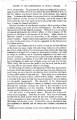
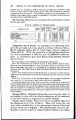
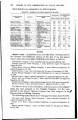
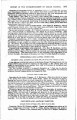
Show I 396 BEPORT Olr THE 8UPERINTENDENT OF INDIAN 80HOOL8. is that lower races should iirat be understood their &oms studied, their Languagm made familiir, their traditions, myth& i q s t i o n s , sympathetieslly appmiated, and that a11 attempted reconstruction of thew lives, thoughts, and emotlons should he guided by this knowledge. Miae Fletcher and Mr. Gushing have taught us that to know the real Indian is to 1ol.e him, and suggest that we should teach that our religion is only another form of theirs. They tell us that their dances are sacred paasion pla a, and that even the ghost dance 1s only a pathetic a pal for help and comfort to t%e denizens of their unseen world, who seem to have %maken them. Heredity justifies us in saying that the most precious of all things in this world is the native indigenous stocks or stirps of men and women who are natural, vigorous, pure, ahoundin in health, and have potency for posterity, which is the very best test of a race of civjization. Thanks to Miss Reel, efforts are now made to preserve, or rather revive, the Indian's wondrous art of making basketa, into which they sometimes weave in sym-bols the whole stor of their lives. This renaissance gives them not only support, such is the demadfor basketry, but teachea them self-support. Why can not the aame thing be done with their pottery, skin dressin beadwork, canoe making, taught, where possible, by natives before they become f~sta rt87 Heart cultore.-Dr. Charles F. Meserve, president Shaw University, Ra!ei h N. C.-Within the last quarter of a century the United States has established In&;- trial, boarding, and day scboola, allotted land in severalty extended civil service to school positions, broken up the autanomy of the Five~ivlllzedT ribes, stopped mak-ing appropriations to denominational schools, urithdrawn or reduced rat~ons, and has begun to put lndian agencies under the control of school superintendents. The annual appropriation for schools has grown from $20,000 to $3,522,950. Many Indians are working their awn land, and all ought Boon to be thrown npon their own resources. The c~visle rvice has improved the schools, and ,great progrew has been made in the Indian Territory by the breaklug up of the tnbal relations. All denominationsare free to 've rebgioue instruction in the Government achools to the cbildren of their faith. &hen rations were reduced or cut off the Government was considered cruel, but theIndians are b@nning to work, and same say they like work and wages better than idlenm and Uncle Sam's free-lunch counter. Tenure in the oivil service.-Dr. James T. Doyle,,Rcretary United States Civil Service Commission, Washington, D. C.-The civil-serv~ce act does not latend that there should be a life tenure, or that persona who become ine5cient should be retained. The authority of removal and its exercise for proper reasons are necesssry for dis-cipline and efficiency of the s e ~ c e . The results under the civil-serviceact are infi-nitely more beneficial to the service and just to the employees than under the old system, where removals were made for political or less worthy reasons. The effect of the competitive system has put an end to t,be political intrigues which were the chief cause of removals. They can no longer be made npon secret charges by nnknown accusers without opportunity for defense, explanation, or denial. Rotation in officeisnecessary in positions where o5cei-s represent political intemts, o inions times, classes, or sections. O5cers who represent public opinion must ctange $ith party measures and opinions. It is different, however, wxth the great body of officials, who have nothing to do with politics or principles of administration. (live Indians work instead of rations.-John R. Brennan, United States Indian agent, Pine Ridge, S. Dak.-On July 1, 1902, about 1,400 persons on this reservation, all under the age of 50, were dropped from the ration rolls. Work was furnished 500 of them at $1.25 per day for a man, and $2.60 per da for a man and a team. The other 900 were the wives and children of the 5W, andlwere dependent npon them for support. The Indians wereput to build' new roads, repairingold ones, building dams for reservoir eites and irrigation, 3 buildins and repairing bridges over streams. Work was furnished for four months, and $35,270 was %xpended. There was opposition to the working order from the older element of Indlans, but after the system was inagmted those concerned took kindly to it. I consider the experiment a success, and trust the Department will see its way clesr to continue the system. The distribution of good literatore among Indisn students.-Miss Frances C. Sparhawk, Newton Center, Mass.-The schools mark the awakening both of Indians into the desirefor someth~ngb etterthmtbeir past, andof the whlte man to theirpossibilities. We have never erred in holding the schools "all important." The error was in holding them "all su5eient." These r?p!e must, +ve a growing knowledge of the affairs of the world along the lines of C rvltlan clnl~zat~oand material progress. Cnltisating the work spirit among Indians.-Axel Jacobson, superintendent Witten-berg Indian School, Wittenberg, Wis.-The work spirit has dually been devel-oped in the mindd of our white citizens through neeeasity. AI? that can possibly be done under om present syatem of schoolsia being done to cultivate this spirit among |