| OCR Text |
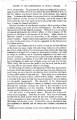
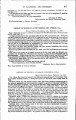
Show REPORT OF THE SUPERINTENDENT OB INDIAN SOHOOL8. 395 On the 2d of March, 1884, the 8ecretary of the Interior aasigned the work of v k - in provision for the education of children in Alaakn to the Bureau of Edncat~op. Pigy public schoolsha\,e been organized and four or f i ~teho usand of the native chll-dren have been brought fora time under their influence. Many of the Alaaka pn ils have engaged in commercial unrnita and,in most casea have been successful. '&wo brothers, for instance, formda partnersh~pa nd started a store. Making a few thou-aznd dollars at storekeeping, and encouraged by the wcm of their comrades at sawmilling, they removed from the village and established a sawmill, which, when I visited there, was mning night and day, unable to fill all its orders. Some of the conditions which present a grester degree of success in qnslfiging far citizenship-from the atandpoint of training sahoo1a.-William M. Peterson, assistant superintendent, Chilocco Agricultural School, Chiloeco 0kla.-We have tried to change the whole life of a race in one generation. ~he)induatriatlr aining schools play a most important part in this evolution. The Indian child entering school to-day begins further along than did the child of 10 years ago. He begins at the day school, and there gets his first experience outside of school. Then he goes to the reservation boarding school and is cut off largely Gom home. Then comes the non-reservation training school, where he learns that there are larger intereats than those he has left; t h t wider acquaintance means wider interderdence; that all must work for the good of all; that what harms one harms all. e begns to realize that his own ersonalconduct has a direct bearingon thewelfare of the community that this goodPbebavior and faithful performance of dlit beget confidence in his supekors, znd that this confidence brings reward in the Porn of promotion and privilege. He learns that this confidence, when betrayed, leads to his own lm. He finds out that for the bad conduvt of one many may he deprived of the pleasures and privileges that might otherwise be enjoyed. He is getti in miniature the same experience that he will get shortly in real life. ~ e e t l nzg e r 1 ndians than those of hie own tribe is exeellent training. The great maeon why we hare not had greater sucecss ia because we have not et had time. The old men are still in control. Majority mles among Indi~n8,a nd= long as the majority is in favor of the old the new ean not be expected to predomi-nate. Time, continued effort, and developing environment will yet bring the Indian to the ranks of the citizen into the company of those who do things not only for themselves but for their nkighbors. Soms of the muditions which prevent s greater degree of sucmaa in qualifying for citi- ~ n s h i p f r omth e standpoint of the 5 e l d . J . h n k l i n House, supervisor of Indian schools.-The schools give the Indiin youth an education sufficient to perform the necessary business tmnsactionsof life, and they teach him how to perform labor thst will earn him a living; bnt necessarily they can not directly control the various influ-ences which will surround him after leaving school. The future of the Indian will depend upon the extent to which he becomes Americanized, as well na civilized. Soms of the conditions which prevent a grester degree of success in qoslifying for citi-zenship- from the atandpoint of reservation achco1a.-E. D. Mossman, superintendent Cheyenne River Indian School, Cheyenne River Agency, S. Dak.-The ration system, which is wisely being abolished, was the direct cause of the idea prevailin among the older Indians that the Government owes them a livin The ehct of t%ie ides upon the child is to make him heedleas of the principles ofeconomy and value. The mreet way to cause a person to wlue and eare forwhat he has is to have him earn it by actual toil. Preparing the IndiPn boy snd I for vigmou8 itmggIes with tbs condition8 wider which their people live.-C. F: f?e' lm, superintendent Riggs Institute, Flandrean, 8. Dak.-Indian schools should make a study of the exlsting conditions and then put forth special effort to tach along lines governed by these local conditions. In the north we find a territory suitable for both sgriculture and grazin As the greater part of our territory is adapted to stockmising, this industry ahon% receive ~pecial attention. The Course of Study recent1 imed makes a great advancement in Indian school work and should be dosely Jllowed, and great attention should be given to the .st udy of agriculture. 8pecial training for I n d h papila in the Brnthwest.-Edwin L. Chalmfi, supervieor of Indian schools.-The Indlans of the northwestern part of the count agri-cultural land in abundance, and can support themsclvea in comfort?ydevelopm its reso-. The Course of Study adopted for use in the schools covers the groung of a@cnltd training fully, hut to makeit effective reqmres cooperation and devoted service on the part of those in direct control of the work. . The white man's borden ve.erm.8 indigenous derelogment for the lower rmoe.-Dr. G. Stanley Hall, president Clark University, Worcester, Mass.-My proposition to-day |