| OCR Text |
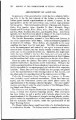
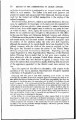
Show 68 REPORT OF THE OOHM8SIONER OF INDIAN AFBAIM. bill, which had been received by the PresidentFebruary 24, was referred by the Department to this O5ce February 25 for immediate report and recommendation. Report was made, after a hurried considem-tion, February 26, and several objectionable features were pointed out. The Office ventured the opinion that the provisions granting addi-tional grounds were entirely too liberal, and that certain limitations should be ked with reference to the lands the use of which might be acquired nuder the act, and invited attention to the fact that the act, if it became a law, would operate to permit the control by railway com-panies of the water supply of large districts. Doubt was further expressed of the wisdom of placingontside of the control of the Depart-ment the matter of compensation to the tribes and individual occupants. At the date of that report it was thought that, under the act, the question as to the necessity for the taking of additional lands would be determined by the Secretary of the Interior, and that the maps author-ized to the filed would be subject to hi approval. It appears that the Department at that time entertained somewhat similar views, for on March 7 it inclosed a copy of the approved act requesting the Office to prepare a draft of regulations for Department consideration. In reply the Office March 12, 1902, pointed out that the scope of the authority of the Secretary of the Interior under the act was not clearly defined, and requested that the law officers of the Department construe the act with reference thereto. The first maps to be submitted to this O5ce under the act were those of the St. Louis and San Francisco Railway Company, showing a line from a point near Mingo to Muscogee, Iud. T., report relative to which was made to the Department March 27, 1902. The question at once arose as to whether maps filed under the act required the approval of the Secretary of the Interior, which question it was then thought had been fully determined in the case of Catholic Bishop of Nesqually v. Gibbon (115 U. S., 155), in which it was held by the Supreme Court as follows: It may be laid down as a general rule that in the absence of somespecific provision to the contrary in respect to any particular grant of public land, its administration falls wholly and absolutely within the jurisdiction of the Comminsioner of the Gen-eral Laud Office, under the supervision of the Secretary of the Interior. It is not necessary that with each grant there shall go a direction that itsadministration shall be under the authority of the Land Department. It falls there unless there is expreas dechtion to the contrary. It was further thought at that time that the same rule applied in connection with matters relating to the Indians and that it should be held that the administration of acts of Congress relating to Indian affairs devolved upon the Commissioner of Indian Affairs under the supervision of the Secretary of the Inte~ior. Further replying to Department letter of March 7, the Office, April |