| OCR Text |
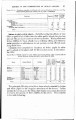
Show REPORT OF THE COXMISSIONER OF INDIAN AFFAIRS. & Requests for authority to employ detectives were frequently received, but the O5ce was powerless to grant them because there were no funds under its control applicable for such employment. The need for the employment of detectives for the purpose of obtain-ing evidence against liquor sellers is shown in a report dated April 7, 1003, made by Special Agent Brewster, of the Department of Justice. He referred to the opinion expressed by the United States attorney for the district of Oklahoma that the only way to apprehend the saloon keeper who is known to.be violating the law is to use Indians as detectives. In justification of such a course the United States attor-ney cited the methods of the Post-O5ce and Treasury Departments in detecting violations of law and contended that it warn the only way to acomplish successfully the desired result. The decision of Judge Hanford of the United States circuit court for the district of Washington in the case of the United States a. Bag-nell et al., rendered during the September, 1898, term, held that a mineral location on land opened to entry by the act of July 1,1898, on the Colville Reservdon, Wash., was not "Indian country" within the meaning of the liquoc lawand practically opened the gate to the intro-duction of liquor into that reservation. The commissioners of Ferry County, Wash., on the authority of that decision went so far as to issue licenses to dealers to sell liquor within the south half of the reservation. Upon representations made by Mr. Albert &AnId.er son, United States Indian agent at the Colville Agency, supplemented by a report from this offide, the Department, on May 15,1903, declared its unwill-ingness to ycept the ruling of Judge Hanford as correct and expressed its disbelief that the act of 1898, subjecting the mineral lands of the Colville Reservation to entry under the mining laws, operated to destroy .the chamcter of the lands within that reservation as Indian country The Department cited the opinion of the Attorney-General, dated October 4 1898 (22 Opinions, 232), in which it was held that notwithstanding the extinguishment of the Indian title to specified tracts wit!$in/the Indian Territory the Territory still remains Indian country. While the facts in respect to the Colville Reservation were somewhat different, it seemed to the Department that the same rule should be applied there and that it should be held that the allowance of mineral entries for portions of the land within the outer boundaries of the reservation does not hke the reservation out of the class of lands properly designated as Indian country. At the requcst of the Department the Attorney-General, on July 29, 1903, instructed the United States attorney for the district of Wash-ington to institute proceedings against persons charged wit11 selling liquor on the Colville Reservation, and if the decision of Judge Hanford |