| OCR Text |
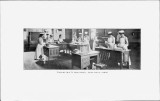
Show EEPORT OF THE COM.I&ISSIONER OR INDIAN ARFAlR8. 5 The Indian tribes are as diverse in habits and customs as the races of the Old WorM. To judge the civilization and capacity of Euro-peans by the single standard of the Albanians'is to draw as false con-clusions as to establish one rule for all Indians by the pattern of the Shebits or Sioux or Hopi, Comanche or Digger. Herein lies one of the great di5culties, and generalizations from one tribe are frequently at fault when applied to the whole number under the care of the Government. The Indian school of the present is not the institution of the past generation. Mistakes are being corrected, and, while they are still imperfect.4he schoolsare striving to raise the Indian character and prepare the young generation for the time when the parental hand of the Government must be taken away. The evolution of the school system may therefore be said to have led to the establishment of res-ervation and nonreservation schools. In the former local environment is a prominent factor; in the latter a wider reach is given the young Indiarto acquire a more intimate connection with civilization ia some of its best centers. It is true, however, that with the influx of popu-lation in the Indian country, the construction of railroads, and the building of cities, the line of demarkation between the older reserva-tion and nonreservation institutions is rapidly disappearing. While day schools are growing in importance, the Indian parent in only a few places has advanced su5ciently to appreciate education, so as to compel attendance. The day school is in itself a great civil-izer, cultivating the refinements of life and dispensing the gospel of cleanliness. For some years to come it can not take the place of the boarding school, but is its most valuable adjunct. The day-school system is seen in its best phaaes on the Pine Ridge and Rosebud reser-vations in South Dakota. Scattered over these reservations are about 50 day schools, each in charge of a teacher and housekeeper. Chil-dren are brought to them from the camps, remain a few years, and are then transferred to the boarding schools and their vacant places filled by the younger generation of the Indians living in the vicinity. The ideal system therefore is-and it could be carried out but for the excess in number of nonreservatian schools-to enroll the young child of the camps in the day school, then pass him into the reservation boarding school, where he should remain until he has con~pleted the sixth grade, when, if he possesses the natural aptitude to acquire a trade or further education, send him to a nonreservation school. If for physical or me~ital disabilities this is undesirable, return him to his home. This is an ideal system, but for reasons over which the Department has no control it seems impossible of being carried into effect. Every-thing possible, however, is being done to bring about such a result, and new rules have been put in force limiting and defining the territory from which each nonreservation school may draw pupils. |