| OCR Text |
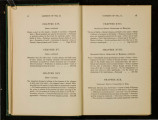
Show 366 SEXUAL SELECTIO~: MAN. l'AR'l' H. or more men arc compelled to marry one woman, it is certain that all the women of the tribe will get manied,, and there will be no selection by the men of the more .attractive women. But under these circumstances the women no doubt will have the power of ehoice, and will prefer the more attractive men. Azara, for instance, describes how carefully a Guana woman ba.rgains for all sorts of privileges, before accepting some one or more husbands; and the men in consequence take unusual care of their personal appearanccY ':rhe very 11gly men would perhaps altogether fail in getting a wife, or get one later in life, but the handsomer men, .although the most successful in obtaining wives, would not, as far as we can see, leave more offspring to inherit their beauty than the less handsome husuands of the same women. Ea1·ly Betrothals and Slavery of Women.- \Vith many savages it is the cnstom to betroth the females whilst mere infants; and this would ef1cctually prevent preference being exerted on either side according to personal appearance. But it would not prevent tho more attractive women from being afterwards stolen or taken by force from their husbands by the more powerful men ; and this often happens in Australia, America, and other parts of the world. r.rhe same cons qucnces with reference to sexual selection would to a certain extent follow when women are valued almost exclusively as slaves or beasts of burden, as is the case with most savages. The men, however, at all times would prefer the handsomest slaves according to their standard of beauty. We thus see that several customs prevail with savages 13 ' Voyages,' &c. tom. ii. p. 92-95. CHAP. XX. MANNER OF ACTION. 367 which would greatly interfere with, or completely stop, the action of sexual selection. On the other hand, the conditions of life to which savages are exposed, and some of their habits, are favourable to natural selection· and this always comes into play together with sexuai .selection. Savages are known to suffer severely from recurrent famines ; they do not increase their food by .artificial means; they rarely refrain from marriage, 14 and generally marry young. Consequently they must be subjected to occasional hard struggles for existence, .and the favoured individuals wi1l alone survive. Turning to primeval times when men had only doubtfully a~tained the rank of manhood, they would probably have hve.d, as already stated, either as polygamists or ~emporanly as monogamists. Their intercourse, judging from analogy, would not then have been promiscuous. 'l,hey would, no doubt, have defended their females to the best of their power from enemies of all kinds, and would probably have hunted for their subsistence, as well as for that of theil' offspring. The most powerful and able males would have succeeded best in the struggle for life and in obtaining attractive females. At this early period the proo-enitors of man from havino-o ' ~ <mly feeble powers of reason, would not have looked forward to distant contingencies. They would have been governed more by their instincts and even less by their reason than are savages at the present day. rl,hey would not at that period have partially lost one ()f the strongest of all instincts, common to all the lower .animals, namely the love of their young o:ff.:;pring; nncl u ~urche~l says.(' Travels inS: Afric~, vol. ii.1824, p. 58), that among tho .wll~l nal.wns of Southern Afnca, nClthcr men nor women ever pass thc1~· I_Ivcs ~~.a stuto of celibacy. Azara ('Voyages dans I' Amerique Mend. ~om. 11 •• 1809, p. 21) makes precisely tho same remark in regard to the Wild Inchans of South America. |