| OCR Text |
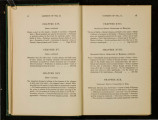
Show .330 SEXUAL SELECTION: MAN. PART ]J. Voice and Musical Powers.-In some species of Qnadrumana there is a great difference between the adult sexe., in tho power of the voice and in the development of the vocal organs; and. man appears to have inherited this dificronce from his early progenitors. His vocnl ·cords are about one-third longer thnn in woman, or than in boys; and emasculation produces the same effect on him as on the lower nnimals, for it "arrests that pro" minent growtl1 of the thyroid, &c., which accompanies " the elongation of the cords." 2 G With respect to the cause of this difference Let ween tho sexes, I have nothing to add to the remarks made in the last chapter on the prouaule effects of the long-continued usc or the vocal ·organs by the malo under tho excitement of love, n1ge, and jealousy. According to Sir Duncan Gibb,26 tho voice differs in the (lifl:crent races of mankind ; and with the natives of Tnrtary, China, &c., the voice of tho malo is said not to differ so much from that of tho female, as in most other races. 'Tho capacity and love for singing or music, though not a sexual character in man, must not here Le pas ·eel over. Although tho sounds omitted by animals of al t kinds serve many purposes, a strong case can be made ·out, that the vocal organs were primarily used and perfected in relation to tho propagation of tho species. Insects and some few spiders arc tho lowest animals which voluntarily produce any sound; and this is gene· rally effected by tho aiel of beautifully constructed " regards the eranial cavity, increases with tl10 development of the " r11ce, so tliat the mnlo European excels much more the female, tbnn " tho negro the negrcss. Wclckcr confirms this statement of Iluscbkc " from his mcnsuremcnls of negro an<l German skulls." But Vogt .aumits (' Lectur son 1\'lnn,' Eng. trauslnt. 18G4, p. 81) that more obscr· vations arc requisite on this point. 2 ~ Owen, 'Anatomy of V rtcbrates,' vol. iii. p. 603. 20 •Journal of the Anthropolog. Soc.' April, ISGH, p. lvii. nnd lxvi. <::nAP. XIX . MU~ICAL POWEllS. 331 .stridulating organs, which are often confined to the males alone. The sounds thus produced consist, I believe in all cases, of the sume note, repeated rhythmically ; 27 ~mel this is sometimes pleasing even to the cars of man. 'Their chief, and in some cases exclusive use appears to be either to call or to charm the opposite sex. Tho sounds produced by fishes arc , aid in some cases to be made only by the males during the breeding season. All the air-breathing Vertebrata necessarily po. se. san apparatus for inhaling and expelling air, with .a pipe capaule of being closed at one end. lienee when tho primeval memuer of this class were strongly exeitecl and their musd s violently contracted, purposeless sounds would almost certainly have been produced; and these, if they proved in any way serviceaulc, might readily have been modified or intensified by the pre, fiervation of properly adapted variations. Tho Amphibians are tho lowest Vertebrates which breathe air ; and mnny of these animals, namely, frogs and toalls, pos~ess vocal organs, which are incessantly used during the hreeding-season, and which are often more highly -developed in the malo than in the female. ~flhe mnlo alone of tho tortoise utters a noi. c, and this only during the season of love. Male alligators roar or bellow Juring tho sume season. Every one knows how largely birds use their vocal organs as a means of rourtship; and some species likewise perform what may be called instrumental music. In the class of Mammals, with which we are here more partieularly concerned, tho males of almost all the .species usc their voices during the breeding-season much more than at any other time ; and some arc abso- 27 Dr. Scudder, "Notes on Stridulation," in 'Proc. Boston Soc. of Nut. I:Iist.' vol. xi. April, 1868. |