| OCR Text |
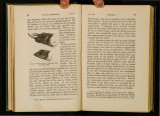
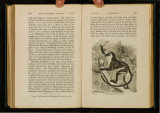
Show 276 SEXUAL SELECTION : MAMMALS. l'ART II. bellowina serves as a call to t 11 e f.e ma1 e ·' but the experienbc ed observers a bo ve quo t e d inform me thha t female deer do not search for the male~ though . t o males search eagerly for tho females, as mdeecl ~ngh~ b; expected from what we know of the ha~Its 1° other male quadrupeu_,s . Th. e · ce of the 1erua e VOl • ' on the other hand, quickly brmgs to her one ~r m~~~ staas 3 as is well known to the huntera wh~ m '\I ( cou~tries imitate her cry. If we could beheve t mt the male had the power to excite or allure the. female b his voice the periodical enlargement of lns vocal oryg ans wou ld' b e m. telligible on the p. rin. ciple o1f sexnal selection together with inheritance hmited to t ~~ same ·s ex an d's eason of the year., but we have no ev1dence jn favour of this view. As the case stands, the loud . f the stag durina the breeding season does not VOICe 0 b · · b cl . seem to be of any special service to blm, eit. or unng his courtship or battles, or in any other way. _But may· we not believe that the frequent use of the vmce, under tho strong excitement of love, jealousy, and rage, continued dm·ina many generations, may at last have produced an °inheriteJ. effect on the vo?al organrs, ~f the stag, as well as of other male ammals ? llllS appears t o m e, with our present state of lmowledg<', the most probable view. . The male gorilla has a tremendous v01ce, .an~ w h?n adult is furnished with a laryngeal sack, as IS bkew1sc the adult male orang.4 The gibbons rank amongst tlw noisiest of monkeys, and the Sumatra species (Hylobates syndactylus) is also furnished with~ l.aryngeal sack/ ~ut Mr. Blyth, who has had opportumtws for observation, 3 See, for instance, Major W. Ross Ring(' The S?orts~an in Oanndn,' 1860, p. 53, 131) on the habits of the,moos~-~nd wild remdeer. 4 Owen, 'Anatomy of Vertebrates, vol. m. p. GOO. CHAP. XVIII. VOCAL ORGANS. 277 <loes not believe that the male is more noisy than the jcmale. Hence, these latter monkeys probably use their voices as a mutunl call; and this is certainly the case with some quadrupeds, for instance with the beaver.5 Another gibbon, the H. agilis, is highly remarkable, from haYing the power of emitting a complete and correct octave of musical notes,6 which we may reasonably suspect sen·es as a sexual charm; but I Rhall haYe to recur to this subject in the next chapter. Tho vocal organs of the American Mycetes caraya are one-third larger in the male than in the female, and are wonderfully powerful. These monkeys, when the weather is warm, make the forests resound during the morning and evening with their overwhelming voices. The males begin the dreadful concert, in which the females, with their less powerful voices, sometimes join, and which is often continued during many hours. An excellent observer, Reng-ger,7 could not perceive that they were excited to begin their concert by any special enuRe ; be thinks that like many birds, they delight in their own music, and try to excel each other. Whetl1er most of the foregoing monkeys have acquired their powerful voices jn order to beat their rivals and to charm the femalesor whether the vocal organs have been strengthened and enlarged through the inherited effects of long-continued use without any particular good being gained -I will not pretend to say; but the former ''iow, at least in the case of the Hylobates agilis, seems the most probable. I may here mention two very curious sexual peculiarities occurring in seals, because they have been sup- 5 l\'Ir. Green, in 'Journal of Linn. Soc.' vol. x. Zoology, 1869, p. 362. 6 C. L. Martin,' General lntroduction to the Nat. Ilist. of Mamm. Animnls,' 1841, p. 431. 7 'Naturgoschichte dcr Sliugothiere von Pnraguny,' 1830, s. 15, 21. |