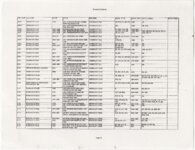
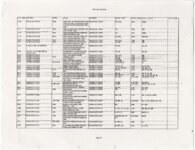
| OCR Text |
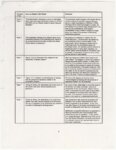
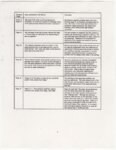
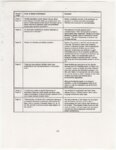
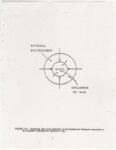
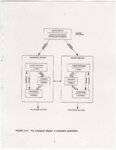
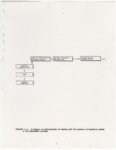
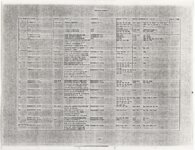
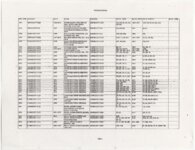
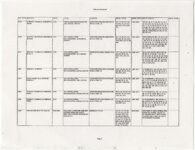
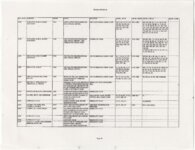
Show Chapter Issue as Stated In the Report Comment Chapt. 1 Page 3 'This determination represents a series of interrelated steps which have legal implications relative to CERCLA and RCRA and are directly related to natural resource damages.• The previously stated purpose of the project did not mention support for possible resource damage· claims or legal implications of CERCLA or RCRA. The focus of the report and project Is unclear. Do the objectives now include legal assessments? If so, what are the qualifications of the authors (unidentified) in legal matters? Liability is a legal issue; not related to the process of identifying reclamation scenarios. Page 3 'The reclamation process must address these issues immediately because of the potentially toxic nature of the contaminants and the need to define the critical limiting factors or resources.• No evidence is presented to indicate that the •potentially toxic _ contaminants• are presenting any immediate threat to human health or the environment. Simply because a contaminant is •potentially toxic- is not sufficient reason for immediate action. For example, sodium chloride is •potentially toxic- to many biotic receptors, but this fact alone does not dictate an immediate need to develop a reclamation process for areas where salt has spilled or been placed. Page 5 1=igure 1.(}3 An information flow diagram for the reclamation of Kessler Canyon• What has happened to Black Rock Canyon arid Little Valley? The diagram is· shown as a neatly arranged sequential series of steps. In reality, there would be many feedback loops which would have to be added to this process to modify the findings as the understanding of the system improved. Step (6) is duplicated (another example of carelessness), and steps {5) and (6) seem to duplicate step (9), assuming biological and ecosystem processes are one in the same. There is no distinct Phase Ill. /Page < Page 6 1=igure 1. 1-1 A diagram of methodologies for dealing with the presence of hazardous wastes in the ~c/amation process.• The title of the diagram is incorrect, since •methodologies for dealing with the presence of hazardous wastes• are not presented. Page? "During its history, the watersheds {sic] to the south of the smelter have been heavily impacted by air emissions.• As a point of fact, Little Valley is not to the south of the smelter, but rather southeast. There is no explanation of why, for example, Rogers Canyon, which is southwest from and closer to the smelter, is not included in the study while Little Valley is included. This statement is made without proof either in this report or in referenced documents. Page 7 "During its history, the watersheds to the south of the smelter have been heavily impacted by air emissions. The lack of vegetation in the watersheds has resulted in a number of catastrophic flooding ewnts. • ·Data contained in this report do not support the allegation that southern watersheds have been heavily impacted by air emissions. In fact, wind rose data (Figure 2.1-5) shows wind direction at the smelter is infrequently from the north (18 percent). - Additionally no specific information is presented on flooding events that were more excessive than normal due to lack of vegetation. In fact, section 2.1.4 (page 25) states "Because of the small run off from the Oquirrh Mountains, no cont_ inuous records of discharge of any of the eight principal streams have been maintained." 4 |