| OCR Text |
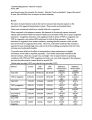
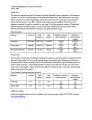
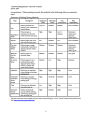
Show 8 is possible because of our level of committed resources, the additional expertise found on the working committees, and CMAP's partnerships with other organizations. Another important aspect of CMAP's scenario planning process is the breadth of policy and investment areas that will be evaluated. According to the report cited on the first page (online at http://www.arch.utah.edu/bartholomew/SP_SummaryRpt_Web.pdf), many studies vary the amount and location of growth between scenarios, but few address its design characteristics, transportation pricing, or additional policy elements. The scenario evaluation for the GO TO 2040 plan will include the variables listed above, as well as some related to economic development, environment, housing, and human services, in addition to land use and transportation. Recommendations and standards for scenario construction As stated above, CMAP has approached scenario construction by identifying investment and policy variables, which we have termed strategies in our process. Scenarios each feature a combination of strategies, or actions that the region could take, so that each scenario is a potential course of action. CMAP used several standards for how scenarios were constructed, listed below. (Please note that a baseline or trend scenario was prepared, mainly to illustrate the costs of inaction. The standards below do not apply to this baseline scenario.) Scenarios should be logical and internally consistent, and should also be reasonable views of the future, rather than "straw men" which exist to be destroyed. Thematic scenarios can provide more realistic futures than the other methods, which tend toward extremes. The purpose of scenarios is to prioritize actions for implementation. Because thematic scenarios are combinations of actions, they can do this. (So could several other of the scenario construction methods, as well.) In comparison to the reference scenario, each scenario should lead to an overall improvement in environmental quality, economic competitiveness, equity, and other vision themes. Thematic scenarios can be constructed in a way to ensure that each contains strategies to improve the environment, economy, etc. Other scenario options, such as the maximizing of one goal over another, would tend to be less balanced, and in some cases, it would be difficult to ensure that this standard were met (for example, an economically-focused scenario could easily have a negative effect on the environment.) Minimum standards or "floors" should be included in each scenario for basic maintenance of the system, continued funding for education, an acceptable level of planning for safety and security, etc. This could actually be accomplished through any of the scenario construction methods. Cost constraints should be clear. This can either be accomplished through holding costs equal and ensuring that all scenarios cost the same, or by explicitly stating the tradeoffs between benefits and costs (such as higher taxes). Because thematic scenarios are combinations of explicit strategies, either of these methods can work with a thematic scenario construction method. |