| OCR Text |
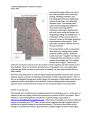
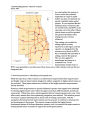
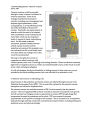
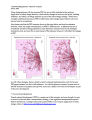
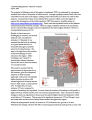
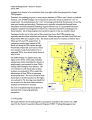
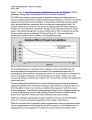
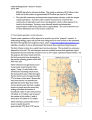
Show CMAP Modeling Results: "Preserve" Scenario June 8, 2009 8 $850,000 per mile for off-street facilities. This yields an estimate of $3.5 billion for the build-out of this system, or approximately $120 million per year for 30 years. The sidewalk construction and intersection improvement activities would also require capital expenditure. A portion of this could be assumed to be covered by the construction of sidewalks as part of new development, which is often required to be done by the developer. However, some sidewalk retrofits and intersection improvements would be the public sector's responsibility. The costs for this have not yet been determined, but work on this is underway. 5. Transit system operations: service extensions Transit system operations will be improved in several ways in the "preserve" scenario. A forthcoming strategy paper will provide more background on some of these; in the meantime, the RTA's Moving Beyond Congestion report, online at http://movingbeyondcongestion.com/, identifies a number of service enhancements that include these operational improvements. The first of these involves low-capital transit service extensions. This included bus extensions planned by Pace and CTA; rail extensions were not included because their significant capital requirements did not match this scenario's focus on low-capital, operational improvements. For this purpose, the future transit networks that had previously been developed for the scenario planning portion of the 2030 RTP were used. These extensions brought transit access to previously unserved parts of the region. Using a ½-mile buffer as the standard for calculating transit access, this increased the area within the region that has transit access by approximately 27% (in terms of land area). Because the areas were service was extended are generally less dense than those where service already exists, this had a smaller impact on people and jobs served; this strategy increased the number of households within ½ mile of transit from 2.8 million to 3.1 million, and increased the number of jobs within ½ mile of transit from 4.5 million to 5.2 million. These extensions increased the service hours for public transit by approximately 19% (from 3,787 service |