| OCR Text |
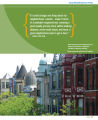
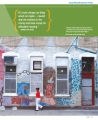
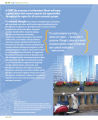
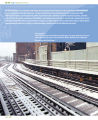
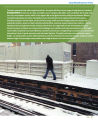
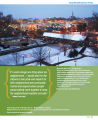
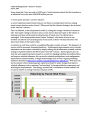
Show CMAP Modeling Results: "Innovate" Scenario June 8, 2009 13 8. Application of context sensitive solutions Context sensitivity is a simple idea - taking the surroundings into consideration when making planning or infrastructure decisions. This represents a shift over traditional approaches which were all about "function" to an approach that balances the focused project purpose with community values and assets. Successful context sensitive processes both facilitate citizen participation throughout the process and allow greater design flexibility in the final product. A paper on context sensitivity is online at: http://www.goto2040.org/contextsensitivity.aspx. Context sensitivity was not addressed within the travel model, as it provides primarily non-transportation benefits. 9. Advanced vehicle technology Advanced vehicle technology is applied to both cars and trucks and provides a way for the vehicles we drive to help compensate for human shortcomings in physical capabilities and behaviors. Advanced vehicle technology also provides a way for our vehicles to track their own mechanical condition and notify us when maintenance is needed. Advanced vehicle technology has a number of safety applications. Technology is available to provide intersection collision warning, obstacle detection, lane departure warning, rollover warning, road departure warning, forward collision warning, and rear impact warning. If desired, the capability to detect these adverse conditions can be further supplemented with automated vehicle responses. Properly functioning technology can detect conditions and react to them much faster than a human is capable of. If a collision does occur, collision notification technology can notify emergency responders immediately so the vehicle occupants receive speedy medical care and the wreckage can be cleared quickly. This service is already in use on some models of cars. Advanced vehicle technology can also provide ways to make our driving easier, through driver assistance technologies. Navigation assistance is already a very commonly used technology, and parking assistance is available on a small number of models. Other services are not commonly in use yet, but technology is available to accomplish them. For example, vision enhancement technologies allow the driver to see better in the dark or in bad weather. Adaptive cruise control senses the forward vehicle and follows at a set distance and speed. Intelligent speed control receives information from equipped roadway infrastructure and maintains an appropriate speed for the facility. Lane change assistance senses surrounding vehicles and ensures collision free lane changes. Lane keeping technology can sense driving lanes and keep the car aligned. Lane keeping technology has been tested on commercial vehicles with proven success in reducing accidents and associated costs. Drowsy driver warning can monitor the driver for signs of falling asleep. Precision docking has been tested on public transit and commercial vehicles, and provides a way to automatically park a vehicle close to and at a desired angle with a docking area, be it a warehouse dock or a bus stop. |