| OCR Text |
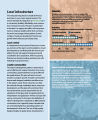
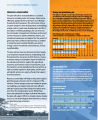
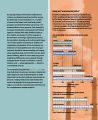
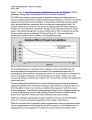
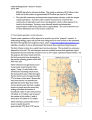
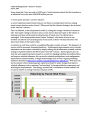
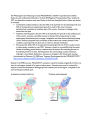
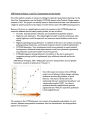
Show CMAP Modeling Results: "Preserve" Scenario June 8, 2009 4 Supply," online at: http://onlinepubs.trb.org/Onlinepubs/tcrp/tcrp_rpt_95c18.pdf. CMAP is preparing a strategy report on parking but this has not yet been completed. The TCRP report examines parking supply management strategies including minimum or maximum parking requirements, employer-based parking management, on-street or residential parking, and remote park-and-ride facilities. It demonstrates strong links between parking policy and travel behavior, particularly the use of alternative transportation modes. For example, vehicle trips were shown to be reduced by approximately 20% when parking at a location was scarce rather than unrestricted. Pricing was also demonstrated to have a major impact, with nominal pricing shown to reduce vehicle trips by 10%, and market-rate pricing shown to reduce trips by an additional 15% beyond this (p. 22). However, alternative transportation options must be available to accommodate these trips. For modeling purposes, new parking policies designed to reduce automobile trips and encourage alternative transportation were assumed to be implemented regionwide. In modeling terms, this was done by increasing the "fixed cost" of arriving at one's destination by auto by an average of 25 percent. (Costs are divided into two types: variable costs, which increase with distance, and fixed costs, which do not. For most trips, variable costs significantly exceed fixed costs.) The new parking policies described above include nominal pricing and reducing minimum parking requirements below conventional standards. Both of these are assumed to add "cost" to the trip, either in terms of an actual fee, or additional time required to walk from a more distant parking spot. More advanced parking pricing strategies, such as charging market rates or using variable pricing, are also worth exploring, but these are more consistent with the themes of the "innovate" scenario and will be included in that analysis instead. Unlike most strategies, parking policy changes can generate revenue and have little public sector cost. Work on the financial implications of this strategy is still underway. While this document does not generally address implementation, there are particular concerns with the implementation of this strategy that should be brought up. The full effectiveness of parking policies at encouraging the use of alternative modes will only be realized if these 0% 5% 10% 15% 20% 25% 30% Percentage of Cost that is Fixed Cost Addition Distance Relative Effect of Fixed Cost Addition % of Cost that is Fixed Cost Addition Less More |