| OCR Text |
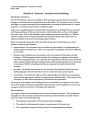
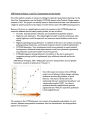
Show 7 Options for scenario construction As the above case studies show, scenarios can be organized in a number of ways. A description of each and a brief discussion of its benefits and problems, follow: Intensity: two bookend scenarios are created in terms of the application of planning strategies, and other scenarios fall in between. Organizing scenarios in this way can be effective at demonstrating the benefits of good planning, and in particular, of linking land use and transportation planning. However, it does necessarily lead to prioritization of the most effective strategies. Location: growth, in terms of population and jobs, is directed to certain parts of the region. This organizing theme can show how the impacts of growth, in terms of environment, congestion, and other factors, can vary depending on where this growth occurs. Investments and policies: different transportation investments, land use policies, or other variables make up each scenario. This allows the impact of different planning strategies to be tested, leading to a more complete understanding of the effect of each. However, the construction of scenarios is much more difficult, because a nearly infinite number of scenarios could be created by arranging the strategies in different ways, and because strategies must be researched before scenario evaluation occurs to determine their potential effects. CMAP intends to use the third option, constructing scenarios that are made up of discrete investments, strategies, and policies. We believe that this is appropriate for our agency and region for a number of reasons: The work done on the 2040 Regional Framework Plan and 2030 RTP means that we are not starting from scratch. These plans established a solid framework for the benefits of good planning in this region. CMAP does not want the GO TO 2040 plan to simply re-state assertions that were already made in previous plans. The formation of CMAP reflected a regional consensus that planning for land use and transportation should be done together, so we do not need to go through a scenario planning exercise to prove that this is the case. "Assigning" growth to different areas does not lead to an understanding of how policies and investments can affect the region's growth. Also, explicitly varying growth by geography would be immediately divisive. While there will be differential impacts of various investments and policies, this should not be the primary point of discussion. Because the GO TO 2040 plan will have a focus on implementation, a scenario evaluation process that helps us to understand the benefits and limitations of different potential strategies helps identify implementation actions. It also helps to understand the trade-offs involved between a range of potential actions and goals. The preparation of this plan is one of CMAP's most important projects, so considerable resources have been devoted to it. Constructing scenarios based on investment and policy variables is more rigorous and difficult than other methods, but we believe that it |