| OCR Text |
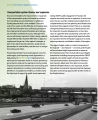
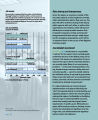
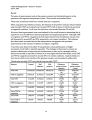
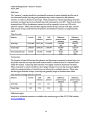
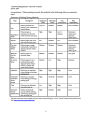
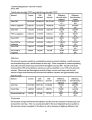
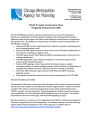
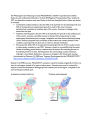
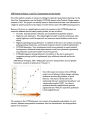
Show 5 Chicago Area Transportation Study - 2030 RTP The Chicago Area Transportation Study (CATS), one of CMAP's predecessors, used scenario evaluation in the 2030 RTP. Four scenarios were created, including the following: The service-intensive scenario focused on transportation strategies that improve user benefits under existing management, operations and capacity conditions. Service improvements for any mode are typically accomplished in the course of reconstruction or capital maintenance, but may also be pursued as "stand-alone" regional strategies. These strategies have the added benefit of allowing quick adjustments to service in response to changes in the needs or composition of users. This alternative was intended to illustrate the benefits of non-capital intensive strategies to improve the transportation system. The system-intensive scenario introduced limited capital improvements and operational changes on the existing system. System improvements for any mode are typically made in response to the need to make strategic changes in facility operations. These may be in response to changes in technology or demand patterns. This alternative was intended to illustrate the benefits of low-capital-intensive strategies to improve the transportation system. With the system additions scenario, capacity additions to existing major highways and rail facilities were introduced. These may result in net new capacity or in existing capacity retrofitted for another function. Capital additions oriented toward improving hub circulation in the Chicago Central Area were included. Completion of existing expressway connections and extensions of existing radial transit lines were also included. System additions are made in response to capacity deficiencies that result from established growth patterns or changing demand patterns. This alternative was intended to illustrate the benefits of capital-intensive strategies to improve the existing transportation system. The system expansion scenario introduced significant new segments to the region's major highway and passenger rail system, with the intent of accommodating or managing projected growth. These proposals are the most expensive, they fundamentally change the way travelers use the transportation system, and they have the potential to induce significant land use changes. Because of their large scale, they are subject to elaborate financing, design, engineering and environmental reviews. This alternative was intended to illustrate the benefits of capital-intensive approaches to improving the transportation system by adding new major capital facilities. (downloaded on February 15, 2008 from "2030 Regional Transportation Plan," http://www.sp2030.com/RTP_compiled_20070914.pdf) The CATS scenario evaluation process was organized by transportation investment theme. The scenarios ranged from "service-intensive," which improved transportation operations without the use of major capital projects, to "system expansion," which relied heavily on major capital projects. |