| OCR Text |
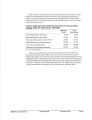
Show Our engineering study calculated on-site costs only. We estimated off-site costs based on various findings from the literature. These off-site costs do not vary by density because of the reasons described in the section above on "On-site and Off-site Costs." We assume that operation and maintenance (O&M) costs are equal to the annual amount required to be put into a sinking fund at 3% interest to replace the capital facility every 25 years. In this way O&M costs follow the same pattern as capital costs. The annual O&M costs end up being nearly 3% of total capital costs. Other estimates that bound our method range from a city manager's high-maintenance estimate of 10%, to an urban reserve area study's lower-bound estimate of 1.35%. To estimate total costs, we divide development into two major categories: • Outside existing or expanded UGBs (resource lands and exception areas) • Inside existing or expanded UGBs Research Report 1, Density, Development Patterns, and Definition of Alternatives, derives the numbers of dwelling units in each category. We calculated infrastructure costs by multiplying the number of dwelling units of each housing type and density by the costs per dwelling unit for each housing type and density. 5.2 RESULTS We estimate that the Land-Conserving Alternative will save over $1.81 billion from 1990-2050 in capital costs and O&M costs, compared with the Historical Trend Alternative. Table 8 below summarizes the cost differences between the two development alternatives. Page 20 December 2000 ECONorthwest DRAFT Summary Report |