| OCR Text |
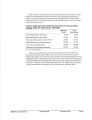
Show the number of dwelling units, and multiplied the costs by the number of units to calculate total costs. Our analysis included the following assumptions: • Include costs, not benefits (which include revenues paid as fee for service) • Include fiscal costs, not all costs (e.g., environmental damage) • Include a subset of infrastructure and public service costs • Include capital and operating/maintenance costs for that subset • Only our estimates of on-site costs vary by density • All development occurs "tomorrow," obviating the need for discounting costs to present value in the case of capital costs • Measure marginal costs rather than average costs • Demographic characteristics remain constant between the two development alternatives • Do not estimate costs for non-residential development • New development outside the UGB does not connect to municipal services • Distance from existing development and existing facilities is not a factor for new development within UGBs. The analysis occurs in two parts: (1) estimate costs per dwelling unit, and (2) estimate total cost as a function of the number of dwelling units (by type/density) and their unit-infrastructure costs. There are two ways of thinking about how capital costs per dwelling unit vary with density. One method assumes that costs per acre are constant, and that costs per dwelling unit vary directly with density-the number of dwelling units that are put on each acre. In other words, the greater the density, the less the cost per dwelling unit. This approach is probably too simplistic. Costs per acre are very likely to increase as density increases, because of increasing costs per service unit or increasing service units required per acre. The result is that costs per dwelling unit will decrease in proportion to density, but not in direct proportion. No definitive, comprehensive, contemporary study has been written that summarizes capital costs, so we consulted with a development and engineering firm to ascertain how costs vary with development pattern, according to an engineering cost model. The firm sketched 38-acre developments of eight different housing types considered by our land use model and calculated the capital cost per dwelling unit for each housing type. The infrastructure costs calculated were for wastewater, stormwater, water supply, and the road network. DRAFT Summary Report ECONorthwest December 2000 Page 19 |