| OCR Text |
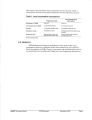
Show Table 3. Estimate of land need inside UGBs for Alternatives, 1990-2050 Historical Land Variable Trend Conserving Population Change 1990-2050 (persons) New Housing Demand (Housing Units) Residential Land Demand (Acres) Average residential density (DU/GRA) Non-Residential Land Demand (Acres) Total Land Demand If No Redevelopment (Acres) Land Demand Satisfied by Redevelopment (Acres) Total Land That Gets Urbanized (Acres) Additional 20-Year Buildable Land Supply in 2050 UGB Total Land Needed to Accommodate Development to 2050 and Requirement for an additional 20-year supply Buildable Vacant Acres in UGBs as of 1990 Additional Acres Needed for 2050 UGBs 1,887,743 1,937,323 806,537 827,727 114,479 96,314 7.0 8.6 68,455 57,538 182,934 153,852 5,354 9,653 177,579 144,199 58,601 47,586 236,181 191,785 147,446 147,446 105,900 62,796 Source: ECONorthwest, 2000. 3 IMPACTS ON FARMLAND Using the land consumption estimates calculated in the urbanization study, we estimated the expected economic loss caused by farmland conversion. Research Report 2, Impacts on Farmland, describes the changes in the distribution of farmland and changes in farm production under the two development scenarios. Sprawling, low-density urban development consumes more farmland than compact development. Some of that land consumed could have been used for growing agricultural commodities and is now not available. Other land may be managed less intensively or less efficiently because of changes in landowners and landowner management objectives. Greater population density in rural areas also creates conflicts that make some farming practices more expensive and therefore less practical. Less land in agricultural production, declining productivity, and reductions in the intensity of management means less crops and livestock produced. Assuming average unit prices do not change, the gross agricultural dollar revenues generated from the land declines. The loss in productive value ripples through the economy resulting in additional losses in jobs and income. 3.1 METHODS Because there are no consistent estimates of future Willamette Valley farmland loss available in existing literature, this research estimates future farmland losses based on extrapolation of historical trends, population Page 10 December 2000 ECONorthwest DRAFT Summary Report |