| OCR Text |
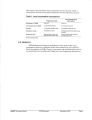
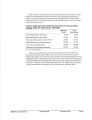
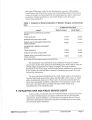
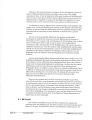
Show and value differences under the two development scenarios. Although the Land-Conserving Alternative reduces the converted forestland, it would have almost no impact on the productivity of remaining forests and on total forest production. Timber production is only 0.22% higher under the Land-Conserving Alternative. Table 7. Impacts on forest production in Western Oregon and the study area % Difference (LC-HT)/HT Impact Western Oregon Study Region Industrial land is unaffected density by population Timber production +0.10% +0.28% Softwood saw timber price t )V 2050 -0.04% -0.04% Present value of total welfare derived from n nco/ n . vo/ ,¦ i i .. +U.UO /o +U. I I /o timber production Industrial land is affected by population density Timber production +0.08% +0.22% Softwood saw timber price by 2050 -0.07% -0.07% Present value of total welfare derived from n noo/ ~ OO0/ ... _, .. +U.UO /o +U./Z 7o timber production Note: Present value of net welfare impacts is less than $50 million. The forestlands most affected by rural residences locating in forested areas tend to be the least productive forestlands in the study region. They are already highly fragmented and lightly managed. The most productive forestland in the study region would remain largely unaffected by reductions in the number of rural residences located in forested areas under the Land-Conserving Alternative. The most productive forestland in the study region tends to be located in the least populated areas of the region and generally would remain so under either development alternative. They tend to be located relatively far from cities and so generally would be unaffected by the expansion of cities. They also tend to be relatively inaccessible and steep, which limits their desirability for rural residential uses. 5 INFRASTRUCTURE AND PUBLIC SERVICE COSTS In this section, we describe how we estimated capital and operating costs for a subset of infrastructure and public services for the two development alternatives. Research Report 4, Infrastructure and Public Service Costs of Alternative Development Scenarios, describes the differences in costs under the two development scenarios. DRAFT Summary Report ECONorthwest December 2000 Page 17 |