| OCR Text |
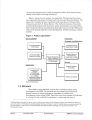
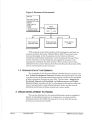
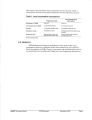
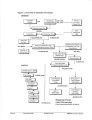
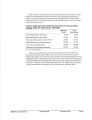
Show Summary Report 1 INTRODUCTION The Willamette Valley Alternative Futures project attempts to describe future development patterns in the Willamette Valley, and their impacts on farm and forest production, and on the costs of public services. This report summarizes the results of the research. The research created and evaluated two development alternatives: the Historical Trend Alternative, a best estimate of how development will occur in the absence of major shifts in market forces or public policy, and the Land-Conserving Alternative, a more compact development inside Urban Growth Boundaries (UGBs) and Exception Areas,1 with less development on farm and forest lands. This project focuses on growth and development patterns, and the impact of those development patterns on farm and forest production, and on the costs of public services. This document summarizes the four Research Reports of the Willamette Valley Alternative Futures project. For further detail on methods and results, see the full Research Reports: • Research Report 1: Density, Development Patterns, and Definitions of Alternatives • Research Report 2: Farm Impacts • Research Report 3: Forest Impacts • Research Report 4: Infrastructure and Public Service Costs. 1.1 BACKGROUND The study was commissioned to answer questions about the future land development patterns in the Willamette Valley.2 It estimates the amount of land needed to continue with current land development patterns and what 1 All cities in Oregon, and almost 100 in the Willamette Valley, have UGBs, which to define an area where future urban development can occur, and are supposed to have land estimated to be adequate to accommodate 20 years of growth. UGBs are generally a line between urban areas and resource land (farm and forest land). The major exceptions are known as Exception Areas-land outside UGBs that has been determined to be committed (through its development patterns or past policy decisions) to non-resource (primarily rural residential uses). 2 1000 Friends of Oregon, a non-profit organization whose mission is to monitor and improve the implementation of Oregon's land use policies, joined with the Oregon Agricultural Education Foundation, and the Oregon Department of Agriculture and Forestry, to seek funding for the project. Contributors include: the William & Flora Hewlett Foundation, Spirit Mountain Community Fund, the Oregon Community Foundation, Compton Foundation, Inc., Lamb Foundation, the Jackson Foundation, the Bullitt Foundation, 1000 Friends of Oregon, and the Rose E. Tucker Charitable Trust. DRAFT Summary Report ECONorthwest December 2000 Page 1 |