| OCR Text |
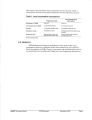
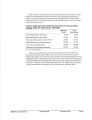
Show softwood saw timber is harvested on the specific types of forestlands, such as hardwoods, most likely affected by development in the Willamette Valley. As a result, small changes in land use planning laws within the Willamette Valley are unlikely to have significant changes on softwood saw timber production in the region. 4.2 RESULTS The Land-Conserving Alternative reduces the number of acres converted to urban used by 23,070 to 40,070 acres, or about 1 to 2%. Table 5 summarizes the acres of forest land converted under the two alternatives. Table 5. Converted forest land (acres) by Alternative, 1990-2050 Historical Trend Alternative Land-Conserving Alternative UGBs Rural Dwellings 5 acres per new dwelling 2.5 acres per new dwelling Total 17,500 51,000 25,500 43,000 to 68,500 11,400 17,000 8,500 19,900 to 28,400 Source: ECONorthwest. To determine if our results were reasonable, we compared our estimates to other studies. We examined data provided by the National Resources Inventory, Oregon Department of Forestry (Azuma et al. 1999), and Gedney and Hiserote (1989). Table 6 summarizes the comparative analysis. Table 6. Estimate of forest land lost (acres) based on other data sources, 1990-2050 Lost by 2050 Lost by 2050 Under Under Land- Net Assumption Historical Conserving Difference Trend Alternative Based on historical National 69,918 23,290 46,628 Resources Inventory trend Based on Azuma et al. 42,375 14,110 28,265 (1999) trend. Based on Gedney and 36,864 12,274 24,590 Hiserote (1989) trend Source: ECONorthwest. Our results indicate that projected aggregate timber harvest levels and timber prices will be very similar under the base case and the two Willamette Valley development scenarios, suggesting that the land-conserving development alternative would result in little impact to aggregate measures of timber production and prices. Table 7 summarizes the timber productivity Page 16 December 2000 ECONorthwest DRAFT Summary Report |