| OCR Text |
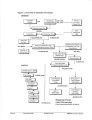
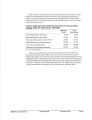
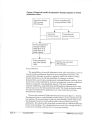
Show We assumed that the number of new rural dwellings locating on forestland under each of the two scenarios is the only difference between the two scenarios. We assumed that forest and farmland only are converted to developed uses and do not switch between forest and farm uses. For this analysis, we distinguish between public, industrial private, and nonindustrial private forestland owners using the geographic information system coverage. The coverage identifies six general forestland owner classes. Four are classes of public ownership on which we assume that forest production will be unaffected by differences in the distribution of population density under alternative development scenarios. The remaining two owner classes include industrial private and nonindustrial private. Private timber owners are now the dominant timber suppliers in western Oregon, with private industrial timberlands providing the bulk of the harvests from private lands. Assuming no changes in forest practices or restrictions on harvestable timber volumes, research indicates that existing forest inventories could sustain existing rates of harvest in the future. Nonindustrial private forestlands generally are managed less intensively than their industrial private counterparts. Nonindustrial private forestlands have significant potential for major shifts in and relative use of more intensive forest management regimes. We assumed that the productivity of forestland owned by public entities will be unaffected by the different population density scenarios. Public forestlands management is a function of the preferences and desires of the public at large, and forest management has recently shifted away from timber production and toward ecological protection objectives. Based on the changes in human population density projections from the Willamette Valley project and the associated probabilities of commercial forest management, some of the timberland area in the model data base would either be: (1) removed from the effective timberland base and no longer in commercial forest use; or (2) shifted to a lower timber management intensity class. In the first case, this includes timberland acres on nonindustrial private forestlands where the probability of commercial management is less than 22 percent. In the second case, these are timberland acres where the probability of commercial management has been lowered into the 22-55 percent class. We assume that forestland in these lower management intensity classes are awaiting further development in the near future or form part of a residence or other infrastructure such that on average only one more timber harvest could be forthcoming. The model reallocates affected acres each model decade, so that the dynamics of land reallocation are reflected along with timber growth, harvest, and other changes in the forest resource base. We also assume that softwood saw timber production will continue to dominate timber production goals of western Oregon forestland owners scenarios and that no development-related changes will occur in the rest of Western Oregon outside of the Willamette Valley. A relatively small share of DRAFT Summary Report ECONorthwest December 2000 Page 15 |