| OCR Text |
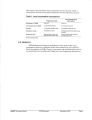
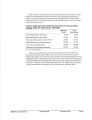
Show 3.2 RESULTS The Historical Trend is a more dispersed pattern of settlement in agricultural lands outside UGBs and exception areas, leading to greater fragmentation, rural-urban conflicts, and reductions in overall farmland productivity in the affected areas. Under the Historical Trend, 300,000 acres of farmland are converted by 2050, and 18% loss of existing agricultural lands. In contrast, nearly 40% of total Willamette Valley farmland has been lost during the past 50 years. The projected slowing of farmland loss is dependent on enforcement of current agricultural land use regulations. Under the Land-Conserving Alternative, 150,000 acres of farmland are converted, a 9% loss. Converted farmland lies within existing or expanding UGBs, exception areas, residential in EFU lands, and other areas that allow non-farm uses on EFU lands. Table 4 summarizes the acres converted from each land use category. Under both alternatives, most agricultural land in exception areas is converted. Development on EFU land is substantially restrained under the Land-Conserving Alternative, and the amount of farmland converted within UGBs is halved. Table 4. Converted farm land (acres) by Alternative, by location, 1990-2050 Historical Trend Alternative Land-Conserving Alternative UGBs 60,000 30,000 EFU 160,000 45,000 Exception Areas 75,000 75,000 Source: ECONorthwest. The economic value foregone due to farmland conversion is calculated as the amount of lost acreage times the average gross sales value of the crop grown on that acreage. These dollar estimates do not take into account subsequent land uses, or alternative income earning possibilities. The Historical Trend Alternative would affect foregone sales of $352 million dollars for the year 2050, expressed in current dollars. The Land-Conserving Alternative results in foregone agricultural revenues of $185 million, $165 million less than under the Historical Trend. These figures represent 22.4% and 11.8%, respectively, of current agricultural sales from the Willamette Valley. Economic effects of farmland conversion are not necessarily proportional to acreage losses across corresponding commodity categories. Under both growth alternatives, nursery crop acreage accounts for only about 3 percent of all lost farmland, but around 30% of total economic loss. At the other extreme, grass seed accounts for roughly 33% of converted agricultural lands, but represents only about 18% of economic value foregone. Page 12 December 2000 ECONorthwest DRAFT Summary Report |