| OCR Text |
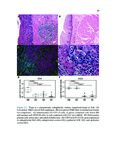
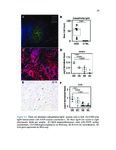
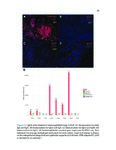
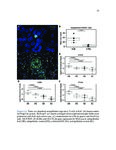
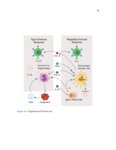
Show 78 a mouse model lung OSM overexpression was associated with eosinophils and interstitial fibrosis [49], reminiscent of the findings in EGPA. Calcitriol has type 2 and toleranceinducing effects including suppressing expression of proinflammatory cytokines such as IL12, IL17, interferon γ, and others, and increasing expression of IL10 and type 2 cytokines [50]. Calcitriol has complex effects on B and T cells, macrophages and dendritic cells, and others [51]. This proposed mechanism suggests three interesting avenues for further study. There is granular IgG4 staining, potentially immune complexes recognizing a specific antigen. Also, prior gene association studies showed EGPA is more common in patients with specific HLA-DR haplotypes, hinting that responses to specific antigens induce disease [5, 6]. We speculate that EGPA could be an immune response to specific antigens; antibodies, possibly enriched in IgG4, to these specific antigen could be present in EGPA, which could be of importance to the pathogenesis and such antibodies could be diagnostically useful. Secondly, CCL18 is the chemokine with the most increased expression in our data. CCL18 recruits both T cells subsets likely needed for both EGPA’s combination of type 2 and immunoregulatory features. Pirfinidone, which suppresses CCL18 expression [52], is a plausible candidate for treating EGPA. It is FDA-approved for treating idiopathic pulmonary fibrosis, in which CCL18 is also a dominant chemokine; serum CCL18 content even predicts an aggressive course in idiopathic pulmonary fibrosis [53]. Finally, further study of tissue Tregs in EGPA would yield additional insight into the mechanism of EGPA’s. It is possible that Tregs are unstable and display reduced expression of GATA3 and BCL6, or increased HDAC6. Tregs might also display similarities with antigen-presenting-cells, given the abundant TNFSF14 expression. The possibility of hybrid Treg/Th2 cells could also be explored. Limitations of this study include the small number of cases studied and that the RNA sequencing was done on paraffin-embedded tissue. Some RNA transcripts are poorly detected in paraffin tissue, often but not only those with low content. However, the RNA sequencing results were corroborated with RT-PCR and extensive immunostaining. We also use appropriately conservative statistics [16]. We recently published a validation study showing that we can obtain reliable RNA results similar to those obtained with well-preserved RNA [15]. Low prevalence RNAs such as cytokines, however, remain |