| OCR Text |
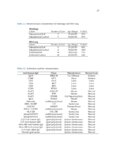
Show 16 (Richmond, IL) immunostainers. Table 2.2 contains the list of antibodies used for immunostaining. 2.3.3 RNA-Seq Ten serial 10 micron thick unstained sections were cut and placed on microscope slides. Under a dissecting microscope, a scalpel blade was used to manually scrape off the lamina propria tissue layers from the epithelium in inflamed areas. The scraped-off tissue was used for RNA extraction. Some contamination of the deeper tissue with mucosa occurred. The High Pure FFPET RNA isolation kit (Roche) was used to isolate total RNA from 10lm-thick, formalin-fixed, paraffin-embedded (FFPE) tissue. The manufacturer’s suggested DNase 1-digestion step was used to remove DNA from each RNA sample. A NanoDrop spectrophotometer (Thermo Scientific) was used to determine RNA quantity. The Illumina TruSeq Stranded Total RNA Sample Prep Protocol was used to remove ribosomal RNA from each RNA sample prior to cDNA library preparation. Kallisto software was used to align sequencing reads to the GRCh37/Hg19 human reference cDNA [16]. The mean aligned read counts for the 9 formalin-fixed, paraffin-embedded RNA sequencing data sets was 7.46 million reads. DESeq2 software was used to perform differential gene expression analysis [17]. The following cut-offs were used to determine whether genes were significantly differentially-expressed: mean read count for at least one group ≥ 10, fold change ≥ 2, and p-value ≤ 0.05 after adjusting for false-discovery rate using the Benjamini-Hochberg correction. Differential expression analysis was also performed between subepithelial EoE tissue and epithelial EoE tissue as well as epithelial control tissue from our previous study [18]. EoE and control FFPE tissue from the previous study contained essentially no lamina propria, as verified by examination of the routine sections [18], and were used as the superficial EoE and superficial control group in this study. The RNA extraction and sequencing protocol for epithelial and subepithelial EoE tissue are identical and have also been sequenced in the same batches, which allows for correction of batch effect [17]. 2.3.4 RNA in situ hybridization In our study, 4µm tissue samples were deparaffinized in xylene, followed by dehydration in graded ethanols and rinsed in dH2O. Sections were incubated in a pretreatment |