| OCR Text |
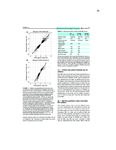
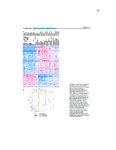
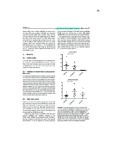
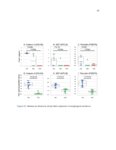
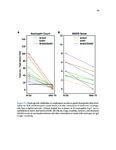
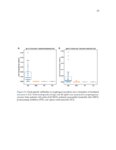
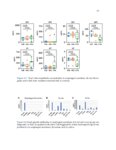
Show 39 6 | 4 | DISCUSSION PETERSON ET AL. EoE subjects. This broad overlap suggests that, even if confirmed as statistically significant, this finding might be of little practical value. In short, our results show that the EoE and PPI-REE transcriptomes To our knowledge, this gene was not examined in the prior, microar- are nearly identical, with no significant differences at the FDR ≤0.01 ray-based studies.16,17 MAPK8IP2 has been identified in a panel of significance level. Only a single gene, MAPK8IP2, was different at the genes predicting clinical reactivity to food sensitivity.28 In a murine FDR ≤0.05 significance level, a finding that was confirmed by real-time model, it was upregulated on induction of Tregs.29 quantitative reverse transcription PCR. To our knowledge, this is the first published RNA sequencing study comparing PPI-REE with EoE. We found no significant difference between KCNJ2 gene in PPIREE and EoE, which was previously identified as differentially As previously mentioned, our findings fit well with the many expressed in Wen et al16 but not Shoda et al.17 Our care to avoid studies showing that PPI-REE and EoE are highly related and, by proton pump inhibitor-treated subjects and gastric or deep tissue many measures, indistinguishable.4-9 Prior microarray-based studies contamination could have contributed to the difference in our find- also found relatively modest differences.16,17 ings. As mentioned above, when so many genes are analysed, it is Strengths of this study are that it is the first RNA sequencing difficult to exclude rare possible false positive findings. comparison of moderately large numbers of EoE and PPI-REE sam- These results emphasise the similarities between EoE and PPI-REE. ples and that the eosinophil contents were matched in both groups. While it remains possible that more fundamental changes will be found By using formalin-fixed tissue, we could confirm that the tissue was with further study, we theorise that PPI-REE is a subtype of EoE. representative and avoid using cases with contaminating gastric or In summary, our RNA sequencing results show that EoE and PPI- other spurious tissue, or deep subepithelial tissue, problems that REE have nearly identical transcriptomes. This corroborates abundant were present in 33% of our cases. In a recently published study, prior evidence that EoE and PPI-REE are closely related and appear to 43% of biopsies contain deep tissue.25 Recently described static jaw differ mainly in the degree of responsiveness to proton pump inhibi- biopsy forceps allow a far higher rate of subepithelial sampling.26 tors. Additionally, this study helps demonstrate that formalin-fixed tis- We only studied subjects not taking proton pump inhibitors at the sue-derived RNA can be used for RNA sequencing with results time of biopsy. Additionally, we compared groups of subjects that strongly correlating with those from well-preserved mRNA. did not differ statistically from one another in regard to their oesophageal tissue eosinophil content, atopy, age and gender. Limitations include the moderate number of subjects studied, that the deep tis- ACKNOWLEDGEMENT sue, lymph nodes and other potentially relevant sites were not Declaration of personal interests: Kathryn Peterson has served as a examined, and the use of formalin-fixed tissue with inherent RNA consultant and an advisory board member for Shire and Allakos degradation. While our use of formalin-fixed tissue means that occa- Pharmaceuticals and has received research funding from Allakos, sional genes will be poorly detected, our validation studies show Shire, Receptos, and Regeneron Pharmaceuticals. All other have excellent correlations with our RNAlater tissue as well as with Sher- nothing to declare. rill et al’s EoE RNA sequencing data.24 While our results are less similar to those of Sherrill et al than our own RNAlater cases, there are many possible reasons, including their different subject cohort and a variety of methodologic differences. However, our study has AUTHORSHIP Guarantor of the article: Kathryn Peterson. an average of 14.9 million reads per subject, while, among Sherrill Author contributions: Kathryn Peterson: study concept and design; et al’s EoE group, most subjects had about 5 million reads per sub- acquisition of data; analysis and interpretation of data; drafting of the ject.24 Numerous short human gene reads, rather than read lengths, manuscript; critical revision of the manuscript for important intellec- appears to be a greater factor determining accurate RNA quantita- tual content; statistical analysis; obtained funding; study supervision. tion in RNA sequencing studies.27 Finally, the RNA sequencing and Don Delker, Mark Hazel: acquisition of data; analysis and interpreta- real-time quantitative reverse transcription PCR results are quite tion of data; drafting of the manuscript; critical revision of the manu- similar for the 2 genes studied—KCNJ2 and MAPK8IP2. Earlier stud- script ies comparing formalin-fixed tissue vs well-preserved RNA for RNA administrative, technical, or material support; study supervision. sequencing have also supported the validity of formalin-fixed data.23 Masaaki Yoshigi: study concept and design; obtained funding. Nicholas None of the genes were significantly different between EoE and Consiglio: analysis and interpretation of data; drafting of the manu- PPI-REE at the FDR ≤0.01 significance level. Only MAPK8IP2 had a script. Chaya Chrishnamurthy: acquisition of data; Jacob Robson: criti- relatively weakly significant difference (FDR = 0.029) between the 2 cal revision of the manuscript for important intellectual content. groups. MAPK8IP2 was 2.2-fold greater in PPI-REE than in EoE, with Frederic Clayton: acquisition of data; analysis and interpretation of very similar findings by real-time quantitative reverse transcription data; drafting of the manuscript; critical revision of the manuscript for PCR analysis. Given large number of genes examined, it remains quite important intellectual content; statistical analysis; study supervision. for important intellectual content; statistical analysis; possible that this finding is spurious; additional validation would be Transcript Profiling: Our plan is that all data will be released/deposited needed to corroborate this finding. Furthermore, in about half of the to GEO once publication is accepted. Writing Assistance: Jordan John- PPI-REE subjects, the MAPK8IP2 contents are similar to those of the son B.S. Support via Utah Division of Gastroenterology. |