| OCR Text |
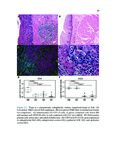
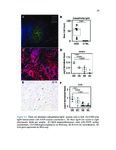
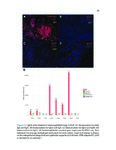
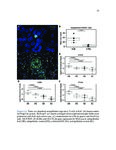
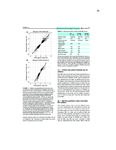
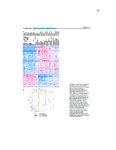
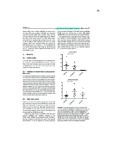
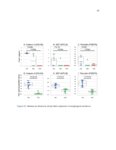
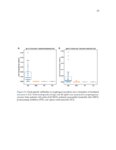
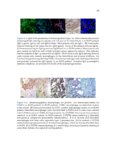
Show 38 PETERSON | ET AL. 5 Relative mRNA levels for KCNJ2, MAPK8IP2 and reference gene, reverse transcription PCR (Figure 3). The RNA sequencing MAPK8IP2 zinc finger DHHC-type containing 5 (ZDHHC5) were determined PPI-REE results were 1.69-fold those of controls (FDR 0.0049). using intron-spanning TaqMan gene expression assays and Taq- MAPK8IP2 EoE results were 0.76-fold those of controls (FDR 0.20). Man Gene Expression Master Mix (Applied Biosystems). ZDHHC5 We evaluated potassium voltage-gated channel subfamily J mem- was chosen as the reference gene for our PCRs’ relative quanti- ber 2 (KCNJ2) on real-time quantitative reverse transcription PCR, tation based on its moderately high expression level and its lack which had been previously identified as differentially expressed of shift according to RNA sequencing reads across our sample between PPI-REE and EoE in Wen et al’s microarray study. KCNJ2 categories. About 10 lL quantitative PCRs were performed in mRNA expression in PPI-REE was 1.25-fold that of EoE with adj. P/ 384-well plates and run in triplicate in a Life Technologies 12K FDR = 0.68. Real-time quantitative reverse transcription PCR had a Flex real-time PCR instrument. Fold change was determined using similar 1.30-fold difference which was not statistically significant the ΔΔCT method and statistical significance determined with the (P = .37) between the groups (Figure 3). Mann-Whitney U test. KCNJ2/ZDHHC5 3 | RESULTS E/P P = 0.3722 40 3.1 | Clinical studies 30 In our main cohort, the age and gender were not statistically different among all 3 groups (EoE, PPI-REE and controls, shown in 20 Table 1). The tissue eosinophil content and serum IgE of the EoE tro on PP C I-R EE (1 1 l(7 ) ) 0 ) 3.2 | Validation of formalin-fixed vs well-preserved RNA results 10 E( 12 proportions of other atopic diseases. Eo and PPI-REE groups were also similar, and both groups had similar In our preliminary validation study of 6-7 subjects per group, we found very similar gene expression between formalin-fixed and RNAlaterpreserved tissue, as shown by heat map (Figure S1) and in the differ- MAPK81P2/ZDHHC5 ential expression expressed as the log 2 ratio fold change for EoE vs controls among genes significantly differentially expressed adj. P/FDR ≤0.01 (Figure 1A, Pearson product moment correlation r = .96). As an additional validation step, we compared the differential expression between our main study cohort (EoE vs control log 2 ratio fold change) with that of Sherrill et al,24 the only prior EoE RNA sequencing study. This showed good correlation (Figure 1B, r = .92). Our formalin-fixed, E/P P = 0.0247 5 4 3 2 paraffin-embedded results had extremely significant correlations with 1 3.3 | Main cohort results 0 ) l(7 1) C on tro (1 EE I-R PP genes differentially expressed between PPI-REE and controls, with Eo Analysis of the main cohort RNA sequencing data showed 1996 E( 12 ) both our RNAlater data and with that of Sherrill et al. 1306 genes differentially expressed between EoE and controls. However, none of the genes were differentially expressed between EoE and PPI-REE at the adj. p/FDR ≤ 0.01 level. Hierarchical clustering and principal component analysis showed no clustering that differentiated EoE from PPI-REE (Figure 2A,B). Using the less strict criterion of adj. p/FDR < 0.05, only 1 gene transcript, MAPK8IP2, was statistically significant at adj. P/FDR = 0.029. MAPK8IP2 was upregulated 2.24-fold in PPI-REE vs EoE when visualised by normalised read counts in the Integrated Genome Browser. It was also significant by real-time quantitative F I G U R E 3 Real-time quantitative reverse transcription PCR results for KCNJ2 and MAPK8IP2. For KCNJ2, at top, the EoE cases were 1.30-fold those for PPI-REE, P = 0.37. By RNA sequencing they were 1.36-fold different, FDR = 0.68. For MAPK8IP2, at bottom, the EoE cases were 0.43-fold those for PPI-REE, P = 0.025. By RNA sequencing they were 0.45-fold different, FDR = 0.029. Although the PPI-REE cases were significantly higher, the EoE and PPI-REE ranges broadly overlapped. EoE, eosinophilic oesophagitis; FDR, false discovery rate; PCR, polymerase chain reaction; PPI-REE, proton pump inhibitor-responsive oesophageal eosinophilia |