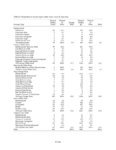
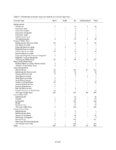
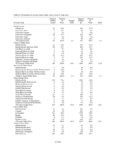
| OCR Text |
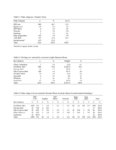
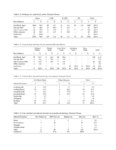
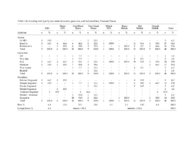
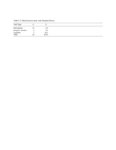
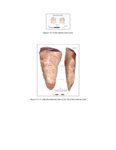
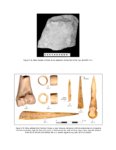
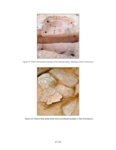
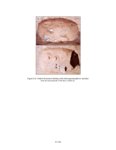
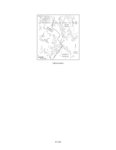
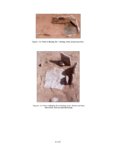
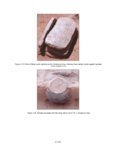
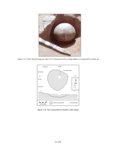
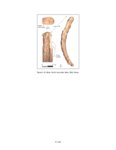
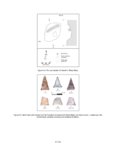
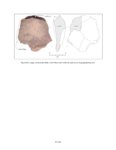
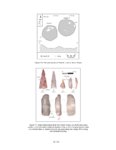
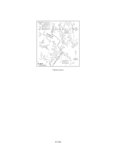
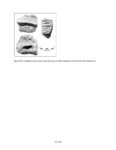
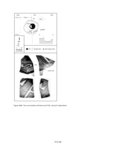
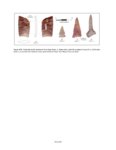
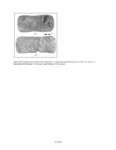
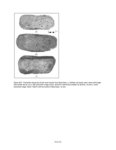
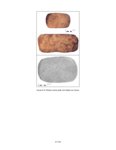
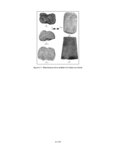
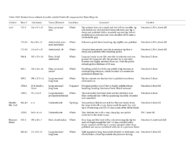
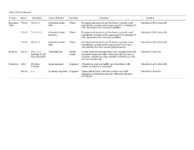
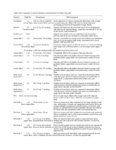
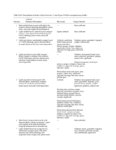
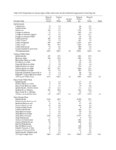
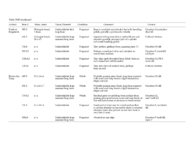
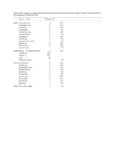
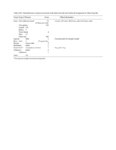
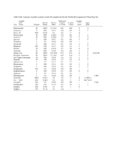
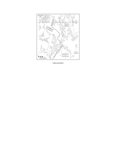
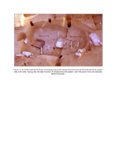
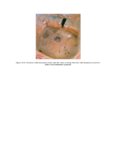
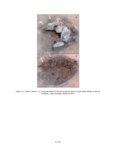
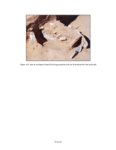
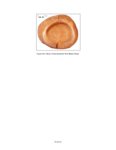
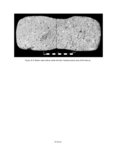
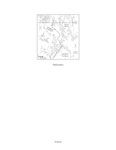
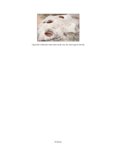
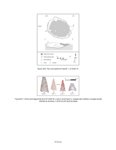
Show reddish surface with a possible design in white paint on its exterior surface. The design consists of lines and interlocking stepped elements (was this scanned?). This sherd is tempered with crushed sandstone and crushed sherd, with a dark paste, smoothed exterior, and a rough interior. The paint was barely visible on a small nip with paint that was refired. Sherds that could not be identified to ware are usually sand-tempered or self-tempered alluvial clay miniatures or pinch pots. Crushed sherd and crushed sandstone were also noted for temper, with small amounts of gray angular fragments, gray rounded fragments, white angular fragments, and multilithic sand also present. Jars, bowls, ladles and two molded spindle whorl fragments are represented by these sherds. Repair holes are evident on 127 sherds from the late Pueblo III component. Most of these are Tsegi Orange Ware sherds, although some Tusayan White Ware, Tusayan Gray Ware, Mesa Verde White Ware, and indeterminate whiteware, grayware, and brownware sherds also have repair holes. Modi-fication is apparent on 112 sherds, representing 91 items after refits. Most of these are Tusayan White Ware sherds, but they also include Tsegi Orange Ware, Tusayan Gray Ware, local utility ware, indeterminate grayware, and Mesa Verde White Ware. An unusually large number of sherds have deposits of fugitive red pigment, yellow pigment, or red staining that may be clay in suspension. The sherds with red pigment are a Tsegi Orange Ware sherd with a band and a small dot of pigment on its exterior surface and an indeterminate brownware sherd with pigment on its exterior surface. Sherds with yellow pigment consist of seven indeterminate Tusayan White Ware sherds from a single vessel, a Tsegi Orange Ware sherd, an in-determinate local utility sherd, and a sherd of indeterminate ware. All have yellow pigment on their interior surfaces, most have pigment on their edges, and one has pigment on the exterior surface. Seven Tusayan Black-on-white sherds from the same vessel have both red and yellow pigment on the interiors and edges. One indeterminate local utility sherd has a red painted design on its exterior surface, which may have been painted before the vessel was fired. The design consists of a solid triangular element with a reversed hook appended to it. Forty-three sherds have red or rust red staining their interior surfaces and edges. Most of these (30) are indeterminate local utility sherds, many of which refit or are from the same vessel, representing a total of 15 items. Two indeterminate grayware (nonlocal) sherds, three Tusayan White Ware sherds, two Tusayan Gray Ware sherds from one vessel, and six sherds of indeterminate ware (two items after refits) also have rust red staining. One of the indeterminate local utility items (consisting of nine sherds from the same vessel) and one of the items of indeterminate ware (consisting of three conjoining sherds) may have been pallets. The staining appears to be clay in suspension that had dried and adhered to the sherds. This may be evidence of ceramic production where the suspended clay was used as a slip. The suspended clay may also have been used as pigment or plaster. The collection also contains sherds with red or reddish orange clay adhering to them. These consist of two Tsegi Orange Ware sherds, two indeterminate grayware (nonlocal) sherds, a Tusayan Gray Ware sherd, two indeterminate local utility ware sherds from the same vessel, and two Tusayan White Ware sherds from the same vessel. Several samples of unfired clay and unfired vessels associated with this component offer evidence of ceramic production at this site. Samples were recovered from Structures 9, 11, and 18, Depression 2, and non-feature associations. Associated with Structure 9 were three samples of unfired clay and unfired sherds. One sample from trash layer 6 had been processed, tempered with crushed sandstone, and formed into a small thick coil. A sample collected from the ventilator was also tempered with crushed sandstone. Neither of these samples was fired. The third sample, from a possible posthole, had not been processed (was in its original geologic state). It was brownish yellow (10YR 6/6) and was probably a limonitic clay. A small piece fired to red (10R 4/8, Red 7). The three unfired sherds are from the fill of Structure 9. They represent the same vessel-a jar fragment with a small amount of organic paint on its exterior surface. The vessel is indeterminate whiteware with crushed sherd and quartz sand for temper. The paste is light gray (10YR 7/2) and a small piece fired light reddish brown (7.5YR 7/4, Buff 2). A green mineral deposit adhering to the interior surface appeared to be a finely ground copper-impregnated sandstone, which can be procured from the Coppermine area. Ten fragments of unfired sherds collected from the floor fill of Structure 11 appear to be from a single indeterminate grayware jar that was tempered with crushed sandstone and had flat unindented corrugations on its exterior surface. The paste ranged in color from a weak red (2.5YR 4/2) to a reddish brown (2.5YR 4/3). A sample fired red (2.5YR 4/8, Red 6). Structure 18 yielded a sample of unfired clay and a few unfired sherds. The weak red (10R 4/4) unfired clay from the fill has been tempered with crushed sandstone; it fired red (10R 4/6, Red 7). Three unfired sherds from a single vessel, also recovered from the fill, consist of two rim sherds and a body |