| OCR Text |
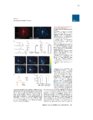
Show 88 following IUE (Fujinami, 2015). IUE has been demonstrated in the gyrencephalic ferret and may be more phylogenetically similar to humans than lissencephalic rats and mice (Kawasaki et al., 2012, 2013). IUE of GCaMPs may permit better selection of disease models in which to perform calcium imaging. The field of genetically engineered tools is currently exploding (Broussard et al., 2014; Rose et al., 2014). There are simply too many novel and useful reporter proteins for it to be feasible to incorporate them all into transgenic animals. The time to build and characterize each reporter line and housing and breeding costs limit the number of transgenic animals which can be produced. However, IUE plasmids are straightforward to construct, can be tested quickly and do not require high numbers of animals for breeding purposes (Gee et al., 2015). Therefore, many new reporter-carrying plasmids can be produced, electroporated and tested in a short time. This work has demonstrated the feasibility of transfecting the rat brain with protein reporters of cellular activity for the purpose of monitoring astrocytic and neuronal dynamics with high spatiotemporal resolution. Transgenic approaches do not require invasive procedures for transfection. Strategic targeting of a transgene to a specific locus in germline DNA can result in a stable reporter line. Promoter specific labeling of various populations of cells can be activated simply by breeding a Cre-dependent reporter to a Cre-expressing line (Gee et al., 2014; Madisen et al., 2015; Sauer, 1998; Zariwala et al., 2012). GECIs have been expressed in specific cell types using Cre/lox technology (Zariwala et al., 2012). However, the PC::G5tdT reporter line offers unique advantages over previous reporters (Gee et al., 2014). First, coexpression of tdTomato and GCaMP5G is very useful for simultaneously observing the cell domain information and intracellular calcium signaling. Both proteins label astrocytic |