| OCR Text |
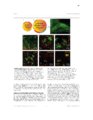
Show 3 Astrocytic process endfeet make extensive contact with endothelial cell-lined blood vessels, permitting dynamic control of blood flow, nutrients from the blood for use by neurons and formation of the blood brain barrier, which shields highly valued neurons from potentially harmful peripheral blood components (Abbott, 2002; Abbott et al., 2006). Additionally, astrocytes regulate neuronal excitability by maintaining ionic balance in the extracellular space (Newman, 1986) and by scavenging neurotransmitter from the synaptic cleft (Anderson and Swanson, 2000). In the pathological brain, astrocytes exhibit dramatic morphological and molecular profile alterations in a process termed "reactive astrocytosis" (Burda and Sofroniew, 2014). The types and extent of changes in reactive astrocytes vary between different diseases and disease stages (Zamanian et al., 2012). In response to severe insults to the brain, such as infection, astrocytes extend their, normally nonoverlapping, processes into neighboring astrocyte domains and increase expression of the intermediate filament glial fibrillary acidic protein (GFAP; Bushong et al., 2002; Kirkman et al., 2010; Oberheim et al., 2008). It is not known how the function of astrocytes in a pathological state differ from those in the healthy state. However, the development of fluorescent indicators of cellular activity has provided the opportunity to optically monitor select aspects of intracellular dynamics in astrocytes and to begin to probe this question. There are several types of fluorescent indicators of cellular activity including those that fluoresce in the presence of calcium (Paredes et al., 2008; Peron et al., 2015), cyclic adenosine monophosphate (cAMP; Nikolaev et al., 2004; Ponsioen et al., 2004) or inositol 1,4,5-trisphosphate (IP3; Mikoshiba, 2007; Oh and Ahn, 2008). Upon binding to their ligand, the indicators undergo a conformational change from a quiescent to fluorescing state and can be excited with a light source and observed with a microscope. Calcium |