| OCR Text |
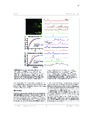
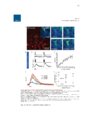
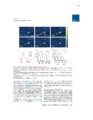
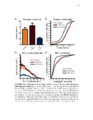
Show 76 Therefore, previous studies were only able to report somatic and thick, proximal process activity both of which are far from distal terminal processes and may not reflect changes which occur at the neuronal-astrocytic interface. Because GCaMP5G readily diffuses throughout the whole cytosolic compartment, we were able visualize calcium activity in fine processes. We also observed changes in intrinsic event frequency in processes. As opposed to what was observed in the soma, intrinsic activity in the processes trended upwards at early time points following LPS-administration (6 hr; Figure 4.4A-B). By 24 hr, however, most intrinsic process activity had ceased. Events tended to be small and close to the terminal processes. Whereas, controls exhibited large transients throughout the whole process region. The intrinsic event rate in the processes (Control: 64.81 ± 81.68 events/cell/min; LPS6: 80.79 ± 110.3; LPS24: 25.52 ± 41.49) was significantly different between groups (p < 0.0001, KW-statistic = 34.11; KW-ANOVA). Intrinsic event frequency was not different than Controls at the 6-hr time point, but decreased significantly by the 24-hr time point (Control vs. LPS6 p > 0.99; Control vs. LPS24: p < 0.0001; LPS6 vs. LPS24: p < 0.0001; Dunn's post-hoc test; Figure 4.4A). Likewise, the cumulative distribution of the LPS24 group was left-shifted relative to both the LPS6 and Control groups (Control vs. LPS6: p = 0.86, D = 0.08; Control vs. LPS24: p < 0.0001, D = 0.33; LPS6 vs. LPS24: p < 0.0001, D = 0.32; KS-test; Figure 4.4B). The skewness of the distribution of the positive ROI correlations was indicative of the size of events. Over the imaging duration used in this study, a single transient which encompassed many ROIs had a large effect on the skewness. Because the number of highly correlated ROIs within an event contributes the square of the number of participating ROIs to the distribution, large events disproportionately skew the ROI correlation coefficient |