| OCR Text |
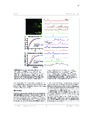
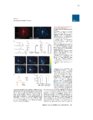
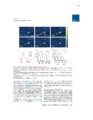
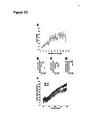
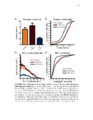
Show 75 3.22 ± 2.57 s; LPS6: 1.78 ± 1.54; LPS24: 1.28 ± 1.22; p < 0.0001, KW-statistic = 22.93; KW-ANOVA). Events in both LPS groups were shorter in duration than in the Control group (Control vs. LPS6: p = 0.002; Control vs. LPS24: p = 0.0001; LPS6 vs. LPS24: p = 0.34; Dunn's post-hoc test). The cumulative distributions of FWHM of both LPS groups were left-shifted relative to the Control group (Control vs. LPS6: p = 0.0012, D = 0.46; Control vs. LPS24: p = 0.0002, D = 0.73; LPS6 vs. LPS24: p = 0.17, D = 0.40; KS-test; Figure 4.3C). We detected a significant difference in the AUC of events (Control: 4.91 ± 7.81; 2.25 ± 4.37; 0.76 ± 0.98; p = 0.0005, KW-statistic = 15.36; KW-ANOVA). Both LPS groups exhibited smaller AUC events than those in the Control group (Control vs. LPS6: p = 0.02; Control vs. LPS24: p = 0.002; LPS6 vs. LPS24: p = 0.43; Dunn's post-hoc test) and LPS group AUC cumulative distributions were left-shifted relative to Controls (Control vs. LPS6: p = 0.03, D = 0.35; Control vs. LPS24: p = 0.0002, D = 0.73; LPS6 vs. LPS24: p = 0.09, D = 0.44; KS-test; Figure 4.3D). We conclude that, in acute brain slices prepared from animals following LPS-injection, intrinsic astrocytic soma activity occurs more sparsely and events become shorter and less intense. Altered intrinsic calcium activity in LPS-exposed astrocytic processes A subset of astrocytic process terminals contact neuronal synapses where many potentially important interactions between the two cell types occur. Neurons and astrocytes can detect release of gliotransmitters and neurotransmitters, respectively, through calciumdependent signaling mechanisms. In the past, synthetic calcium dyes, such as Fura-2, have been used to probe LPS-induced changes in calcium dynamics in astrocytes (Ronco et al., 2014; Strokin et al., 2011). Fura-2, however, cannot diffuse into astrocyte terminal processes following bulk loading which was used to deliver the dyes in these studies. |