| OCR Text |
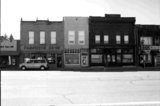
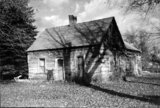
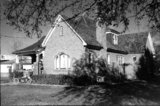
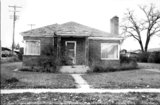
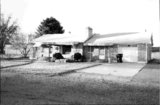
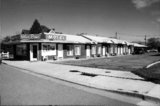
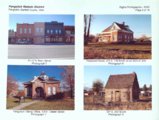
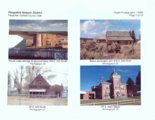
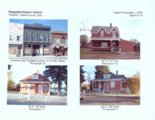
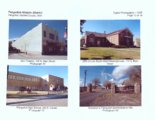
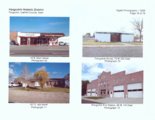
Show 0MB No. 1024-0018. NPS Form United States Department of the Interior National Park Service National Register of Historic Places Continuation Sheet Section No. §, Page § Panguitch Historic District, Panguitch, Garfield County, UT Croft Sawmill began operations in Panguitch in 1954 and quickly became the largest employer. It was still the largest employer in 1970, when Kaibab Industries took over production. Although in recent years, the industry has declined due to greater restrictions on timber harvesting. The idiosyncrasies that accompanied local brick making in Panguitch came to an end in the late 1930s. The styles and materials for the construction of Panguitch homes are similar to those found in other communities. The domestic architecture of Panguitch in the period followed the national trends from boxy cottage in the World War II-era, stretching out into early ranch-style houses, to the flat-roof modernist style of the early 1960s ranches and ramblers. However, like most rural communities in Utah, there were more individual home designs than in larger cities where tract housing was predominant. Late-Twentieth Century Development Period. 1965-2006: The population of Panguitch remained around 1,400 between 1970 and 1990. There has been a slow, but steady increase since 1990. The population in 2000 was 1,623. New housing has appeared mostly as infill on the large city blocks, but there has been some subdivision-like development at the fringes. Today the town has fourteen motels, a KOA campground, six restaurants, five gas stations, three convenience stores, two grocery stores, hardware store, auto-parts store and several souvenir shops/art galleries. There are three LDS wards, a Catholic Church and a Baptist Church. The DUP operates a history museum in the old tithing office. The Panguitch Main Street Association has been involved with preserving historic buildings in Panguitch and guiding the compatibility of new development. The Panguitch Drugstore recently moved into a newer development at the corner of 100 East and Center Street. Both this building and the new Panguitch Fire Station are red brick buildings that are visually compatible with Panguitch's historic town core. Panguitch is a somewhat sleepy during much of the winter, but thrives during the tourist season. Like many tourist towns of southern Utah, many of the residents are part-timers, recreating or running businesses during the tourist season. A few of the motels and cafes are closed during the off-season, but unlike some Utah towns, by-passed by the freeway system, none are permanently vacant. The economy remains stable due to the developments of the previous period. The historic resources of the Panguitch Historic District are important as physical representatives of the history and development of Panguitch, Utah. While the architecture of Panguitch represents the s yles and types popular in Utah in the one hundred years between 1871 and 1964, many of the architecture 1 resources are unique manifestations of locally made brick and local builders' skill resulting from the insularity of the agricultural outpost. The architectural legacy ranges from settlement-era cabins, to the prosperity of the Victorian era, to the rising influence of the tourism industry in Panguitch. |