| OCR Text |
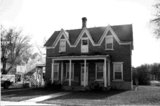
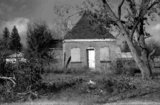
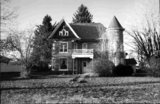
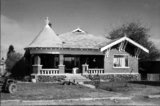
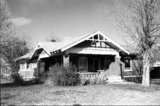
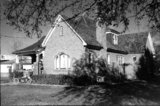
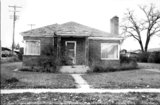
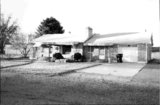
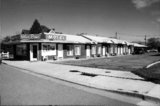
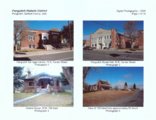
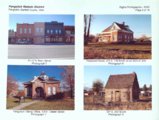
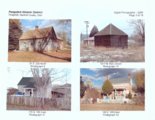
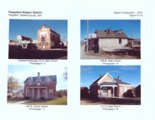
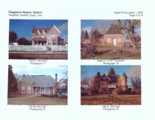
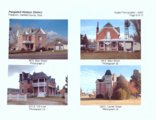
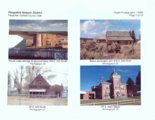
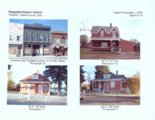
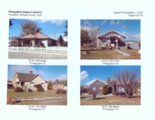
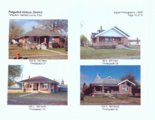
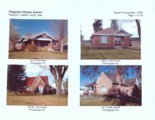
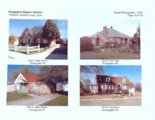
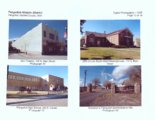
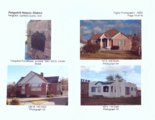
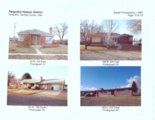
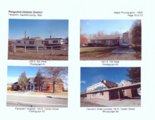
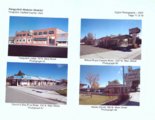
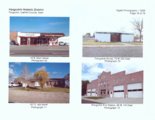
Show OMB No. 1324-0018, NPS Form United States Department of the interior National Park Service National Register of Historic Places Continuation Sheet Section No. 7 Page 10 Panguitch Historic District, Panguitch, Garfield County, UT variety of materials in this period. The Marshall House at 57 E. 300 North (built circa 1950) is similar in style and type to the houses of the previous period, but was constructed with narrow, rornan brick [Photograph 54]. The Gerald and Mary Henrie House at 280 N. 100 West (built circa 1945) is done in the Minimal Traditionalstyle of early post World War II housing [Photograph 55]. The house at 55 N. 100 West is also Minimal Traditional in style, but features the picture-window corners popular by the 1950s [Photograph 57]. In contrast the Nyle & Blanche Henrie House at 49 S. 100 East is a stucco-covered Mission-style built in 1949 [Photograph 56]. It is the only historic residence in Panguitch which comes close to representing the modern styles of the 1930s and 1940s. In the 1950s and early 1960s, the domestic architecture of Panguitch was represented by the ranch/rambler types and styles popular in throughout Utah and the nation. An early example of striated red brick is found at 169 N. 300 East (built circa 1950) featuring decorative brickwork at the water table [Photograph 58]. While there were few innovations in type or style, Panguitch builders remained creative in the use of materials. The ranch houses of Panguitch utilize all colors of brick in many different sizes (roman, atlas, slump block etc.). The ranch house at 151 E. 200 South (circa 1955) features intricately laid courses of multi-colored rornan brick [Photograph 59]. Skilled masonry was also at work in the roman/atlas brick courses of 360 S. 100 West (circa 1960) [Photograph 60]. The historic district includes several examples of mobile homes, such as the one at 335 S. 300 West (circa 1960) [Photograph 61]. Aluminum siding gained popularity during the 1950s and 1960s, both for remodeling older homes and sheathing newer ones (e.g. 241 S. 100 West, circa 1955) [Photograph 62]. Two institutional buildings of the period are the Panguitch Hospital (completed in 1946) [Photograph 63], and the Panguitch Elementary School (circa 1955). The most noteworthy change to the architectural inventory of Panguitch during this period was the construction of twelve motels on Main and Center Street. While there had been hotels all throughout the history of Panguitch, they were primarily domestic-looking buildings or later small tourist cabins. The only extant example is the Cameron Hotel complex at 78 W. Center Street, a multi-resource property, which includes two houses (circa 1890 and 1935), a row of tourist cabins (circa 1910) and a commercial block remodeled in the 1950s [Photograph 64]. The motel building boom began around 1940 and ended in 1964 with the construction of the last motel court of the historic period. Of the twelve motels, only one is urban in design. The two-story Panguitch Inn Motel was built in 1940 at 50 N. Main Street [Photograph 65]. Although the facade has been slightly altered, the original design, for example a tunnel to the inner block parking, can be distinguished. The other motels are more traditional automobile courts and can be divided into two categories: individual/double cabins and the motel row. The earliest motels of the 1940s were built with an office in front and usually an Lshaped court of individual or double cabins. A good example is the Nelson/Bryce Canyon Motel at 310 N. Main Street (circa 1945) [Photograph 66]. The Blue Pine Motel at 130 N. Main Street is a very domestic example of the motel row (circa 1950) [Photograph 67]. An example from the early 1960s is the Adobe Sands Motel at 390 N. Main Street, which is a more modern interpretation of the motel row. The tourist industry was also served by gas stations. The Utah Oil Company replaced an older building in the 1960s with a modernlooking station and canopy at 18 S. Main Street [Photograph 68]. The Panguitch Dental building, at 75 N. 200 East, is a rare example of modern architecture in Panguitch [Photograph 69], |