| OCR Text |
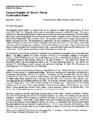
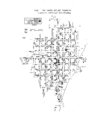
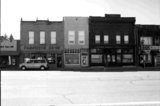
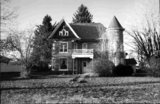
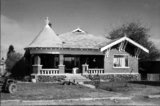
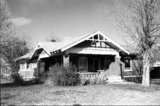
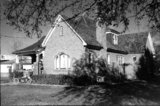
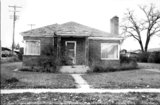
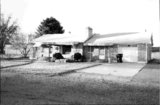
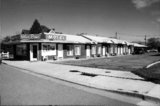
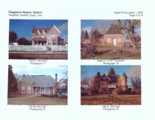
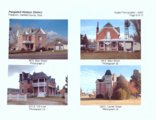
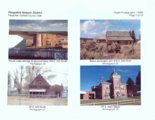
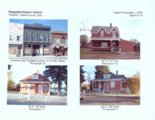
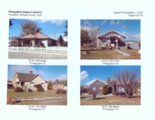
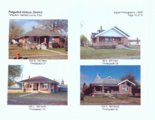
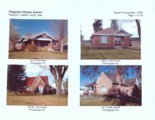
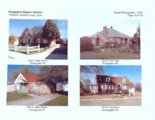
Show 0MB No, 1024-0018, NPS Form United States Department of the Interior National Park Service National Register of Historic Places Continuation Sheet Section No. 8 Page 1 Panguitch Historic District, Panguitch, Garfield County, UT Narrative Statement of Significance The Panguitch Historic District includes the historic town plat of Panguitch, which is only slightly smaller than the current city limits. Panguitch is a rural community in Garfield County, in central-southern Utah. The district is primarily residential with commercial district along Main and Center Streets. There are 386 contributing primary resources, about 60 percent of the total number of resources. The historic district is significant under Criterion A for its association with the history and development of Panguitch from an agricultural outpost to a growing city with tourism as a major part of its economic base. The themes of Panguitch history have been early settlement, farming, ranching, mercantilism and tourism. An isolated pioneer outpost for many years, the residents of Panguitch formed a close-knit community consisting of mostly descendants of its earliest settlers. Ranching made many residents prosperous and by the early 1920s, Panguitch was the richest per-capita town in Utah. After the Depression years, when many ranching fortunes were lost, tourism grew to augment ranching in the city's economy. Tourism in southern Utah grew with the proliferation of the automobile. The community's proximity to five national parks and other recreational areas has been a boon to Panguitch. Because of the significant impact tourism had on the landscape of Panguitch in the early 1960s, the period of significance extends from the second settlement of 1871 15 to the construction of the last motel court in 1964. The historic and architectural resources of the district are eligible within the following areas of significance: Exploration/Settlement, Community Planning and Development, Agriculture, Commerce, Entertainment/Recreation and Social History. The Panguitch Historic District is also significant under Criterion C for an intact concentration of historic buildings, which exhibit a high level of integrity, craftsmanship, and creativity. The large number of historic buildings constructed of locally-made red brick is particularly impressive. This brick is distinct to the Panguitch community in color, and in the early twentieth century, in texture. Overall, the brick is darker red than in most Utah towns of the same age. Panguitch residents take great pride in their unique brick buildings. Although there are a number of architecturally significant institutional and commercial buildings, the district is primarily significant for the high number of architecturally significant residences from throughout the period of significance, including a large number of individualistic Arts & Crafts bungalows. The architectural legacy includes a distinct hybrid house-type of the 1920s and 1930s, unique to the Panguitch community. This Panguitch house-type of the 1920s and 1930s is large with a square footprint under a pyramidal-withprojecting-bays roof, and an eclectic mix of Victorian, Bungalow and Period Revival stylistic elements. The unique Panguitch house dominated the 1920s and 1930s; and, unlike most Utah communities, only a few examples of traditional period cottages are found in the town. Prior to this nomination, three buildings within the district were individually listed on the National Register of Historic Places. Despite some late twentieth century intrusions, the Panguitch Historic District represents and contributes to the history of Panguitch, Utah. 15 There is an extant log cabin that was reportedly constructed in 1864, but this has not been thoroughly documented and the cabin is not in its original location, so the period of significance begins with the resettlement in 1871. |