| OCR Text |
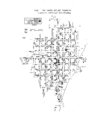
Show 0MB No. 1024-0018, NPS Form United States Department of the Interior National Park Service National Register of Historic Places Continuation Sheet Section No. 7 Page 3 Panguitch Historic District, Panguitch, Garfieid County, UT (five and two blocks) at the southwest corner. The original plats were bounded by 400 North, 400 East, 500 South and 300 West streets. A few later "additions" at the edges were in place at the time of a resurvey in 1953. The streets and blocks at the northeast and northwest (where Panguitch Creek is located) corner were never fully developed. The four blocks at the bottom of the southeast quadrant were only partially developed. Several large parcels were added historically on the north to 700 North and on the east to 600 West, to accommodate the extension of the commercial district along Highway 89. The west end of Center Street was extended to include nine acres of land where the first Panguitch High School was located (destroyed by fire). This land now belongs to the Forest Service, but is not included in the district. Limited historical development also took place along west 175 North Street. According to a 1917 Sanborn map of Panguitch, these boundaries were the city limits of Panguitch at the time. The core of the current city limits are similar to the historical limits; however, the current city limits extend further north, south, and east following development along the main highways. To the west, the city limits extend approximately one mile between 175 North and 300 South. This acreage has been annexed, but not yet developed. The historic district resembles the historic city limits, including extensions along Highway 89 where historic development can be found. In most cases, the district includes buildings on both sides of the boundary streets. The development patterns of the district are distinct and easily define the area. Beyond the boundaries lies mainly open land. There is scattered new residential development at the corners of the original town site and extending just beyond the boundaries of the district. The boundaries of the historic district do not include areas at each of the four corners that are dominated by new development, including a new subdivision at the south end of town. The boundaries have been drawn to encompass the highest concentration of historic buildings that meet the requirements for historic significance. (See attached map for boundary details.) Streetscapes and Landscapes The Panguitch town site was laid out in a grid typical of Mormon town planning.4 Mormon pioneer town sites discouraged isolated farmsteads in favor of community cohesiveness and family-level subsistence agriculture. Individual lots were generally large allowing room for vegetable gardens, fruit trees, and outbuildings for livestock and poultry. Residences were to be built with a uniform setback with fences, trees and other landscaping. The system was designed to promote self-sufficiency and efficient land use, provide security, and discourage social isolation. Within the community, opportunity and space were provided for education, worship, social gatherings, and the arts. Public buildings were communal projects and usually located near the center of town. Scarce resources such as timber and water were to be held in common with no private ownership. Agricultural acreage was located on the outskirts of the town site. The Panguitch town site was divided into sixty five-acre blocks by streets that were uniformly 99-feet wide. Each block was divided into four 1 %-acre lots. For this reason, the oldest residences are usually located at the corners of the blocks. Panguitch is similar to most rural Mormon communities where only the center of the 4 Mormon settlements in the Intermountain West were generally adaptations of the City of Zion plat developed by IDS Church founder, Joseph Smith, for the city of Nauvoo, Illinois. See Lowry Nelson's The Mormon Village: A Pattern and Technique of Land Settlement (Salt Lake City, Utah: University of Utah Press, 1952). |